November 21, 1999 – In Which I Meet Sherlock Holmes and tour Madame Tussaud’s and Kensington Palace

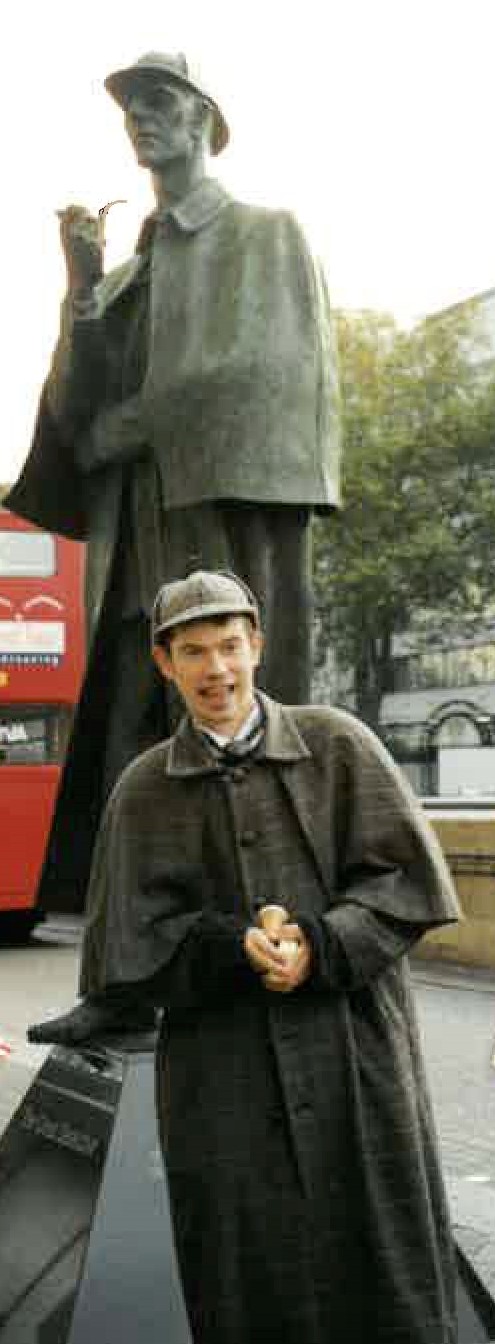
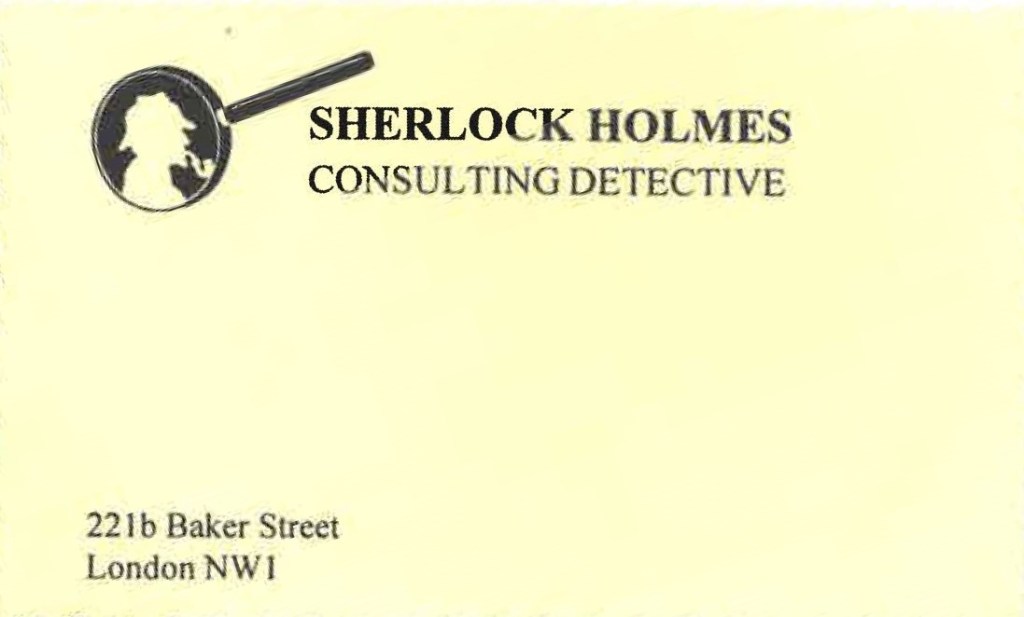
When I exit the tube station at Baker Street, I see the tall bronze statue of Sherlock Holmes in front of the station as expected. But, today, there is also a man dressed in a Victorian caped cloak and deerstalker hat having his picture taken with the tourists. He hands me his business card. It says: “Sherlock Holmes, Consulting Detective.”
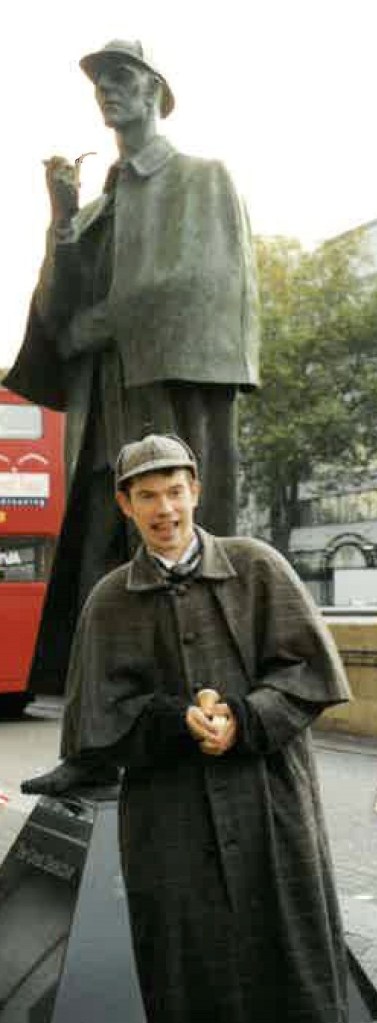
Sherlock Holmes hanging out on Baker Street

Madame Tussaud’s Wax Museum

I love Madame Tussaud’s. I get other visitors to take my picture first with Sean Connery and then with Princess Diana.
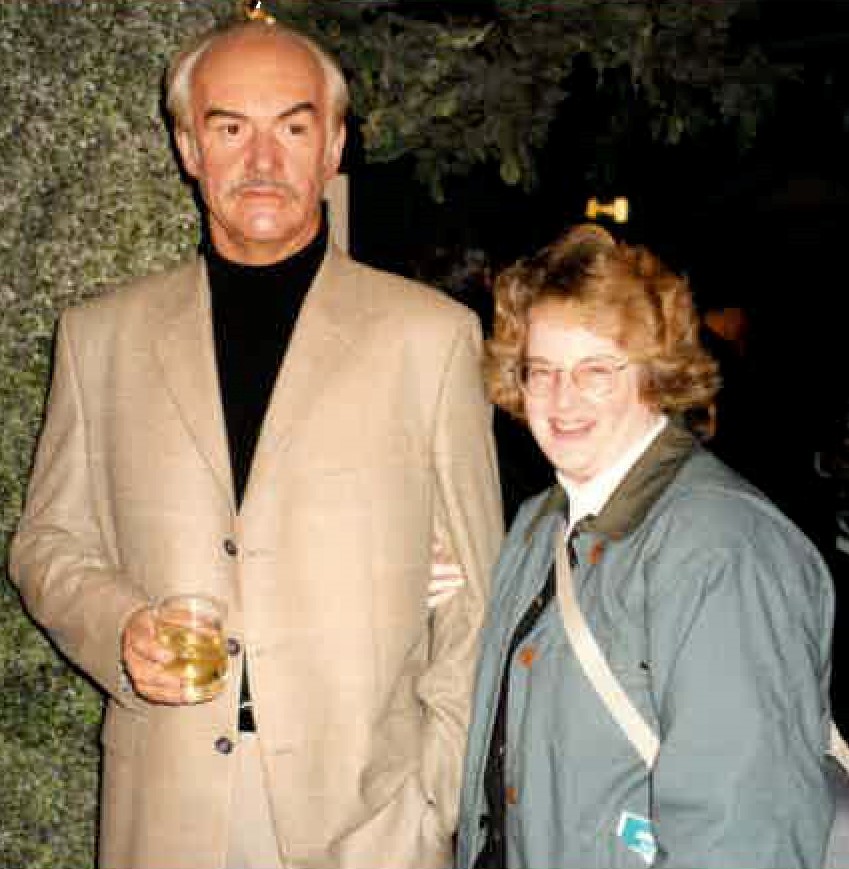
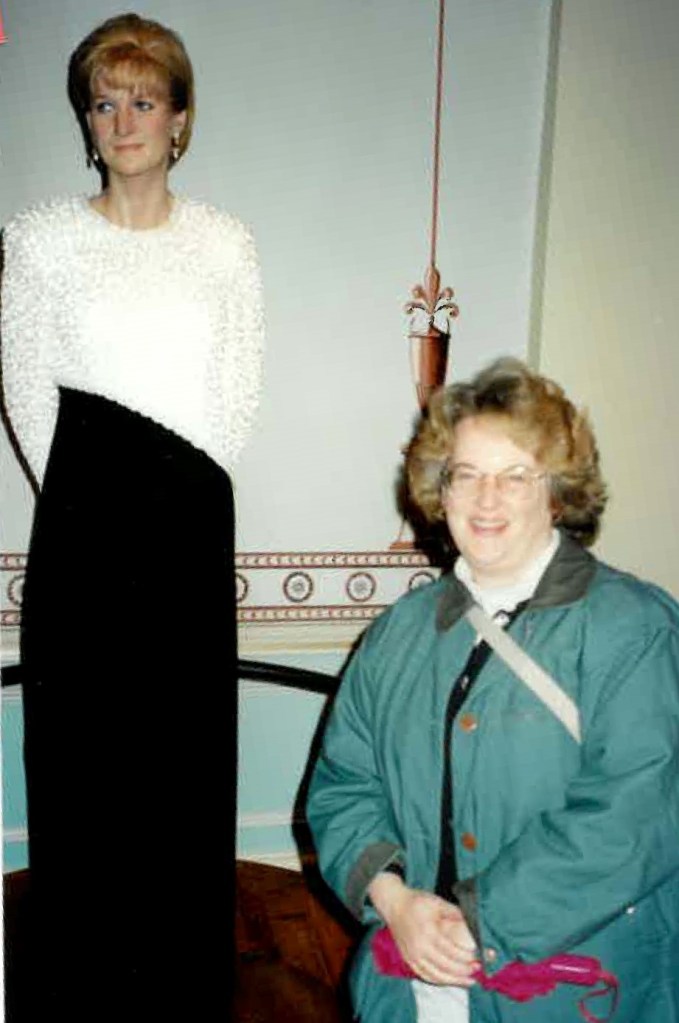
Shaken, Not Stirred
Wax Figure of Princess Diana at Madame Tussaud’s

Upon entering, the museum staff takes everyone’s picture with Arnold Schwarzenegger for a souvenir photo that you can pick up at the end of your visit. Schwarzenegger’s figure is as tall as I remember him to be. I saw him once at the University of Maine, Augusta, at an event sponsored by Governor McKernan; the kick-off of some presidential fitness campaign for which the actor was the spokesperson. He towered over McKernan, who himself is a very tall man.
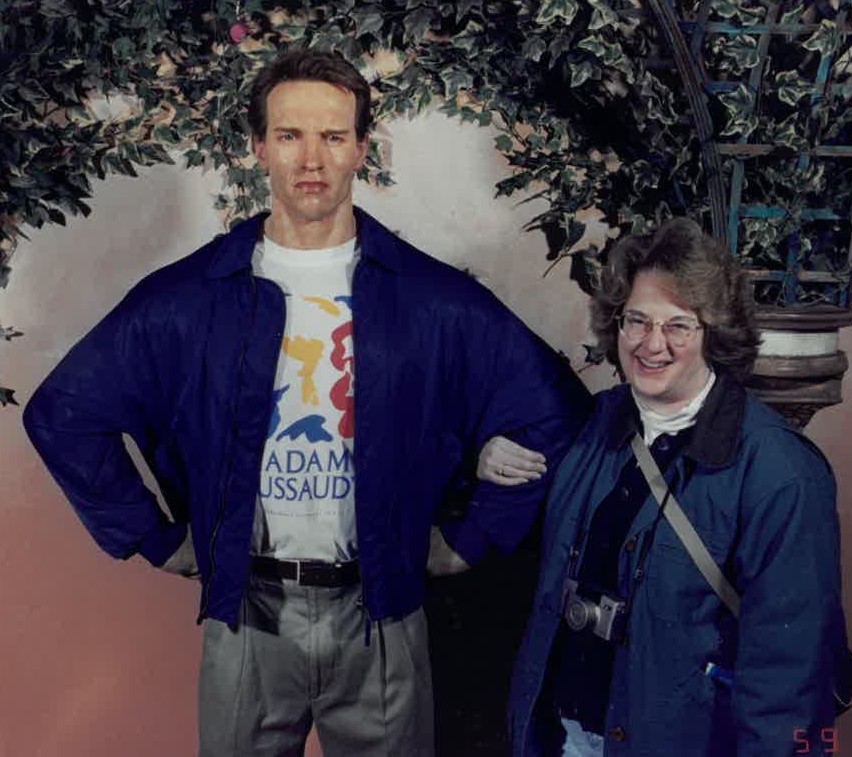
Arnold Schwarzenegger

I peer at royalty, pop stars, political figures, and sports heroes: Henry VIII and all of his wives, Elizabeth Taylor, Tony Blair, and Olympic skaters, Torvill and Dean. The Queen, of course, looks very regal standing beside her son and new daughter-in-law, Edward and Sophie, dressed in their wedding finery. The figure of Bill Clinton doesn’t look very realistic to me, but, his predecessor, George Bush, is spot on.

Most of the figures are gazing off to the side or into the distance, but every once in a while there is one that looks straight out at you. These are eerie. As I read the plaque of an African leader, I look up and the figure’s piercing eyes are glaring at me. It makes me look twice.

During the French Revolution, Madame Tussaud’s job was to make wax death masks of the guillotine victims, including Marie Antoinette. This might account for the museum’s penchant for the grisly. The Chamber of Horrors includes Vlad the Impaler (Count Dracula), Adolf Hitler, Vincent Price, and Britain’s notorious murderer, Dr. Crippen. There is no waxwork figure of Jack the Ripper however because Madame Tussaud would not model anyone whose likeness is unknown. Instead, the museum portrays the 19th century serial killer as a shadow (source).

Madame Tussaud, whose given name was Marie Grosholtz, modeled Benjamin Franklin, King George III, and Napoleon—in real life. She also modeled herself.
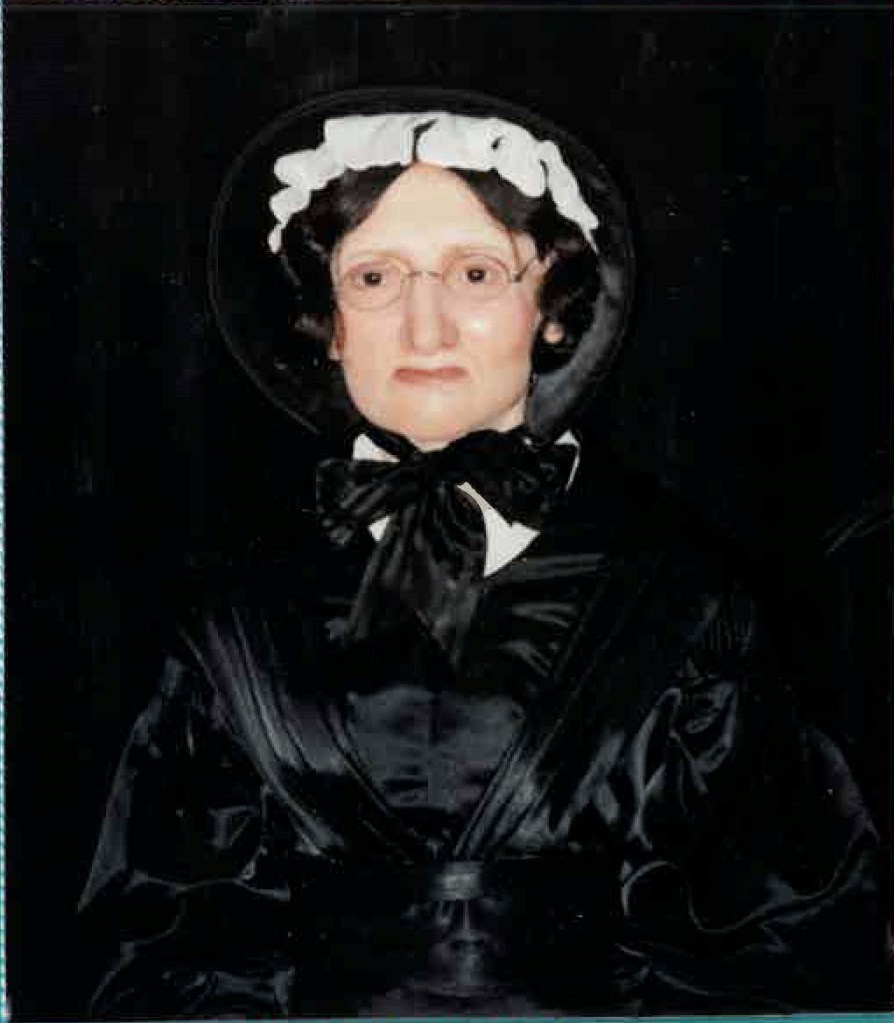
Madame Tussaud

Kensington Palace

On the tube today, I am Charlie on the MTA. It takes me three tries before I get the right train to Kensington.

At Kensington Palace, the royal ceremonial dresses are displayed in realistic tableaux. They are set in the Edwardian era so it is a little like Warwick Castle, although not as grand as the Royal Weekend Party. One display shows what young girls would have worn when presented at court; maids helping them with trains and tiaras. The coronation robes of George and Mary and what people would have worn to their 1911 coronation accompany a display of Queen Mary’s dresses. There are also some of the current Queen’s dresses.

A special exhibit of the late Princess Diana’s dresses is lovely, but infuriating. When Brian, Mom, and I came in 1996 just shortly after the Prince and Princess’s divorce, Diana’s wedding dress, which I was yearning to see, had been removed. Apparently the hypocritical palace officials feel it’s OK to showcase the Princess’s glittering gowns and formal evening dresses now that Diana is dead while they they shunned her as the ex-wife of the Prince of Wales.

All of the Kensington Palace state rooms are open too and I wander through them. Kensington is, of course, where Queen Victoria was born. While today’s members of the Royal family live in the private apartments deep in the building, the front part of the palace houses the public state rooms. Dating from the Hanoverian and Stuart eras, primarily used by William and Mary at the end of the 17th century, they are gilded and lavish.

The red-walled King’s Gallery lined with marble busts and life-sized oil paintings is where King William met with his spies.

In the Queen’s apartments, is the Queen’s bedroom and although it is named for William’s queen, Mary, it is the room in which, “Victoria went to sleep a princess and awoke a Queen at the age of 18.”

My favorite room is the marble and gold Cupola Room where the domed trompe-l’oeil ceiling gives the impression of a dome. There is an amazing 18th century musical clock in the center of the room. Queen Victoria was baptized in this room.
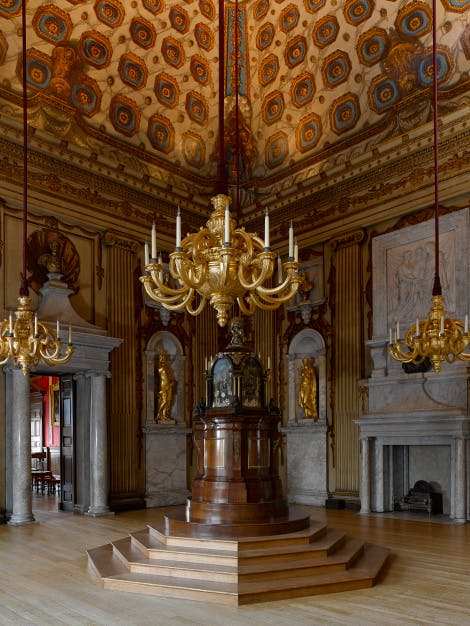
Cupola Room, Kensington Palace
Photo: Historic Royal Palaces

I love the white marble statue of Queen Victoria in front of Kensington Palace all the more when I read that it was sculpted by her daughter, Princess Louise, in 1893. It shows her mother in her coronation robes in 1837 at the age of 18.
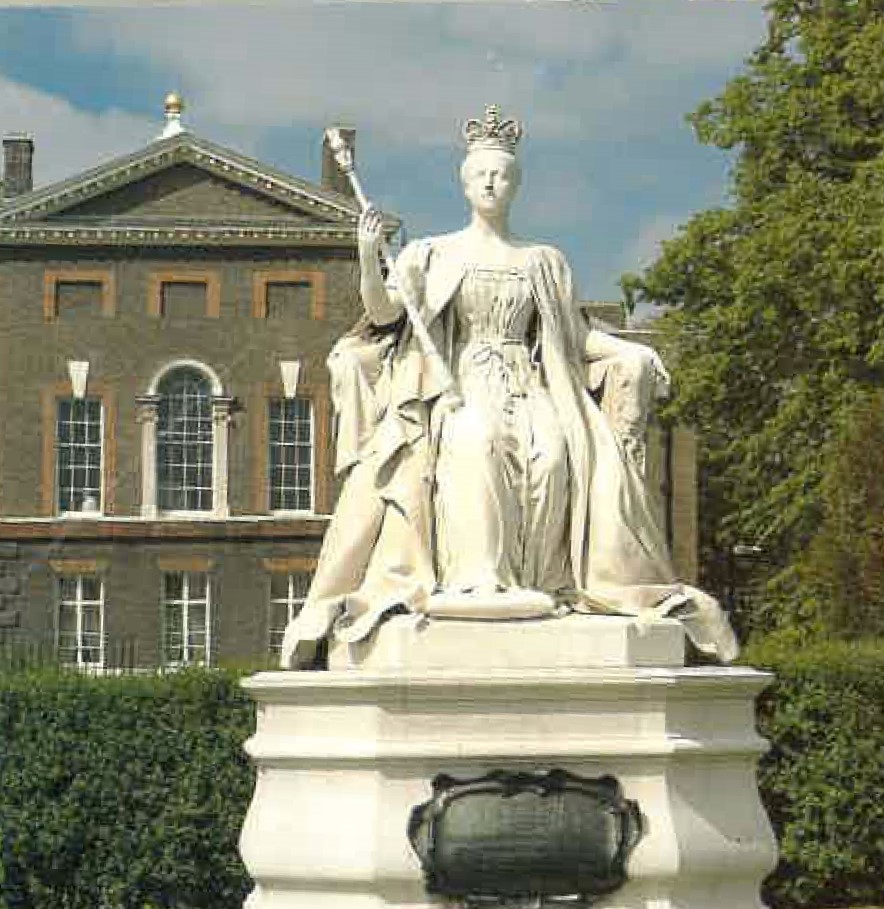
Queen Victoria, Kensington Palace

All along Kensington High Street, the stores are decorated for Christmas. They are lovely, but it is just way too early for Christmas decorations.

Back at my hotel, I go to a restaurant around the corner—the Jagerhuitte, a German restaurant. The veal stroganoff is outstanding.

  • In today’s news: The race for Lord Mayor of London is becoming bizarre. Jeffrey Archer, the best-selling author and the leading Tory candidate, bowed out of the race today. Ten years ago, several newspapers reported that he had solicited a prostitute. Archer sued the papers for libel and won. But today’s news reveal that his alibi for refuting the solicitation charges a decade ago was fabricated. True, he wasn’t with a prostitute—he was with his secretary with whom he was having an extra-marital affair—but now he faces perjury charges for lying in the libel case. Goodbye, Jeffrey. Frank Dobson, the Labor candidate that Blair supports, has been dogged by suggestions that he is Labour’s pick. Tony Blair is doing everything he can to make sure Ken Livingston, the other Labour party offering, doesn’t get to stand for election. Livingston is popular and pundits speculate he might win if the Labour party selection committee lets him run. Blair, today, went on the attack, saying that Livingston was part of the old Labour party that nearly destroyed itself in the 1970s. Right now, in this race, it seems that anything goes.
November 20, 1999 – Portobello Road and The Pajama Game

After a fitful night in my teeny bed, I get ready for the day in my teeny shower in my teeny bathroom.

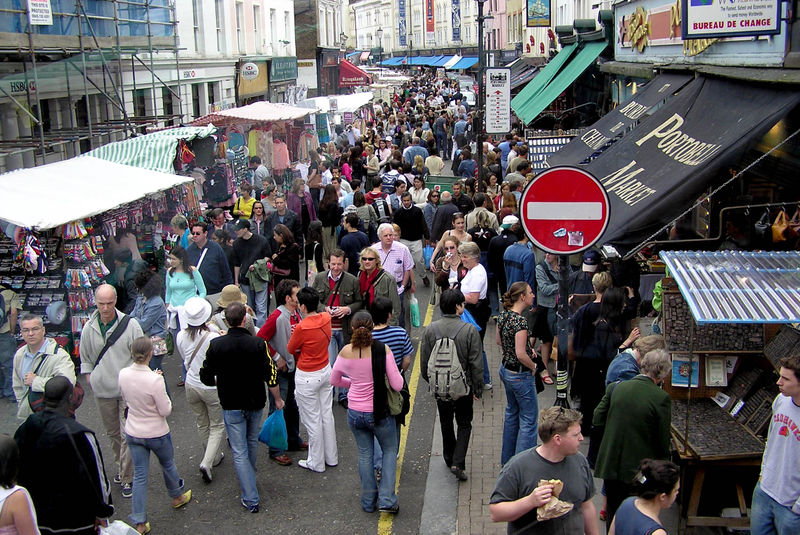
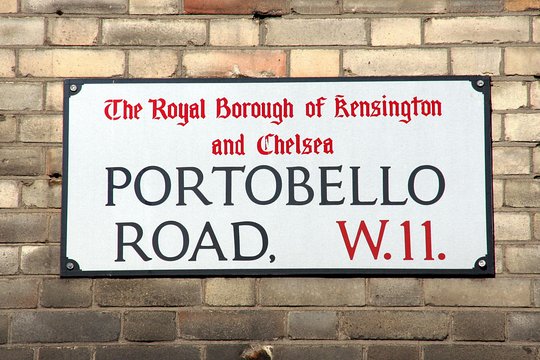
My destination is Portobello Road Market. I am glad I arrive early because by 11:00 AM it is so crowded you can barely squeeze through the throng of people. On Saturdays, Portobello Road is in full swing with more than 1,000 antique shops and stalls lining the street, which is closed to traffic for the day. In addition to the antique stalls, there is also a big farmers’ market, second-hand clothes, books, and bric-a-brac.

Portobello Road Market

Portobello Road Market is the largest of its kind in the world and, of course, a bit of a tourist trap. But I love it because it is colorful, eclectic, and even a bit nostalgic in today’s world of mini malls and big box stores.
I meander the stalls looking at clocks, jewelry, scarves, silver, and kumquats. As the song says
Portobello road, Portobello road
Street where the riches of ages are stowed.
Anything and everything a chap can unload
Is sold off the barrow in Portobello road.
You’ll find what you want in the Portobello road.

Robert B. Sherman and Richard M. Sherman, song from Disney’s Bedknobs and Broomsticks

I am looking for royal commemoratives, but only one or two stalls have them in any quantity. I buy two; both for the investitures of princes of Wales: Charles in 1969 and Edward in 1911. Edward’s has a tiny chip, but I think it will add panache to my collection having been purchased in Portobello Road.

I bump into Jonathan Weiner with his two sons. They are leaving tomorrow for the US―it is the end of his fellowship―and a sober reminder that I have only a little more than a month to go.

Back at Notting Hill tube station as I am buying my tube ticket, I say something offhandedly to a couple in line behind me. Hearing my American accent, they ask where I am from. When I say Maine, he says one of his best friends from the army was from Maine―from Mechanic something or other. Before I can say, “Mechanic Falls! I know it, I grew up near there!” the crowd sweeps them away.

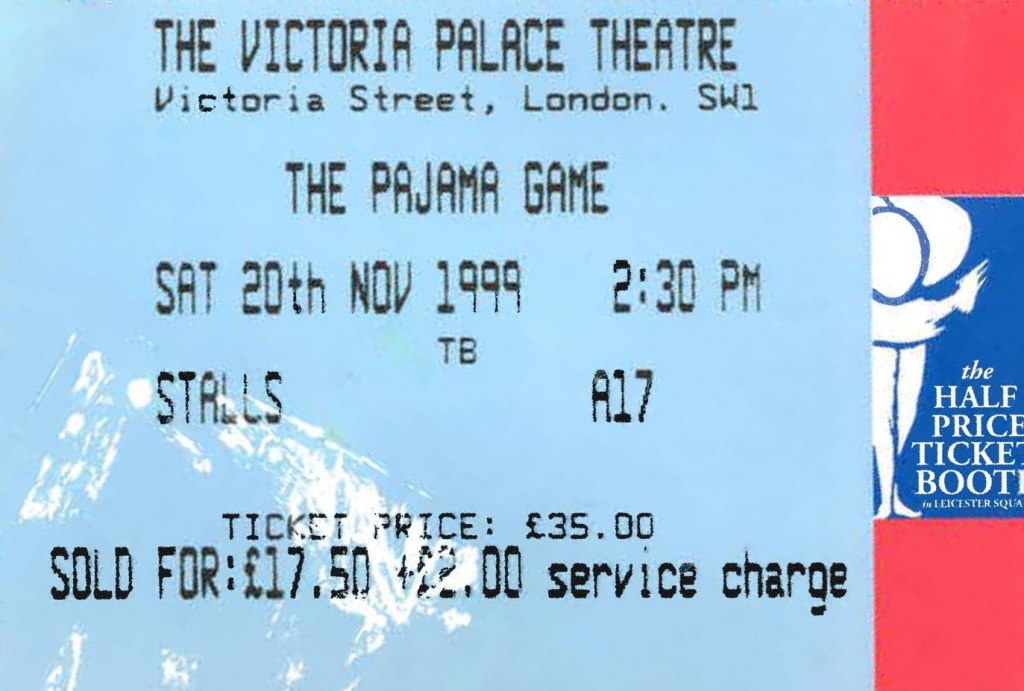
At Leicester Square, I get in the long snaking line for half-price theater tickets and, after about 35 minutes, am happy to come away with a matinee ticket to The Pajama Game for £19.50. I spy a little café for lunch called The Dome. Only after I am seated do I realize Brian and I ate brunch here on our theater trip a few years ago.

The play is set in the 1950s. They haven’t even tried to update it. But maybe that is supposed to be part of its charm. I had forgotten the plot line. It is corny, but the songs are fun. I don’t much like the guy who plays Heinzy, Brian’s part in his high school production. His American accent is fake and he overacts. I am in the front row, which is distracting. You can see make-up lines, wig tape, and microphones; which for some of the men are taped to their foreheads near their hairlines. But I enjoy the production and come away singing

There once was a man who loved a woman
She was the one he gave his kingdom for-or.
They say that nobody ever loved as much as he-ee
But me-ee, I love you more-or.

After several aborted attempts in September, on this trip, I finally make it to the world-famous Harrods. Worse than the mall on Christmas Eve, there are so many people swarming its seven stories, 330 departments, and 5 million square feet, I can hardly move through. Why did I want to come here?

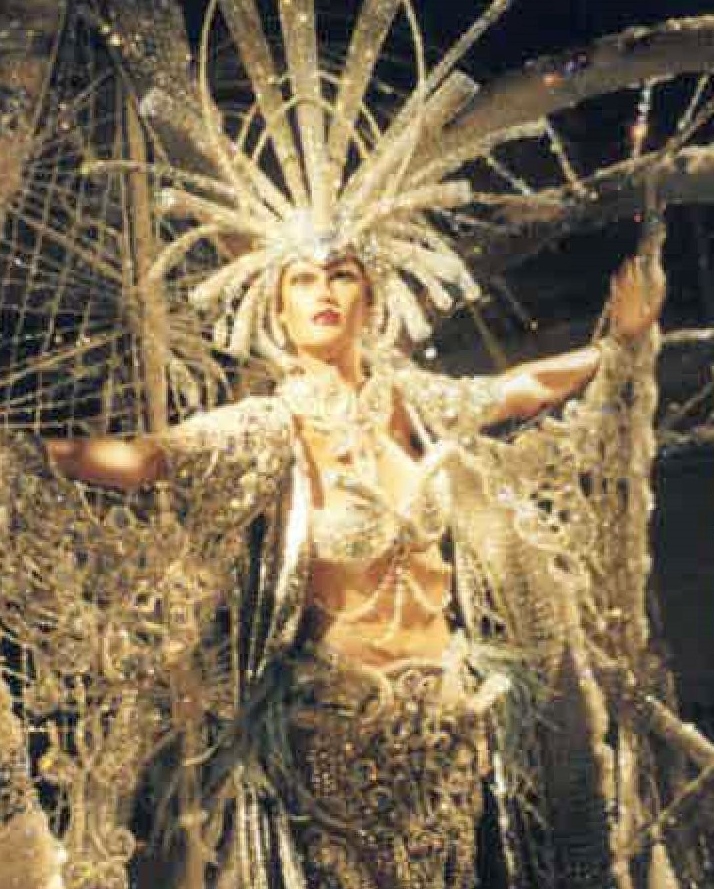
Outside, I walk the entire perimeter of the full-city-block-sized store looking at their illuminated Christmas windows. Harrods is celebrating the millennial Christmas with a retrospective of clothing styles over 10 decades. Each window’s manikin represents a different decade of the century. They are stunning. The manikin for the millennium glitters in gold. I am not sure if the lamé frock and headdress are meant to depict what fashion models are wearing now or predict what they will wear in the decade to come.

Harrods Millennium Window

Back in my tiny room, I eat bread, cheese, and grapes for supper that I bought in Harrod’s Food Hall.

November 19, 1999 – In Which I Tour the Houses of Parliament and Touch Winston Churchill’s Foot

Off to London today. Stacy has arranged for the fellows to tour the Houses of Parliament and, afterwards, the Plowdens have invited us to a cocktail party at their home.

My train pulls into London Euston at 14:20. The hotel that the BC arranged for me, instead of being 10 minutes by cab on Oxford Street, is 35 minutes away in Bayswater. It has a big, bright lobby, but my room (a single with one twin bed) is smaller than you can imagine. The bed is barely big enough for one person and I cannot turn around in the shower.

Being further afield than I planned, I am late meeting everyone at the scheduled time of 3:20 PM at Westminster Palace. I run down Parliament Street, past the statue of Churchill on the corner of Parliament Square Park, arriving breathless about 3:35 PM. I am relieved to see my group is still there. We gather at St. Stephen’s Gate, go through security, and enter one of the most famous buildings in the world.

Parliament is located in Westminster Palace, which most people don’t realize is owned by the Crown, although Parliament has met here since the 13th century. An older building sat on the same site but was mostly destroyed by fire in 1834. It is an enchanting neo-gothic building of honey-colored stone that runs nearly a quarter of a mile along the bank of the Thames. With its fairy-tale spires and towers, Tsar Nicholas I of Russia called the building, “a dream in stone.” (source)

We enter the building and walk along St. Stephen’s Hall towards the Central Lobby. The hall is lined with historical paintings and statues. Our guide tells us these were Prince Albert’s idea to draw attention to Britain’s heritage. Spaced along the hall on both sides are marble statues of the prime ministers.

We have hired a private guide for the evening, Mary, a Blue Badge tourist guide, who is extremely knowledgeable as she explains the significance and symbolism of the State Opening of Parliament that we have all just seen on TV.

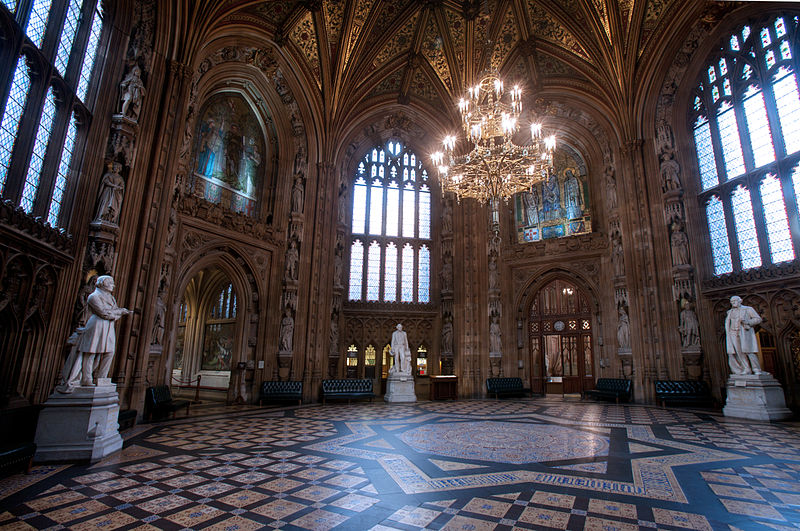
In the massive octagonal Central Lobby, soaring Gothic arches are interspersed with stained-glass windows so that I feel like I am in a church rather than a government building. I crane my neck upwards to take in the high, arched windows surrounded by stone statues of all the British monarchs stacked three high. This is the central crossroad between the House of Commons and the House of Lords.

Central Lobby, Houses of Parliament
Photo: Wikimedia Commons

Two long corridors (the Commons Corridor and the Peers Corridor) lead off from the Central Lobby to each of the parliamentary chambers. The House of Commons with green benches is to the north and the House of Lords with regal red seats to the south. Along the Commons Corridor are paintings of scenes from the Civil War “specifically chosen to depict the struggles through which national liberties were won.” I can’t quite reconcile the idea of greater freedoms with the fanatical Puritan Oliver Cromwell but I suppose they are talking about the greater parliamentary powers that evolved from this conflict.

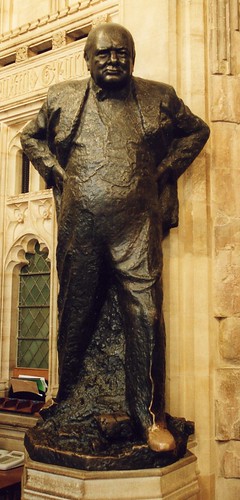
On the door to the House of Commons, we can see a huge dent from the whacking by the Gentleman Usher’s black ebony stick. Just outside the door is a large bronze statue of Winston Churchill. Like bronze statues do, it has turned black over the years. Except Churchill’s bronze left foot, which is as bright and shiny as a new penny. Mary tells us this is because everyone who passes through the door touches Winston Churchill’s foot. So, of course, we all do too.

Churchill Statue, Members Lobby, House of Parliament
Photo: Pinterest

Westminster Palace’s clock tower—Big Ben—is Great Britain’s iconic symbol. Big Ben is not the name of the tower or the clock, but of the 14-ton bell, named after Sir Benjamin Hall, a Welsh politician and engineer who oversaw the bell’s installation. Mary tells us a red light on the top of the clock alerts people to when Parliament is in session. I did not know that!

We exit through the 900-year-old Westminster Hall, yet another huge cavernous hall and the only original part of Westminster Palace not destroyed by fire. England’s second King, William Rufus, built Westminster Hall in 1097. Rufus, only one generation out from the Norman invasion and still trying to cement the dynasty, intentionally built the large hall—the largest in Europe at the time—to impress his new subjects. Charles II and Guy Fawkes were tried and convicted here 44 years apart.

After leaving the Houses of Parliament, we walk to Westminster Cathedral, not to be confused with Westminster Abbey. The abbey, by the way, looks very clean and bright as we walk past it. I remember how black with grime it was when Mom, Brian, and I visited a number of years ago. Our guide said it took 25 years to clean; slow work because of the soft stone which had to be treated carefully.

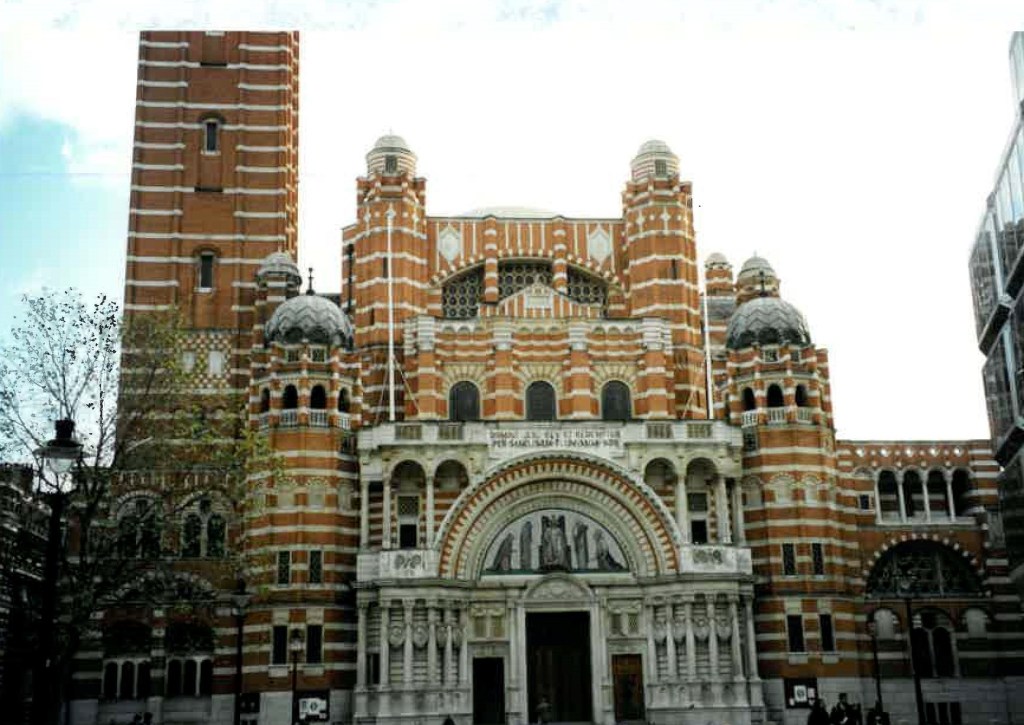
Westminster Cathedral, near Victoria station, is a Catholic church. Its mosque-like architecture is beautiful and unique and a contrast to the Gothic abbey. Constructed in 1903, when Catholics were not allowed to buy land, the church hierarchy had to get a middleman to purchase the site for them. Just shy of 100 years later, but in time to celebrate the Millennium, church officials have planned a march from Westminster Abbey, the Anglican church, to Westminster Cathedral, the Roman Catholic one. We go in, but there is a mass going on, so we don’t stay long.

Westminster Cathedral

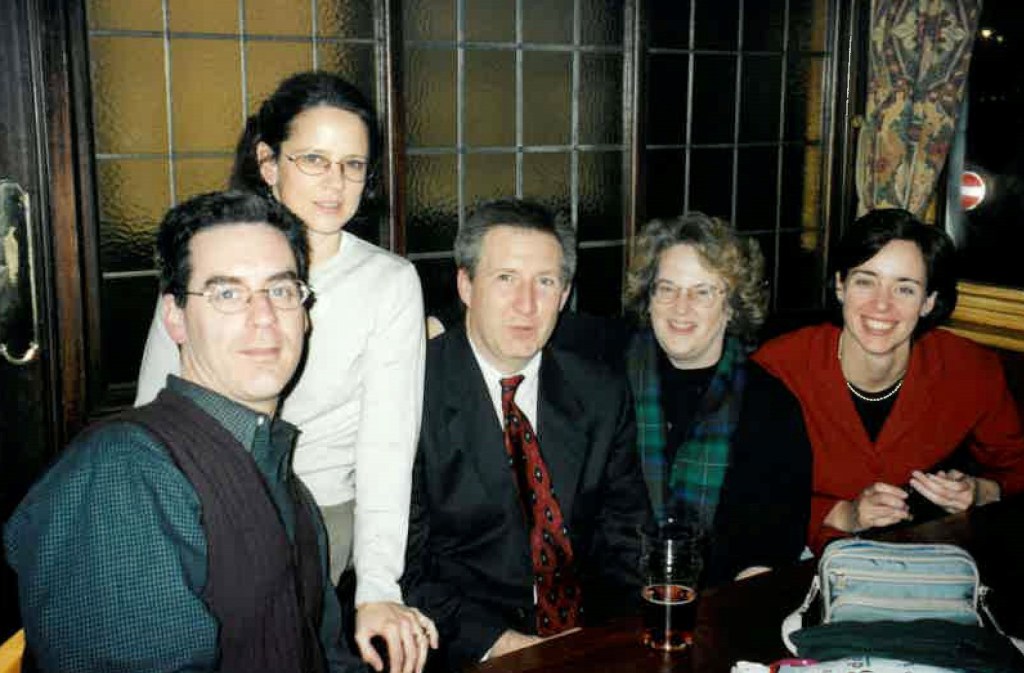
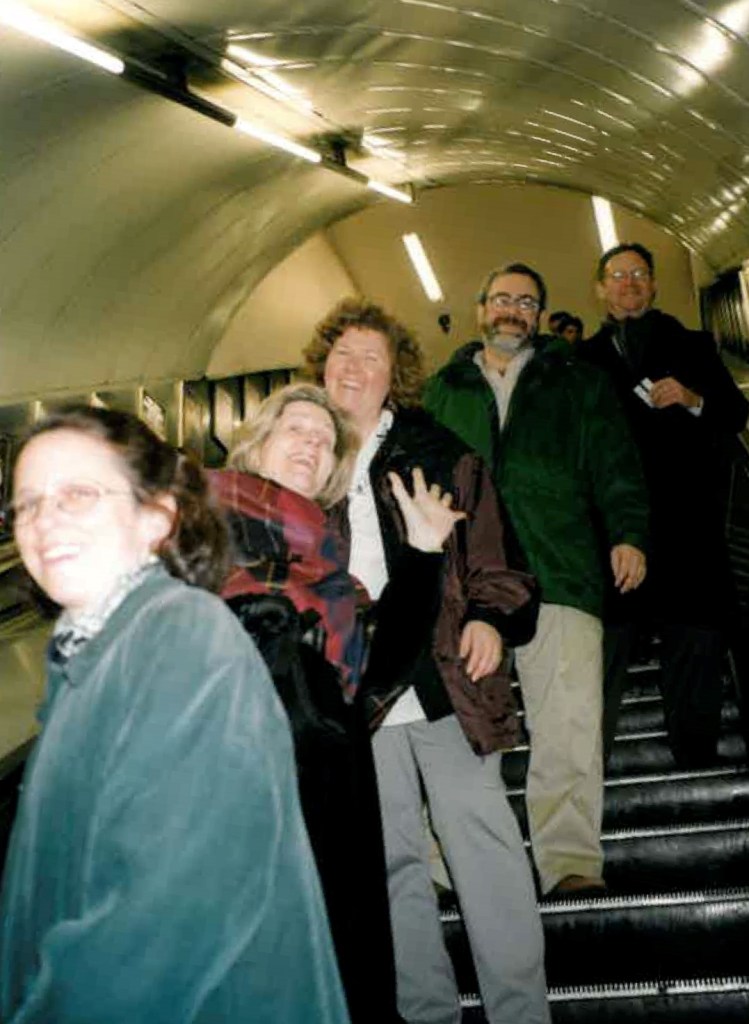
We are a smaller group now as those with children go back to their hotels to take care of meals and sitters. The rest of us head to a pub. After two pints in the smoky pub, we walk to Victoria station. Tube travel always takes longer than you expect, and we arrive about 45 minutes late for the Plowden’s party, which is already in full swing.

At the pub. Fellows: Kelly and Mary Ellen O’Connell, Matthew McKearn, Jody, Stacy Dean
On the Tube. Fellows: Mary Ellen O’Connell, Carolyn Galbreath, Jen Weiner, Jonathan Weiner, and Frank Galbreath

William and his wife, Veronica, live in south London off the Stockwell tube stop. It is a narrow townhouse with 3-1/2 levels filled with books. I ask Veronica where the bathroom is and she says there are two, one at the top of the stairs and one off the room where we stashed our coats. I chose the latter but, unless I am losing my mind, there is only a bathtub and linen closet in there, no toilet. Why she told me to use it, I have no idea. Sometimes I don’t understand the Brits.

William offers us drinks and I am soon talking with Elizabeth Mitchell again, who is there with her husband this time. I also meet the Atlantic Policy Program’s other Maine fellow—Tom Judge from Port Clyde—a 1996 fellow. So, the three of us from Maine stand in a circle and speculate about the Maine connection to the fellowship program. I mention George Mitchell, but Tom is convinced that is not it.

I meet lots of interesting people. One, a news reporter, has a Scottish accent that makes him sound like Sean Connery. Stacy questions him about the lack of coverage of the Scottish Parliament in the English papers to which he has no good answer.

I leave around 10:30 PM taking the tube at the Stockwell station, changing at Victoria, and back to Bayswater. I fall asleep almost immediately.

  • In today’s news: Blairs expecting a baby. Tony Blair and his wife Cherie are expecting a new baby—the first for a serving prime minister in more than 150 years. Mrs. Blair, 45, and her husband are said to be delighted at the news though it came as a “total shock.” The couple already has two sons, Euan, 15, and Nicky, 14, and a daughter, Kathryn, 11. The baby is due in May.

November 17-18, 1999 – The Wonderfully Arcane Rituals of State Opening of Parliament

It is spitting snow this morning as I walk along the Edinburgh streets in search of caffeine. I find an Internet café and sip a cup of coffee while I check my email.

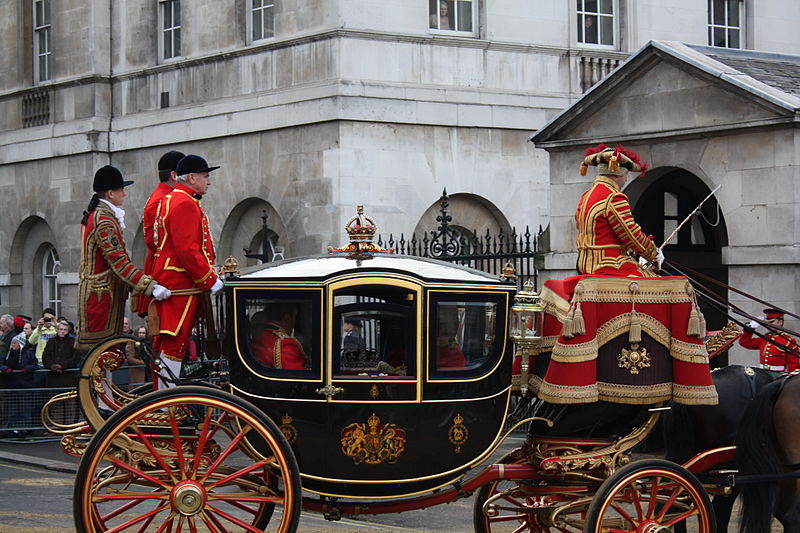
Back at the hotel, I watch a bit of the State Opening of Parliament on TV. Wistfully, I think that, had I been in London today, I could have seen the Queen escorted by the Household Cavalry ride through the London streets from Buckingham Palace to Westminster Palace. I watch as the Queen Alexandra State Coach exits the gate at Buckingham Palace. It carries take the Royal Regalia and the ceremonial Crown of State from St. James Street down the Mall to the Houses of Parliament. The Cinderella-style coach is the one that Lady Diana Spencer rode in to St. Paul’s Cathedral for her wedding.

Queen Alexandra’s State Coach, transporting the Royal Regalia
Photo: Wikimedia Commons

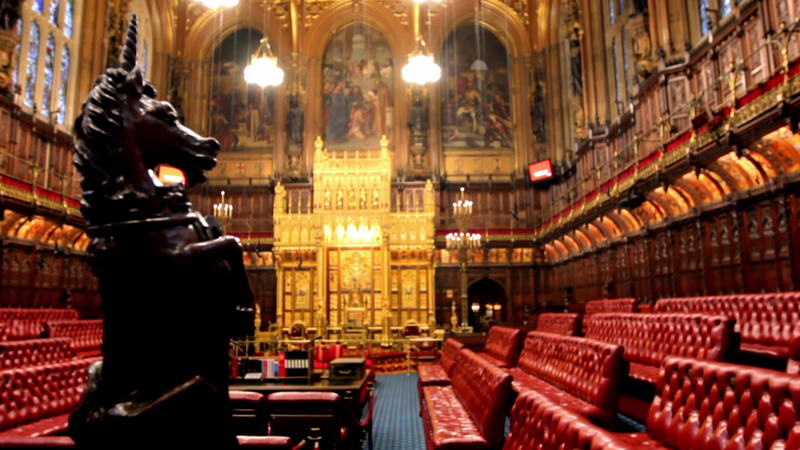
It is the last parliamentary session of this century and the first State Opening without the full complement of hereditary peers. The Yeomen of the Guard bring the Imperial State Crown, containing more than 3,000 diamonds, into the Palace. The Queen, when she arrives, will proceed first to the Robing Room to put on the glittering crown and the ermine-edged Robe of State. Then she will mount the golden dais in the House of Lords and read the speech written for her by her prime minister.

As I watch the ceremony unfold, I am thinking, “Soon, the Queen will be standing just below the very spot where I sat last week!

Golden throne in House of Lords
Photo: UK Parliament

Dean and I have meetings this morning at the Scottish Accounts Commission (SAC) and the Council of Scottish Local Authorities (COSLA). We leave our luggage at Waverley station and then eat lunch at an organic café that Dean and Barbara found over the weekend. When we arrive for our first appointment at SAC on George Street, Alex Taylor, who has not had lunch yet, takes us to a nearby pub. He eats and we join him for a pint, just to be friendly of course. He is extremely forthcoming and I enjoy talking with him. Our next appointment is with a Jon Harris—no relation―at COSLA. Everyone keeps saying how the Scottish Best Value system is so different than in England (the implication being that it is better). But I cannot seeing that it differs in any substantive way.

Haymarket station is right next door to COSLA and we catch a train for the four-minute ride to Waverley station, pick up our luggage, and board another train for the long journey back to Birmingham.

I love Scotland—I am surprised by how much I like it—maybe even more than Ireland. Its wild landscape, unique skies, and warm people will always be part of my heart.

On the train ride home, I sit next to two American women who talk loudly to each other while playing cards. They proclaim that East Coast Americans are rude and not as friendly as Midwesterners, like themselves (they are from Chicago). They have a point, but it is belied by their very loud and obnoxious pronunciation of it.

A man wanders up and down the aisle in an alcoholic haze. He stops and looks over the blonde women’s shoulders offering his advice on their card game. They pointedly ignore him. Where is their Midwestern friendliness now?

The continual announcements from John “buffet-car-in-the-rear-of-the-train” become increasingly annoying. Even his colleagues seem to think so as one cuts him off mid-sentence to welcome new passengers at Preston.

I make my way back to Birmingham. The next morning, Caroline cheekily asks me if I looked under any kilts! They had a guest in my room for two nights while I was gone, so I saved £60. That will pay for one night in London. I am keeping my things packed over the weekend while I am in London in case Tony gets any other lodgers.

  • In today’s news: Speaking at the first state opening of Parliament since the majority of hereditary peers was abolished, the Queen said Labour’s third legislative programme would seek to reform and modernize the UK.

She is talking about the UK’s performance measurement system that I am studying!

My Lords and Members of the House of Commons. This is my Government’s third programme. It aims to build on my Government’s programme of reform as they seek to modernize the country and its institutions to meet the challenges of the new Millennium. My Government’s aim is to promote fairness and enterprise, providing people with real opportunities to liberate their potential. They will focus on continued modernization of our economy, the promotion of enterprise, reform of the welfare system, protection of the public, and the development of a safe transport system. A bill will be brought forward to reform local government to make it more innovative and accountable. My government will introduce a Bill on Freedom of Information. It will give everyone the right of access to information held across the public sector for the first time. (underlining for emphasis is mine!)

Excerpt from the Queen’s speech, State Opening of Parliament, November 17, 1999

If Tony Blair wrote this speech, he is a terrible writer—passive voice, repetitive, boring words. He seems to be a better orator than speechwriter.

State Opening of Parliament – What a Performance!

The kidnapping of a government whip during a parliamentary ceremony headed by the Queen may sound like the plot of a Hollywood thriller. But due to arcane ritual behind the state opening of Parliament, the temporary detention of the vice chamberlain remains an integral part of the annual event.

Since Guy Fawkes’ attempt to blow up Parliament in 1605, the day has begun with a search of the building’s cellars. By the time the Queen’s procession travels the short distance from Buckingham Palace to Westminster, at around 11:00 GMT, security checks will be complete. The Queen’s crown makes the journey separately from the monarch—the two are reunited inside the House of Lords.

As the Queen arrives, the vice chamberlain’s kidnapping ordeal begins. This year, Graham Allen is the victim of palace officials who hold him to guarantee safe return of Her Majesty. Shortly after, the members of the House of Commons are told they are requested to attend the Lords, where the Queen’s speech is read.

Once they have traipsed from one side to the other of Parliament, the pomp and ceremony begins in earnest. Traditions surrounding the Queen’s Speech can be traced back to 1536, but its modern form dates from the opening of the present Palace of Westminster in 1852. Last year the government gave the process a tweak, scrapping some of the more elaborate and time-consuming aspects of the performance. But the bulk of the ceremony escaped the modernisers. At their own insistence, the great officers of state—the Lord Great Chamberlain and the Earl Marshall—continue to walk backwards to show respect to the Queen as they lead her procession into the House of Lords.

MPs are still summonsed to the Lords by the Gentlemen Usher of the Black Rod who gives the Commons’ door three whacks with a black ebony stick to request their presence. And year after year, Black Rod then has to endure the indignity of having the door slammed in his face before the honourable members relent and decide they will attend the ceremony after all.

A few rebels have in the past remained in the Commons throughout, but the House of Lords is always full for the event, although this year 666 fewer hereditary peers will turn up as they lost their right to do so in a bill first announced in last year’s Queen’s speech.

The kidnapped vice chamberlain misses it all, as he is only freed after the monarch has made a safe return to Buckingham Palace.

BBC News Online, accessed November 18, 1999

November 16, 1999 – In Which I Present my Research Findings and Say Farewell to Lovely Edinburgh

People either love performance measurement or they hate it and my research topic generates a lot of discussion among the fellows. Fellow Kathy Taylor, who clearly is in the skeptical camp, says performance measurement is probably good in my hands, but not everyone is as reasonable an administrator as I am.

A law and public administration professor, Peter Falconer, is here from Glasgow Calendonian University to comment on my presentation, He is great! He volunteers to write up his comments and send them to me. I think that will be a tremendous help in framing my paper.

Dean and I meet with the strategic planning person for Edinburgh County Council and then I am free for one last afternoon in Edinburgh. I move out of my chic, BC-funded hotel, to the Travel Inn in a much less grand part of the city; located behind Edinburgh Castle. I dump my stuff and head to the Writers’ Museum, which closes at 5 PM, so I only have about an hour.

The Writers’ Museum celebrates the lives of three giants of Scottish Literature―Robert Burns, Sir Walter Scott and Robert Louis Stevenson. Although their lives stretched over a century and a half, there is much more that connects these three outstanding writers. Their sense of being Scottish is fundamental to their work and each, in turn, created a lasting awareness of Scotland, inspiring writers and lovers of literature the world over.

Edinburgh Writers’ Museum website

The museum is located just off the Royal Mile through a short passageway, called the Lady Stair’s Close, which brings me to an open courtyard in front of the museum. The courtyard’s flagstones are engraved with quotes from famous Scottish authors. This one catches my eye:

Sing it aince for pleisure / Sing it twice for joy

J.K.Annand

Despite the Robert Burns-sounding dialect, I look up the author to learn he is a modern children’s poet.

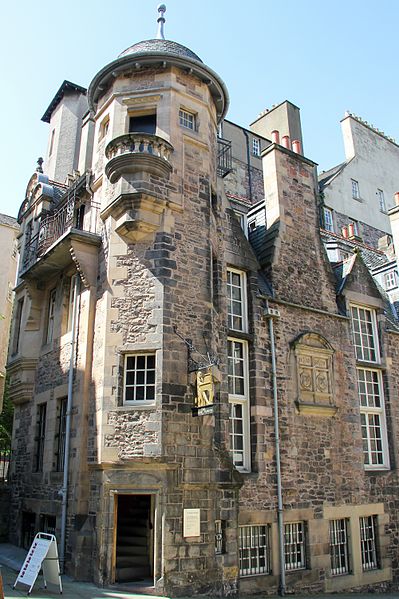
The three-story museum, a graystone manor housebrandishing lots of turrets, chimneys, and dormershas one prominent round turret with a sweet little Romeo and Juliet balcony.

Writers’ Museum, Edinburgh
Photo: Wikimedia Commons

The museum is split into three floorsone for each authorreached by a narrow, stone spiral staircase. It contains manuscripts and personal items. There is a mini scale replica of the Scott Monument, Burns’ writing desk, and Sir Walter Scott’s slippers.

I bump into Deacon Brodie again, in the form of a cabinet that belonged to Robert Louis Stevenson, which William Brodie, a joiner, church deacon, and respected member of the town council, built. His secret cadaver-thief-turned-murderer persona is said to have inspired Jekyll and Hyde’s double life.

I leave the museum and walk along the Royal Mile. It is after 5:00 PM and while most of the shops are closed, many of the upscale restaurants are not yet open. I find a casual Tex-Mex place off Princes Street from where I can hear my favorite bagpiper playing under the floodlit monuments.

As I spend my last hours in the lovely city of Edinburgh, another quote from the Writers’ Museum’s flagstones seems appropriate.

There are no stars so lovely as Edinburgh street lamps.

Robert Louis Stevenson

November 15, 1999 – A Tour of the New Scottish Parliament

The fellows gather for our first joint meeting since September in London. Our first speaker is Owen Dudley Edwards, a writer and historian based at the University of Edinburgh. He has written several books on Arthur Conan Doyle, the author of the Sherlock Holmes mysteries, and some histories of the Irish troubles. He weaves a tale of Scottish history that is thoroughly relevant today.

Since the BC’s Edinburgh office is located nearby on a square named Bruntsfield Crescent, Edwards tells us that, in the 19th century, this square contained a unique type of soil that was not found anywhere else in Edinburgh. A young Conan Doyle was a medical student at the school on the other side of Brunstfield Green and observed his professor saying to a student that the student must have walked across the green. Surprised, the young scholar wanted to know how the professor knew that. It was the soil clinging to the walker’s shoes, of course. A few years later, Doyle’s detective Sherlock Holmes famously says to an astonished Dr. Watson on their first meeting, “You’ve recently arrived from Afghanistan, I presume.”

I am constantly amazed at how much of what I’ve read in literature or history is right here at my feet as I journey around this country.

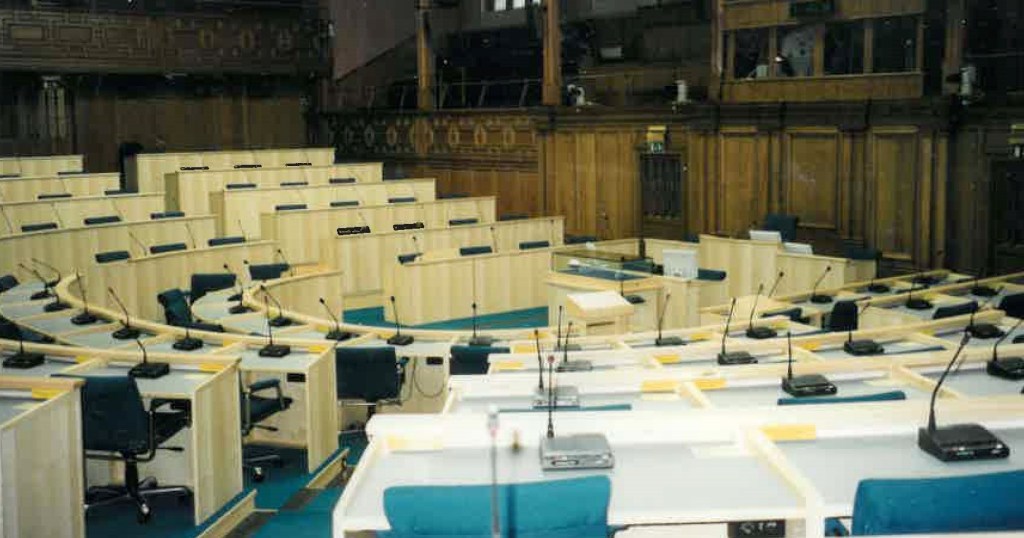
The tour of the new Scottish Parliament is very interesting and exciting. It is a whole new system of government and one of which the Scots are very proud. They are trying to correct all the things that they think are wrong with the British system. I didn’t realize until now how deep the feeling against the English Government runs and how strong the sentiment is that the Scots should govern themselves. When the current Parliament was opened, the Speaker declared, “The Scottish Parliament adjourned in 1702, today it is reconvened” (not that it was newly opened, but that it was re-opening—the small matter of the intervening 300 years, irrelevant). We learn very quickly that Members of Scottish Parliament are not MPs rather MSPs.

Scottish Parliament

The current Parliament is temporarily located in quarters belonging to the church while their new, £180 million home further down the Royal Mile near Holyrood is being built. There is a little gift shop in the Parliament building, and we all buy souvenir mugs and pencils.

Later, reading my back issues of Majesty magazine, I come across an article on the Queen’s opening of Scottish Parliament. There is a big picture of the parliament assembly room that we toured today. During the ceremony, the article says, a congregation sang a hymn in which a kilted Sean Connery lustily sang along threatening to steal the show.

Scottish Parliament

Our group has dinner together. Most of the spouses and families who were here for the weekend have gone home. We eat at a place called “Mussel Inn.” It is a nice little seafood place, heavy on mussels and scallops. Andy and I banter about the correct way to pronounce “scallops.” He finally admits that his Bostonian mother pronounces it the way I do. The traditional New England pronunciation is “skawl-up“, rhyming with “trollop.” I have a Caesar salad and prawn cocktail.

  • In today’s news: George Mitchell has been in the news a lot this week. The Irish peace settlement seems to be falling into place. There were terse announcements from both sides of the talks indicating that a compromise had been reached. The Ulster Unionists are willing to accept a vague statement from Sinn Fein about possible future disarmament. Although hailed as courageous by the press and politicians, it looks like David Timbley, Head of the Unionists, will have a battle on his hands to unite his “no guns, no government” party behind the latest proposal. However, it seems to be the last chance for the peace process to succeed.

November 14, 1999 – Exploring Edinburgh’s Old and New Towns

The Inverness sky this morning is pink with light-gray mackerel clouds unlike anything I have seen before. It is pink, not just where the sun peaks through the clouds, but all over. As the sky lightens, the pink fades into daylight yellow and I realize it hadn’t been quite daylight; the pink sky part of the brimming dawn.

I arrive early at the train station and settle in for my 3½-hour ride to Edinburgh. The ride passes uneventfully until, just outside of Edinburgh when there is an announcement, which of course I can’t understand, followed by the train coming to a complete stop. Suddenly we are going backwards at a fairly high rate of speed. I don’t know why we are going backwards away from Edinburgh rather than toward it. However the British Rail employee assures us that we will be at Waverley Station within 15 minutes, and, indeed, just as he says this with a glance at his watch, we pull into Haymarket and then, shortly thereafter, into Waverley. I have no idea what just happened.

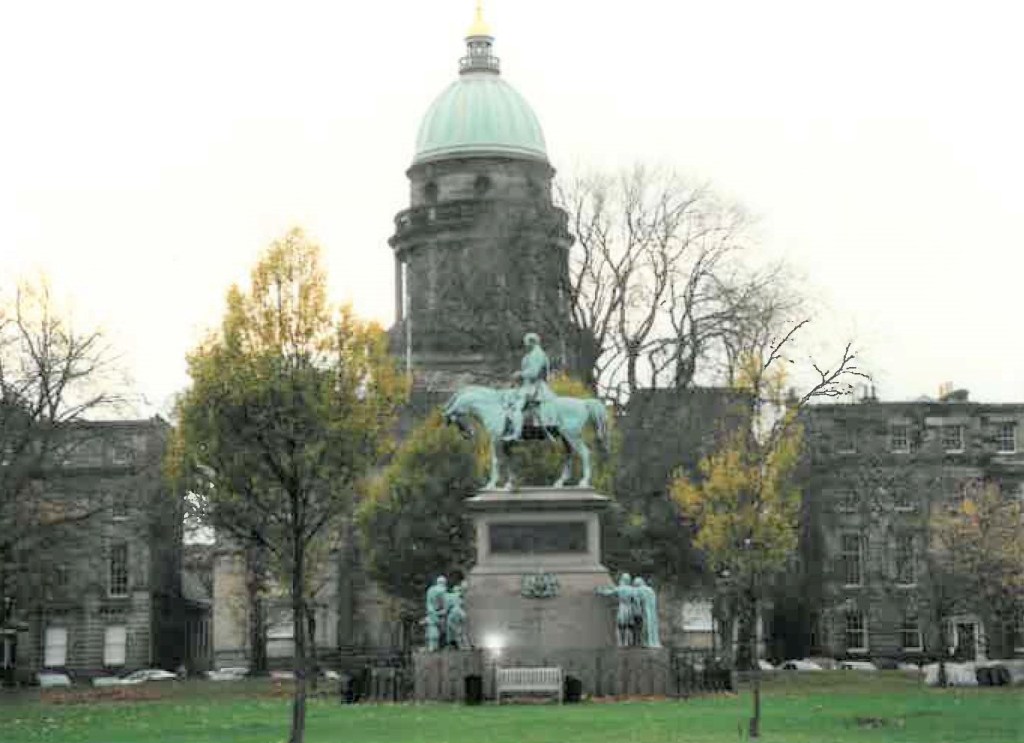
I take a taxi to the Roxburghe Hotel where the BC has arranged for the fellows to stay. It is in lovely leafy Charlotte Square in Edinburgh’s New Town. Despite its name, New Town isn’t really all that new; designed and built in the early 1800s with lots of lovely Georgian architecture.

The square’s center is marked by an equestrian statue of Prince Albert. The former St. George’s Church―now the National Records Office―dominates the west side of the square. No. 6 Charlotte Square is the official residence of the secretary of state for Scotland. The “Georgian House”―a period-furnished historic house owned by the National Trust for Scotland―is at No. 7. Our hotel is opposite at No. 38.

Charlotte Square, New Town, Edinburgh

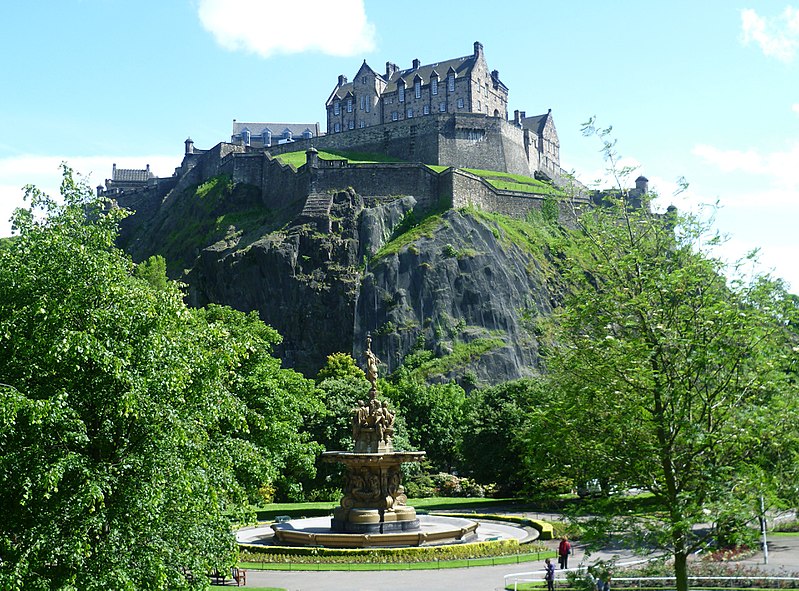
I walk through the tranquil Princes Park; a respite from the bustle of the busy Princes Street above. There is a huge cast-iron fountain in the center of the park—Ross Fountain—brought back from France’s Great Exhibition of 1862. I climb the long paved path up the steep slope to the Royal Mile.

Ross Fountain, Princes Park, with Edinburgh Castle in background
Photo: Wikimedia Commons

The Camera Obscura and Outlook Tower is at the top of Royal Mile. Victorian town planners installed the “camera” in 1853. Using technology with mirrors similar to a periscope, moving images of streets outside are reflected onto a white table. These original Victorian moving pictures caused a sensation at the time. Although dull compared to today’s videos and camcorders, back then it was the closest thing the Victorians had ever seen to live moving images.

On the round white table, the attendant points out the Royal Academy of Art building on the Edinburgh skyline. He says that Sean Connery, in his youthful days as a milkman in Edinburgh, used to pose as a nude model for the artists at the art academy to earn extra money. It is amusing to think of a load of nude Sean Connery portraits stashed in a basement somewhere in the art building waiting to be discovered.

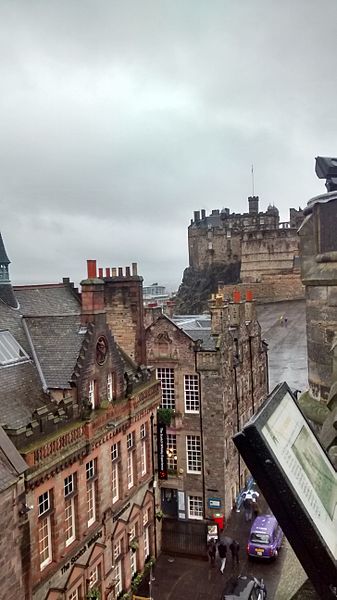
From the balcony of the viewing tower, I have tremendous views of Edinburgh.

View of Edinburgh Castle from the roof of the Camera Obscura
Photo: Wikimedia Commons

I shop for wool tartan scarfs. I buy one for myself in a lovely Isle of Skye pattern. It’s a new tartan—instigated and registered by Mrs. Rosemary Nicolson in 1992, an Australian of Skye descent. The tartan’s colors—green, black, and purple—depict those of the watery island. I also purchase a scarf for my boss at home—a red, black, yellow, and green weave newly commissioned to mark the millennium—called the Millennium Tartan.

Isle of Skye tartan

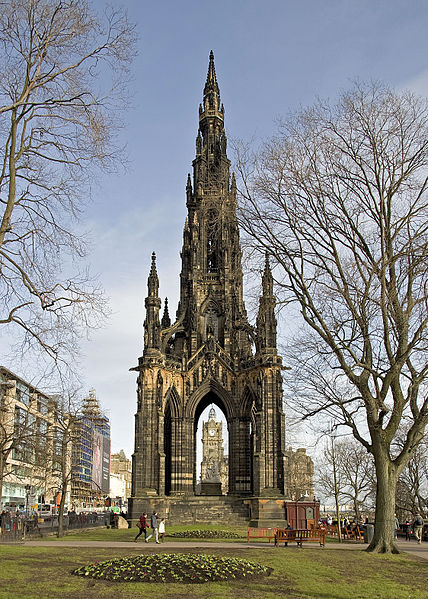
I admire the monuments on Princes Street—the massive Scott Memorial, commemorating Sir Walter Scott, and the David Livingstone statue.

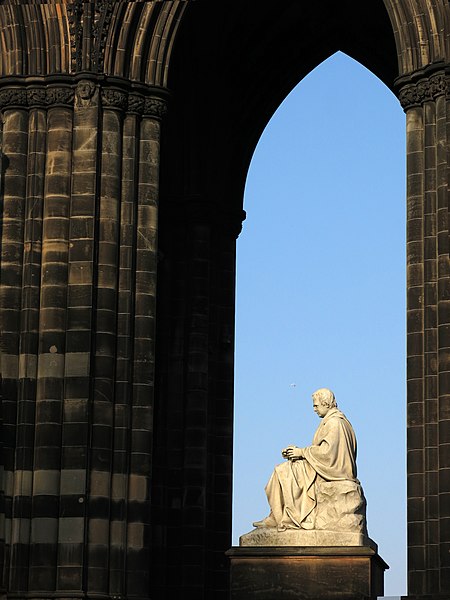
The 200-foot-tall Scott monument looms large over the city skyline. By comparison, the Paul Bunyan statue in Bangor ME stands just 31 feet high. It is blackish in color and ornately decorated with 64 smaller statues sculpted by different Scottish sculptors of Scott’s literary characters including Rob Roy, Rebecca from Ivanhoe, and Bonnie Prince Charlie from Waverley, the novel for which Waverley train station is named. In the center of the monument under the dark Gothic spires is a white marble statue of Scott himself.

Sir Walter Scott Monument, Edinburgh
Photo: Wikimedia Commons
Sir Walter Scott Monument
Photo: Wikimedia Commons

A few yards from Scott is that of David Livingstone, the Scottish doctor/missionary/explorer who worked tirelessly in Africa and who was located there by Henry Stanley in a famous encounter (Dr. Livingstone, I presume?).

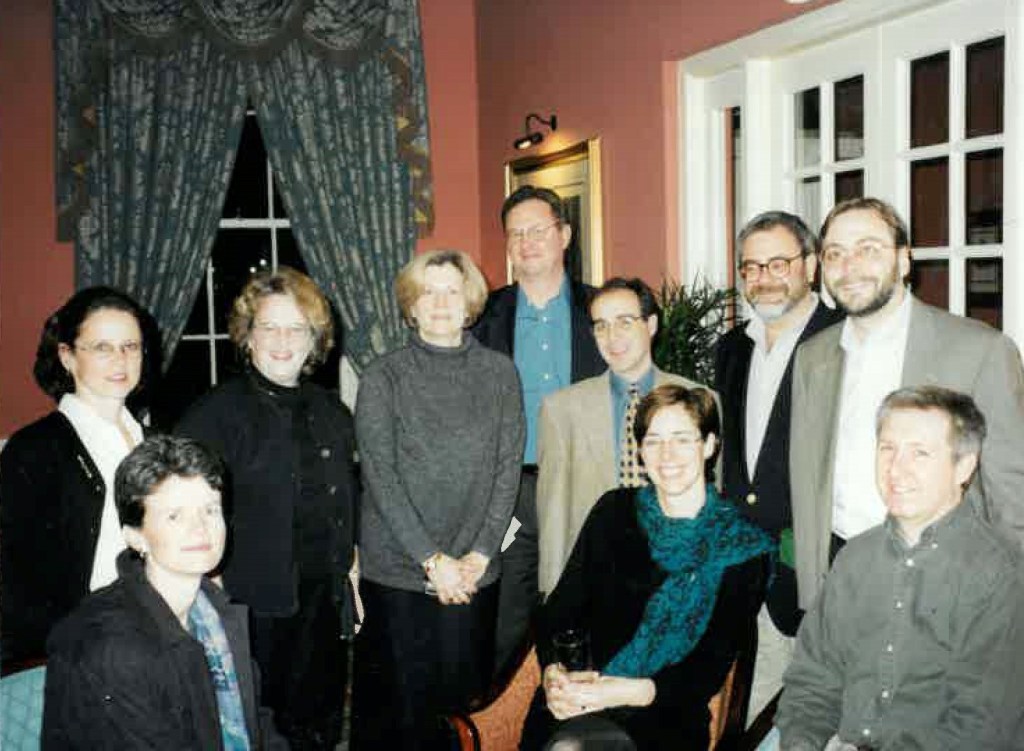
I bump into Carolyn and Frank in the hotel and join them for a drink. Later all the fellows meet in the lobby and we head out together to dinner.

Atlantic Fellows, Front Row: Kathy Taylor, Stacy Dean, and Matthew McKearn Back Row: Mary Ellen O’Connell, Jody Harris, Carolyn Galbreath, Frank Manies, Andy Bindman, Jonathan Weiner, and Dean Kaplan

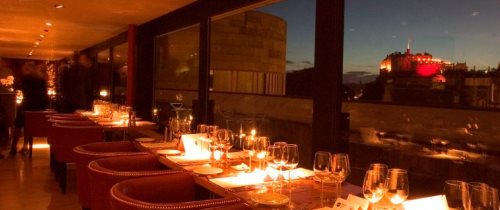
The BC treats us to dinner at the Tower Restaurant on the rooftop of the Museum of Scotland where there are marvelous night views of the floodlit castle on the hill. If you visit Edinburgh, I recommend this restaurant for the views alone. But the food is excellent too. I have the Aberdeen Beef and probably a bit too much red wine.

Tower Restaurant with View of Edinburgh Castle
Photo: This is Edinburgh

November 13, 1999 – Inverness, Loch Ness, and the Stunning Highlands

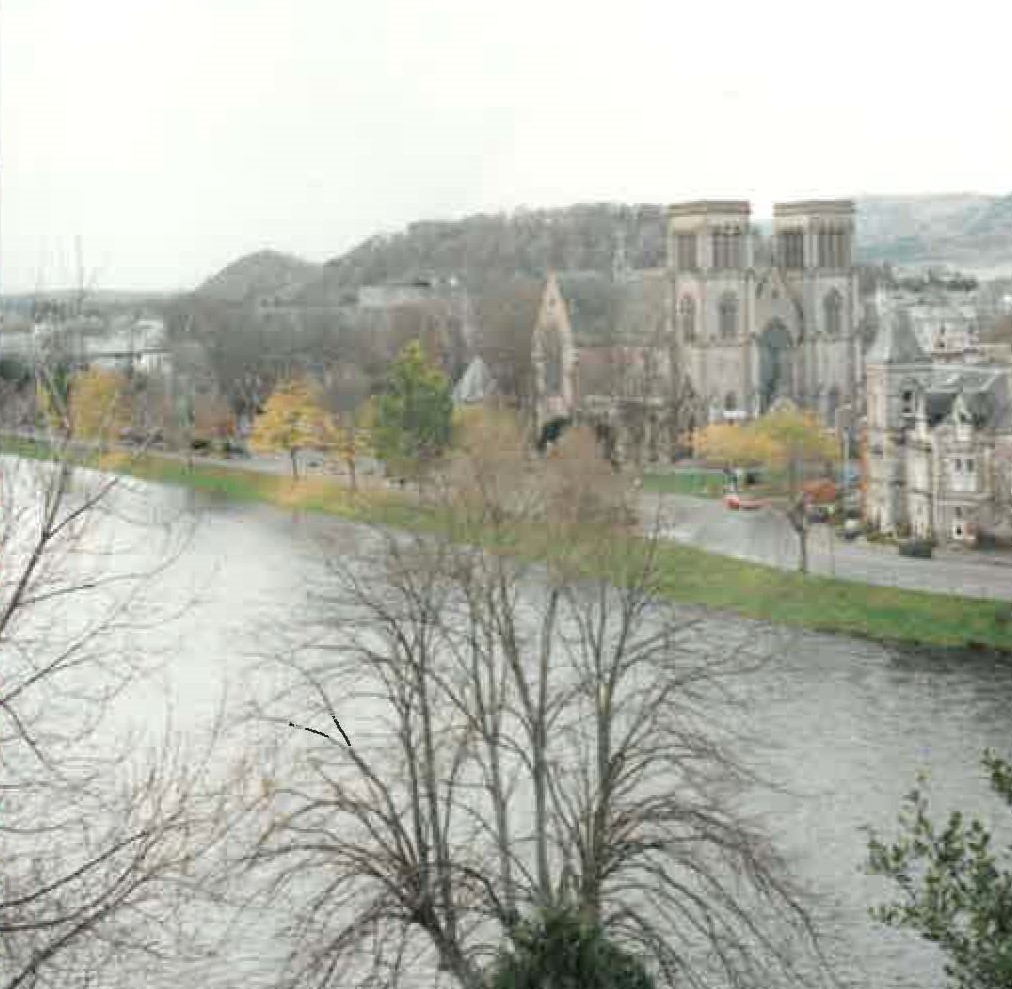
Breakfast at the B&B consists of porridge and toast. And the coffee is great. I drink the whole small pot. My tour is not until 10:30 AM, so I have time to kill. I walk down to the River Ness, cross over the Ness Bridge, and up to Inverness Castle.

River Ness, Inverness

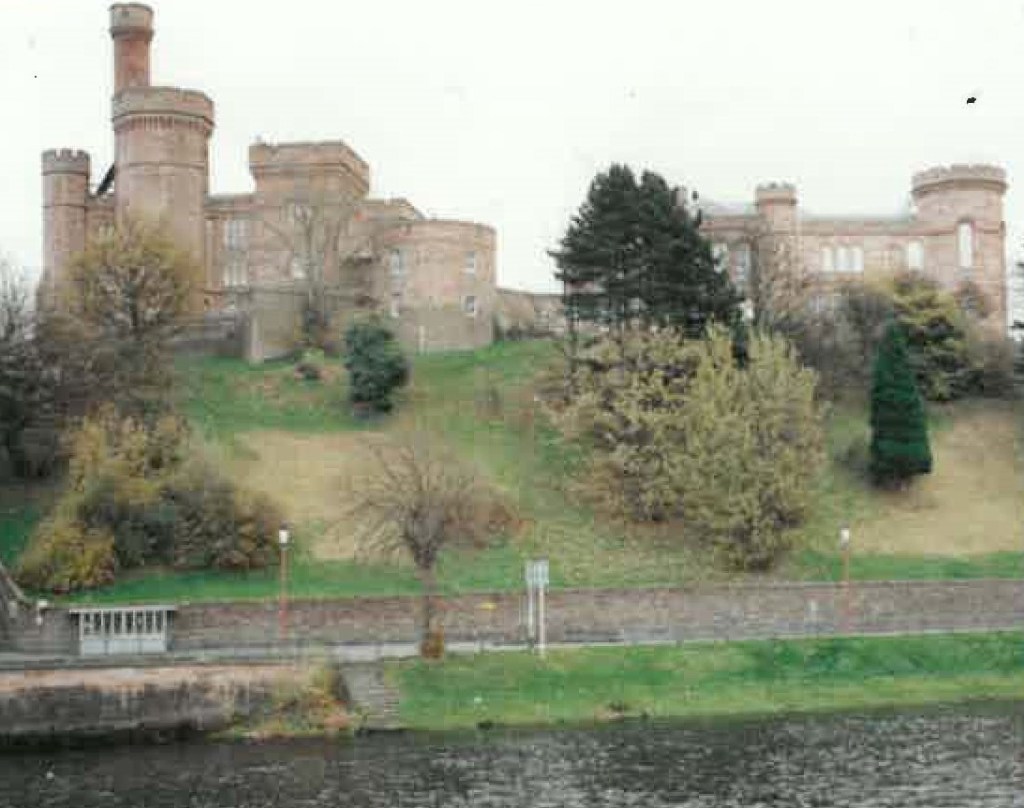
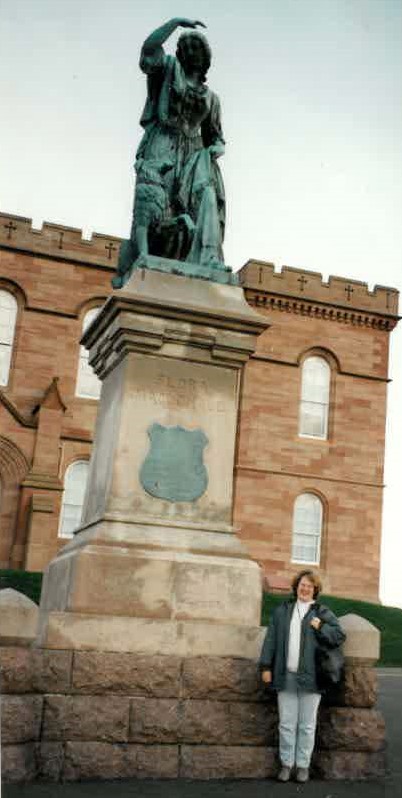
Made from red sandstone, Inverness Castle has a pink hue. Today’s castle is not original; Scottish soldiers blew that up in 1742 so the English couldn’t use it. It is a pretty, Victorian-style castle that now houses the Sheriff’s Court, but is not open to the public. In front is a statue of the intrepid Flora MacDonald—Scotland’s heroine who helped rescue the fleeing Bonnie Prince Charlie by dressing him in women’s clothing and pretending he was her maid.

Inverness Castle
Inverness’ heroine Flora MacDonald

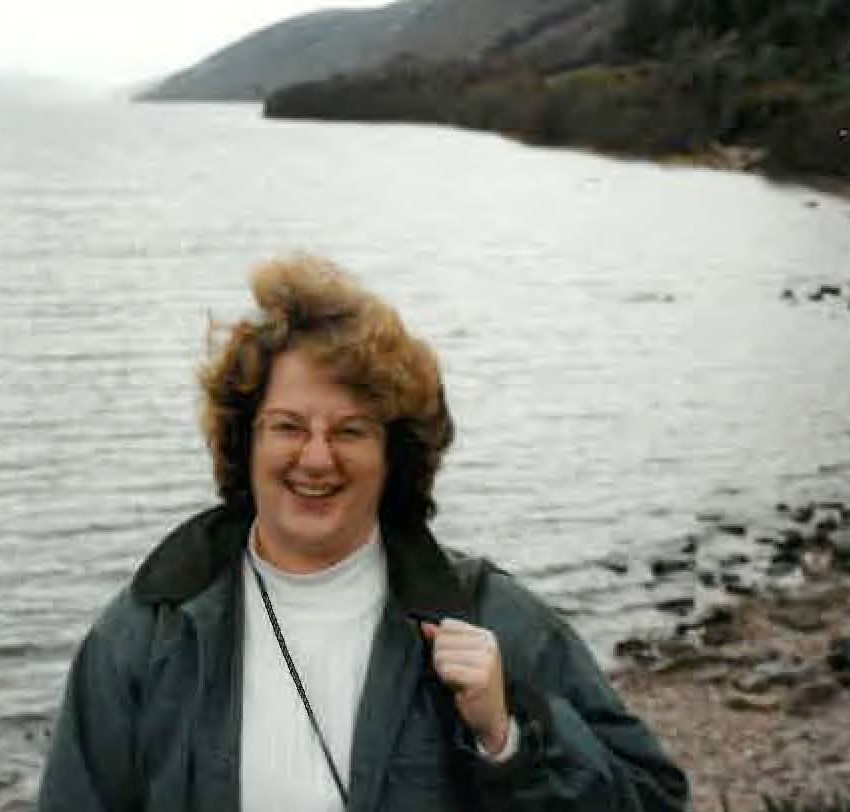
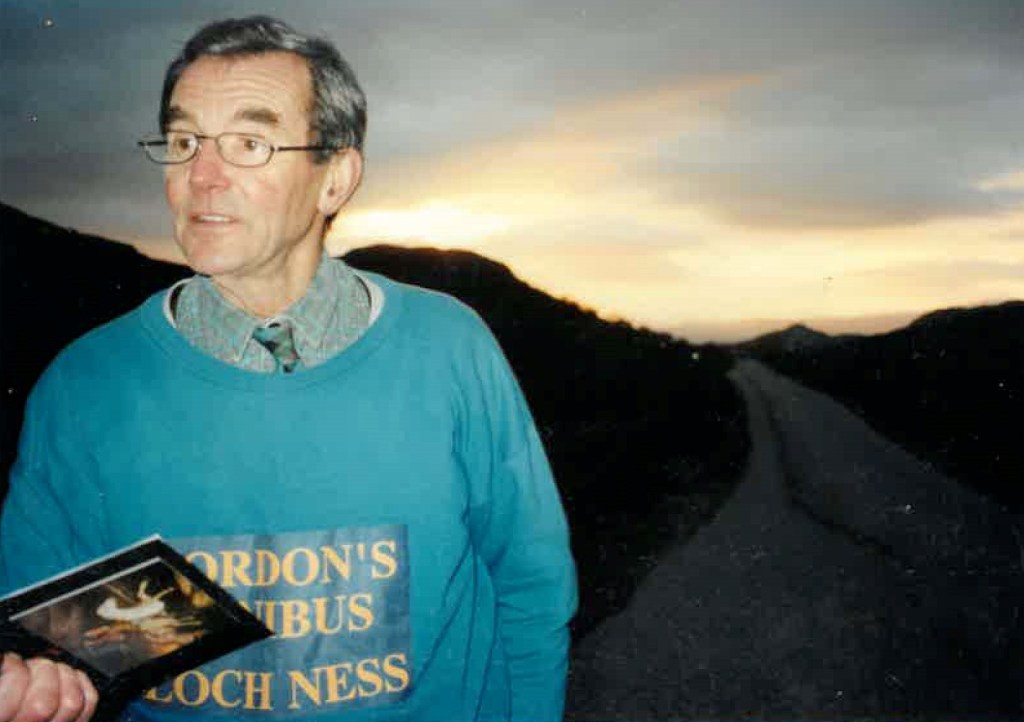
At 10:30, I board the minibus with Gordon, our tour guide, and 12 other loud Americans (American tourists always seem to be loud—and demanding) for a tour around Loch Ness. Gordon―a poet, biologist, and historian―takes us first to the north shore of Loch Ness with a splendid view of the staggering 23-mile-long and 750-feet-deep lake. We walk along the rocky beach made of small, smooth, pink stones.

Loch Ness

In the distance, at the other end of the beach, we can see a black object with a long, thin neck sticking out of the water. We know it is only a piece of driftwood, still we eagerly take pictures. Gordon tells us the lake is too cold to support reptiles and so impossible for a Plesiosauria, which Nessie is supposed to be, to live in it.

No one really believes in the Loch Ness monster since the man who took the only reliable photograph in the 1930s made a deathbed confession last year that it was a fake. There is no other proof of any “beastie,” but the tourist trade still thrives on its legend.

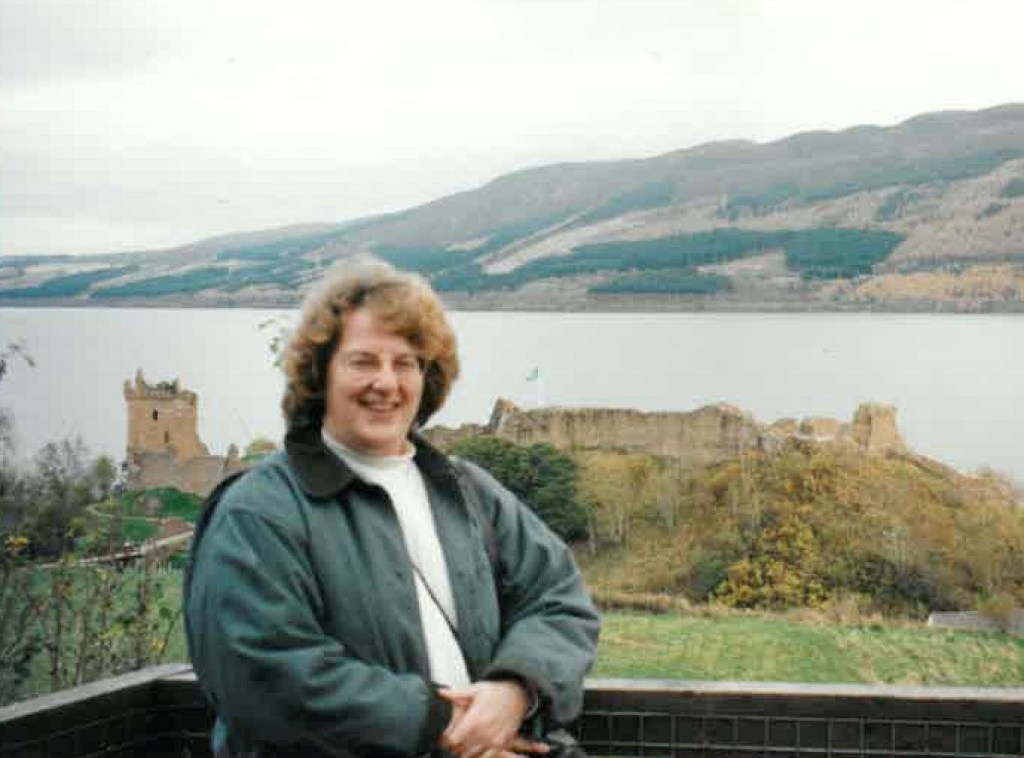
We stop to see the ruins of the 15th century Urquhart Castle—once one of Scotland’s largest castles―before the British blew it up in 1692. From its perch on the top of a high sheer cliff, it still holds a commanding presence on the headland of Loch Ness. It is one of the favorite Nessie spotting sites; supposedly the most tourist sightings of the prehistoric lake monster have been made here.

Urquhardt Castle, Loch Ness

It is a particularly beautiful spot.

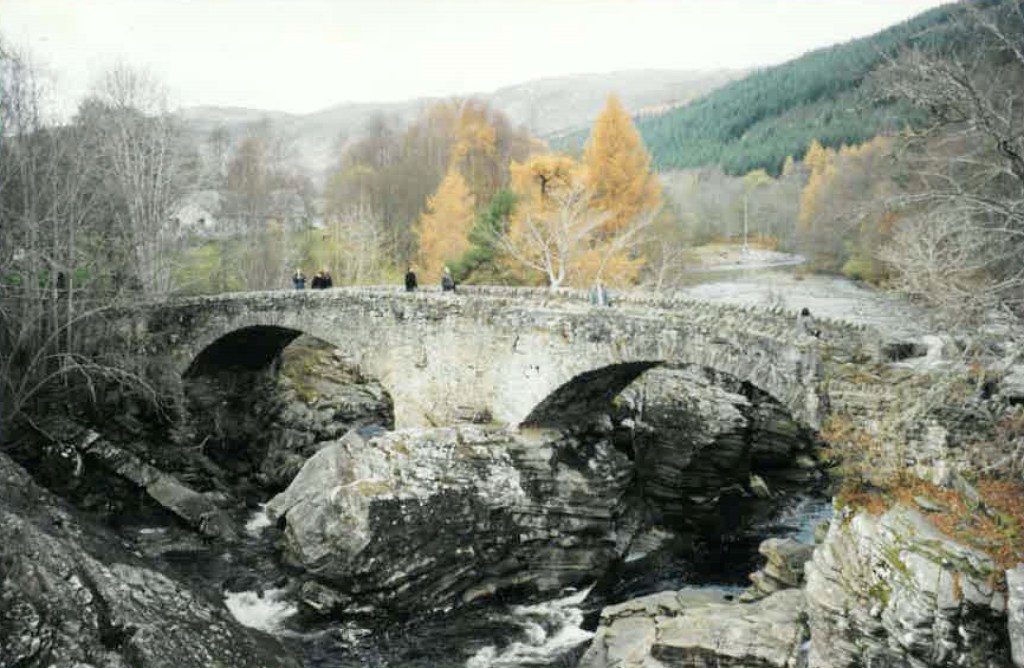
We travel on to Invermoriston where we can see the historic, vaulted, stone Telford Bridge. It is a pretty view of rippling water and autumn-gold, leafy trees.

Telford Bridge, Invermoriston

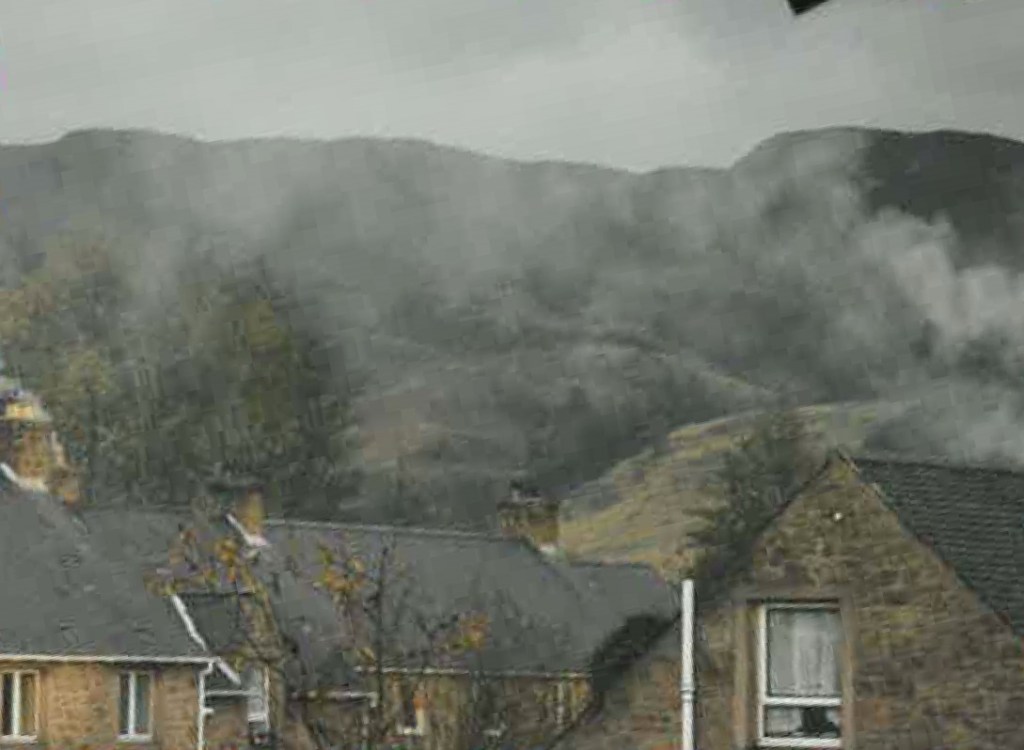
Next we drive on to Fort Augustus at the southern tip of Loch Ness―a small village where the air is redolent with pungent, smoky peat fires.

Fort Augustus

At lunch in Fort Augustus at in a little place called Scot’s Kitchen, one of the Americans turns up her nose at the fish & chips special. She doesn’t like them and can’t understand why any self-respecting British person would either. I would love to order them in front of her, but I am not that hungry. I get the tuna melt.

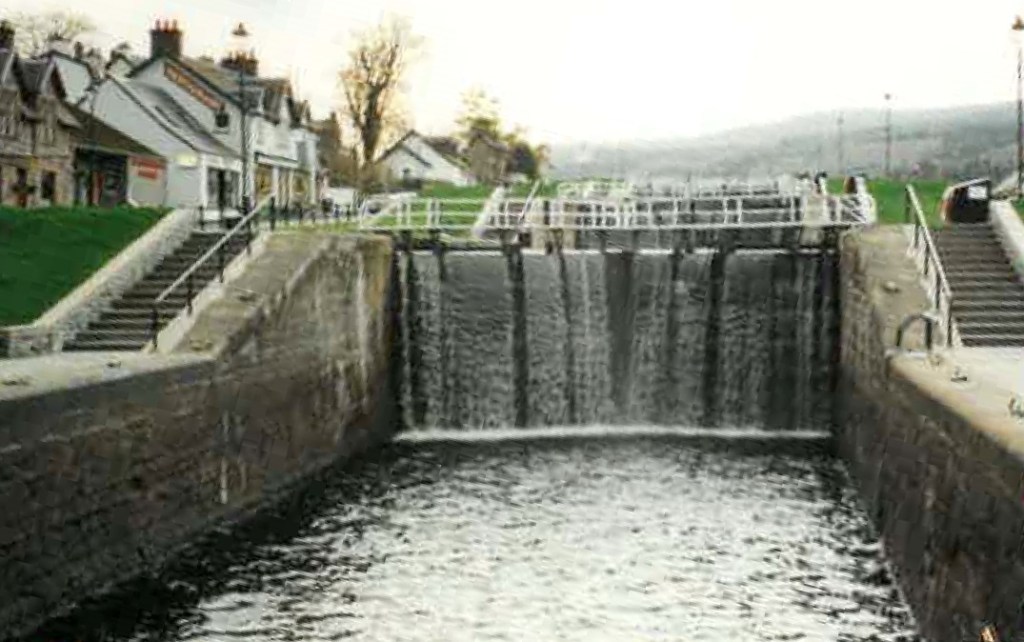
After lunch, I walk with my fussy lunch companions to see the Caledonian Locks; a Victorian engineering marvel. Fort Augusta connects three others lakes―Loch Oich, Loch Lochy, and Loch Linnhe―to Loch Ness via the Caledonian Canal. The locks at Fort Augustus raise and lower the water level to let ships pass from Loch Ness to the other lakes. Thomas Telford, who designed the Telford Bridge at Invermoriston, engineered the 60-mile canal and lock system in the early 1800s that features 29 locks in all with four aqueducts and 10 bridges.

Caledonian Locks, Fort Augustus

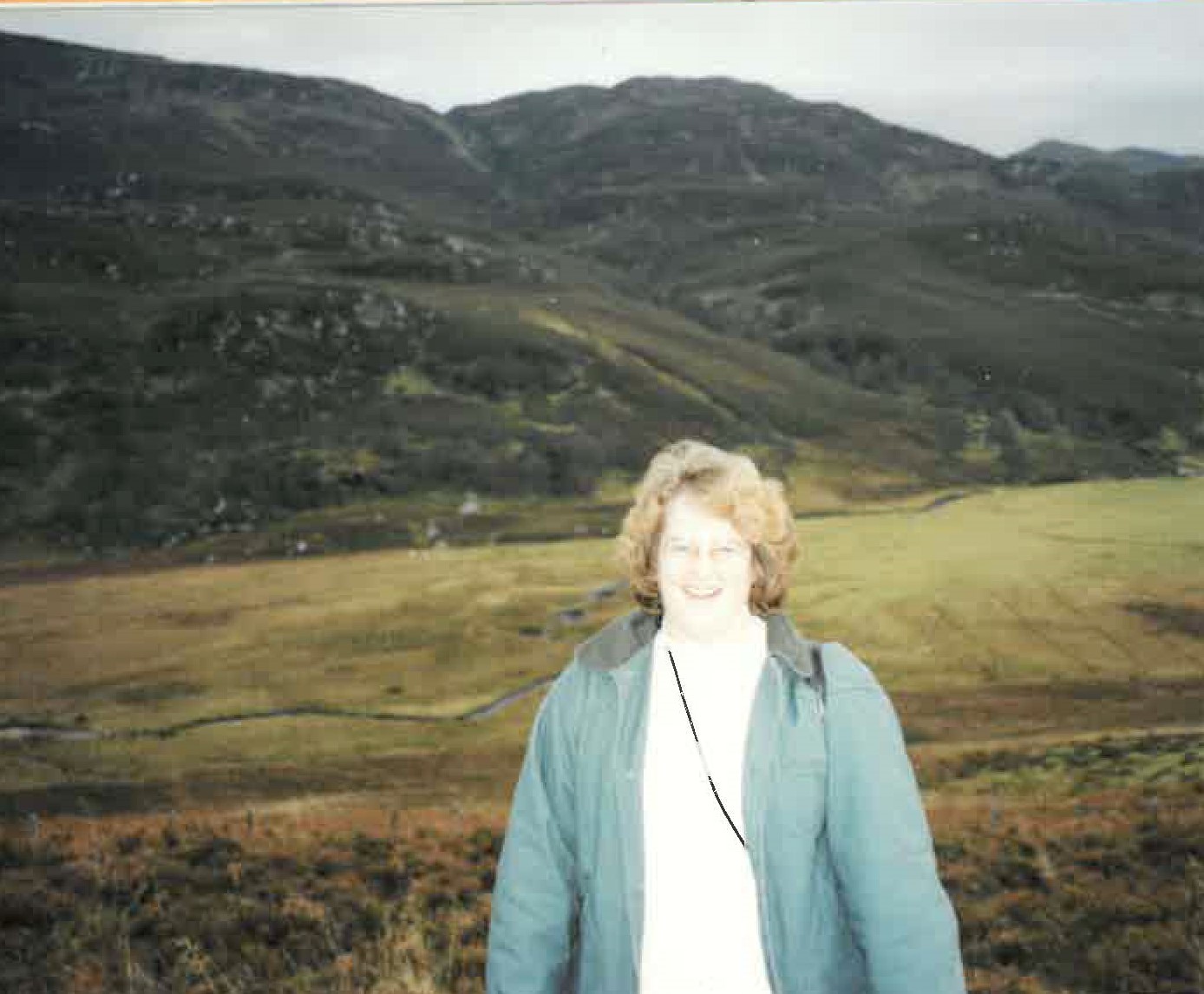
Back in the minivan, we turn and head north along the eastern shore of Loch Ness. We pass some of the most beautiful scenery I’ve ever seen. The Highland mountains are covered with heather. Although it is not in bloom, it is still beautiful. We stop to admire the view and Gordon tells us we must romp in the heather—a very Scottish thing to do. Although I wouldn’t call it romping, I do walk up the hillside.

Beautiful Highlands

All along the drive we see wildlife—pheasants and Scotland’s red deer.

As we drive home, the sun is setting behind the mountains at our backs. Gordon says this is what the Scottish Highlands look like at their best. He stops in the middle of the road and we all pile out to watch the sunset. I will never forget how beautiful it is. As the sun goes down and the mountains dissolve into inky twilight, Gordon reads us the Robert Burns’ poem, Tam O’ Shanter:

Gordon reading us Tam O’Shanter

Tam O’Shanter is an old Scottish legend that Robert Burns turned into a narrative poem. In the tale, after a long day at market Tam (Tom) stays drinking until near the witching hour (the hour between night and day) against his wife, Kate’s, warnings. As he rides his mare, Meg/Maggie, home, his course takes him past the haunted Alloway Kirk (church). Through the church windows, he sees witches dancing and then has to flee for his life as they give chase. He makes for the brig (bridge) over the River Doon, knowing that the fiendish creatures cannot cross running water. Despite the horse being a fast one, by the time Tam reaches the middle of the arch of the bridge, the “pursuing, vengeful hags” are so close at his heels, that one of them actually springs to seize him but only manages to grab the horse’s tail. Poor Meg’s tail never re-grew and her tail-less condition serves as a reminder to the local farmers not to stay out too late drinking.

Myths and Legends website

Here’s an excerpt from Gordon’s reading of Tam O’Shanter:

Ah, Tam! ah, Tam! thou’ll get thy fairin! 

In hell they’ll roast thee like a herrin! 

In vain thy Kate awaits thy comin! 

Kate soon will be a woefu’ woman! 

Now, do thy speedy utmost, Meg, 

And win the key-stane of the brig: 

There at them thou thy tail may toss, 

A running stream they dare na cross. 

But ere the key-stane she could make, 

The fient a tail she had to shake! 

For Nannie far before the rest, 

Hard upon noble Maggie prest, 

And flew at Tam wi’ furious ettle; 

But little wist she Maggie’s mettle— 

Ae spring brought aff her master hale 

But left behind her ain grey tail: 

The carlin claught her by the rump, 

And left poor Maggie scarce a stump. 

         Now, wha this tale o’ truth shall read, 

Ilk man and mother’s son, take heed, 

Whene’er to drink you are inclin’d, 

Or cutty-sarks run in your mind, 

Think, ye may buy the joys o’er dear, 

Remember Tam o’ Shanter’s mear. 

Robert Burns, Tam O’Shanter

As we make our way home, Gordon points out the kind of bridge that Tom would have fled across as he narrowly escaped the witches. He also points out the exact bridge that a fleeing Bonnie Prince Charlie used as he made his way, defeated, from the battlefield at Culloden. As we approach Inverness, the city’s lights twinkle all along both sides of the river.

Inverness Terror Tour

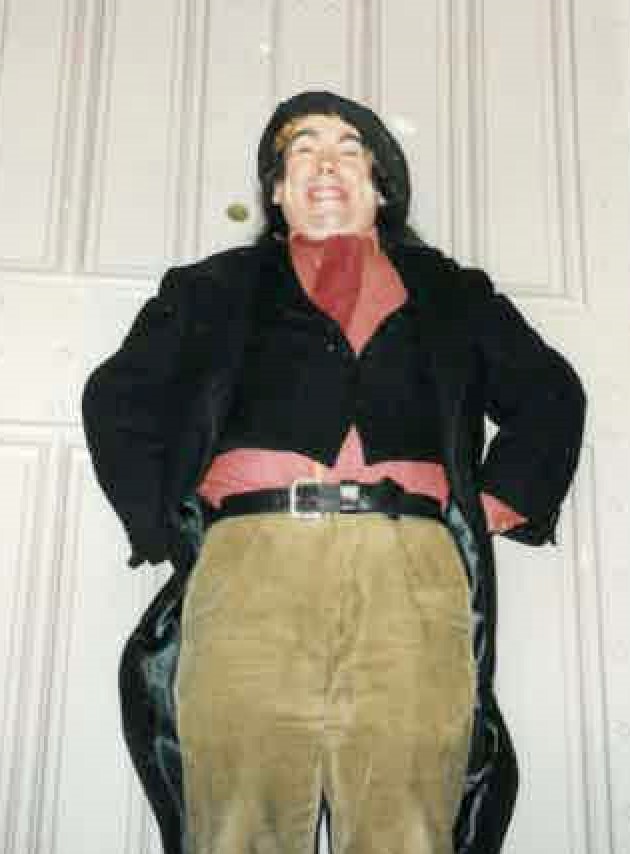
I go on a walking “Terror Tour” with tales of ghosts, ghouls, and torture. A funny little man with long hair dressed in a black frock coat and tattered top hat carrying a walking stick—in the persona of the ghost of Deacon Brodie—guides us through the streets around the castle.

The Ghost of Deacon Brodie

Deacon Brodie, an 18th century graverobber, inspired Robert Louis Stevenson’s Dr. Jeckel and Mr. Hyde. In the day, medical students and doctors would pay for cadavers for dissection. Deacon Brodie, being the entrepreneurial man that was, began killing people to get more corpses and increase his earnings.

Our tour ends in a haunted bar where our tour guide swears, “Some really strange things have happened.” He doesn’t elaborate―odd for someone leading a ghost tour―but says that Inverness is one of the most haunted towns in all of Britain.

Tonight the pub is full of “drunken eegits,” as the Deacon calls them, watching the England-Scotland football game. I have a cider and soon leave. The streets are full of soccer fans; men in kilts, two with tux jackets over their kilts, some staggering, many singing. I am not in Kansas anymore, Toto.

I switch on the TV and watch Cliff Richardson singing. I remember Caroline telling me how wonderful Cliff Richardson is (often called “Britain’s Elvis”). On another station is the military tattoo being televised live from Albert Hall where Prince Charles is in attendance.

November 12, 1999 – A Scottish Train Route Over Which Queen Victoria Waxes Eloquent and A Visit to Culloden Moor

It is not yet light at 7:00 AM when I get up. The sky is gray and Edinburgh Castle looms starkly over the city.

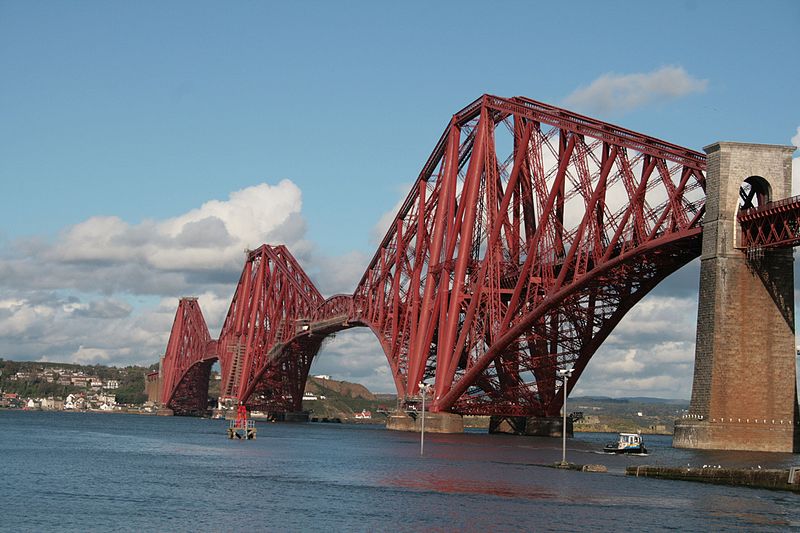
The train ride to Inverness is another long one—more than three hours—but delightfully scenic. We pass over the Firth of Forth via the landmark red-oxide Forth Rail Bridge; its tracks spanning more than a mile and a half. Today, the water is gray and dull unlike the sparkling blue memory I have from September. The bay is littered with fishing trawlers, cranes, and other commercial fishing rigs.

Forth Rail Bridge, Edinburgh
Photo: Wikimedia Commons

The train travels along the coastline for about 20 minutes. It is low tide and for a few minutes we ride along some muddy flats that extend to the sea with mountains in the hazy distance. People are digging for clams. Then the shoreline turns to a sandy beach before the railroad cuts into the craggy hills and I lose the sea view. In Kinghorn, the coastline reappears and it is dotted with small trailers. They look about half the size of U.S. mobile homes, but they have the best oceanside views. The next stop is Kirkcaldy. Then we turn inwards to Markinch, past the Firth of Tay, briefly, and on to Perth where a man gets on the train wearing a Blackwatch plaid kilt.

In Dunkeld, the sun comes out but with clouds so low they touch the tops of the trees and castle turrets. From my train window, the sun shines bright and clear in the west but, to the east, the hills and trees are shrouded in what can only be the famous Scottish mist. Soon the train is enveloped too and we ride north in and out of the morning mist. I expect the mythical Brigadoon to emerge at any minute.

My train pulls into Pitlochry amidst brilliant sun. It seems to be a town of grey stone and turrets. I see one impressive stone house nestled in the dark woods among pine trees and moss. It is just like Queen Victoria’s description in her Scottish diaries. She wrote

We passed Pitlochrie, a small village…then came to the Pass of Killiecrankie, which is quite magnificent; the road winds along it, and you look down a great height, all wooded on both sides, the [River] Garry rolling below it. I cannot describe how beautiful it is. Albert was in perfect ecstasies.

Queen Victoria’s Scottish Diaries

I can see why Prince Albert loved it so much.

We travel deeper into the tree-covered mountains, their tops obscured by mist. The track goes through dark tunnels cut through rock, across small rivers and streams. and then suddenly bursts into a bright open field full of grazing sheep, then plunges back into the mountains, now bare and grass covered. In Blair Atholl, everything is covered with a heavy frost.

In the distance I can see the white turrets of Blair Castle. Home of the dukes of Atholl, British soldiers besieged the castle during the 1745 uprising. Queen Victoria stayed here in 1844 on her second visit to the Highlands.

The further north the train travels, the more barren the landscape becomes. Still mountainous, but bare, brown, and rocky instead of tree-lined and lush green. In Dalwhinnie, I can see the Dalwhinnie whisky distillery with its odd-looking turrets, something akin to Japanese pagodas.

We follow the River Spey to Kingussie. As the sun turns to clouds, it becomes bleaker. I am cold, but the buffet cart has run out of hot water for tea, which is annoying.

Then suddenly the scenery opens up wide to the Moray Firth with Inverness nestled at its mouth.

I disembark and follow my map to Crown Street. A set of stairs, three stories high, takes me up to a residential area. In a neighborhood where nearly every other house is a B&B, I find the Pitfaranne Guest House about three blocks down. Jim Morrison, the host, answers my knock and greets me warmly with his Scottish brogue. He appears to be about 40. His long dark-blond hair makes him look like a skinny Mel Gibson as William Wallace. His wife, Gwen, shows me upstairs.

Culloden Moor

My walk to the tourist information center gives me a nice view of Inverness Castle and information about the bus, which I board and take to the Culloden battlefield.

Culloden Moor is the site of the final brutal battle between the English and Scottish in 1746. The Scottish clans fought to put Bonnie Prince Charlie on the British throne; the grandson and heir to the Catholic Stuart King James II who fled England after being deposed in 1688. It was an uprising that nearly destroyed Highland society.

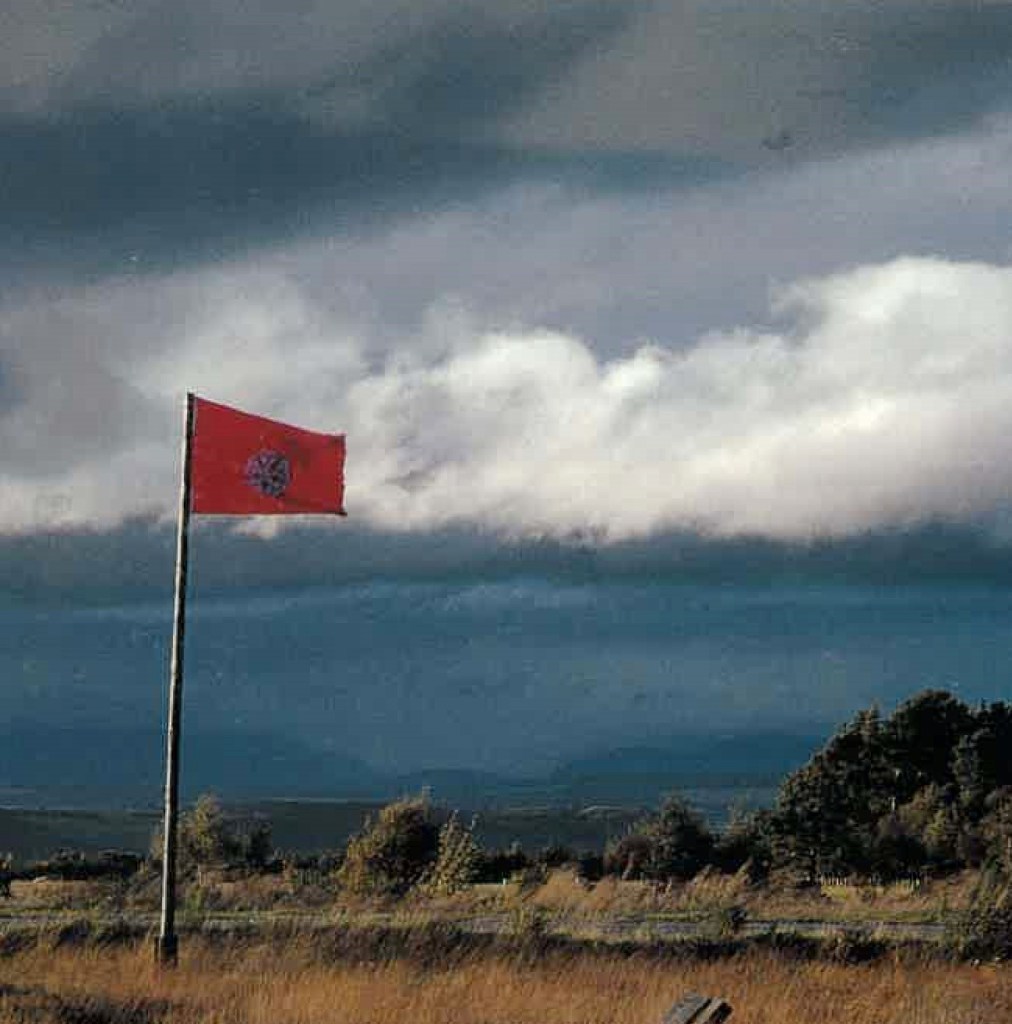
It is a stark, desolate field with rows of red and blue flags marking the armies’ lines. The Scots were slaughtered here even after they surrendered. The Duke of Cumberland, the English army leader, who the Scots call “The Butcher,” gave furtive orders to kill anyone left alive after the battle was over. Then, a series of English laws forbade wearing kilts, playing bagpipes, speaking Gaelic, and outlawed countless other traditional Scottish customs. This was the story of William Wallace in Braveheart.

Culloden Moor battlefield

Bonnie Prince Charlie, a romantic figure to this day, survived the battle and escaped to France. He died in Italy 40 years later; the last of the Scottish line of kings.

The battlefield is quiet with a sad and bleak mood. Some people say that Gettysburg feels the same way; the weight of the death of so many men hanging in the air.

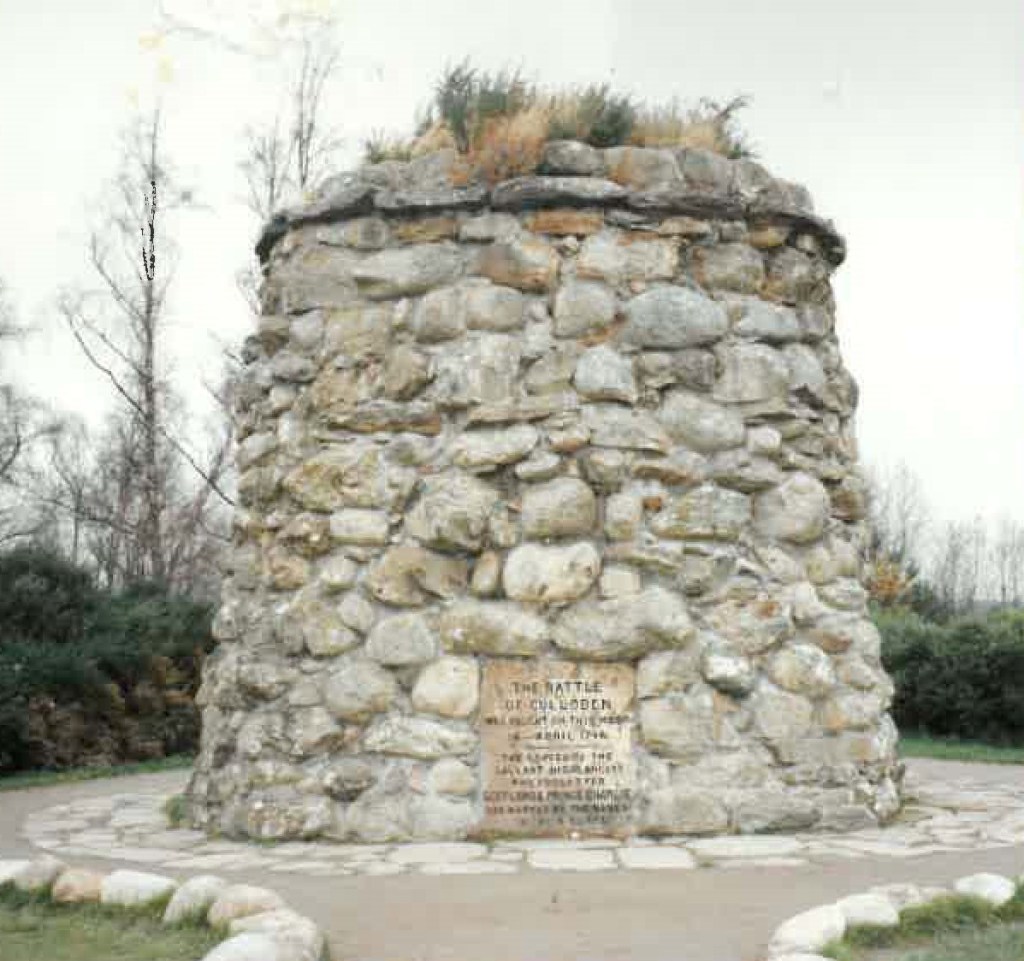
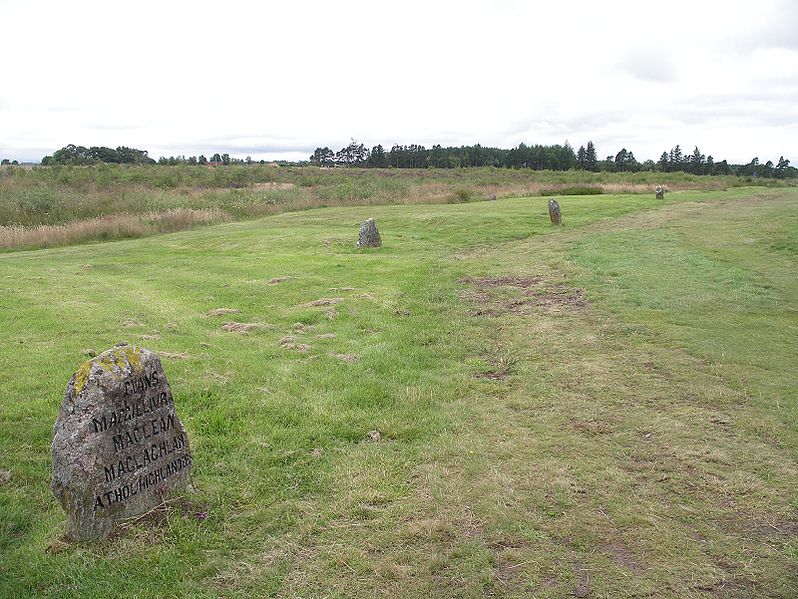
A 20-foot-tall, round, stone cairn commemorates the battle. But mostly, it is a grassy field with plain, moss-covered boulders engraved with the names of the clans of the Scotsmen who fought and died here.

Culloden Battle Memorial

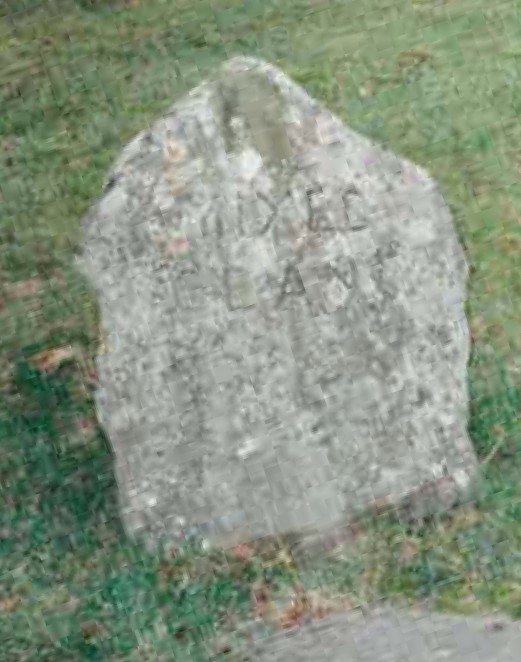
I walk along the wide grassy pathways reading the clan names on the stones: Macintosh, Donald, MacGillverary, Stewart, and one engraved “Mixed Clans”.

Culloden Battlefield
Photo: Wikimedia Commons

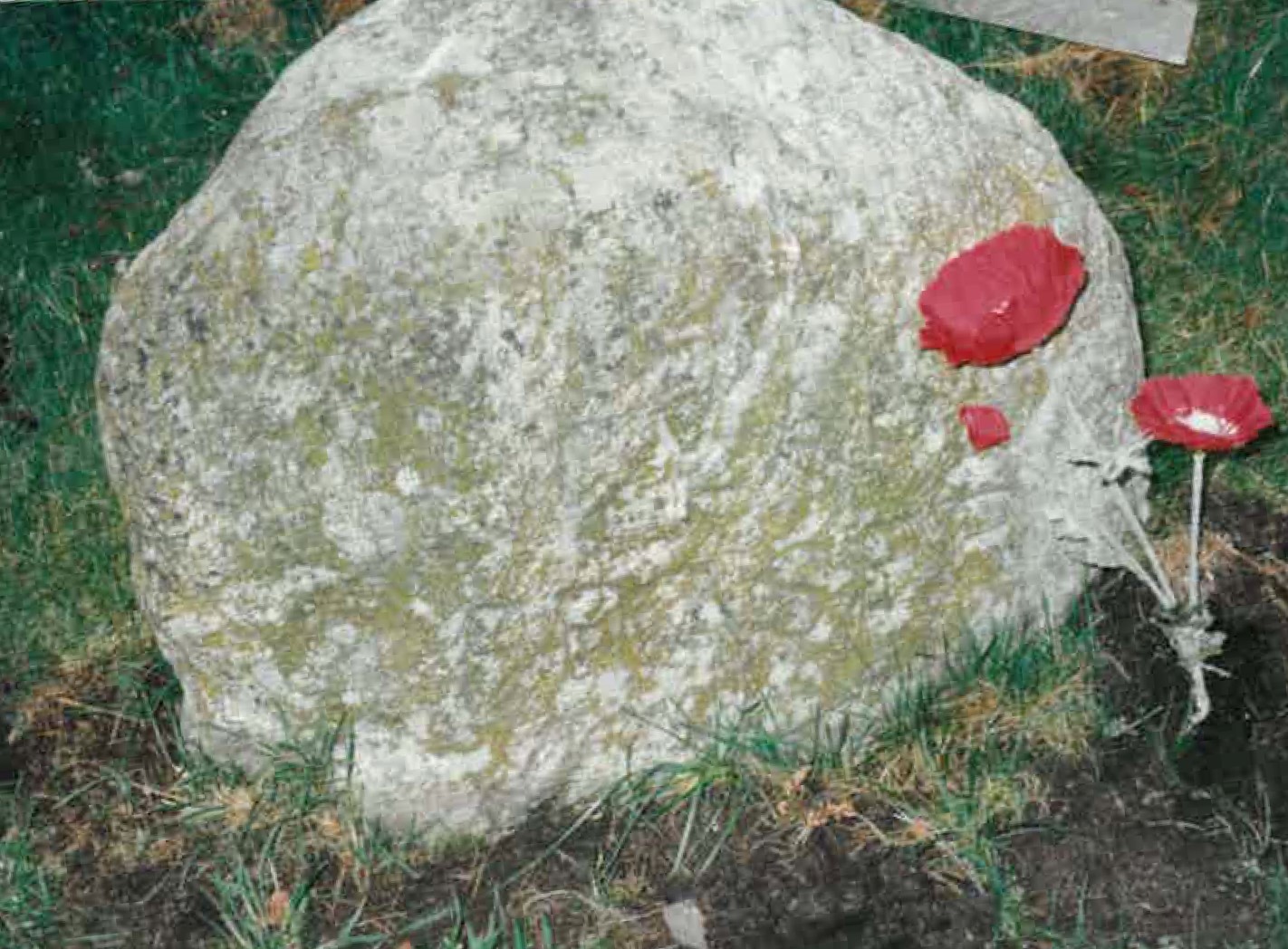
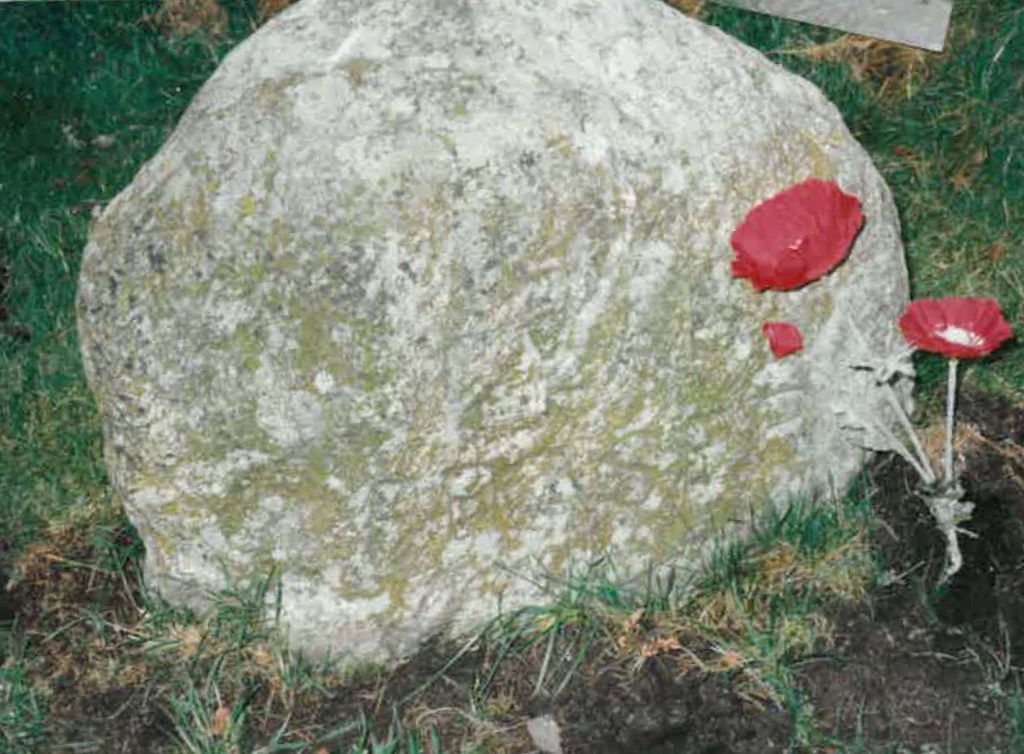
I snap a picture of the grave of the Fraser clan where someone has left two blood-red “remembrance” poppies. These are the Frasers so well known to fans of the wonderful Outlander book series by Diana Gabaldon.

Fraser Clan Marker, Culloden
Clan Marker, Mixed Clans, Culloden

There is small museum with artifacts and a battle table that shows how the armies progressed and clashed.

Culloden was also on my “must-do” list and although there is not a lot here, it is definitely worth doing.

Back in Inverness, it grows dark early. It is just after 5:00 PM and most of the shops have closed. I walk around the town and end up at the local cinema where I watch the new Disney movie, Tarzan. Some would use the excuse that it was only movie playing, but I could not get away with that since everyone knows how much I love Disney movies.

I have dinner at Long Johns, a pub/restaurant with a WWII theme. There is a toy train chugging around the ceiling and lots of WWII memorabilia; boogie music plays in the background. The booths are made from leather seats made over from an old train carriage. A notice on the wall next to my table instructs Brits on the home front what to do in case of German invasion: “Stay put unless there are specific government orders to evacuate. People fleeing on their own are in danger of being shot from the air.” What people lived through during the war; I really can’t imagine.

November 11, 1999 – Edinburgh: Can There Anywhere be a More Beguiling City on a Crisp, Dark November Evening?

I have packed up all my suitcases and stored them in the locked closet under the eaves in my room at Glenelg. Then I haul my travel case to the office where I work for a while.

Dean, Barbara, Ari, and Max join me in our reserved seats on the train at New Street station. The kids are good as gold during the five-hour journey, listening to books on tape with headphones. We talk and eat the bread, cheese, and fruit that Barbara has thoughtfully brought.

We pass through Durham and can see the lights of the massive cathedral there; a cathedral that Bill Bryson says is even better than the monolithic York Minster, which is on my list. I promise myself to go back to Durham to see it.

[Note: Sadly, I never get to Durham even with Bill Bryson’s advice: “If you have never been to Durham, go there at once. Take my car. It’s wonderful.”]

In Preston, just over the border, a Scottish crew comes on board. I attempt to buy some red wine in the buffet car, but I cannot understand a word of the waiter’s thick, impossible Scottish accent. After the third attempt, I finally realize he is asking me if I want a ½ bottle or ¼ bottle of wine. As always, Bill Bryson explains it so well. Here is his only slightly exaggerated interaction in a Glasgow bar when the a man says to him

“Hae ya nae hook ma dooky?”

“I’m sorry,” I replied.

“He’ll nay be doon a mooning.”

“Oh, ah,” I said and nodded sagely, as if that explained it.

I noticed they were still looking at me.

“D’ye hae a hoo and a poo?” said the man to me.

“I’m sorry,” I said.

“D’ye have a hoo and a poo?” he repeated.

I give an apologetic smile and explained that I come from an English-speaking world.

“D’ye nae hae in May?” the man went on. “If ye dinna dock my donny.”

Just then to my relief, the barman appeared, and he said to me, “Ah hae the noo.” I couldn’t tell if it were a question or statement.

“A pint of Tennent’s please,” I said hopefully.

He made an impatient noise, as if I was avoiding the question. “Hae ya nae hook ma dooky?”

“I’m sorry?”

“Ah hae the noo,” said the first man, who apparently saw himself as my interpreter.

I stood for some moments with my mouth open trying to imagine what they were saying to me, wondering what mad impulse had bidden me to enter a pub in a district like this, and said in a quiet voice, “Just a pint of Tennent’s, I think.”

The barman sighed heavily and got me a pint.

Bill Bryson, Notes from A Small Island

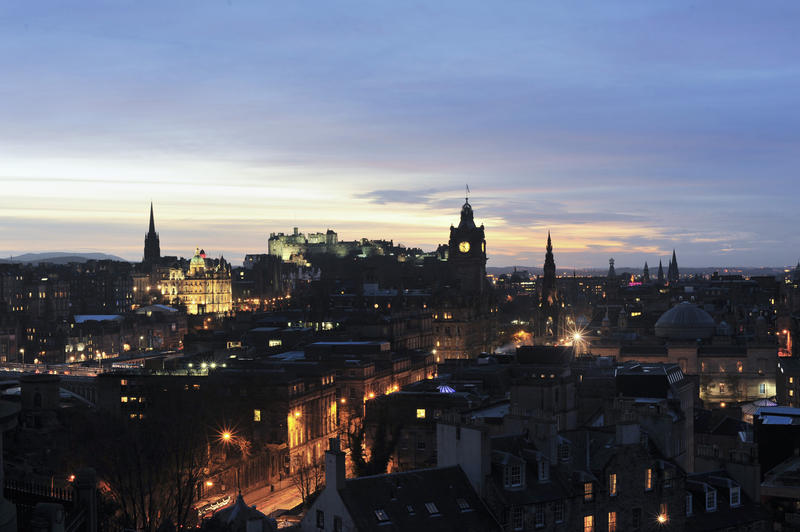
After four hours and forty-five minutes, we reach Edinburgh. I bid the Kaplans goodbye and follow the “Way Out” signs climbing the Waverley Steps out onto Princess Street. I check into the Waverley Hotel and admire the luminous Edinburgh castle and the Scot monument from my hotel room window.

Edinburgh at night with a view across a brightly lit Princes Street to the Edinburgh Castle floodlit on the skyline
Photo by photoeverywhere

The city skyline at night is one of the prettiest sights I’ve seen. As Bill Bryson says

Can there anywhere be a more beguiling city to arrive at by train early on a crisp, dark November evening? To emerge from the bustling, subterranean bowels of Waverley station and find yourself in the very heart of such a glorious city is a very happy experience indeed. It is captivating. Every monument is lit with golden floodlights—the Castle, the Bank of Scotland headquarters on the hill, the Balmoral Hotel, and the Scott Memorial down below—which gives them a sort of eerie grandeur.

Bill Bryson, Notes from a Small Island

I promise to stop quoting Bill Bryson, but his description of Edinburgh fits exactly my experience on this cool November evening as I look out upon the city bathed in soft light.

Design a site like this with WordPress.com
Get started