I am off on my long-anticipated, eagerly-awaited trip to Althrop, the ancestral home of Princess Diana’s Spencer family. As soon as I knew of my fellowship start date in Birmingham, my visit to Althrop was one of the first things I arranged. In fact, I scheduled my arrival a few days early so I could visit here. Althrop is open for only a few weeks a year and closes for the season on August 31.
At breakfast Tony tells me that part of the investigation of Diana’s car crash was done here at the University of Birmingham, where they have specialists in accident reconstruction. He says it’s a big secret but that Caroline, from where she works at the University, saw lots of coming and going and someone there told her about what they were doing.
Caroline tells me to leave a few minutes earlier than I planned so that I can stroll to University station. Tony says it only takes 15 minutes to walk there, but Caroline turns up her nose at him and says it takes longer than that. For the record, it takes me 25 minutes to walk there, but I never claimed to set any land speed records.
At New Street Station, I catch the Silverlink to Northampton. During the hour-long ride, we pass quaint sounding places―Coventry, Rugby, Long Buckley—and arrive in Northampton at 12:10 PM. While I wait for the coach to Althrop, I look around to see if anyone else looks like they are going to Althrop. One lady is a certainty. She carries a big bouquet of white lilies, which can only be for Diana’s graveside. Eventually, a big, double-decker bus with a sign that says ALTHROP arrives. A long queue of eager visitors climbs aboard and the bus sets off.
I consider the people on the bus. For some reason, I assumed they would all be Americans. There are mostly women, but I see two men each traveling alone, an elderly British couple, and lots of British ladies. The woman with flowers is speaking French to a young couple that accompanies her. Oh, yes, there is one loud American couple too.
At the gates of Althrop, the bus turns onto a narrow, bumpy road. More than once, sheep grazing on the edge of the road scatter at our approach. A pheasant runs past. As we drive nearly a mile into the estate, the fields dotted with sheep stretch for as far as the eye can see.
The bus obscures my first views of Althrop, but I glimpse the stables to the left of the house. I know this to be the building in which Earl Spencer put the exhibit of Diana’s life. We pull into a circular drive. There is a large green lawn in between the house and the stable and people are milling around.
Althrop House, The Spencer Family Home Since 1508
There has been a house on this site owned by the Spencer family since 1508, rebuilt and remodeled numerous times. No one knows for sure what the first house looked like. Today’s house bears the hallmarks its 1770 re-design.
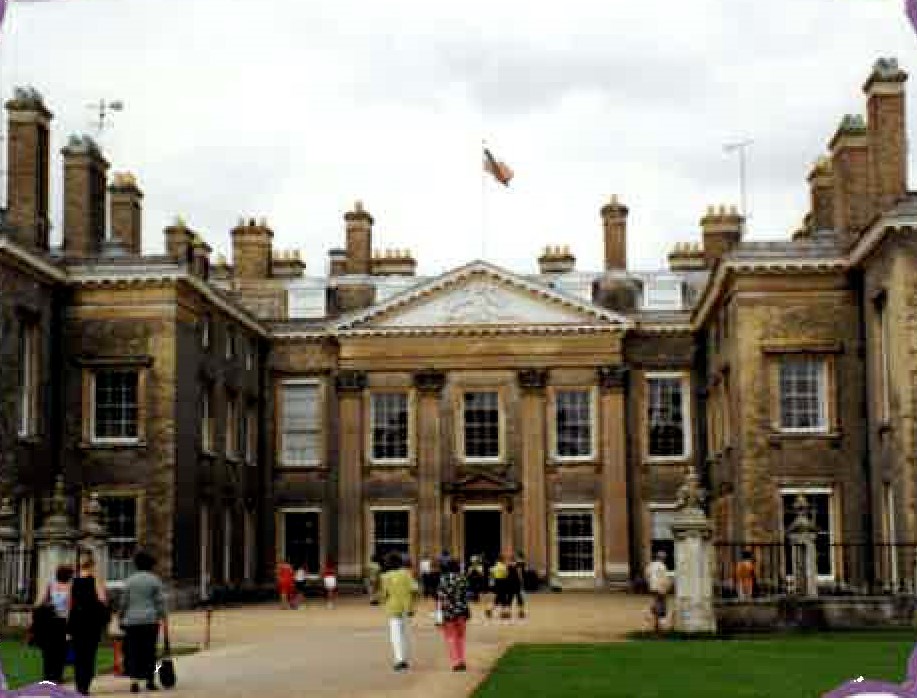
Althrop is a Saxon word dating from the Doomsday Book in 1087 when chroniclers called the grassy land “Olletorp.” Throp is Danish and would have been pronounced “throop” 600 years ago. I read somewhere that Charles Spencer pronounces it “Awltrupp” not All-thrope as one would assume and, since he is the owner, “He can pronounce it however he wants.”
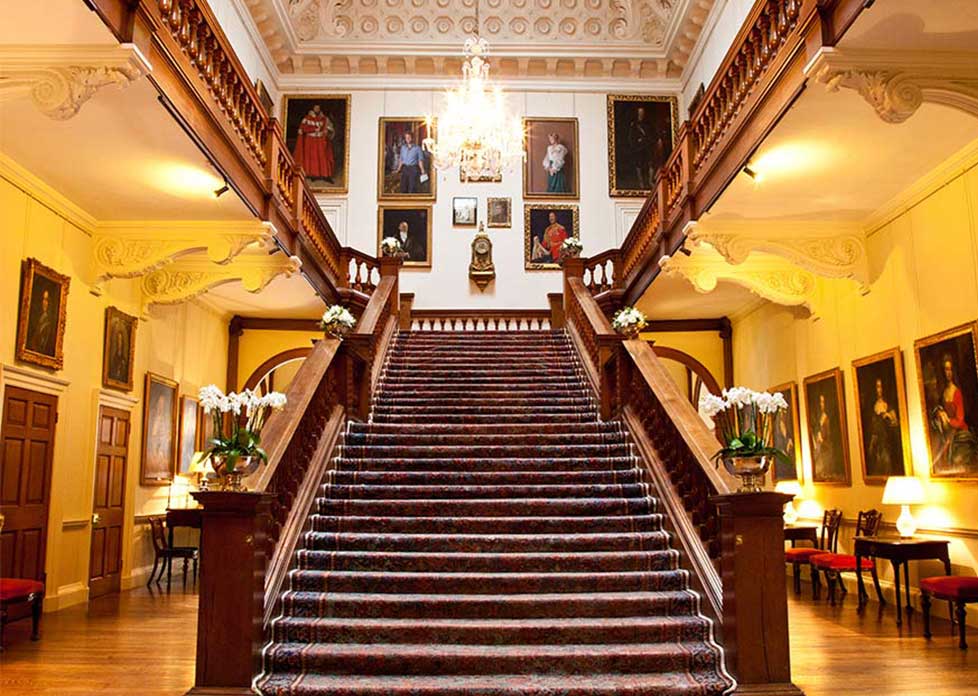
Photo: Althrop House
The house’s interior is staggering. There are 90 rooms of furniture, bronzes, Waterford Crystal, sculptures, books, miniatures, and porcelain. Life-sized paintings cover every inch of wall space. The highlight of the house is the magnificent “saloon” with its imposing staircase. It is a gallery of Spencer ancestors. A portrait of Lady Diana Spencer, who was sister to the 1st Earl Spencer in the 18th century, is paired with a modern painting of Lady Diana Spencer who became Princess of Wales in 1982.

Lady Diana Spencer, Princess of Wales (1961-1997)
Photo: Nelson Shanks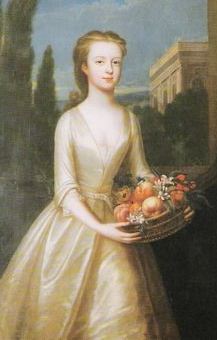
Lady Diana Spencer
(1710-1735)
Besides the obvious one, the house has many royal connections:
- “Johnnie” Spencer, the 8th Earl of Spencer, the current Earl’s father, served as Equerry to King George VI and later for Queen Elizabeth II.
- The Princess of Wales bedroom is named, not after Diana, but for the wife of the future King Edward VII, Alexandra, who stayed at Althorp in 1863, while the Queen Mary bedroom is named for the wife of King George V, who visited Althorp in 1913.
- The Great Dining Room, added in 1877, is said to be inspired by the ballroom of Buckingham Palace.
- The Garden Lobby Room contains the Spencer porcelain collection including a set of blue and gold porcelain cups for serving chocolate, which was once owned by Marie Antoinette.
- Through Charles Spencer’s 1700 marriage to Anne Churchill, daughter of the Duke and Duchess of Marlborough, the dukedom of Marlborough passed to the Spencers. Winston Churchill is also descended through this line.
The art collection at Althrop is better than most museums and includes paintings by Rubens, Titian, and Van Dyke, while one of a young lady said to be “of the School of Leonardo da Vinci” bears a striking resemblance to the Mona Lisa. There are also 17 Joshua Reynolds portraits, mostly of the Spencers themselves.
Good Night, Sweet Princess
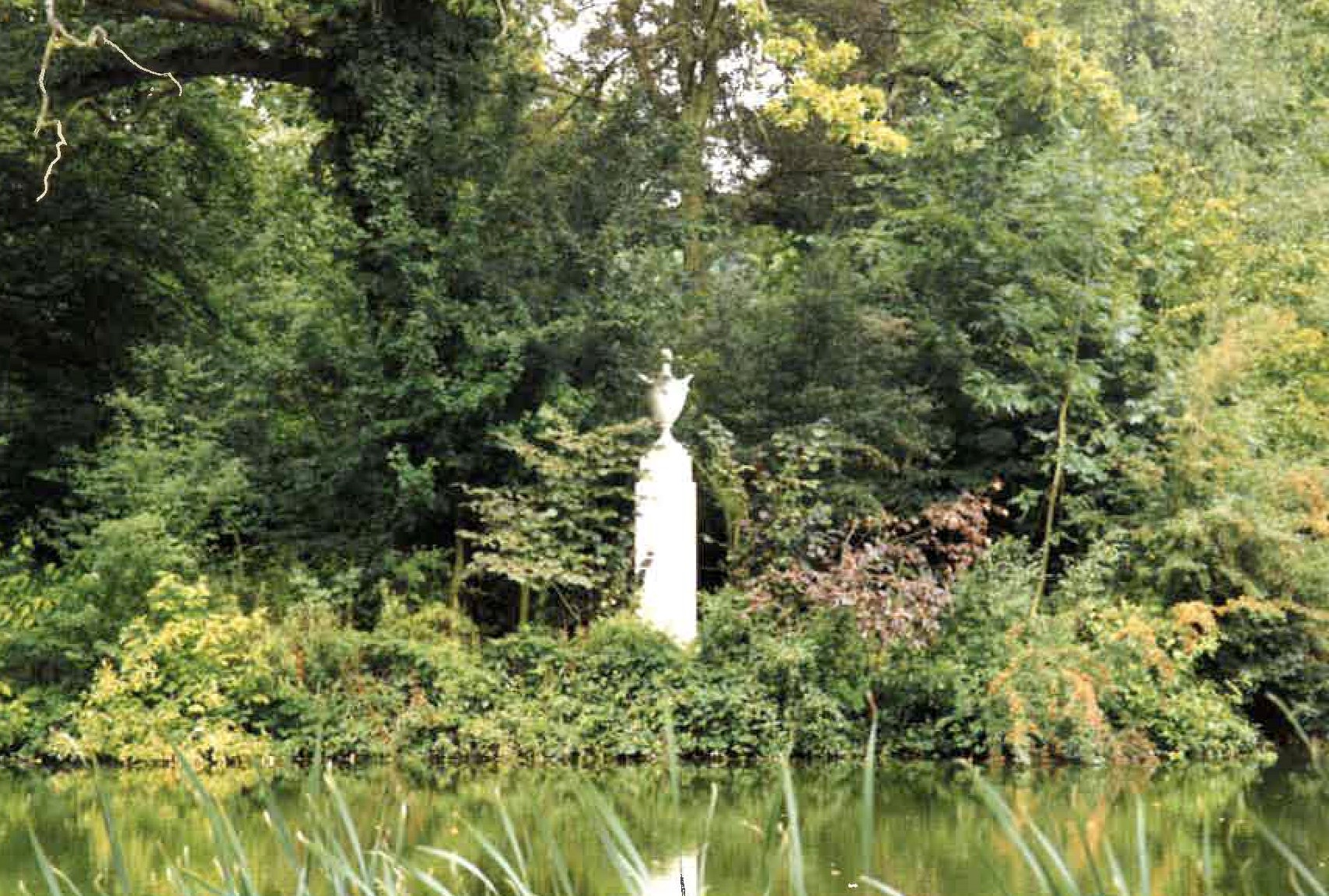
I exit the house in the rear and walk to the Round Oval where Diana is buried. Soon the dense path opens up to the pond with the miniature island at its center. The white memorial column with a stone urn on top is simplistically elegant. Everyone is respectful, standing in quiet contemplation. Then a jet plane roars overhead. The Althrop guard remarks how the engine noise spoils the peacefulness and I think, “Yes, that is exactly how I would describe this spot—peaceful.” Far different from Diana’s life.
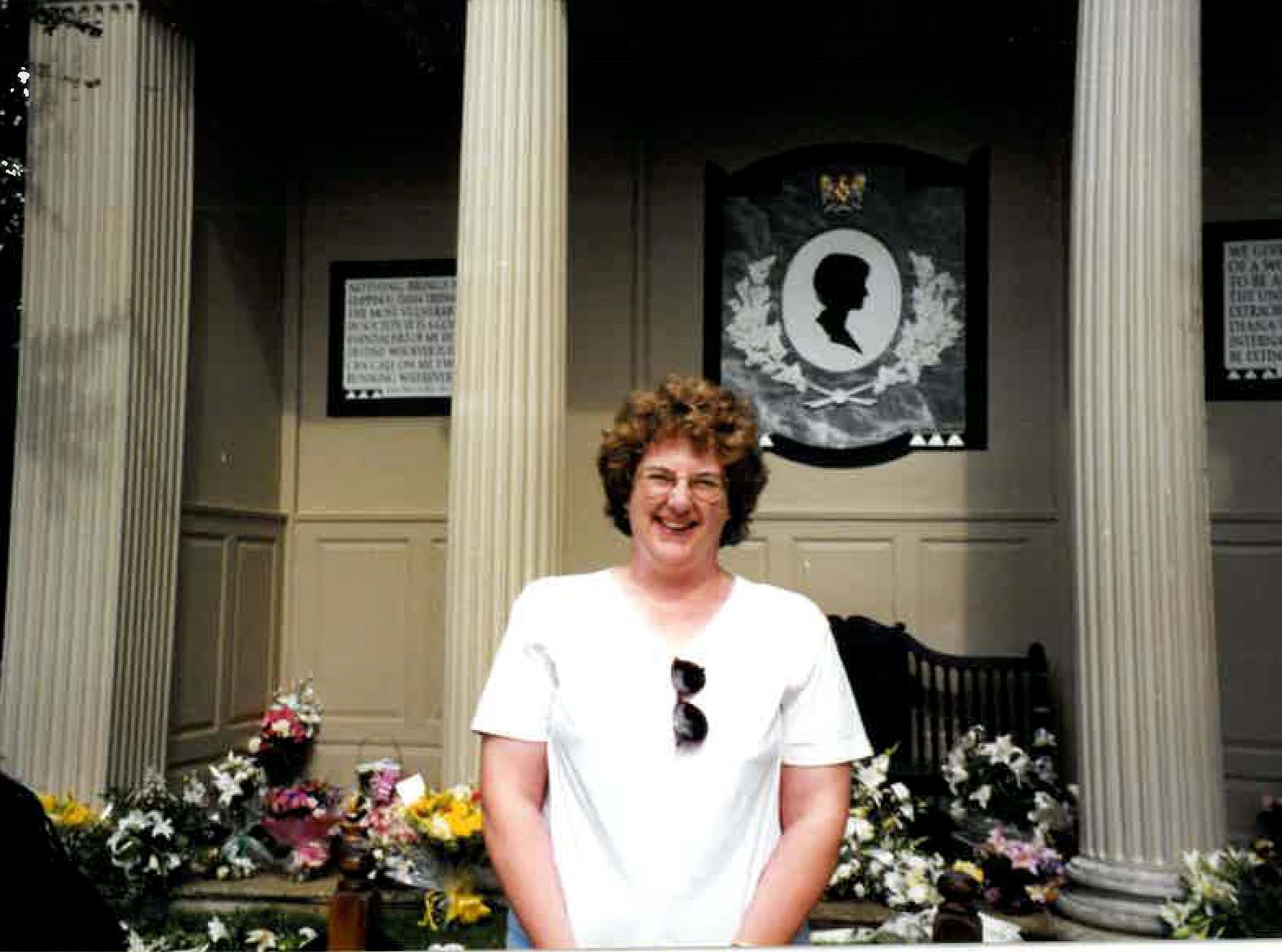
As I move left along the path that circles the pond, I come to the 18th century summer house that is now a memorial to Diana. A marble plaque with a black and white, cameo-like silhouette of Diana’s profile is at the center of the temple framed by Greek columns. The air is heavy with the scent of the flowers that visitors have left. It is astonishing how strong the fragrance is. I can only imagine how the flowers must have perfumed the air at Kensington Palace where they were stacked waist high in the week leading up to Diana’s funeral.
Saddened anew by Diana’s death, so tragic because it was avoidable, I return to the front of the house and walk towards the stables. The renovated stables are huge. At one time they housed 100 horses and 40 grooms. The courtyard is scattered with tables where people are drinking tea and eating sandwiches from the café.
I slowly make my way through the crowds in the stable’s exhibit rooms.
The Wedding Room contains the famous flouncy, ivory, silk wedding dress with its sweeping 25-foot train. When we were in London in 1996, Mom, Brian, and I visited the Royal Ceremonial Dress Collection in Kensington Palace but the Royal curators had removed Diana’s wedding dress from the display following her separation from Prince Charles. At the time I remember thinking them just sad and petty. I admire it now―one of the most famous dresses in the world.
In other rooms, the exhibit showcases Diana’s charity works. Two cases of stunning designer dresses show how tall and thin she was. An enormous bed of dried petals from flowers from the funeral are mounded on the ground behind a glass wall. There is also book case after book case—nine in all― stacked from floor to ceiling with condolence books from all over the world.
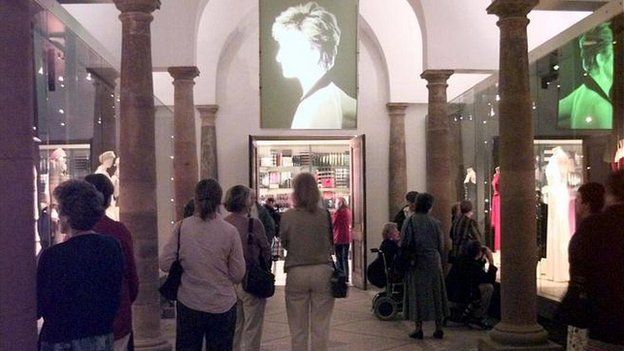
And there is a display of Diana’s childhood with memorabilia from her school days. Home movies show a happy, carefree girl swimming, dancing, riding a bike, and snuggling a pet rabbit. An American rock song is playing:
Another turning point, a fork stuck in the road
Time grabs you by the wrist, directs you where to go
So make the best of this test and don’t ask why
It’s not a question, but a lesson learned in time.It’s something unpredictable, but in the end it’s right
I hope you had the time of your life.
The song is poignant and it sticks in my mind long after leaving Althrop. Even years later when I hear it, I am immediately transported to the Althrop stables and the home movie of a young Diana standing on her toes doing ballet twirls.
Charles Spencer is Here!
I buy some things in the gift shop including a sweet, pink demitasse cup and saucer decorated with an English rose and, on the reverse, the inscription, “the very essence of compassion, of duty, of style, of beauty”―an excerpt from Charles Spencer’s eulogy at Diana’s funeral.
I also buy Earl Spencer’s new book, Althrop, The Story of an English House, after which I head to the café. I chose a prawn and green onion sandwich, a honey flapjack (a kind of oatmeal bar), and sparkling water. I sit down at a table with two women from my bus who tell me Charles Spencer has just arrived back from South Africa and is at this very moment signing books in the gift shop. I grab my book and dash into the gift shop. Sure enough, he is there.
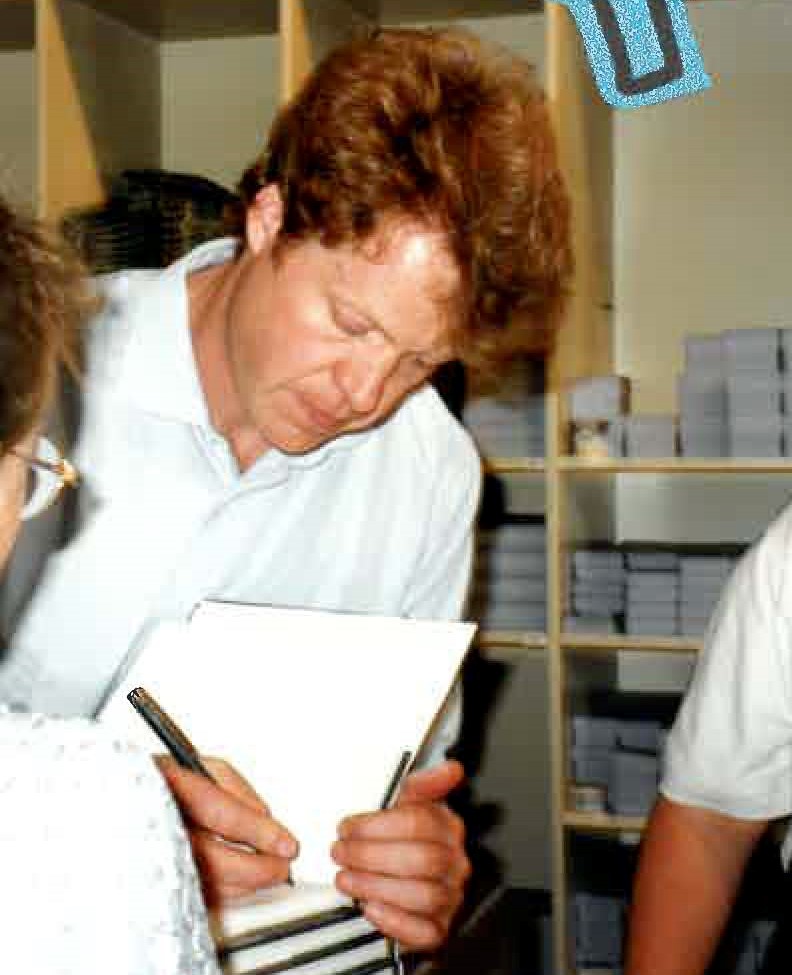
As I give him my book to sign, he asks, “Who’s it to?” I say, “Jody” and spell it out. He asks me where I am from and I say, “Maine in the United States.” “Yes,” he nods his head, and I say, “North of Boston.” He repeats, “Yes,” and seems to know it. He says, “You are coming into a lovely time of year there, aren’t you, with the leaves.” I am surprised that he not only knows where Maine is, but knows about our fall foliage. He signs my book, “To Jody, With Best Wishes, Charles Spencer.” I ask him if I can take a picture and he says oddly, “Yes, but I can’t look at the camera because of my eye” (he points to his left eye), but he says, waving, “You go ahead.” I snap one picture and return to my table where I had hastily left my sandwich uneaten. I thank the ladies profusely for telling me about the Earl and I happily finish eating my lunch.
Charles Spencer is no slouch. At just 35, at the time of Diana’s death two years ago, not only was he a published author and successful manager of this massive estate with all of its lands, livestock, art, and historic heirlooms, he also braved the wrath of the Royal Family at Diana’s funeral by publicly criticizing them in what are probably some of the most astonishing remarks made in front of the Queen and ― embarrassingly for her―to the rapturous applause of the millions of people listening outside Westminster Abbey. He eulogized:
Diana was the very essence of compassion, of duty, of style, of beauty. All over the world she was a symbol of selfless humanity. All over the world, a standard bearer for the rights of the truly downtrodden, a very British girl who transcended nationality. Someone with a natural nobility who was classless and who proved in the last year that she needed no royal title to continue to generate her particular brand of magic.
- In today’s news: Betrayal! James Hewitt is to reveal sensational details about six lovers in Princess Diana’s life in an effort to rescue his own tarnished reputation. As the second anniversary of the Princess’ death approaches, the former Guards officer; branded a “traitor” by Diana, hopes to bank at least £1 million from his new book by disclosing her intimate thoughts on her relationships.
 Jody’s UK Memories
