September 18, 1999 – Punk, Shakespeare, and Butterflies

I encounter my first truly punk fashion on a young couple on the bus. She has a fringe of blond bangs, then a shaved band across the top of her head and, then the rest of her hair is pulled back into two ponytails. The pony tails are colored pink. On the bald part she sports a tattoo of Pegasus. She has more pierced body parts than I can count—at least six around her lips, cheek, and nose and another six in the one ear on the side I can see. Her clothes are beyond description. He is also pierced in multiple places and wears a fake Dalmatian fur coat. I would never have the courage to dye my hair pink, but I admire her for her individuality and give her a friendly smile.

Last night as I played with Lutchford, Tony and Caroline told me about a butterfly farm in Stratford-upon-Avon. I add it to my itinerary for my trip there today. By the time I get to New Street station, I have missed the 9:30 train by just five minutes and have to wait an hour for the next one. I arrive in Stratford around 11:15 AM and walk into the village following the signs for Shakespeare’s Birthplace.

Shakespeare’s house and visitor’s center is on the busy Henley Street, which is lined with souvenir and gift shops. The recognizable, half-timber, Tudor-style house belonged to John Shakespeare, who was a respected and powerful merchant in the city. His son, William, was born in the house, grew up there, and as an adult, purchased it.
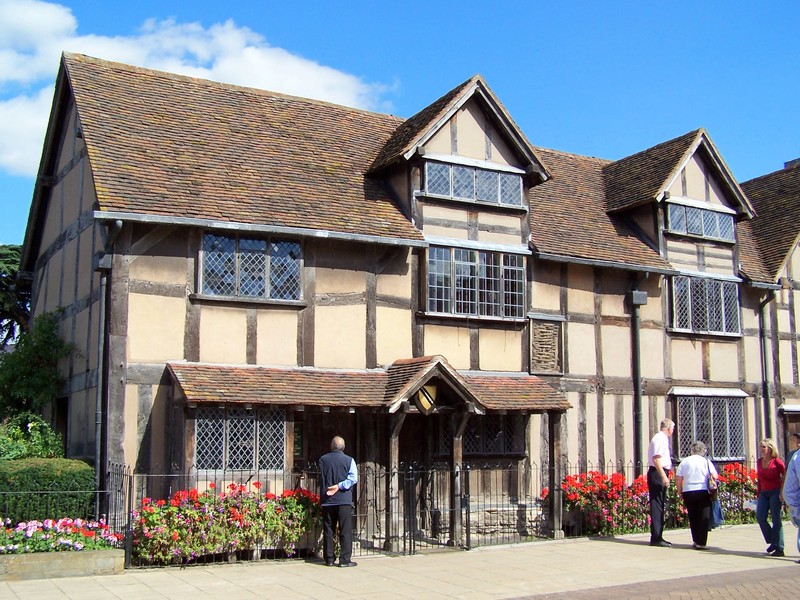
Shakespeare’s birthplace

The Visitor’s Centre has an interesting chronological display of the Bard’s life. One thing I learn—Shakespeare married Anne Hathaway when he was 18; she was 26 and three months pregnant. Anne Hathaway’s cottage is on the outskirts of town; a distance too far to walk.

Shakespeare spent the last two years of his life in New Place, now only brick remnants and a picturesque garden. The peevish and short-sighted Reverend Francis Gastrel demolished New House in 1759 fed up with the pilgrims traipsing over his property to see where Shakespeare lived. Gastrel also cut down Shakespeare’s mulberry tree. According to my guidebook, an alleged descendent of the notorious mulberry now occupies the central lawn of the superb garden. It is recreated from garden books of Shakespeare’s time and contains flowers and plants that Shakespeare would have known.
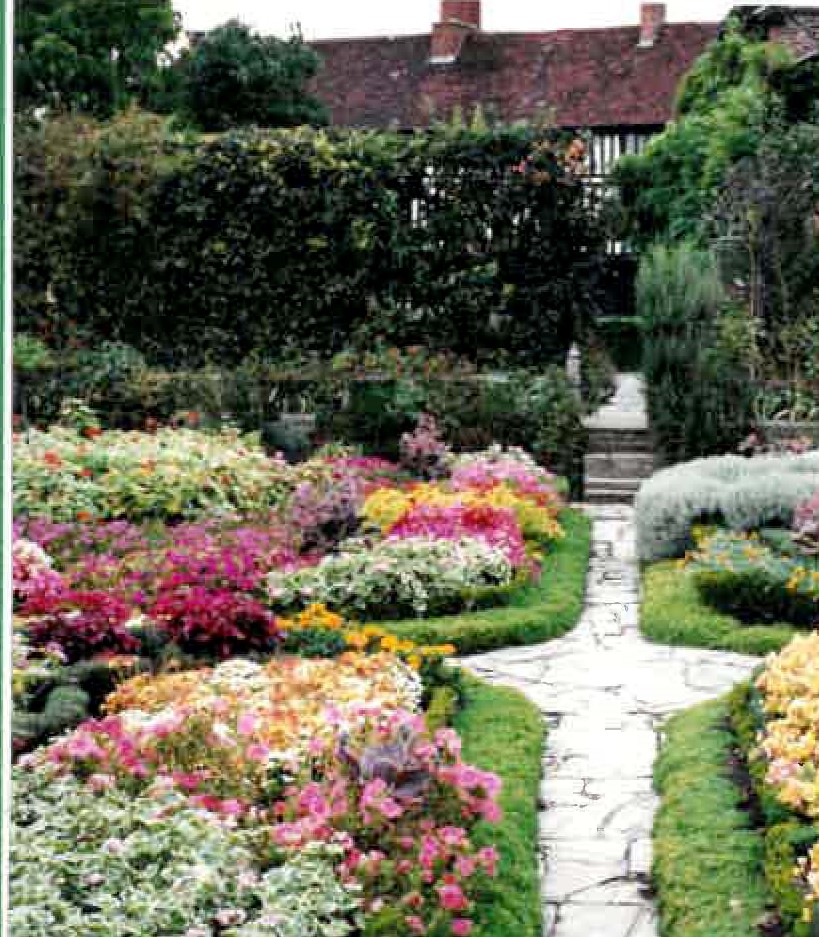
Garden at Shakespeare’s New Place

I continue walking towards the theatre and the River Avon. “Avon” is the Latin word for river. So, Stratford-upon-Avon is literally Stratford upon the river. Some people argue that it is superfluous to say River Avon, which means River River.

The theater is home to the acclaimed Royal Shakespeare Company. In the adjoining park is a huge bronze statue of the Bard on a tall cream-colored stone pedestal and, at each corner of the monument site, four more bronze statues of his literary characters. I love this monument. Shakespeare himself is seated with a rolled-up manuscript in his left hand while his right hand holds a quill pen. Each of the characters is meticulously carved and the sculptor catches their personality perfectly; from the morbidly philosophical Hamlet, to the power-mad Lady MacBeth, the boastful Falstaff, and the youthful Prince Hal (Henry V).
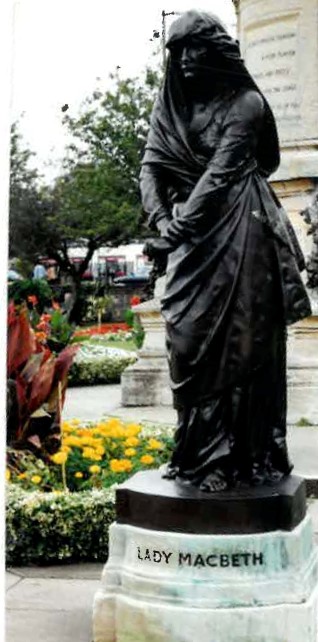
Statute of Lady McBeth, Stratford-upon-avon

It is clear that no one in this town takes seriously the theory that the plays may have been written by someone else. As intriguing as it is―the suggestion being that Shakespeare was an uneducated, unworldly backwater and could not have written the world’s most lyrical and insightful plays―it doesn’t hold water. None of the theorists’ ascribants for the real author—Kit Marlowe, Frances Bacon, Earl of Oxford, even fancifully Queen Elizabeth I—are plausible; their chronology is wrong.

I cross the canal that feeds into the Avon and as I enter the lush, tropical butterfly farm, it is so humid that my glasses fog up.

There is a huge, fish-filled pond with splashing waterfalls. Gravel walkways meander among dense, fragrant flowers. There is cut-up fruit on which the butterflies feed. And there are butterflies fluttering everywhere. There are orange, blue, black, and red ones; plain, spotted, and striped ones. A little girl points to my pocketbook; a butterfly has contently landed on it and stays perched there as I walk around. I finally have to shoo it off when I leave.

Back out into the cool air, I walk back to the train station. It hasn’t rained yet but it keeps sprinkling and acting like it wants to rain.

Back at the B&B, I tell Caroline about the butterfly on my pocketbook and she laughs. “Tony,” she says, “Jody calls her handbag a pocketbook too.” Apparently, another American guest used the word and although I don’t know why, they think it is very funny. This leads them to say that they thought it was funny that I called a pullout bed, a “cot.” And then they decide they can tell me what they thought when they first heard my request for accommodations. I had told Chris at the British Council that I wanted a double bed. They tell me most hotels in England for a single person only have single beds (unlike in America, they say). They asked Chris why I wanted a double bed and he said he didn’t know that I must be a big lady. So Tony and Caroline worried for three days before I arrived that I would show up weighing 300 pounds and I wouldn’t be able to fit in the stairway to climb to my room, or to sit in their dining room chairs. Tony says when I arrived, he immediately called Caroline at work to report that I was not 300 pounds. I giggle uncontrollably as Tony tells me his visions of me being his Rikki Lake guest.
Week of September 13, 1999 – Birmingham Balti and an Explanation of British Reserve

There is a new guest at the B&B—Brenda; a young woman with a lovely Irish lilt. When I tell her I am going to Ireland next week, she complains that it rains all the time in Ireland and it is very expensive. Brenda is studying for her Ph.D. in chemistry at Trinity College in Dublin, which will take her seven years to complete! She is horrified to learn that I will be alone for Christmas, but says surely I will make friends and someone will invite me for Christmas dinner. However, she thinks being in London for the millennial New Year’s celebration is “brilliant.” For Brenda, everything good is “brilliant.”

I read in the paper that there was a fire at Birmingham New Street station Monday night around 9:00 PM. People were forced to evacuate the station and people on incoming trains were stuck on the tracks outside the station for two hours. I’m glad it wasn’t the night before; or it would have been me stuck out there. The trains are back on schedule on Tuesday.

The mysterious Simon makes an appearance at the office. He is tall, thin, and speaks with a fast, clipped accent. He makes a few phone calls, complains about his computer, and is gone. The secretaries describe him as eccentric. Apparently he rides his bicycle to work and has very strong views on ecology. After today, I don’t see him again for the rest of my time in Birmingham.

I spend the week digging into my research. Scanning the Internet I find a lot of relevant materials—much of it generated here at Birmingham University. One day, I go to the library looking for a book written by Steve Rogers, one of the INLOGOV faculty titled, Performance Management in Local Government. I have not met Steve, but am anxious to see what he has to say. I make my way through the Dewey Decimal system only to find the book sitting in a trolley waiting to be re-shelved. I check it out using my new university ID card. I get back to my office and just as I unlock the door, a man walks by. He says, “Jody, Hi. I am Steve Rogers.” He grins when I show him the book I am carrying.

I begin to get to know some of the other faculty. Michael Hughes, with his wild hair and sandals, gives me tons of material to read as well as disks with excel files of the Audit Commission’s work. He has just written a book on Best Value, which he says I can get in the library. I tell him it is not there yet and he says resignedly, “But I gave them a copy.” He is rather disorganized; not able to find all the books he wants to give me. But I have enough for now.

Another one of the faculty, Mike Smith, asks me to conduct a graduate student seminar in October on my project. The seminar is in the late afternoon and afterwards all the students go to the Staff House for drinks.

I meet briefly with Peter Watt, who is back from Hong Kong. He basically tells me to do whatever I want and, if I need help, knock on his door. This is fine with me.

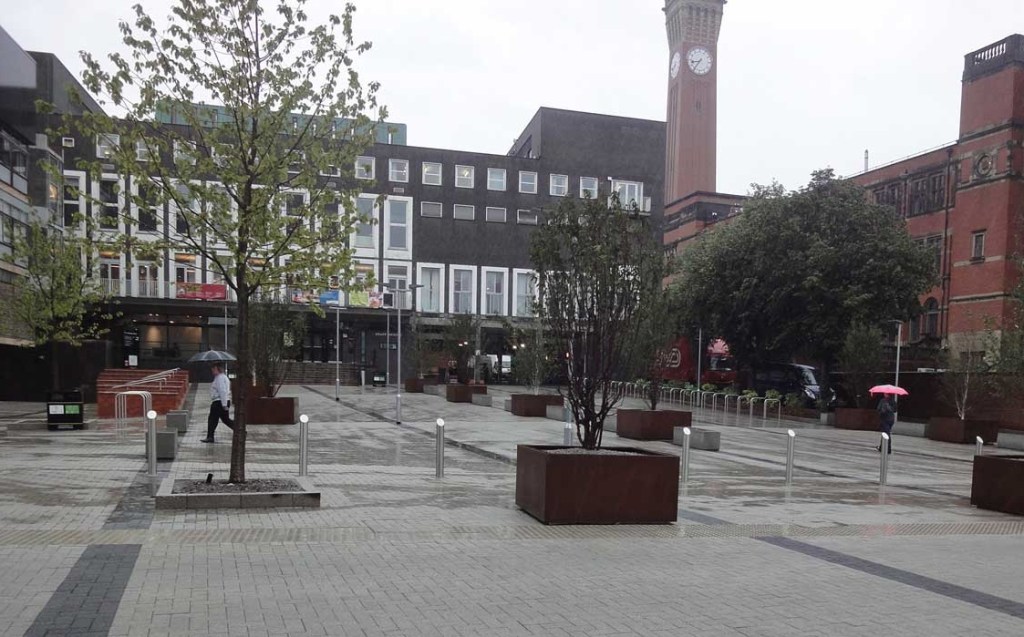
One day midweek, Dean, Peter, and I go to lunch at the Staff House. Peter is also Dean’s mentor. The Staff House has three floors, a cafeteria on the top floor, a coffee/sandwich shop on the 2nd floor and, a pub on the first floor. We eat our hot meal in the cafeteria and then go down to the 2nd floor for tea.

Staff House, University of Birmingham

Peter tries to explain why British people are so reserved. He compares Americans and British conversations to a card game. Americans lay their cards out on the table immediately saying, “This is what I’ve got.” The British hold them close to the vest and lay one down occasionally. Peter says, for the Brits, it’s like a game, but he thinks it can waste a lot of time. He speculates that it has to do with America’s strong market economy. To prosper in the US, you have to get all your cards out on the table quickly to make a deal. In Britain, with its social, bureaucratic society, knowledge is power and it’s something you want to keep for yourself. I find this interesting and illuminating. It explains why I sometimes have to ask a lot of questions before getting a full answer.

I stop at Lloyds Bank and end up being there for nearly an hour. They can’t find my checkbook. It has been mailed to this branch, but they never received it. So, they have to cancel the order and arrange for a new one to be sent. It should be here next week. I ask if there will be a checkpoint (ATM) card too. They say, “It will be here next week.”

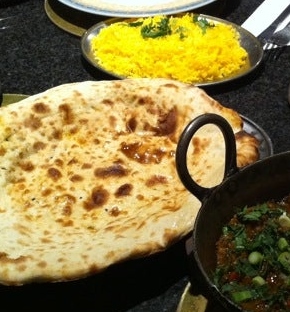
Chamon, the Indian restaurant in Selly Oak, just down the street, has become a regular haunt for me. I like the food and it is inexpensive. There are usually a lot of students there and one review I read says, “It’s good solid Birmingham Balti.”

Birmingham is known as the Balti Capitol of England; its large Kashmiri population having introduced it to the city:

“Balti” literally means “bucket” referring to the pan in which the food is cooked; a round-bottomed wok with handles. It is a type of curry, fast-cooked over a high flame with fresh meat and vegetables, and then cooked with extra spices. The meal is often served sizzling. Each restaurant jealously guards its own special recipe, but they all use similar spices like cumin, cardamom, coriander, cloves, and ginger. Although the restaurant will give cutlery to “beginners,” experienced “baltiers” use naan bread to scoop up their food.

I usually order the chicken tikka, a kebab, or chicken and mushrooms with a naan, which is enormous. Sometimes I just get an omelet. They don’t serve alcohol, but you can bring your own. I always seem to forget and usually just have water.

Humongous Naan bread, Chamon Balti Restaurant, Birmingham

I finish the book I am reading. Author Amanda Foreman writes a familiar scenario:

She could not help but suspect the true nature of her husband’s feelings toward her…she soon realized they had little in common.

He was used to his bachelor life; love he received from his mistress…

In less than a year, she had eclipsed her husband and become a popular figure in her own right. Her “goings on” had become an obsession in the press. Her clothes, her movements, her friends—in short anything new or unusual about her was considered newsworthy.

It was the greatest paradox that her husband must be the only man in England not in love with [her].

Although eerily parallel, these passages are not about Diana, but about Georgiana Spencer of Althrop, a many times great aunt of Diana’s who married the Duke of Devonshire in 1774 at age 17.

September 12, 1999 – Eton and the Swan Uppers

We are off to Windsor today, taking the train from Waterloo station. But first we have a full English breakfast in the hotel.

  • A word about English breakfasts. A “full” English breakfast usually means eggs and all the fixings and includes bacon, sausage, grilled tomato, mushrooms, baked beans, toast, and coffee or tea. In Scotland, it also includes haggis. Watch out for the black sausage, sometimes called blood sausage, because blood is just what they are made of. Generally, the pork sausages (or bangers) have a lot of cereal fillers. They are called bangers because, during WWII, with all the food shortages, they contained so much water that when they were put in the hot frypan, they exploded.

We stroll around Windsor village and poke into the shops. We take the jump on/jump off bus tour through Eton where the exclusive, private boys’ school is located. Started by King Henry VI in the 15th century, it costs £15,000 a year to attend. Both Princes William and Harry attend. Our tour guide said they spotted Prince Harry yesterday. The boys wear a uniform consisting of full morning dress, complete with coat and tails. It is fun to see all the boys dressed to the nines walking around the town.

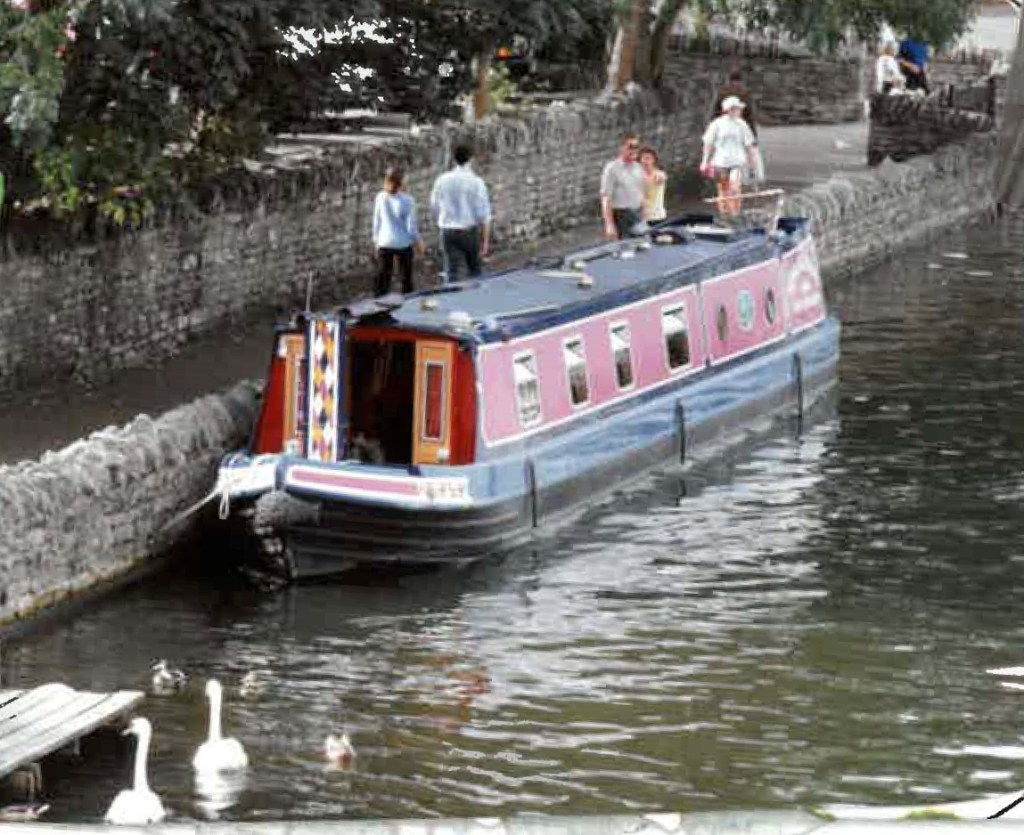
We learn about the Queen’s swans. Apparently the Queen owns all unclaimed swans in England; one of her official titles is, actually, Seigneur of the Swans. Each year in Eton, in a ceremony called the Swan Upping, the Royal Swan “uppers” take a census of the swans on the River Thames. The Queen does not attend but, undaunted, the uppers toast her with port before they start.

The Queen’s swans, Eton

We hop off at Windsor Castle and have a fish and chips lunch at restaurant outside the castle’s gate. We finish our bus tour, which takes us past the impressive Long Walk, the two-and-a-half-mile road through Windsor Great Park at the other end of which is the iconic, postcard view of Windsor Castle.

Tourists and residents can frequently see the Royal Family driving along the road here on their way to and from the castle; they are the only ones permitted to drive on this pleasant park road. I read a funny story in the Daily Mail that the Queen drove herself to church one Sunday and instead of waiting for a young couple pushing a stroller to move out of the way, she swerved onto the grass and drove around them, giving them a cheery wave as she passed. The article was titled, “One WILL get to church on time.”

We take tea at the pub across from the Windsor train station—The Royal Oak—and catch the 16:02 train back to Waterloo. After taking the underground to Paddington, I pick up my suitcase at our hotel and leave Mom and Brian there to fly home tomorrow.

Retracing my steps to Paddington, I plan to catch the tube to Euston, but there are no trains to Euston tonight. I am not sure if there are ever trains from Paddington to Euston or just not tonight. I trudge over to Euston. Once there, it is a pain getting from the underground to the trains; it isn’t very clearly marked. I arrive back in Birmingham about 9 PM.

September 11, 1999 – London and The Importance of Being Earnest

Our wake-up call never comes but thankfully Mom wakes up at 6:15 AM. We rush to catch the 7:00 AM train. We get no shower, no coffee, but we make the train.

Our train leaves Edinburgh, then Dunbar and Burnmouth, then Scotland altogether. We cross the border at Berwick-upon-Tweed and ride along the North Sea to Newcastle, then York, and finally arrive at King’s Cross station in London. We take a taxi to our hotel. The driver says, “Thanks, love,” when I give him the address. Brian gives him a nice tip for schlepping our luggage and he says, “Thanks, mate,” about four times.

The hotel, near Paddington station, is kind of dingy and smoky. It has one double bed and a twin all in the same room with the bathroom. The bathroom is so tiny, Mom says, “You can’t change your mind in it.” There is a shower, sink, and toilet in a space about as big as a closet. It’s cramped, but the sheets are clean and the proprietors friendly.

The weather is incredibly warm and humid. Brian says to make a note for our future travelogue to bring a portable fan for those old hotels that don’t have air conditioning.

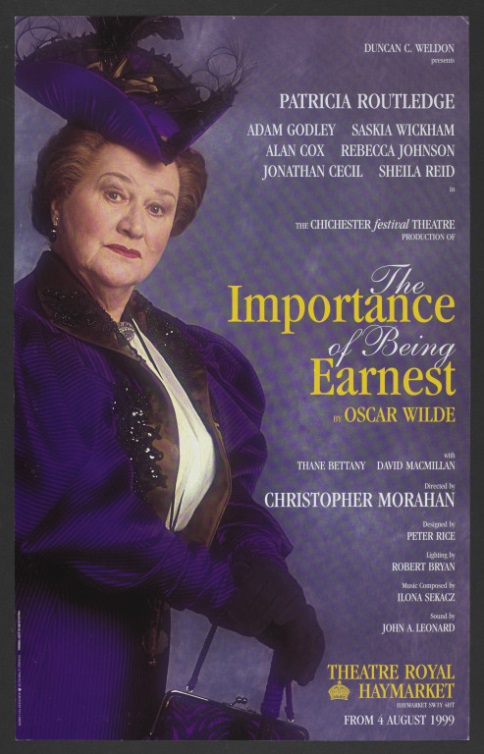
We head to the theater where we are to see the Importance of Being Earnest; the tickets, an early Christmas gift from Brian. It stars the amazing Patricia Routledge, of Keeping up Appearances, a long-running British comedy, and I am eager to see it.

I read in my Majesty magazine that for her 99th birthday in August, the Queen Mother saw the play and reportedly enjoyed it very much.

The theater—the Royal Haymarket—is near Piccadilly Circus. It takes us a while with the A-Z to get oriented. We pick up our tickets and grab some lunch. We walk around the block to stretch our legs and pop in the back entrance to the National Gallery museum shop. As we leave the shop, I look down a narrow alley and see St. Martins-in-the-field church. I am just a block from where I was last weekend near Trafalgar Square and the National Portrait Gallery.

The theater is opulent—in the decorative style of Louis XIV with rich, red brocades, gold cherubs, and the gold-leaf Royal crest of King George V and Queen Mary above the stage. We are in the first row of the lower balcony, which I take pleasure in seeing is called the Royal Circle.

The show is hugely funny. Oscar Wilde called it, “A trivial comedy for serious people.” Patricia Routledge superbly plays the overbearing Lady Bracknell to the point of absurdity, just as Wilde intended mocking the upper-class morals of the day. We all love it.

One theater critic writes of Ms. Routledge’s performance:

Her voice, an effortful monotone with a dying fall on each punchline, seems to emanate from somewhere deep in her bustle. When Jack stutters out his origins as a foundling in a piece of left luggage, Routledge’s eyelids droop, her head quivers, and the appalled line—“a handbag”—creeps out like a death rattle.

During intermission, we have ice cream. Brian and I are amazed that we can take the ice cream inside. In the US, the ice cream would be smeared over the seats, dripped on the floor, and empty cups littered everywhere. Here, the theater patrons eat it neatly and properly dispose of the containers.

After the play, we walk through Piccadilly Circus, down Piccadilly Street, to Fortnum and Masons. A landmark itself, F&M sells gourmet foods; everything from quail eggs to Scotch eggs, to foie and Stilton. We laugh at some of the products nestled among the upscale British marmalades and shortbread—spreadable frosting in a can, Nescafe instant coffee, and peanut butter. Is it a nod to US expatriates? We pick up a few nibbles and bring them back to our room for a light dinner.

We are all tired. Brian falls asleep at 8:15 PM but of course denies having been asleep when he wakes a few minutes later.

We miss the bagpipes.

September 10, 1999 – In Which We See Scotland’s Stone of Destiny and Taste Some Whisky

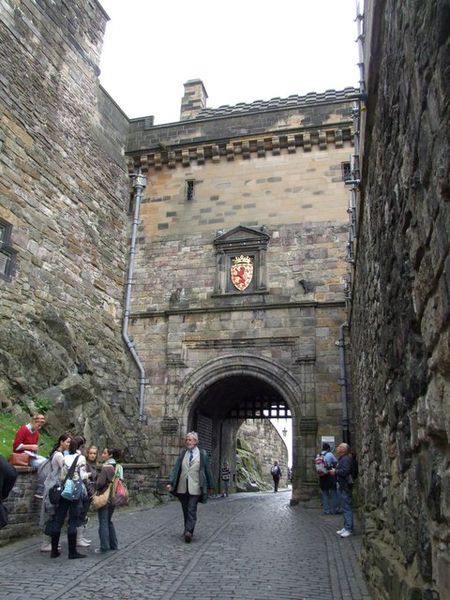
We pass on the haggis at breakfast this morning and head out for Edinburgh Castle. The massive castle, situated on an extinct volcano, dominates the city skyline. We enter through the football-field-sized esplanade, which is the parade ground for the Edinburgh Military Tattoo held annually in August. Ian, our Scottish guide, takes us through the portcullis gate and tells us to take a wee walk up the hill where we will start our tour.

Portcullis Gate, Edinburgh Castle
Photo: Dave Hitchborne/Wikamedia Commons/CC BY-SA 2.0

We climb the steep, broad, cobbled road to the ramparts of the Upper Ward that look out over the city. We have a beautiful view of the Firth of Forth, the estuary of Scotland’s River Forth.

Here also is the one o’clock gun. The Royal Artillery gunner fires the booming cannon at 1 PM as he has done every day since 1861. The firing is so consistent that ships in the Firth of Forth set their maritime clocks by the gun. Cheeky Ian tells us that the ever-frugal Scots chose 1 PM instead of 12 PM to save on ammunition; having to fire only one canon shot not 12.

Next, we visit St. Margaret’s chapel―a small, simple chapel made of sandstone. King David I built the chapel around 1130 and named it for his sainted mother. This is the castle’s oldest structure.

St. Margaret’s Chapel, Edinburgh Castle

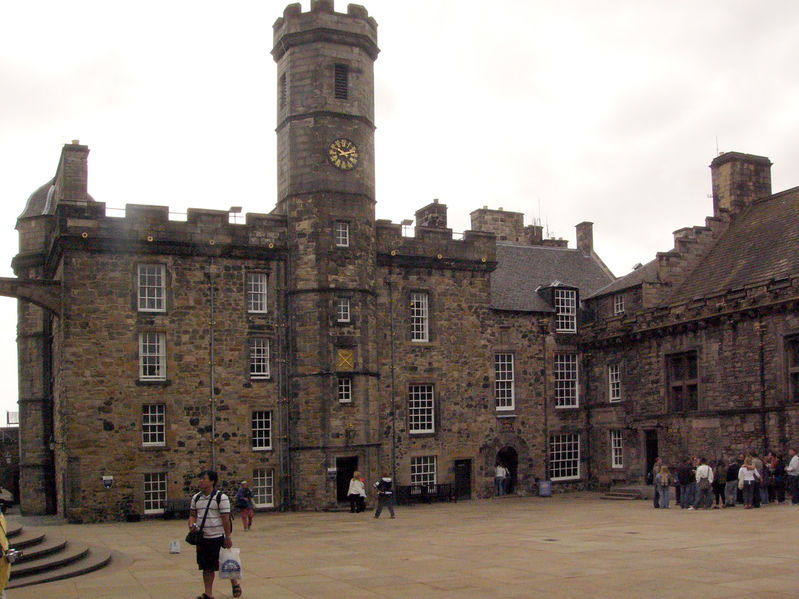
We move along to the Royal Palace entering a small bricked square that is distinguished by a neat, hexagonal clock tower. This was the official residence of the Stewart kings and queens. We see the rooms that Mary Queen of Scots occupied.

Royal Palace, Edinburgh Castle
Photo: Christian Bickel

The Stone of Scone aka the Stone of Destiny

I am most interested in seeing the Stone of Destiny. The Stone is displayed in the Crown Room in the Royal Palace along with the Honors of Scotland, as the Scottish Crown jewels are known. It is an ancient stone that solemnized Scotland’s royal coronations.

Unless the fates be faulty grown 
And prophet’s voice be vain 
Where’er is found this sacred stone 
The Scottish race shall reign.

― ancient poem translated by Sir Walter Scott, 16th century

Steeped in myth, Scots believe that without the Stone’s presence, a coronation is not legitimate. In the 13th century, King Edward I of England captured the stone and brought it to Westminster Abbey. Here it remained until 1950 when four reckless Scottish nationalist university students stole the 300-pound stone, bringing it home to Scotland, but breaking it in half in the process.

England soon recovered the stone, but the students’ act set off a patriotic fervor. Finally in 1996, as a gesture to try to quell the Scottish separatist movement, John Major’s Conservative government returned the stone to Scotland; 700 years after it was removed and coincidentally only a year after Mel Gibson’s Braveheart movie that depicts the brutal destruction of the Scots by a villainous Edward I. For the next British coronation, the Lord Great Chamberlain will install the stone in Westminster Abbey for the ceremony, but return it to Edinburgh Castle afterwards.

Leaving the castle, we begin our walk down the Royal Mile—as the mile-long street between Edinburgh Castle and Holyrood Palace is known. The street is lined with monuments, churches, and historic sites, as well as shops and pubs.

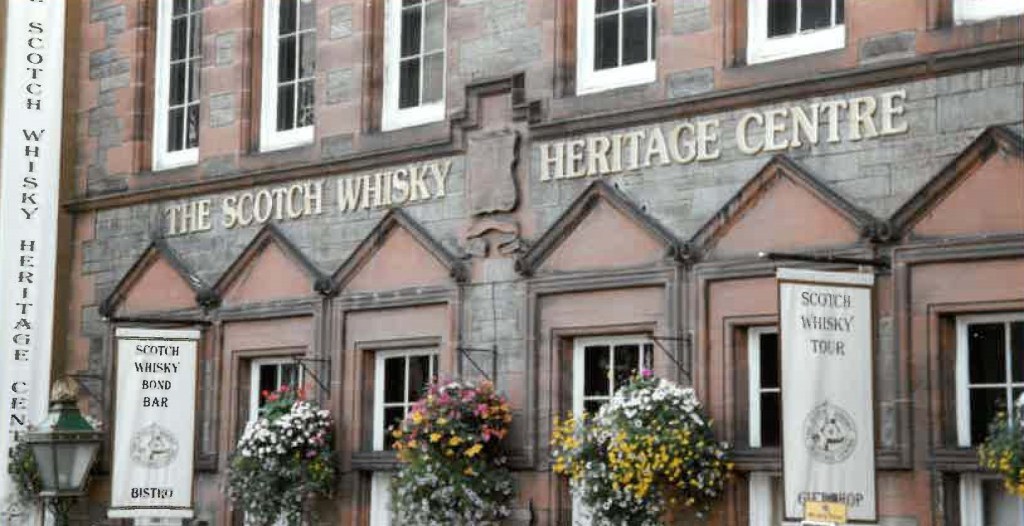
After a brief stop at the tartan store where Mom buys some wool, we move on to the Scotch Whisky Heritage Center (Scotch Whisky, as opposed to Irish Whiskey, is always spelled without an e).

Scotch Whisky Heritage Center, Royal Mile, Edinburgh

Whisky—the water of life

A Disneyesque ride in a whisky barrel takes us through the history of the distilling industry from the early Royal charters that allowed businessmen to sell whisky tax-free in the 1600s; to the high-tax period from which rose the illicit stills and the everlasting battle to outwit the excise man; to prohibition, which nearly bankrupted the industry; to the young WWII servicemen who acquired a taste for Scotch and took it to all corners of the globe.

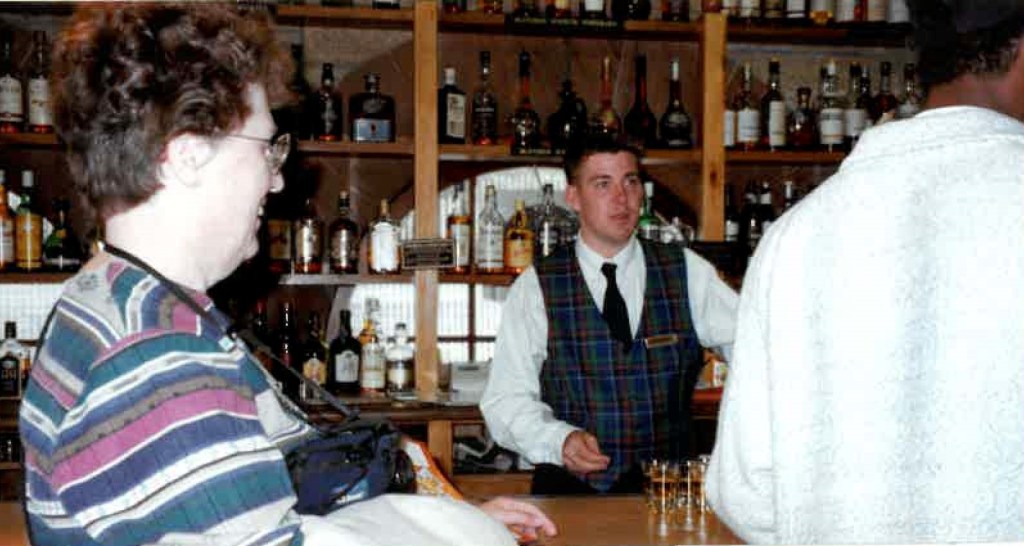
Our tour ends with a wee dram. Undiluted, the strong liquor burns all the way down my throat. The gift shop boasts over two dozen single and blended malts. Mom buys some crème liqueur for Dad.

Mom has a wee dram, Scotch Whisky Heritage Center, Edinburgh

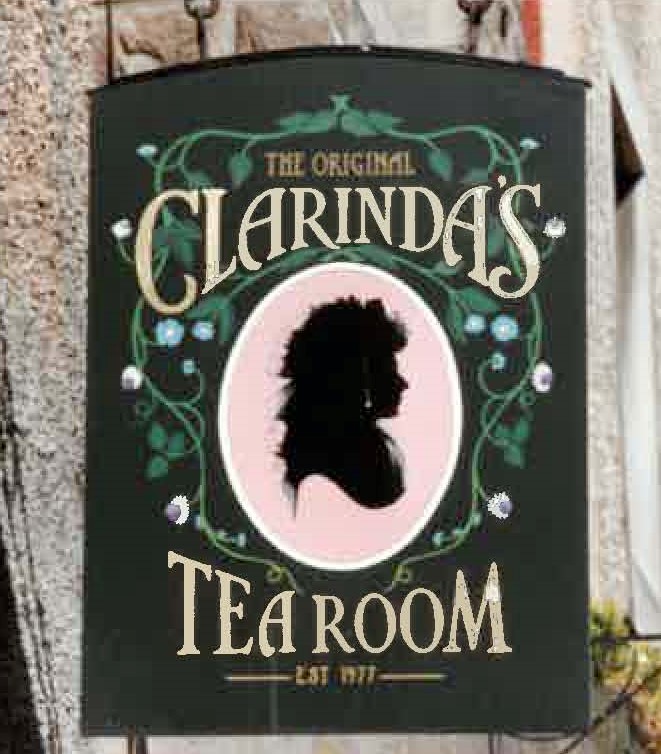
Continuing down the Royal Mile, we stop at Clarinda’s Tea Room for a late lunch/early tea. It’s a very cute tea shop with a wonderful selection of sweets from the trolley.

The Queen’s Palace of Holyroodhouse

We make our way to Holyrood Palace. Built for Charles II in the early 17th century, he never actually saw it, let alone lived in it. The “new” palace he had constructed incorporated a tower from the older palace that is steeped in Mary Queen of Scots lore. She lived here with her second husband, Lord Darnley. It was here where a jealous Darnley murdered Mary’s private secretary. And it was from here whence Mary escaped and fled Scotland…into the even more jealous arms of her cousin, Elizabeth I of England.

The palace has some interesting and unique personal items of various monarchs and would-be monarchs, including a lock of hair from Mary Queen of Scots; pistols belonging to Bonnie Prince Charlie; and a fork and spoon of Charles II’s.

Holyrood (rood meaning cross) is a working palace where Queen Elizabeth stays when in Edinburgh. The guide in one room tells us that the Queen’s apartments are directly above us, but that she has never seen them, “It is not allowed,” she says.

We pass through the 16th century apartments of Mary, Queen of Scots and the State Apartments used for official and state entertaining. According to the Holyrood website:

The rooms become progressively grander as you approach the King’s Bedchamber―the grandest room of all, where historically, only the most important guests would have been granted an audience.

The bedchamber in the 17th century was not just for sleeping but also where the King or Queen received guests and met with diplomats. According to one account, these ceremonial duties often crowded the sleeping chambers until the monarch had to move to another bedroom when he or she actually wanted to sleep.

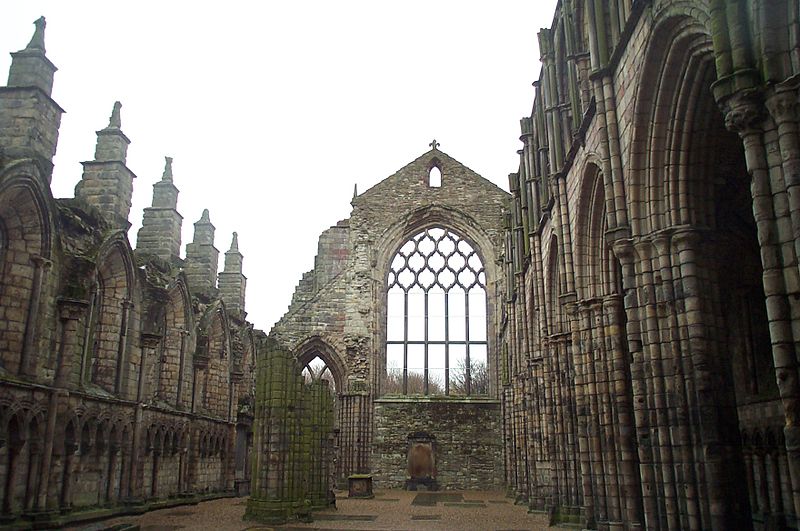
My favorite part of the palace is the Abbey ruins. The ruins are vast and I can almost imagine how splendid the church must have been, including huge stained glass windows and a wonderful Gothic nave. King David founded the abbey in 1128 and it stood for 400 years until the Scottish Reformation when mobs destroyed and looted it. In the mid-18th century the roof collapsed leaving the abbey the ruined shell that stands today. Its soaring arches are weathered but look sturdy and solid with their intricate stone work. They leave a haunting impression of ancient Scotland.

Holyrood Abbey ruins, Edinburgh
Photo: Wickipedia Commons

After hitting one more gift shop, we walk back to the hotel, have dinner, and pack to leave tomorrow.

September 9, 1999 – For the Land of Burns, the Only Snag is Haggis

We have coffee in our rooms while Tony orders us a taxi. It’s a four-and-a-half-hour train ride to Edinburgh. Who knew Scotland was so far away? We talk, read, eat a sandwich. Brian asks for a scone. They don’t have scones, but they have “moofins.” Finally, at 1:30 PM, we arrive and check into our hotel.

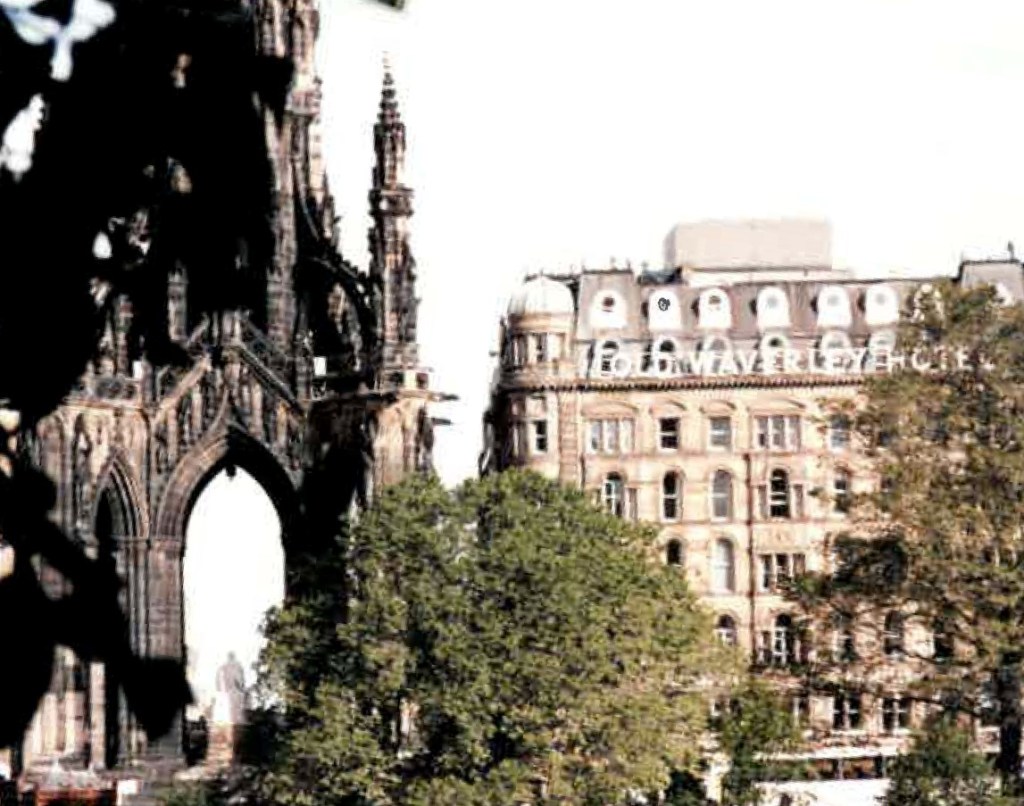
Our hotel, the Waverly, a large, pleasant 3-star Victorian hotel, is just steps from the train station on Princes Street. The registrar at the hotel desk has a thick, incomprehensible Scottish brogue. He talks for several minutes giving us copious instructions. When we take our keys and turn away, Brian and I look at each other and both say, “Did you understand a word he said?” Brian says. “I think we’re supposed to return the key to the desk when we go out.” I say, I think he said something about breakfast. Really, we have no idea.

Sir Walter Scott Memorial (foreground) and Waverly Hotel (back), Edinburgh

Our first stop is Britannia—Her Majesty’s Royal Yacht. It was decommissioned in December 1997 and is now docked in the Port of Leith in Edinburgh for tourists and corporate events. Taking the ship out of service was quite controversial at the time. Admittedly a drain on taxpayers, yet it represented Britain all over the world and commanded respect wherever it went; some calling it a national treasure. Then during its decommissioning, just a few months after the death of Princess Diana, it did not go unnoticed that the Queen showed more emotion at the loss of her yacht than she did for the death of her former daughter-in-law; even wiping away a tear at the ship’s decommissioning ceremony. (Heaven forbid!)

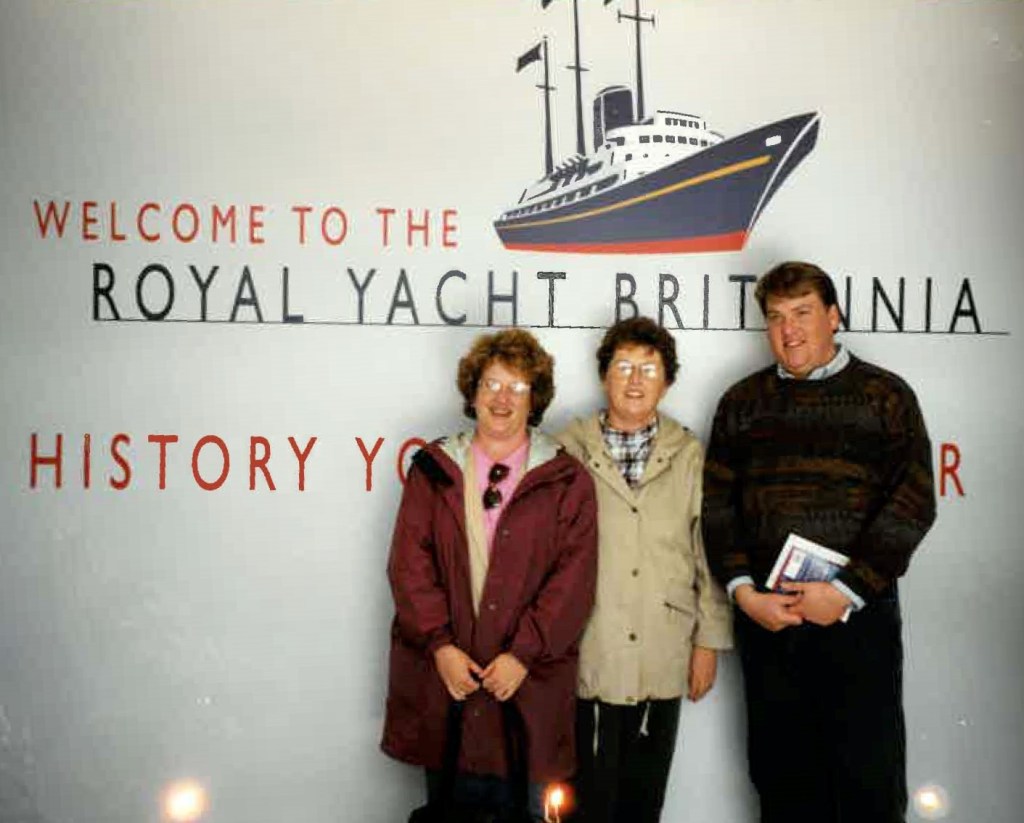
Jody, Mom, and Brian aboard the Britannia

The tour starts with a short video showing Britannia sailing the ocean waves. The visitor’s center offers insight into the Royal Family and the world’s rich and famous whom they entertained. We learn:

  • The Queen travelled with five tons of luggage when making state visits, including Malvern water for her tea.
  • The port windows in the Queen’s apartments are higher than eye level so that seamen wouldn’t inadvertently see the Queen through the windows.
  • The most distinguished guests, like the Clintons, stayed in the Honeymoon Suite, the only room with a double bed.

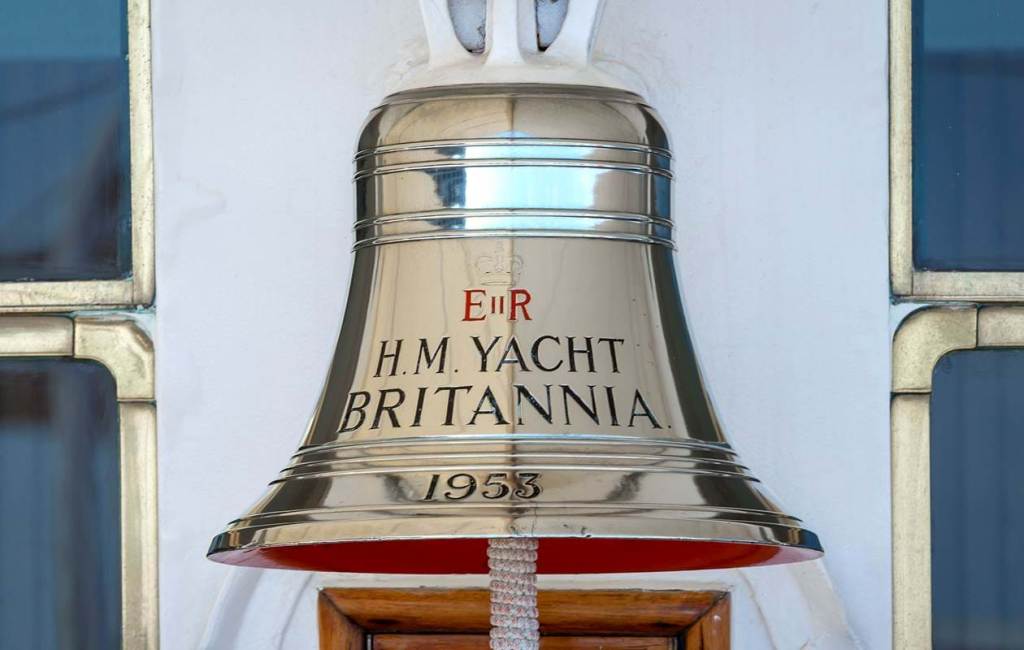
We also watch film footage of the Queen’s various state visits. Over 44 years, the ship made 968 official visits calling at 600 ports. Interestingly, the Queen chose the ship’s outer blue color, which is striped with a band of 36-carat gold leaf. Unusually, the ship does not have its name on her hull, only on the ship’s rather modest-sized bell.

Britannia’s Bell Photo
Royal Yacht Britannia

In some ways, the yacht with its imposing front staircase and elegant state rooms is much grander than you expect, but in other ways, it’s more common. In the long state dining room, the dining table is precisely laid with elegant china, silver, and crystal for a party of 24. But, there is bamboo furniture in the sun room, which Prince Phillip bought in the 1950s, and it looks like it was bought in the 1950s—their style and colors dated.

In that way that the Brits love their pomp and circumstance, we learn that all the clocks on board the ship remain stopped at 3:01 PM the exact time H.M. the Queen was piped ashore for the final time during the decommissioning ceremony. It is a nice touch.

We loved Britannia, from the captain’s deck, to the engine room, to the state drawing room, to the Royal living quarters; it is a floating palace with exotic tales of the bounding main that once truly did rule the waves.

We return to our hotel and rest before heading out for our Scottish evening at the George Intercontinental Edinburgh Hotel—a dinner event with singing and dancing and, of course, haggis.

Scottish Evening Dinner Menu:

  • Scotch Broth (vegetable soup)
  • The Chieftain o’ the Pudding Race (haggis)
  • Bashed Neeps (mashed turnips)
  • Champit Tatties (mashed potatoes with chives)
  • Roast Rib of Aberdeen Angus Beef
  • Rumpledethumps (cabbage, potatoes, onion, and cheese)
  • Scotch Whisky Trifle (custard desert)
  • Coffee and Highland Shortbread

Scotland’s national dish, haggis is lamb organ meat chopped and mixed with oatmeal and spices. To cook it, the mixture is boiled in a sheep’s stomach.

For the land of Burns, the only snag is haggis

— popular rhyme penned by an English poet

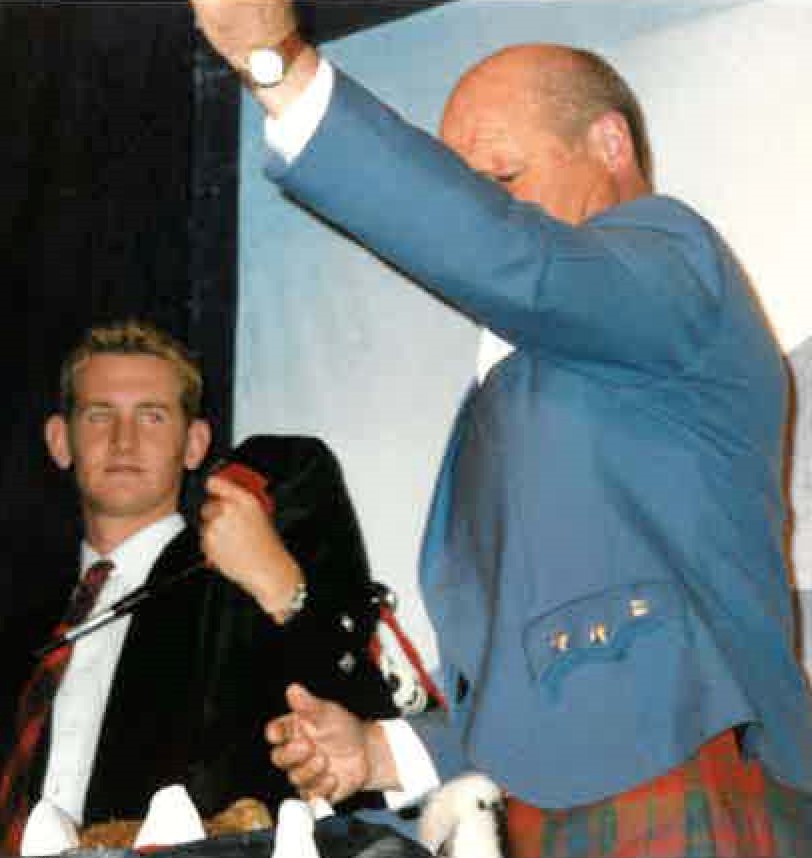
A piper always announces the arrival of the haggis. The head of the table gives his “Address to the Haggis,” a Robert Burns poem, which is recited over the dish. The bulging stomach is then cut open with a dagger or sword and everyone drinks a whisky toast to the dish.

Our host and emcee for the evening, the kilted Graham Fraser, addresses the haggis after it is piped with much flair into our dining room. We raise our whisky glasses high.

Address to the Haggis

Address to the Haggis:

Fair fa’ your honest, sonsie face, Great Chieftan o’ the Pudding Race! Aboon them a’ ye take your place, paineh, tripe, or thairm! Weel are ye worthy of a grace as langs my arm.

— Robert Burns

For all its ceremony and hype, it’s a spicy meat dish that resembles hash or stuffing—the organ meat tastes mildly of liver—overridden by a strong pepper flavor. Its build-up is mainly for tourists…I think.

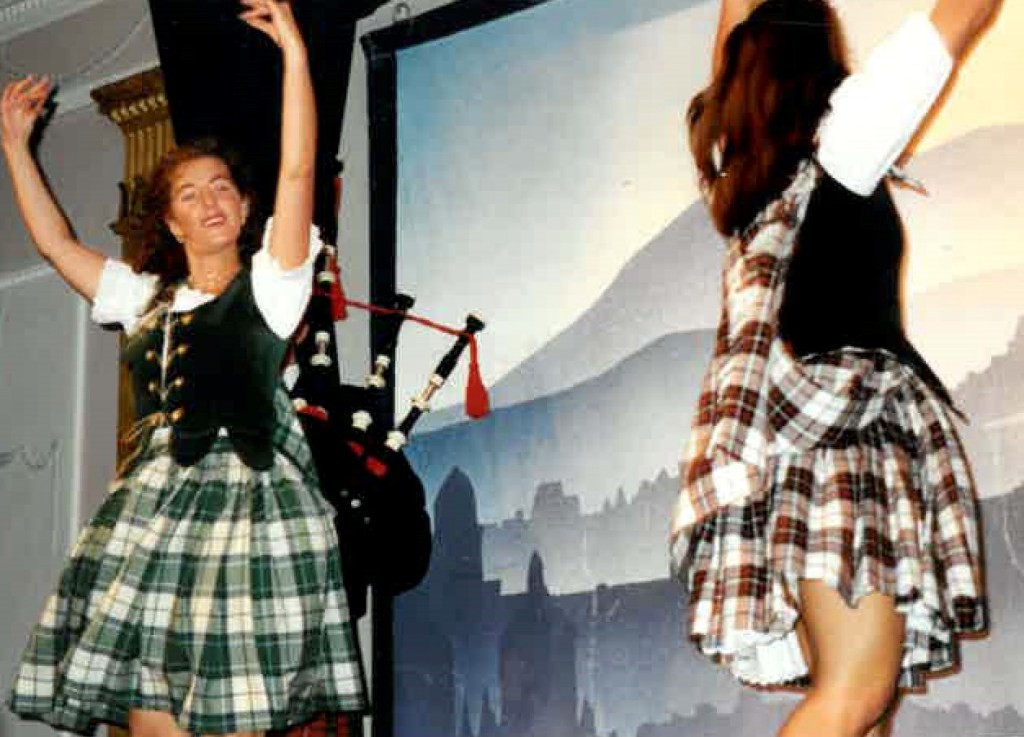
The highlight of the evening is the music―a Scottish piper, fiddler, and accordionist―and the dancers. We clap and tap our toes to the likes of Scotland the Brave and the Bonny Banks of Loch Lomond.

Our Scottish Evening Programme:

  • Welcome to Scotland and Come to the Ceilidh
  • The Ceremony of the Haggis
  • The Skirl o’ the Pipes
  • The George Highland Dancers
  • Sing a Song of Scotland
  • The Pipes and Highland Dancers
  • The Ballad of Glencoe

I love the Skirl o’ the Pipes (skirl meaning wail or moan, which is just the sound the bagpipes make). The bagpipes’ eerie quality provide an ancient, mystical tone to accompany the age-old sword dance.

Scottish dancers

I come away humming Scotland the Brave.

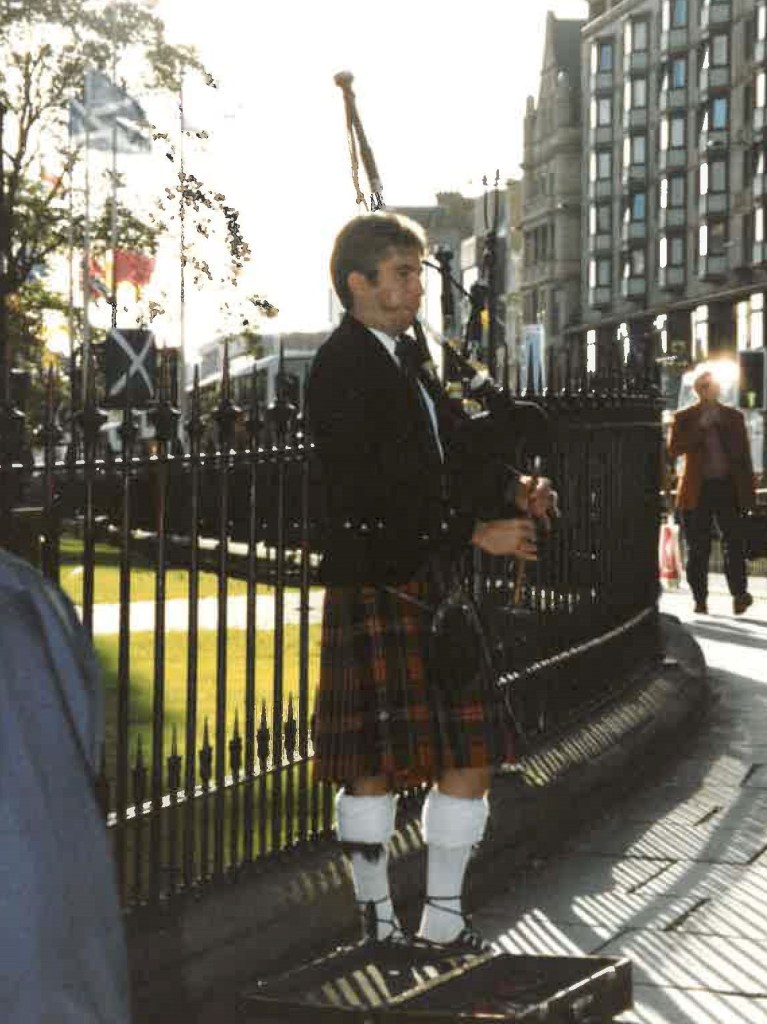
Just outside our hotel, in the park in front of the Sir Walter Scott monument, a piper dressed in full Scottish regalia plays; a busker. We passed him coming back from Britannia and he is playing again tonight as I write this. The melodic tunes of Amazing Grace and Scotland the Brave go on for several hours. It is at times jaunty, at times haunting, and always lovely.

Bagpiper, Edinburgh

September 8, 1999 – Warwick, Britain’s Greatest Castle

At breakfast Brian says I have to record in my journal that Jody didn’t have the cereal, but Mom loved it. It’s some kind of mix of grains with banana and coconut chips. I have my usual—croissant, toast, and grapefruit.

We take the train to Warwick from Birmingham’s Snow Hill station, which is the terminal for local train services rather than long-distance. One of the platforms has recently been renovated and will be ceremonially opened next week by Princess Anne. It is just a few minutes’ walk from Corporation Street and then it is about a 20-minute ride to Warwick.

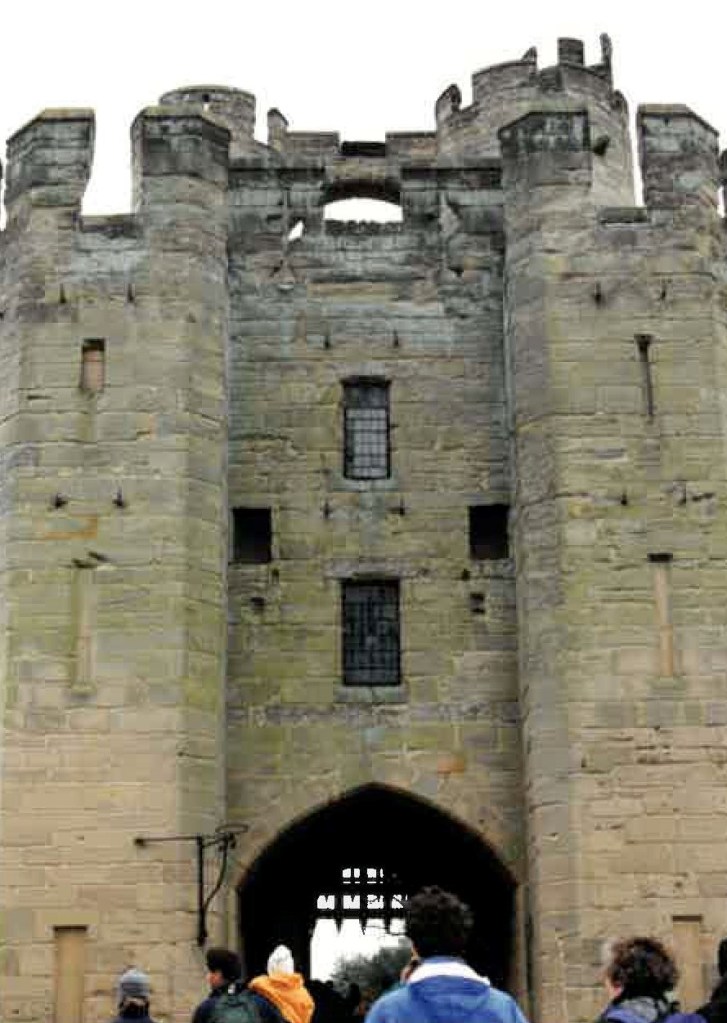
We approach the castle through a dark tunnel carved out of solid rock before emerging onto a tree-lined walkway (Brian calls it a leafy corridor) where we get our first glimpse of stone turrets through the leaves. We enter through the massive medieval gatehouse with its arrowslits and ramparts. It makes me want to look up to make sure no one is preparing to throw boiling oil on us.

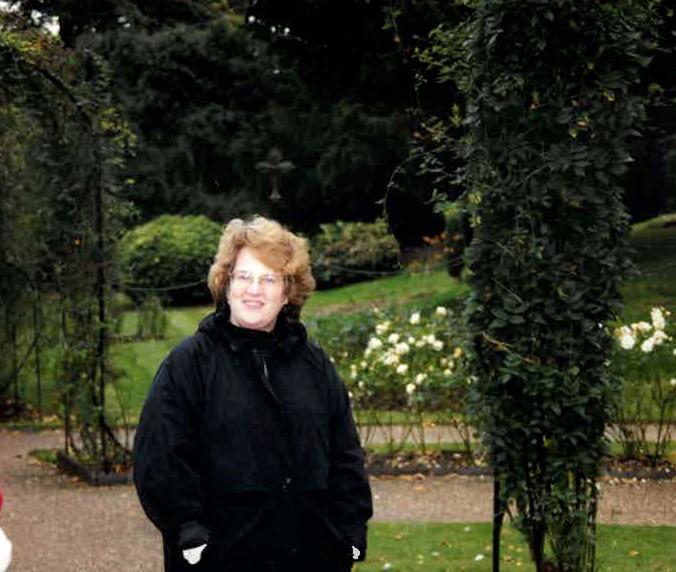
Before entering the castle, Mom and Brian indulge me in a diversionary stroll through the Victorian rose garden just outside the castle walls. It has been recently refurbished and dedicated to Diana, Princess of Wales. The center is planted with white Princess of Wales roses in her memory.

Princess Diana Memorial Rose Garden, Warwick Castle

Warwick Castle is locally proclaimed the “greatest castle in Britain.” Located on the River Avon, it is a microcosm of 1,000 years of British history. Beginning with Ethelfelda, daughter of Alfred the Great, who built an embankment on the site in 914 to defend against invading Danes, the castle has been at the center of the pivotal events of English history.

In 1068 William the Conqueror built a wooden fort at Warwick to retain control of the Midlands while he battled on to capture the north. During the 100 Year’s War, British soldiers brought their French prisoners from the battlefields and incarcerated them in the castle’s grim dungeon, where they were forgotten and left to die. During the Civil War, Warwick’s nobles came down on the side of Oliver Cromwell’s parliamentarians and its dungeon held Royalist captives.

Warwick Castle entrance

The 13th Earl supervised the trial of Joan of Arc. And we will hear about Warwick the Kingmaker, the 16th Earl, during the War of Roses in a bit. The 17th Earl, a potential claimant to the throne, and rival to Richard III (“My horse, my horse, my Kingdom for a horse”), got himself mixed up in a plot to overthrow the King and was executed for his trouble. And it was the Earl of Warwick’s daughter-in-law, Lady Jane Grey, who ruled as Queen for nine days; a pawn in the royal power struggle that ended in the 17-year-old’s beheading by Queen Mary I.

The castle, featuring Madame Tussaud waxworks, showcases its momentous history with a multitude of exhibits: the stables where men prepare for battle during the War of the Roses; the medieval Great Hall complete with weapons and coats of armor; the Court of Henry VIII and all six of his wives; the glittering Baroque 17th century state rooms; and a sumptuous Victorian weekend house party.

We start with the Kingmaker.

The year is 1471 and Warwick’s Earl, Richard Neville, commonly known as the Kingmaker, is readying for battle―Kingmaker because of his military prowess that helped win the throne for two English kings during the War of the Roses.

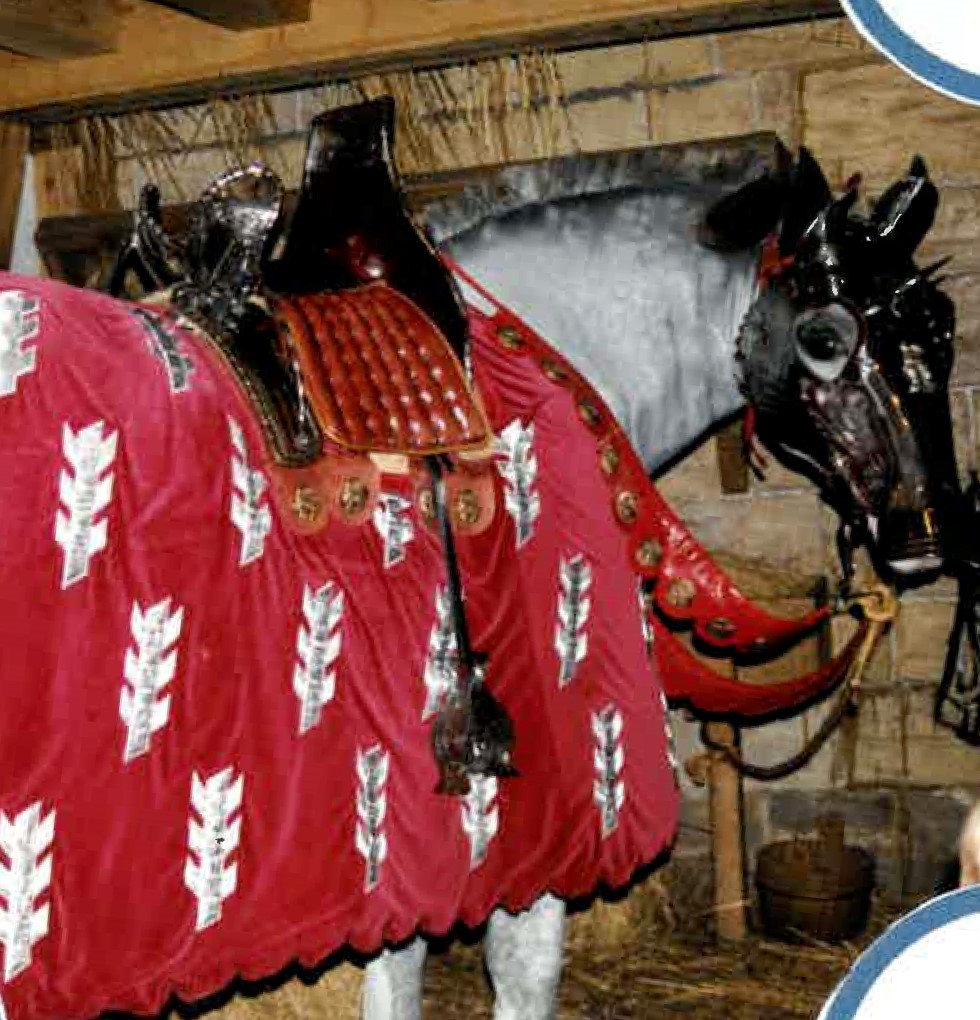
War Horse, Warwick Castle

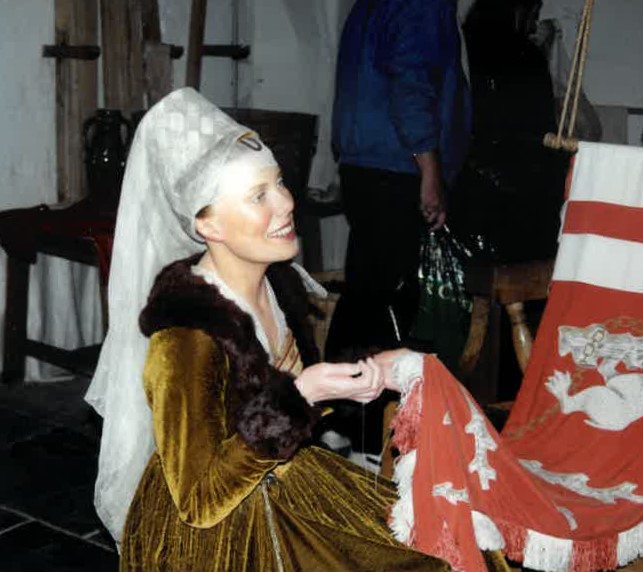
The exhibit has soldiers wielding swords and grooming their decorated horses along with music and snippets of dialogue that depict a castle gearing up to fight. There are displays of all the craftsmen who support the soldiers: blacksmith, wheelwright, fletcher (arrowmaker), and bootmaker. The women of the medieval castle, clad in their veil-adorned steeple headdresses, are sewing battle flags.

Sewing Battle Flags, Warwick Castle

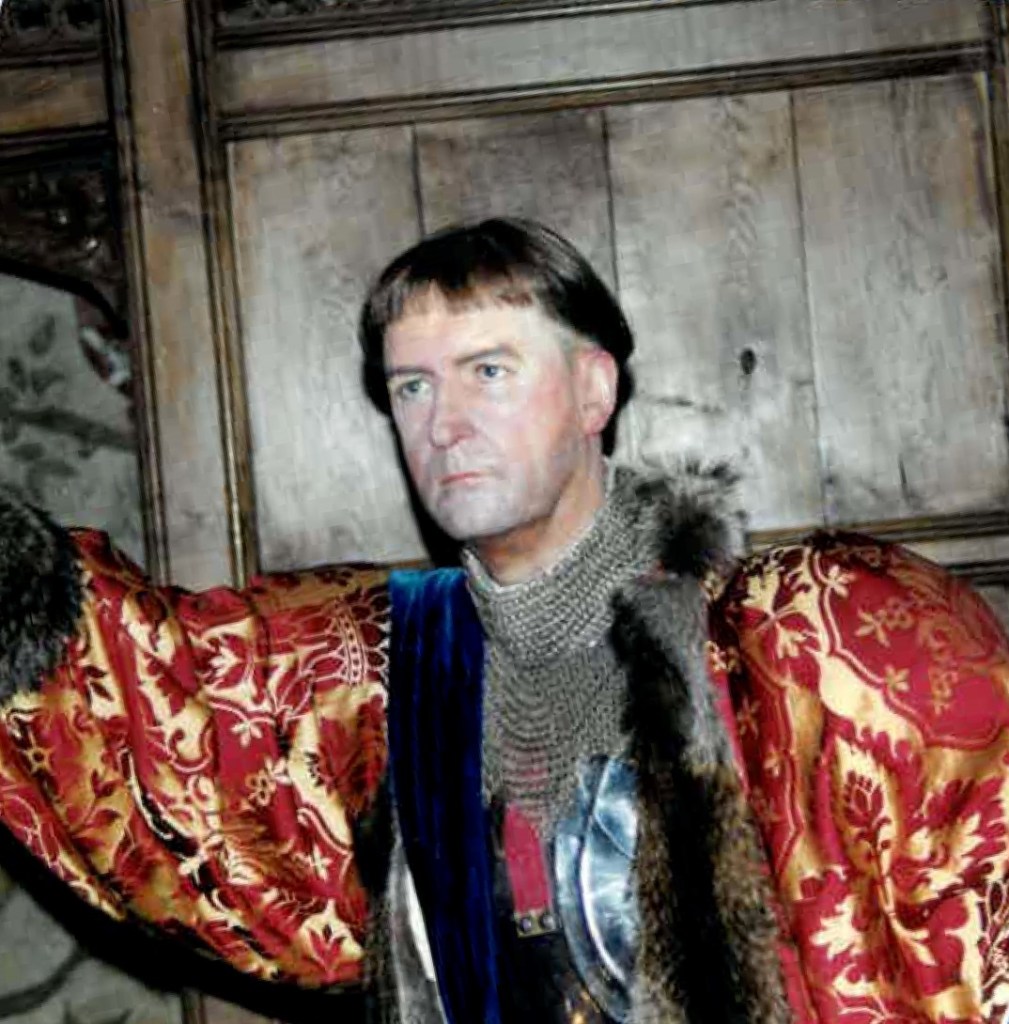
The last scene shows Neville, sword in the air, rallying his men for the fight. The Earl was killed in this battle.

Earl of Warwick, 1471

My favorite part of the castle is the Victorian exhibit, which jumps ahead 400 years and recreates an 1898 Royal Weekend Party complete with wax likenesses of the Earl and Countess, their well-heeled guests, and servants.

Each of 12 rooms presents a different tableau. Among them are:

  • A young Winston Churchill reading in the masculine, oak-bookcase-lined library. Winston is shortly leaving for Egypt to become a war correspondent.
  • In the Music Room, Clara Butt, renowned contralto singer of the time, entertaining Winston’s mother, Lady Churchill, and her 20-year-younger lover and future 2nd husband, George Cornwallis-West.
  • The Duke of York, later to be King George V, playing cards with Charles Spencer Churchill, 9th Duke of Marlborough and owner of Blenheim Palace, in the Smoking Room while the butler mixes drinks.
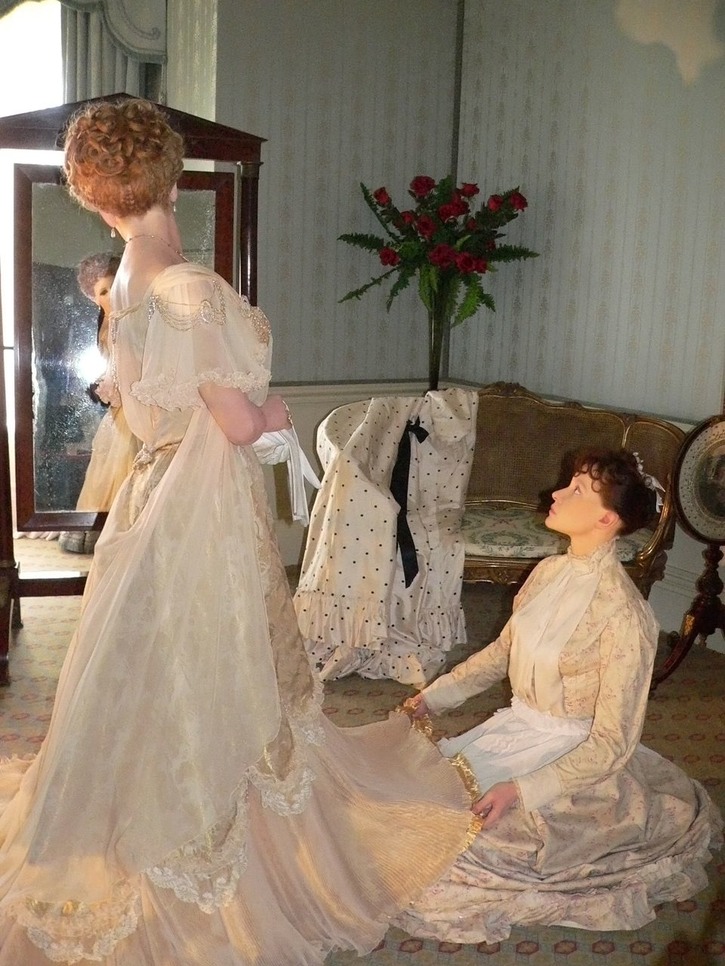
  • Daisy, Countess of Warwick in front of a full-length mirror in her luxurious bedroom trying on her new white satin and lace gown. Daisy’s maid sits at her feet holding the dress’s lavish train.
Daisy, Countess of Warwick, Warwick Castle
  • The Kenilworth Bedroom is reserved exclusively for Daisy’s lover, the Prince of Wales, the future King Edward VII, where he stands in front of the fireplace with a fat cigar in his hand. His valet is pouring him a pre-dinner drink.
  • Daisy’s tolerant husband, Francis Greville, Earl of Warwick, also smoking a cigar, waiting for his bath to be drawn in the Earl’s Dressing Room.
  • Consuelo Vanderbilt, Duchess of Marlborough, preparing for dinner in the Chinese Bedroom with its colorful oriental furnishings. The American heiress is said to have been locked in her room by her father for four days before agreeing to marry the English Duke.
  • In the nursery, Maud, the nurse, holding the baby Marquis of Blandford, the first son of the Duke and Duchess of Marlborough, while the maid Lily looks out the window to see what is happening outside.

We all love Warwick Castle, its history, its attention to detail, its sheer immensity. After our tour, we have to agree, it is the greatest castle in Britain, or at least one of them.

We grab a quick bite to eat at the castle’s Stableyard Restaurant and take the train back to Snow Hill.

At Snow Hill, we dash down the escalator and hop on the train to Worcester just minutes before it pulls out of the station. It is an hour-long ride during which, at one stop, a group of school boys gets on. They are wearing uniforms—neat pants and navy blue blazers. Despite their very proper appearance, they act in typical noisy boy fashion—pushing and shoving. A short while later they all scramble off, and peace is restored.

Worcester is a quaint city with a central cobblestoned, pedestrian walkway lined with Tudor-style buildings that house shops and restaurants. We pass the Guild Hall. Through the windows, we can see gorgeous chandeliers inside. But, I can’t find anything in my guide book about it.

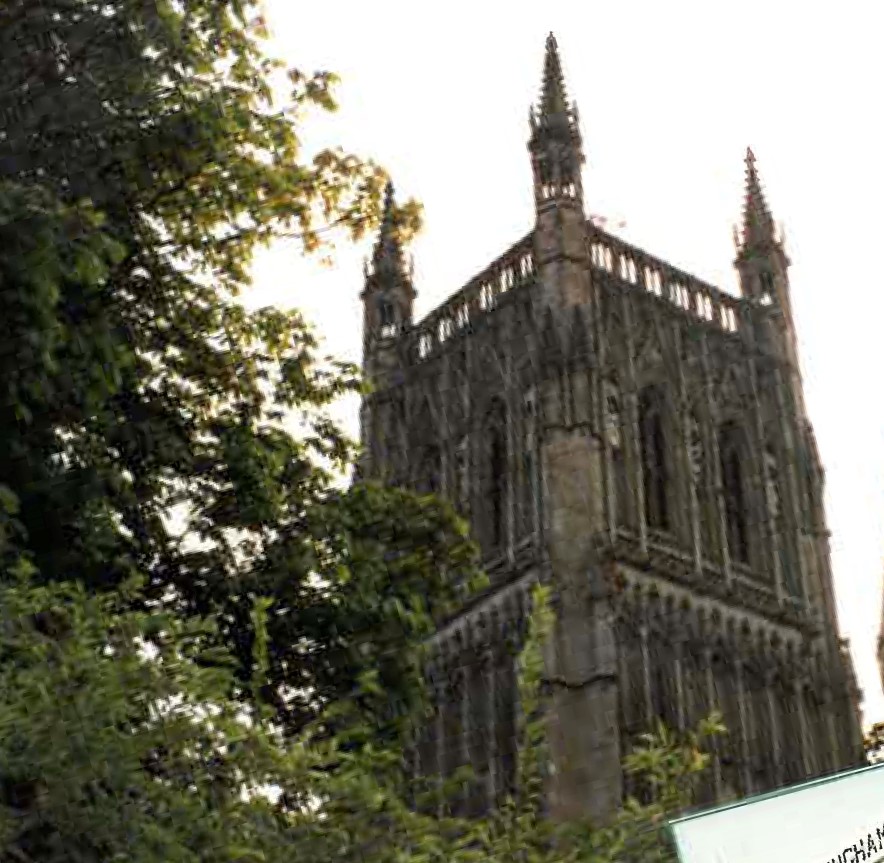
Worcester Cathedral dominates the skyline as we walk towards it. It is built of sandstone and, as my guidebook says, “It is a rich stew of architectural styles.” The plague carried off many of the stonemasons that worked on its construction in the mid-twelfth century. It is also where King John, who died in 1216, is buried. They story goes that the king of Magna Carta notoriety explicitly asked to be buried between the tombs of saints Wulfstan and Oswald in Worcester Cathedral.

Worcester Cathedral

We continue walking down a narrow path to Severns Street, named for the Severns River, which it borders, until we see the blue metal archway with the Royal Worcester crest. We head first for the Spode Blue Room to pick out some Spode Italian Buildings china for Aunt Kay-Lee—a covered cheese dish. We arrived in Worcester rather late; about 4 PM and most everything closes at 5:30 PM. We go in a few factory shops, have some tea, and hop back on the train.

We eat dinner in Birmingham at Pasta Bella, go home, and fall into bed.

September 7, 1999 – Mom and Brian arrive!

This morning for the first time since I’ve been here, it is raining. It is a soft, steady rain and still warm and very humid. But by the time I walk to the University station and take the train to City Centre to meet Mom and Brian, it’s stopped. At New Street station, I wait for several minutes after their train is supposed to have arrived, but I don’t see them. I make my way towards their platform and there I see two tired and bedraggled travelers walking towards me. We have coffee and scones at the Internet café then take a taxi to my B&B for naps.

Around 2:00 PM we head off to Cadbury World. Brian is quite enamored of the Beanmobile ride. Today, I am thankful for the chocolate bars they hand out as we skipped lunch and I am hungry. We buy a ton of chocolate and then take the train back to Birmingham City Centre. We walk through the public squares to the canals. It’s too far for two jetlagged people and they are dragging.

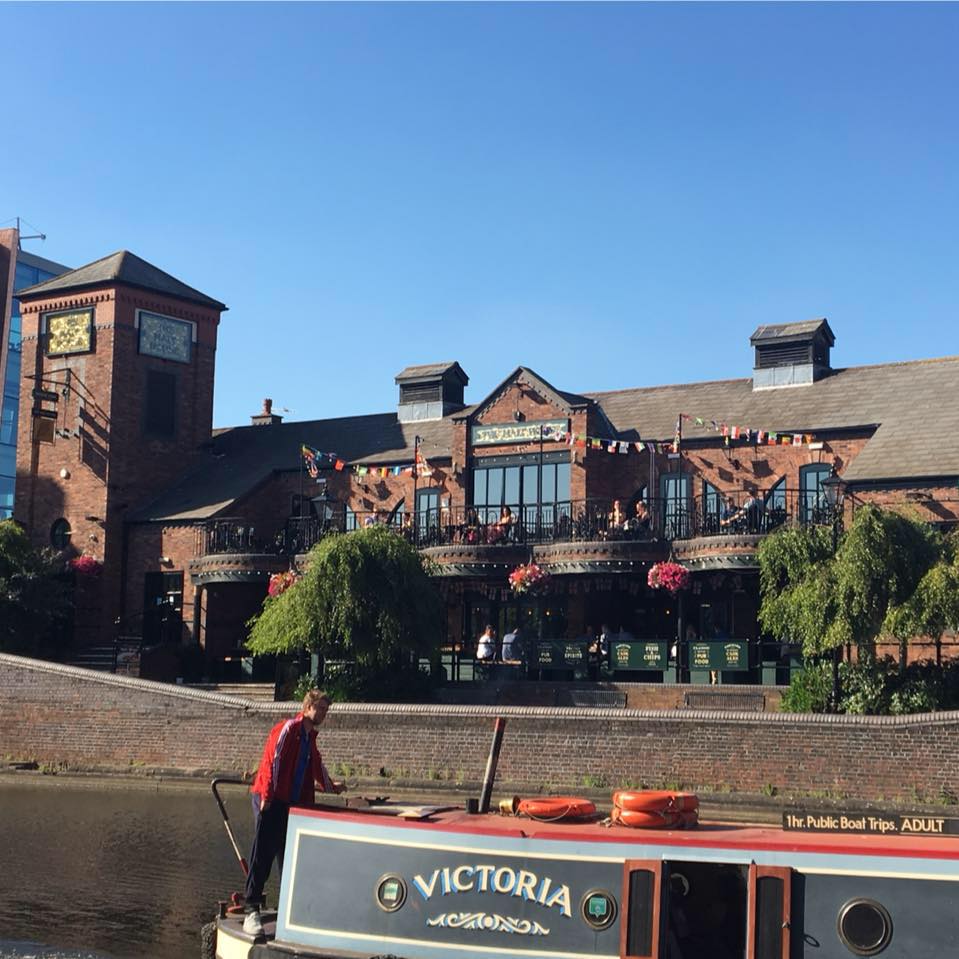
We end up at the Malt House in Brindley Place, where Bill Clinton ate. Disappointingly, it is not traditional fish and chips pub food. Brian has chicken tikka. Mom and I have grilled chicken. Mom has coffee and says with a surprised look that it’s not too bad.

Malt House, Birmingham
Photo: Malt House Facebook Page

We are all leery of British coffee. When visiting in 1996, we found the coffee to be very bad; bitterly strong or, more often, instant coffee. In one of those stories that have become family lore; Mom always tells about Brian talking her into having coffee in every restaurant we went in, whenever the menu listed “filter coffee.” He’d say, “It’s filter coffee, Mom” thinking it must be made in a regular drip coffee maker, not instant. Mom is like Charlie Brown to Lucy with the football. Every time Brian encouragingly says, “It’s filter coffee,” she ordered it. But no, every time, it was bad. Finally, three days into our trip we switched to cappuccino and drank that for the rest of our time in the UK.

We take a taxi back to Glenelg and go to bed early.

  • In today’s news: Row as Royal Opening Shuts Metro. Thousands of commuters have been told to catch a bus during the two-hour period the Midland Metro closes for its official Royal opening. Public transport promoter, Centro, confirmed it was suspending normal services on the Birmingham Snow Hill-Wolverhampton route for the Princess Royal’s visit next Tuesday. A Centro spokesman said the Metro was being closed for “operational reasons” and advised members of the public who wanted to use it to catch the bus instead.

September 5-6, 1999 – Antiques Roadshow and a Day in which I Crash the University Computer System

I am immediately hooked by a BBC show called Antiques Inspectors, which airs on Sunday nights. I love the format. A squad of experts goes into people’s homes and pokes in attics and spare rooms then values the antiques they find. It is light and fun. In Whitsable, England, where the first show takes place, they find some early ceramic vessels. Apparently a ship with a cargo of Roman pots went down near here centuries ago and fishermen have been dredging up earthenware for years. Despite their antiquity, they are only valued at £100-200 each.

Sadly, the woman co-host of the show—Jill Dando—was murdered in April on the front doorstep of her home in London, shot in the head. She was a well-loved news anchor. This fall, they are airing the first and only series of the show in her memory with her family’s permission.

I also love the British Antiques Roadshow. Everything is always so much older than what people bring in on the American show. When the Roadshow visits Torquay, an older British lady shows the appraiser a set of broken Japanese ceramic bowls; their fragments glued together haphazardly. There is a red scorch mark across their side. The bowls were unearthed at Hiroshima; the force of the nuclear blast fusing the broken pieces like they had been baked in a kiln. The Roadshow experts can put no price on them. The appraiser says, “They simply record an extraordinary moment in time.”

At work on Monday, I make train reservations for Mom and Brian, who arrive tomorrow. I register for health services, and pick up my mail. I also go to the Lloyds bank branch on campus to get my checking account settled. The British Council has set up the account and they have even deposited money into it. The woman at the bank says my checks will be here in 2-3 days. I don’t know it yet, but this is the start of a long saga of lost checks, recalled ATM cards, and unworkable PIN numbers that won’t get resolved for more than a month.

The office is extremely noisy. I can hear every conversation in every office all the way down the hall. Plus once or twice someone is smoking and cigarette smoke wafts into my office. The mysterious Simon has yet to put in an appearance.

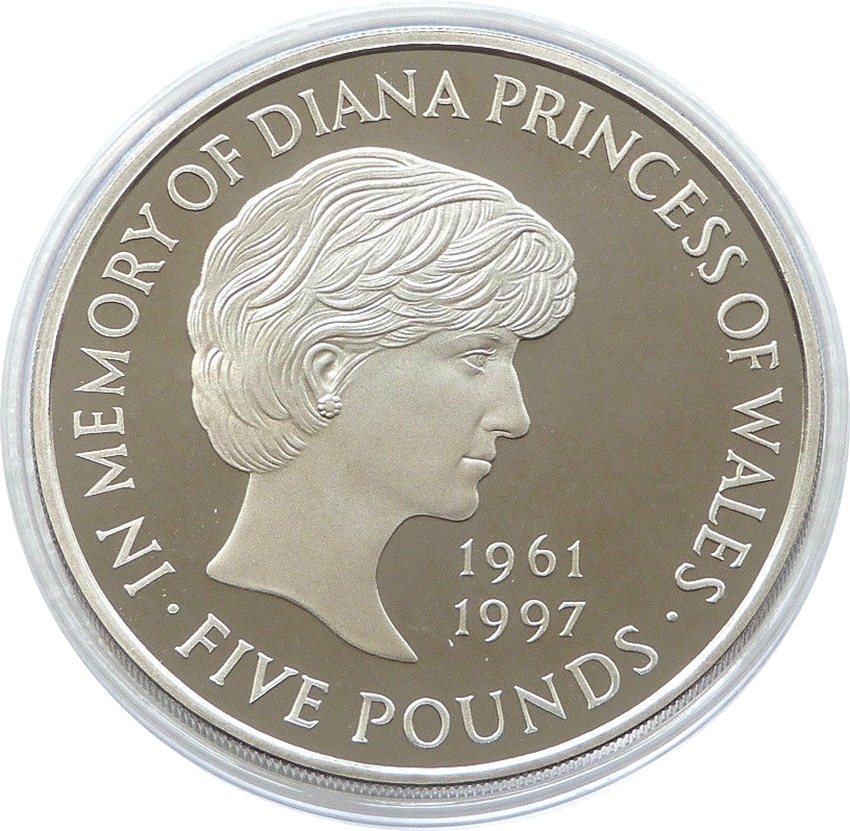
Dean and Barbara arrive and, after Saroj shows them around, they ask me to lunch. We eat at a little French café in Harbourne, a Victorian suburb of Birmingham, where Dean and Barbara have rented a house. The baguette is amazing, fresh and crusty, and I devour it. I stop at the post office, which is right next to the restaurant, to mail some letters. I also buy one of the Royal Mint’s new Princess Diana £5 memorial coins. Dean is not impressed, but Barbara is a fan of Diana’s. She is very eager to hear about how I met Charles Spencer.

Princess Diana Memorial Coin
Photo: The Royal Mint

After sending some emails during the morning, Nasir, the university’s computer guy, pops his head into my office and asks if I sent an email message to a big group list. Apparently, I crashed the server because I listed the email addresses with a semi-colon and space between the addresses rather than a comma and no spaces. Really? He says not to worry, they’ll fix it. They will have to kill all my outgoing emails though.

  • In today’s news: George Mitchell arrived in Ireland today to try and save the Good Friday Agreement, which has all but broken down. Senator Mitchell says, yes, he thinks it can be saved adding, “If I did not, I wouldn’t be here.”

September 4, 1999: Jody’s Grand Day Out in London

I have the whole day in London to myself! And this morning, I have reservations to tour Buckingham Palace. To get to the palace, I walk along the pedestrian-only Queen’s Walk that borders Green Park; it is about a 10-minute walk. The pleasant, leafy Queen’s Walk was built for Queen Caroline, wife of George II.

It is another sunny, summer day. I wear my raincoat, not because I am cold, but to cover up my travel wallet. Mostly I wear my coat tied around my waist with the wallet around my neck and tucked underneath hidden from pickpocketers.

Buck House

Normally, Buckingham Palace is not open to the public. But, since the 1992 fire that destroyed parts of Windsor Castle, the Queen agreed to open it for a limited period of time in August and September while she is on holiday at Balmoral in Scotland. My £10 ticket fee helps pay for Windsor’s restoration.  

There is a long queue where we enter through the Ambassador’s Entrance. Buckingham Palace is where the Queen holds her official state dinners, garden parties, and the accolade ceremony to confer knighthood. The rooms that are part of the tour include the: Grand Staircase, Throne Room, State Dining Room, Music Room, and the Green, Blue, and White Drawing Rooms.

The rooms are opulent beyond words.

In the Throne Room everything is red and, anything that isn’t red, is gold. The room contains the chairs in which Elizabeth and Philip sat for the 1953 coronation ceremony. The red chairs, with the Queen’s cypher ‘EIIR’ embroidered in gold thread, look small against the dramatic red velvet canopy. I recognize this enormous room as the setting for Charles and Diana’s formal wedding pictures.

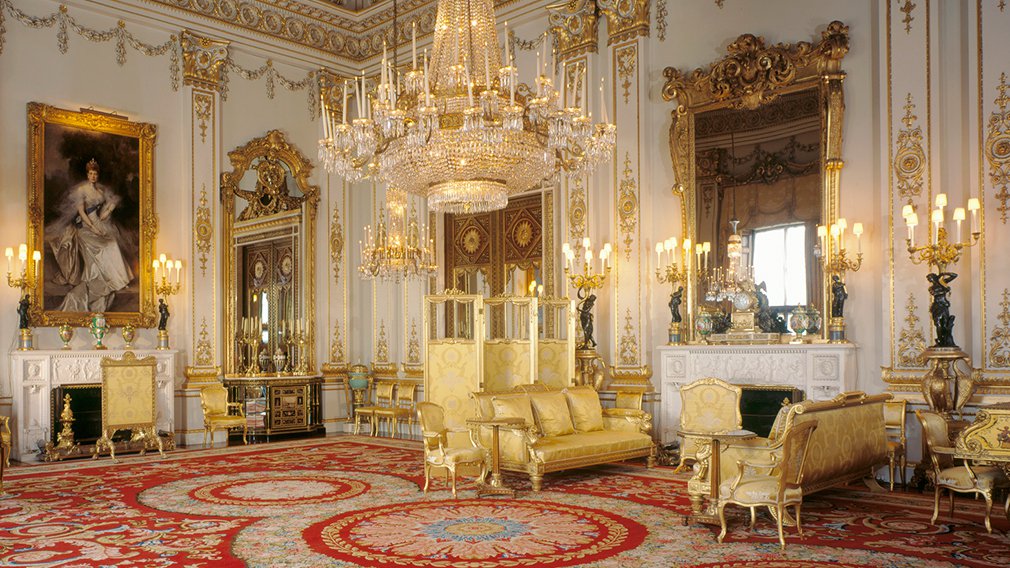
The White Drawing Room is more gold and crystal than white. A portrait of Queen Alexandra (wife of Edward VII) dominates the room along with a huge crystal chandelier surrounded by five smaller chandeliers dating from the early 19th century. The antique furniture is French and made of gold brocade. There are floor-to-ceiling gold-framed mirrors; one of which conceals a secret door through which the Royal Family enters before guests arrive.

White Drawing Room
Photo: Royal Collection Trust

To call the State Dining Room big would be an understatement; the room is huge. It is decorated in white and gold, a style chosen by Edward VII in 1906. One article I read says the 175-foot dining table seats 170 and requires 1,700 pieces of cutlery and over 1,100 glasses, all measured and precisely placed.

As I pass from one dazzling room to the next, my enthusiasm dims. After a while, I become immune to the gold and glitter and it is hard to distinguish one chandelier-bedecked room from another. With my audio cassette, I pass through the rest of the rooms in a daze until coming to the last room; the Music Room.

With bow windows that overlook the garden; the Music Room has an intricately decorated cream-colored domed ceiling and sixteen stunning blue columns that imitate lapis lazuli. It is elegant but more subdued (if that is possible) than the other rooms; easier to take in and to distinguish its remarkable features. The Royal Family uses the Music Room for, well…music; recitals and drinks receptions.

I go out through the gardens where the Queen hosts her famous garden parties, and on to the gift shop. I purchase a pretty two-handled, teal/white/gold loving cup that commemorates the wedding of Prince Edward and Sophie Rhys-Jones who were married just two months ago. It is fine bone English china with a curlicue design taken from the 13th century door at the east end of St George’s chapel at Windsor where they were married.

I walk back to Green Park station and take the tube back to Embankment to take a sight-seeing boat cruise on the Thames.

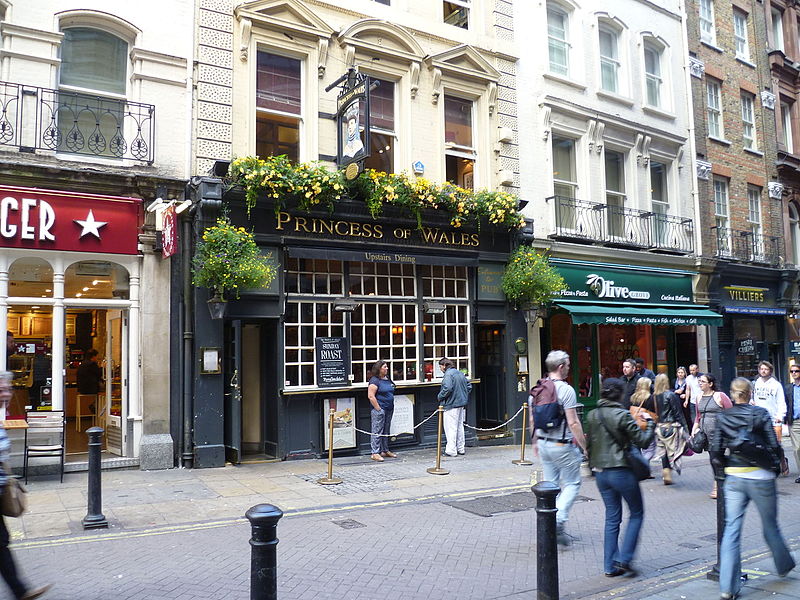
But first I go in search of lunch. A short way up Villiers Street is a pub with a name I cannot resist—the Princess of Wales. Before Diana, England hadn’t had a Princess of Wales since Edward VII’s wife, Alexandra, at the end of the 19th century. I am guessing this pub is named for her. (Note: Everything in England is always 200 years older than you think. The pub is actually named after George IV’s first wife, the Catholic widow Maria Fitzherbert, whose secret marriage was invalid under the law because the King had not given his consent.)

Princess of Wales Pub, London

I order a cold bread and cheese Ploughman’s lunch, but it is, shall we say…pungent. In addition to four slices of English yellow cheddar, there is a salad of bitter greens, Branston pickle relish, two pickled onions—they are so sour they make my eyes water—and two slices of green apple. I wash it down with sparkling water. I should have ordered what the couple at the next table had—a bitter and toasty. The toasty is a delicious-looking open-face sandwich; a thick slice of bread topped with ham and cheese and broiled until melted and bubbly.

Sweet Thames Flow Softly

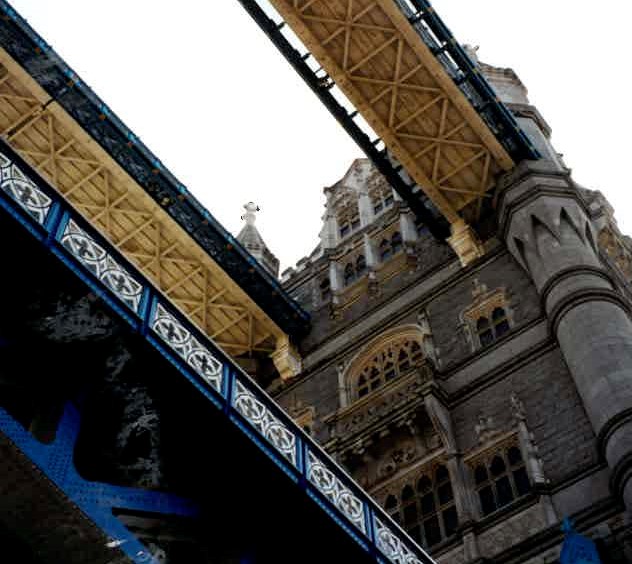
I walk back to Embankment Pier and board my river tour boat. It is very bright and sunny and I get a bit of sunburn. We cruise past Big Ben and the Houses of Parliament, turn around and pass the newly constructed replica of Shakespeare’s Globe Theater and the imposing St Paul’s Cathedral, then sail under Tower Bridge looking up to see the massive structure overhead. As we clear the Tower, we turn around to watch them raise the bridge so a tall-masted boat can pass under. Our tour guide is very excited. She says they only raise the bridge a couple of times a week.

Sailing under Tower Bridge, London

Whitehall

Next I walk back towards the Horse Guards Parade, along Whitehall Street, and past Downing Street, which is now gated and heavily guarded. When I was here for my high school trip in 1978, I walked right up to #10 and had my picture taken in front of the Prime Minister’s residence. Not anymore.

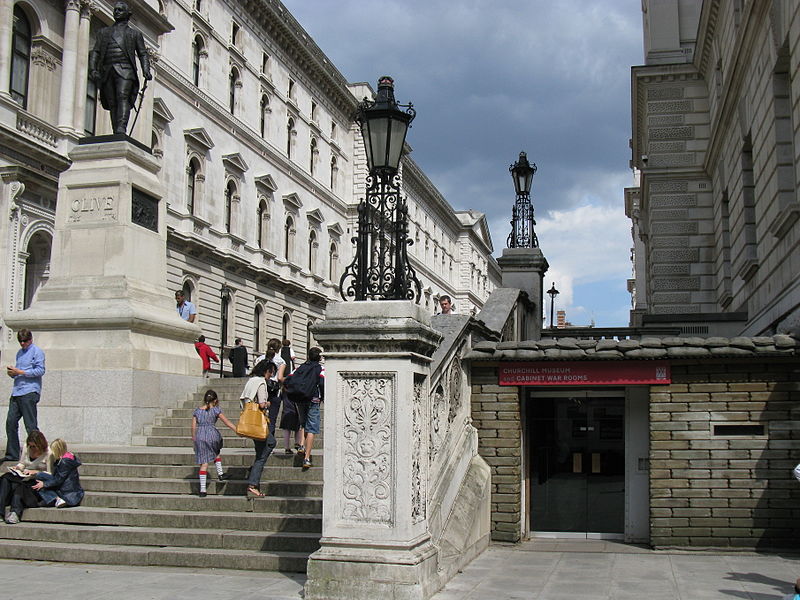
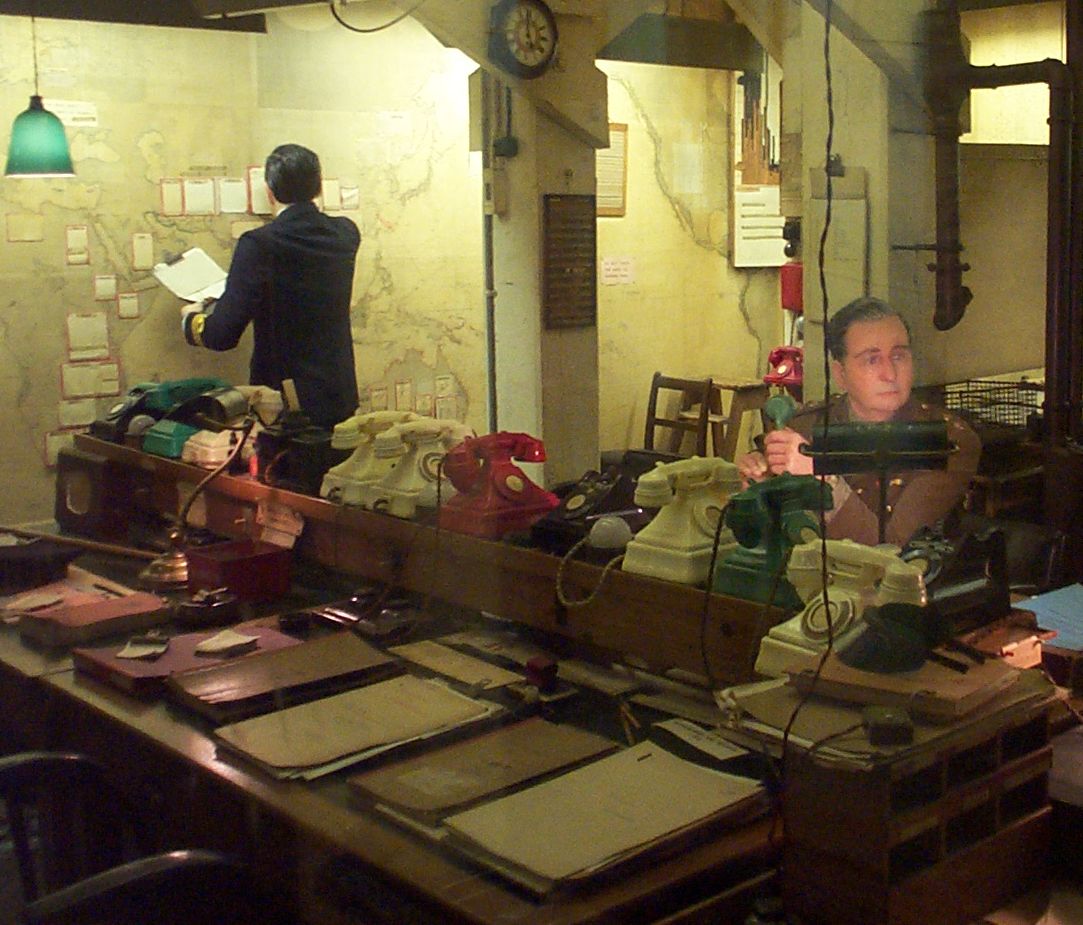
The next street over, King Charles Street, is my destination. Here are the Cabinet War Rooms; secret underground rooms from where Churchill directed the war effort during the Blitz. Everything is exactly as it was left on the day the lights were switched off in 1945. There is an audio-guided tour that walks me past the Cabinet Room, the Map Room, and even Churchill’s sleeping quarters. A concealed, transatlantic telephone room, disguised as a toilet, is where Churchill conversed with FDR. It was so secret even the military personnel did not know it was there.

Churchill’s Secret War Rooms, Whitehall, London
Photo: Wikimedia Commons
Churchill’s Secret War Rooms, London
Photo: Wikimedia Commons

I collect my suitcase from the Royal Horseguards Hotel and make it to Euston Station in time to catch the 16:10 PM train to Birmingham. I have tired feet, but an abiding love of this complex, tantalizing city. As Samuel Johnson famously said in 1777, “When a man is tired of London, he is tired of life.”

I arrive back at Birmingham about 6:00 PM and lug my heavy case out of the station, up to the Internet café, and then to find some supper. I stop at Bella Pasta and order the red pepper pesto linguine with the house red. Bella Pasta is a chain, but I find the food reasonably priced and very good, especially as I am very hungry having eaten little of my bitter-tasting Ploughman’s lunch.

Caroline and Tony greet me at the door and ask me to join them for tea. Tonight is their 34th wedding anniversary. It is lovely sitting in the garden as the sun goes down.

Design a site like this with WordPress.com
Get started