I find out
that Borneo Bill’s name is not Bill, rather it’s Sieve (pronounced See-ev). He
is very chatty. He is a teacher at a university in Malaysia. He likes salsa
dancing and Outward Bound. His English is very good. He has a British accent that
is peppered with American colloquialisms from his days studying at Texas
A&M.
Dean picks me up just after 9:00 AM and we’re off to Warwick on site visits today. We drive first to the University of Warwick. The professor rambles all over the place, not giving us a lot of information about the Best Value pilots. He seems to want to talk about politics comparing the new Labour government to the Tories. At one point, he says that everyone thinks Margaret Thatcher is a “stupid old bat.” I think of my Cotswold tour guide who loves Maggie. Well, maybe not everyone.
We have lunch at the Aylesford Hotel―a very cute restaurant. I have a pint of Scrumpy Jack cider, which makes me sleepy. Our afternoon appointment is with Steve Freer, the County Treasurer for Warwickshire County. He is very enthusiastic about Best Value, but also realistic.
We drive
back to Birmingham and Dean drops me off at Glenelg with a promise to pick me
up later for the reception at Council House. We have both received an
invitation to a reception sponsored by the British Council to welcome
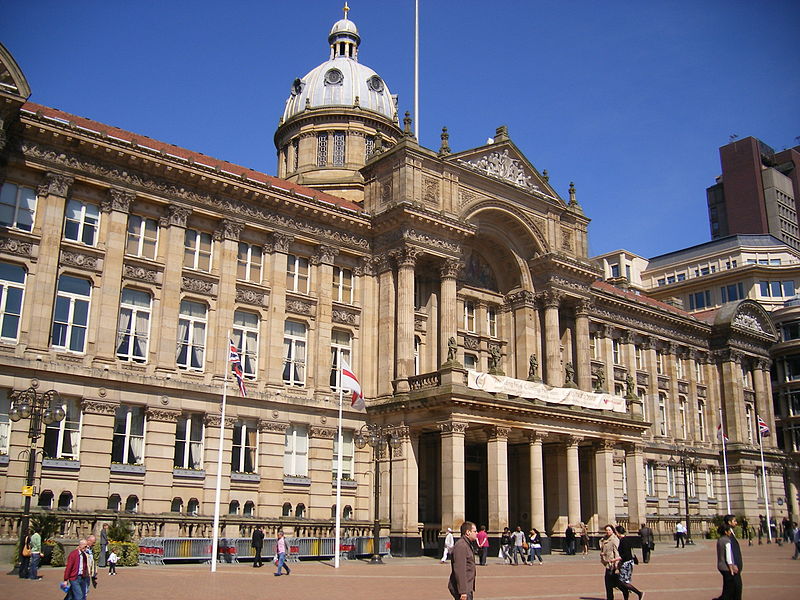
International Student Award Holders. I can’t wait to see the inside of the
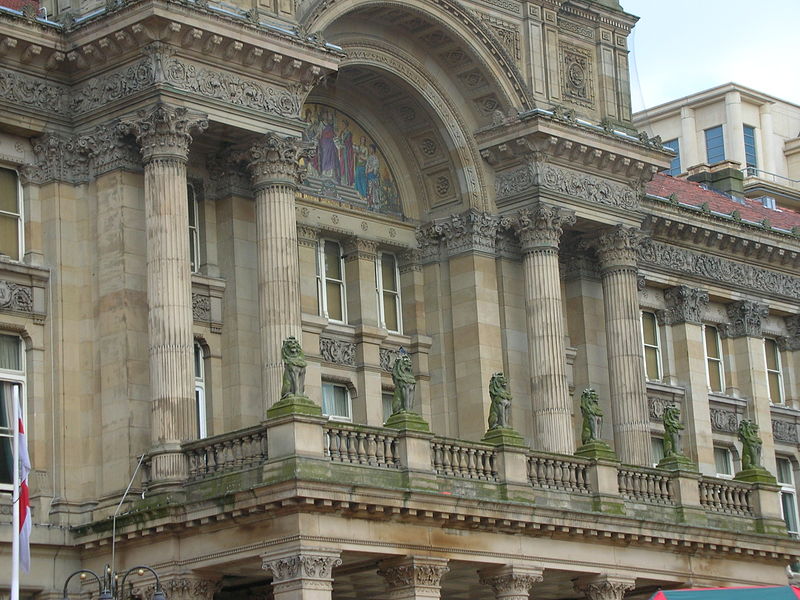
magnificent council building on Victoria Square.
Caroline comes up and knocks on my door. She tells me Tony is worried that their new guests—a Japanese couple with a loud, two-year old child—will disturb me. I assure Caroline that they do not bother me.
Later, as I
am waiting for Dean to pick me up, Caroline asks what I am doing over
Christmas. She assures me that I am welcome to have Christmas lunch with the
family. My heart flows over.
Dean picks me up while Tony is in the yard. I laugh when Tony says to Dean, “It’s a wonder the Lord Mayor didn’t send a car around to pick her up!”
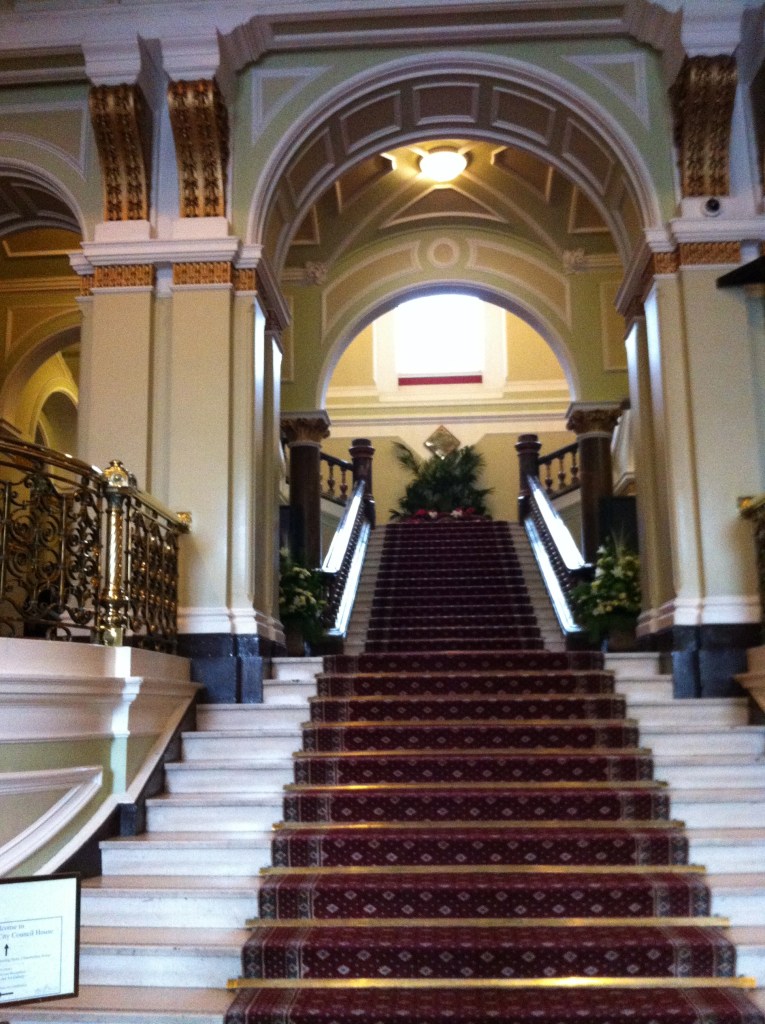
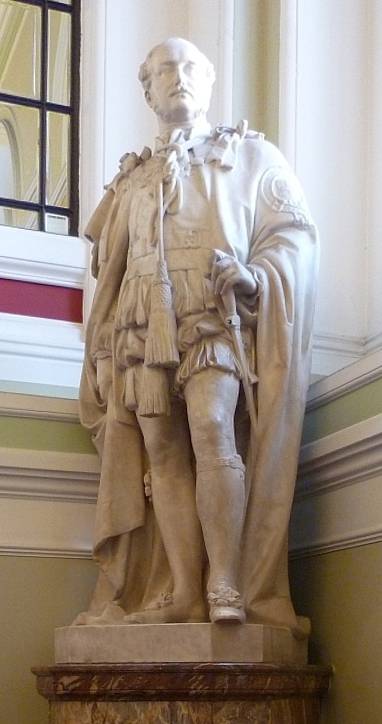
On entering the Council House, we are greeted by an impressive main staircase which is topped by a magnificent ceiling dome. On the landing between the first and second floors is a statue of Queen Victoria on one side and Prince Albert on the other. The chandeliered reception room has floor-to-ceiling arched windows that run the full length of the room and provide impressive views of Victoria Square outside. The reception area leads to a balcony where on special occasions, like Buckingham Palace, dignitaries can wave to the minions below.
Reportedly
the ghost of Joseph Chamberlain, who was thrice mayor of Birmingham, haunts his
old office in the corner of the building on the first floor.
Although the Lord Mayor is not here, the Deputy Lord Mayor is and I can’t wait to tell Tony. She makes a few inspiring and passionate remarks about Birmingham. Chris Gately brings her over to meet Dean and me. She wants to meet us because she has been to the U.S. recently. During her trip she visited with Mayor Daley and, in not so many words, she conveys how unimpressed she was with the Chicago mayor. Aren’t we all?
We meet several interesting students from India, Botswana, and the U.S. Protectorate of Samoa. The student from American Samoa is sweetly funny. He went to the University of Hawaii and lived in Washington D.C. for a time. He is desperate to talk to people from the U.S. He has been in Birmingham for three days and we are the first Americans he’s seen. I saw him earlier looking earnestly in our direction, but the crowd swept him away before he could approach us. Dean invites him to the School of Public Policy for lunch.
The young woman from Botswana is studying toxicology as it relates to pharmacies. She says pharmaceuticals are not recognized in her country as part of the legitimate medical profession. A man from India is there with his wife and two children. He introduces us to his wife, who only reluctantly shakes my hand and immediately steps to the side while he talks to us. He talks about the current state of politics in India and Pakistan. I ask him if Indira Ghandi’s granddaughter won the recent election. She did not. He compares the Ghandis to the Kennedys.
In an optimistic frame of mind, I walk to Lloyd’s bank hoping that my PIN number for my new ATM card will be there. I am pleasantly surprised when the teller hands me an envelope. I step outside to use the ATM machine. I insert my card and unbelievably the machine “retains” it. In disbelief, I go back inside the bank. They look me up on the computer and discover that my card has been cancelled. But, they say, a new one is on its way. It should be here in another couple of days.
They assure
me that the PIN number I have just received will be the same for the new card. Forgive
me for being skeptical.
Even the tellers cannot believe my bank misadventures. They all know me by sight and by name. When the teller gives me my PIN number today, she said, “I am not going to ask for identification, I know you by now.”
Not expecting anything, I go back to the bank again the next day. Surprisingly, the teller greets me, “Ms. Harris, something’s come in the mail for you.” But it’s not my ATM card, it’s a new PIN number for the card I haven’t received yet. Of course, it is. The teller just smiles pleasantly and cashes my check.
I attend a school staff luncheon to welcome a new person and bid farewell to Josephine, the school’s receptionist. Ken Spencer, Head of School, makes some cheerful parting remarks and gives Josephine some vouchers (gift certificates) to Marks and Spencer, which he calls the “family firm.” But I don’t think he’s actually related.
Caroline happens
to drive by while I am walking home after work and she stops to pick me up. I
start to cross the street to jump into her car checking for traffic to my left without
thinking that the cars will come from my right. Caroline yells out a warning as
a car speeds by.
Caroline is singing a song from South Pacific. She has a concert tonight at a senior citizen’s home. Tony is ordering take-out Chinese and asks if I want to order some. I order the Chicken Satay. I am a little surprised to see that it is chicken in a brown sauce with green peppers, onions, and carrots. It is good though. I eat at their kitchen table with Lutchford snoring at our feet.
In
today’s news: On the eve of her 40th birthday, Sarah, the
Duchess of York (Fergie), gives an interview to the Daily Mirror. The journalist is Piers Morgan. He writes,
“Yesterday, in a frank and emotional interview, she said she had never been
happier and openly discussed her extraordinary relationship with her former
husband, Prince Andrew. She tells of her great friendship with Princess Diana
and the tragic loss of her own mother.
There is a new guest at the B&B this morning, from Borneo. Tony calls him Borneo Bill. I don’t know if his name is Bill or not. Tony says he hasn’t thought up a nickname for me yet. But I am sure he will!
Britain
still has milkmen or least Birmingham does. I see the milk truck on Oakfield
Road—a low-bed, open truck with little crates of milk pints lined up on the
flat bed—making deliveries. I feel transported to the 1950s.
The mysterious Simon, who is not so mysterious to me now, has moved out. Francis Taylor, my new officemate works part-time. She pops her head in and I greet her with, “Hello, Francis.” I don’t what I said, but she replies, “Oh, I love being called Francis; it reminds me of all the best days in the United States. Please call me that whenever you see me, in whatever exaggerated form you want.” I have no idea what she is talking about. A bit bewildered, I agree.
Chris Skelcher, one of the faculty, invites me for a drink at the Staff House after work. In addition to me, Dean, and Chris, there is also Mike Smith, a woman named Helen Sullivan, and another woman, Margaret Dalhstrom, who is in the office next to mine.
We talk about British television comedies. The conversation turns to Monty Python and how it is so popular still 25 years later. Everyone knows what you are talking about when you say, “I’m not dead, yet.” I tell them how Brian can practically recite every line of Monty Python and the Holy Grail, but I think it’s just silly. They all laugh and say, “That’s the point.”
Mike lives
in Worcester. When I ask what he likes about living there, he says, “Well,
there’s the cathedral.” He is impressed that I know that King John is buried
there.
Mike buys us a round. I know I am supposed to reciprocate but I don’t know the etiquette when I am only having one drink. Do I buy them around and leave?
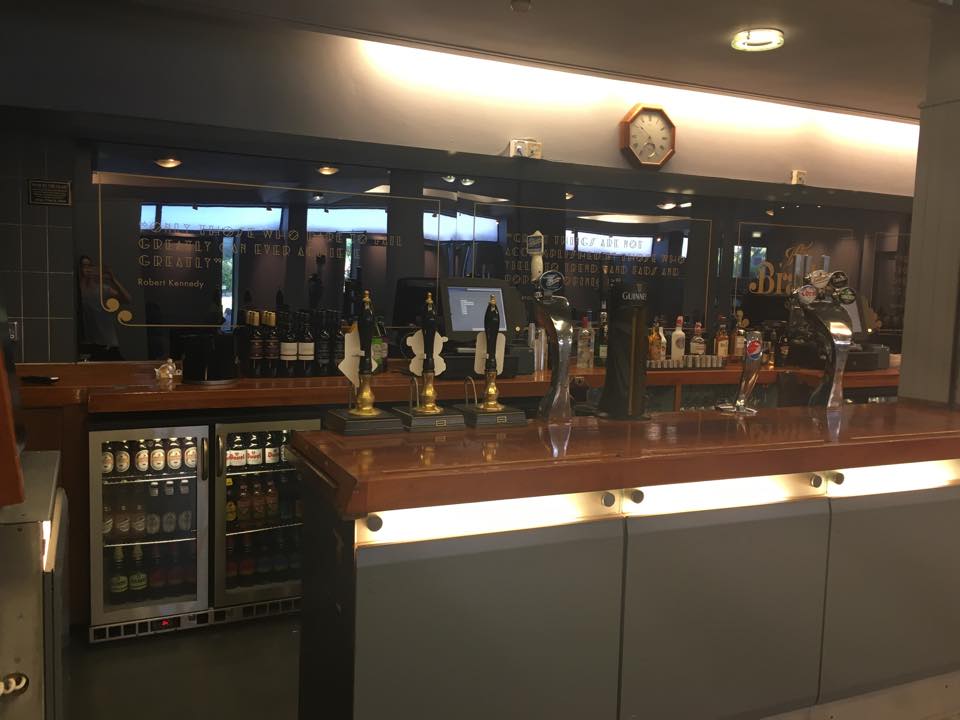
Staff House Bar, University of Birmingham Facebook Photo
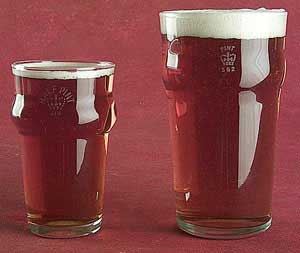
There is a whole pub culture in Britain that seems like a minefield to me. In addition to sharing rounds, Mike tells me it is unmanly to order a half-pint (for men anyway).
A pint vs. the unmanly half-pint
Over time “public house” as it was called in the 15th century became shortened to “pub.” Pubs are casual, neighborhood places where people go more to talk and socialize than to drink. Most people have their own pub that they go to consistently, perhaps every night.
There is usually no table service. You order at the bar and bring your drink back to your table yourself. If you are with a group, you take turns buying a round for the table. This is not only convivial, but saves the area around the bar from being too crowded. You hold your money in your hand to let the barman know you are there to order. They know whose turn is next and will get to you in the order that you arrived at the bar.
Instead of a tip, it is common to offer to buy a drink for your barman or barmaid. When ordering, you ask for a pint “… and one for yourself?” You don’t say, “Can I buy you a drink,” because that implies charity.
After a half-pint (cider, for me), Dean and I grab the bus to his house and arrive just as the kids are sitting down to dinner. They are great kids, contributing to the conversation just like adults. Barbara has made a wonderful meal of lamb chops, baked potatoes, and a big green salad. It is hard to get fresh salad here (and the restaurants don’t do salad bars very well). I am always hungry for salad. I scarf down two helpings of Barbara’s salad.
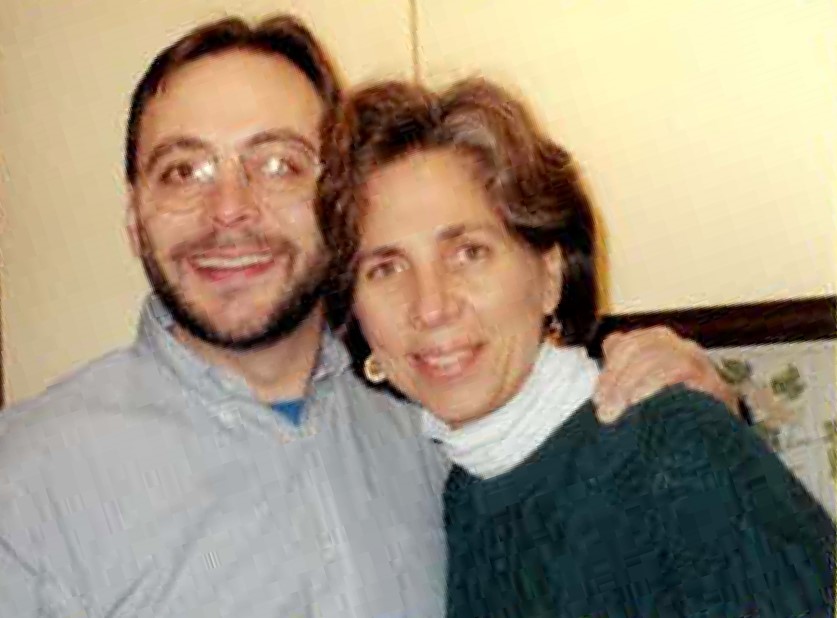
Dean and Barbara
Dean drives
me home and I read until after 11:00 PM.
A word about greetings: A common greeting here is, “Are you alright?” At first, I think people are asking because they think I am ill or have some problem. It begins to dawn on me that it is a friendly greeting much like we use, “How are you?”
It is still
quite warm here. I admire the pretty pink roses still blooming on the
neighbor’s hedge as I walk to work. It seems strange for roses to be flourishing
in October.
Today is a research day. It’s not all work though. I spend an inordinate amount of time making travel plans, deciding where I want to go on the weekends, how to get there, what the train schedules are, what landmarks or museums I want to see, when they are open, what tours are on offer, etc. Half my internet research is travel-related.
At noon, I go to Lloyd’s bank to cash a check, because I still don’t have a PIN number for my ATM card. Sandra promises me that it is being sent to the Lloyds Bank on campus and it will be there tomorrow for me to pick up. I am not holding my breath.
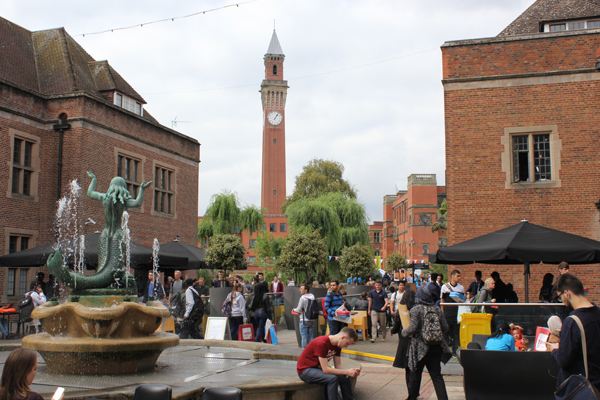
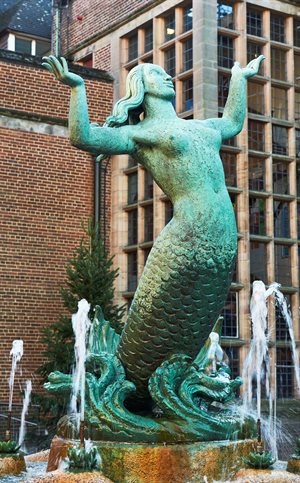
I go to the post office at the Student Guild. The humongous guild building’s central courtyard contains a delightful fountain with a bronze statue of a mermaid. Birmingham Sculptor William Bloye designed the mermaid fountain in 1961 inspired by the heraldic crest of Sir Josiah Mason, founder of Mason Science College, the 19th century college that was the forerunner to Birmingham University.
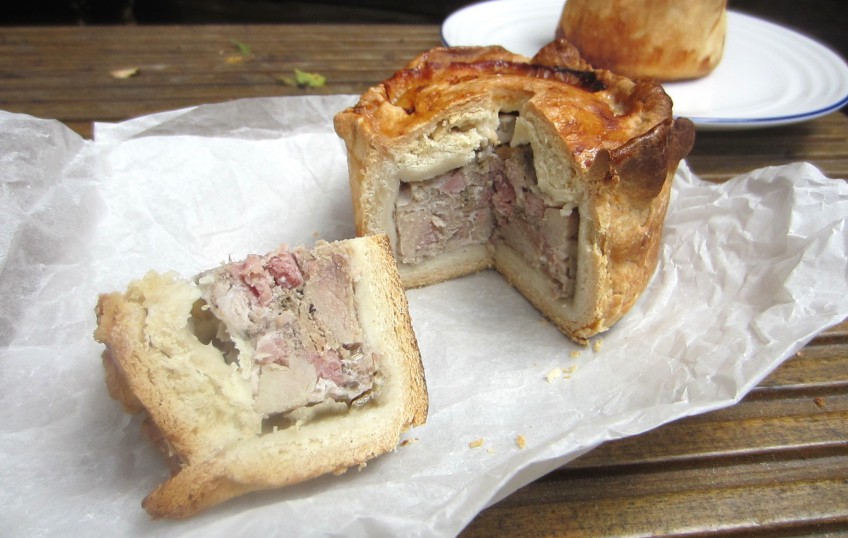
I eat lunch at the Staff House—pork pie and chips. I have a semi routine of having my hot meal at noon at the Staff House, and then just a light, cold supper in the evenings at the B&B. Tony says I am welcome to use the kitchen and I do occasionally use the microwave, but usually I just eat in my room. I keep a few things in their refrigerator, but it is small, the size of the dorm room refrigerator I had at college.
Unlike the traditional spiced Tortiere, English pork pie is made with cooked chopped pork loin, not ground meat, and a hot water crust pastry similar to a choux pastry. Butter or meat jelly covers the meat to keep it fresh. It is an old, medieval recipe. It is very tasty.
I am beginning to distinguish some of the regional accents. I can now pick out the Manchester accent, which is distinct in some words. When I first arrived, I found the strong Birmingham accent impossible. I didn’t understand half of what Tony said. Now, I hardly notice it.
Some words with a Brummie accent are:
Foyer –
flames, burning
Gloss – transparent material used for windows
Loin –
shortest distance between two points
Loik –
similar, or terms of favorability
Point – large glass of ale or one-eighth of a gallon
Or roit? – Alright? Are you well? OK?
Toy –
fashion accessory worn by men around the neck
Troin – form
of transport that runs on tracks
Wick – seven
days
I eat a light supper of baguette, boursin cheese, and soup and watch some TV before going to bed.
In
today’s news: The Queen made an unannounced visit to see for herself
the devastation of the Paddington rail crash. She had earlier flown especially
from Balmoral in Scotland to the scene of the west London rail crash, which has
claimed at least 30 lives. The Queen spent about 15 minutes at the crash site.
She reportedly said to the Metropolitan Police Deputy Commissioner that it was
awful and made the point that it was ordinary people going about their ordinary
lives and how shocking that was.
I am off
early to Nottingham. I have to change trains in Derby. It takes me a while to
figure out that the destination city they are announcing, which the train
official pronounces “Darby,” is the one I want.
I start off
at the Tales of Robin Hood, a tourist
attraction geared towards kids. It’s a Disneyesque ride that includes a run-in
with the malevolent Sherriff of Nottingham who tosses us into the dungeon from
where Robin Hood rescues us.
Afterwards I take a bus tour of Nottingham, starting at Nottingham Castle. The original castle on this site was destroyed during the Civil War; only its ruins remain today. The current 1650 building was a ducal palace and today is a museum and art gallery. In the 12th century, the Royal Deer Park stretched for hundreds of acres right up to the palace walls. It was in this park where Robin Hood poached the King’s deer. In the 1850s, the Duke sold the park and today it is an exclusive residential area where gas street lights are hand lit each evening and extinguished each morning by a lamplighter.
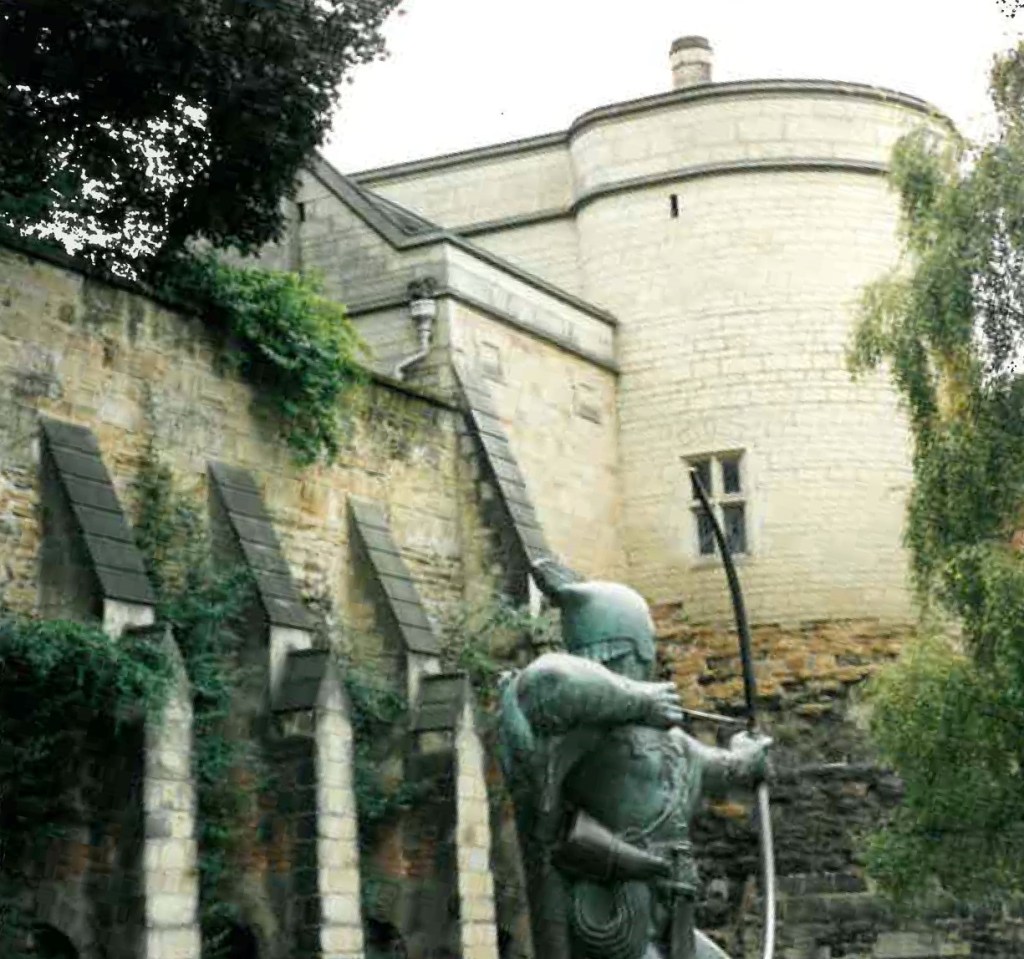
While King Richard I (“the Lionheart”) was away on the Crusades, supporters of his brother, the eventual King John, took over Nottingham Castle. This included the Sheriff of Nottingham. According to legend, Nottingham Castle is the scene of the final showdown between the sheriff and the heroic outlaw who was King Richard’s man. A bronze statue in front of Nottingham Castle immortalizes Robin Hood. I find the statue disappointing. It is small and the archer figure looks almost childlike, not the dashing figure of legend.
Robin Hood statute, Nottingham Castle
The tour
takes us through the old Lace Market, which once flourished here. Lace is still
made here; supplying the lace for Diana’s wedding dress. Our tour guide points
out the Jerusalem Pub, the pub from where the Lionheart departed in 1089 for
the Crusades and purportedly the oldest pub in England.
And a more
modern landmark, we pass the ice arena where the first “perfect-10” Olympic figure
skaters, Torvill and Dean, got their start. I remember a couple from New
Brunswick I met in the Augusta Denny’s last year when they asked for directions.
They were originally from Nottingham. He was a skater; Christopher Dean’s
original partner, he said!
We hear the
story of the unfortunately named Saxon warrior from whom Nottingham gets its
name. The poor fellow was named Snot. The settlement became known as
Snotengerham. When the Vikings arrived, they could not pronounce Snotengerham
and so it became Nottingham.
I head back
to the train station and run to catch the 16:55 train, which is leaving in one
minute.
The
Cotswolds are enchanting; a place that time passed by. Built on the wealth of
the medieval wool trade, the villages look much the same as when they were
built in the Middle Ages.
With their
thatched-roof cottages, cobbled market squares, and Gothic “wool” churches—all
made of the soft honey-colored Cotswold limestone—the villages are so
quintessentially British. I can’t help but feel that Miss Marple is going to
step out of the High Street tea shop at any moment.
A company
called Good Friday sponsors my tour, which departs from Stratford-upon-Avon.
There are 10 of us, plus Tony, the Good Friday guide and driver. Tony tells me,
“I loved Margaret Thatcher.” He’s the first person I’ve talked to since I’ve
been here who has said that. Two of my fellow tourists are from New Hampshire
but, when they hear I am from Maine, they explain they are really from Maine
too, just transplants to NH. He is from Berwick.
The term
“Cotswolds” means rolling hills and, true to its name, the further away from
Stratford we get, the greener and more bucolic the landscape becomes. We pass
through Winton where, Tony tells us, the Telly Tubbies television show is
filmed. He points to a green hill where the tubbies romp.
The
Cotswolds were the heart of England’s profitable wool trade in the 14th
and 15th centuries. The area’s rich, water-retaining limestone soil
produced the lush grass that fed the “Cotswold Lion;” the local sheep whose
prized wool is yellowish in color.
Our first stop is Chipping Camden; “chipping” meaning market, and likely the origin of the word “shopping.” Chipping Camden is the “flower of all villages of England,” to paraphrase the inscription in St James’s Church on the 1401 tombstone of William Grevel, a leading wool merchant.
I fall in love with the Cotswolds the moment I look down the Chipping Camden High Street and see all the lovely yellow stone buildings hugging the street enclosing the ancient stone, open-air market hall. I am charmed by the tea shops and want to spend the afternoon browsing the antique stores. Alas, following our tour, we only have 20 minutes allotted for Chipping Camden.
Market Hall, Chipping Camden, Cotwolds Photo: Richard Slessor, Wikimedia Commons
The soft
golden stone, quarried locally, was the chief building material for houses and
churches for over six centuries. Today, planning regulations require houses to
be built from the local Cotswold stone to retain the area’s traditional character.
Chipping
Camden has wonderful medieval buildings. William Grevel’s house on the High
Street has impressive two-story bay windows. With wonder in his voice, Tony
tells us this house is 700 years old.
Fittingly,
PBS filmed a Miss Marple episode in Chipping Camden. In the show, Nemesis, Miss Marple takes an English villages
house and garden tour, but Tony says, “We knew, the whole time, her bus was
just riding up and down Chipping Camden High Street.”
In an ironic
twist that history sometimes deals out, Tony tells us the story of Sir Baptist
Hicks, the town’s main benefactor. One-time Lord Mayor of London, he built a
fabulously ornate house in 1613, of which today there are only ruins. It seems
that Sir Hicks was a Royalist and one day, at the height of the Civil War, he
received news that Cromwell’s army was marching on Chipping Camden. Rather than
let the traitors take over his manor and use it as their base, he burned it
down, only to discover after the fact that the army had turned and marched in a
different direction.
Tony calls St
James’s Church, “ridiculously large for a town of 2,000 people.” Referred to as
a “wool” church because it was built with the wealth of the wool trade, most
Cotswold towns have these elaborate churches, almost like mini cathedrals.
St James’s
soaring, boxy Gothic bell tower holds a carillon; a series of eight bells of
different octaves, which we immediately deduce is the inspiration for the name of
the nearby Eight Bells Inn. The bells play four different tunes, which we hear
several times while we are there.
St. James “wool” Church, Chipping Camden Photo: Stephen McKay, Wikmedia Commons
Laid into
the church’s medieval floor is William Greville’s ledger stone, decorated with
an engraved brass effigy of William and his wife, Marion, hands folded in prayer.
The marker five-and-a-half-feet in length bears the inscription, ‘the flower of
the wool merchants of all England’, acknowledging Greville’s prominence, not to
mention his wealth that built the church.
Wool was big
business in the Middle Ages and the Cotswolds had some of the best. In the
1300s, Edward III went to war with France over the wool trade. In the 15th
century, the Lord Chancellor’s seat in the House of Lords was made of wool and
he still sits on the ‘woolsack’ today; a nod to the importance of wool to
England’s history. At that time 50% of England’s economy was based on wool.
My 20
minutes are up and I walk back down the High Street. Just as the bus comes into
sight, I peer through a shop window and see half-dozen very old Royal commemoratives,
including a Queen Victoria jug. I must come back to Chipping Camden.
The road out
of Chipping Camden climbs higher and, turning around, we can see a wonderful
view of the village and church nestled into the valley below.
View of Chipping Camden, Cotwolds Photo: Peter Barr, Wikimedia Commons
As we make
our way to the next Cotswold town—Stanton—we see fields of cabbages growing on
either side of the road. The Cotswolds grows the Brussels sprouts that feed the
rest of England.
Stanton is
called the most perfect village in the Cotswolds. The industrial revolution
left Stanton to decay but, in 1906, a wealthy architect bought up much of the
village and restored it to an ideal. Today, the village has no commercial
enterprise—no school, post office, or shops.
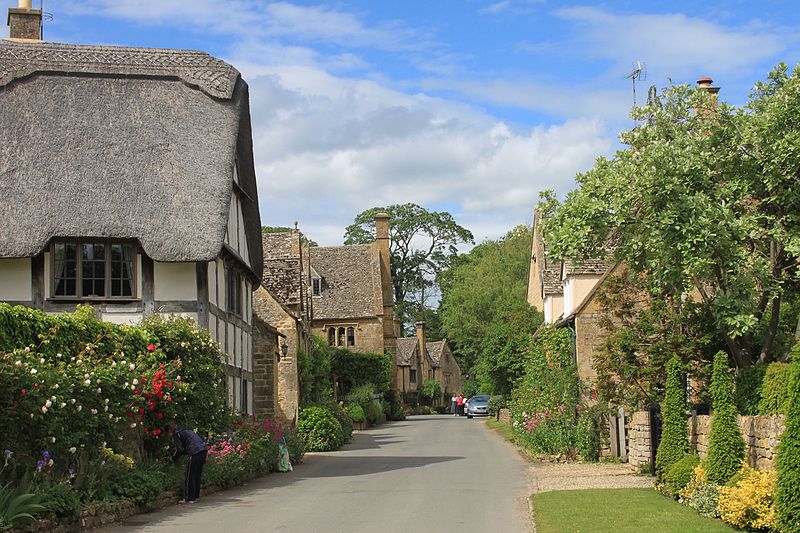
Stanton, the perfect village, Cotwolds Photo: Roger Davies, Wikimedia Commons
Stanton’s St
Michaels and All Angels is a wonderful little church complete with
devilish-looking gargoyles. It houses the oldest pulpit in England dating back
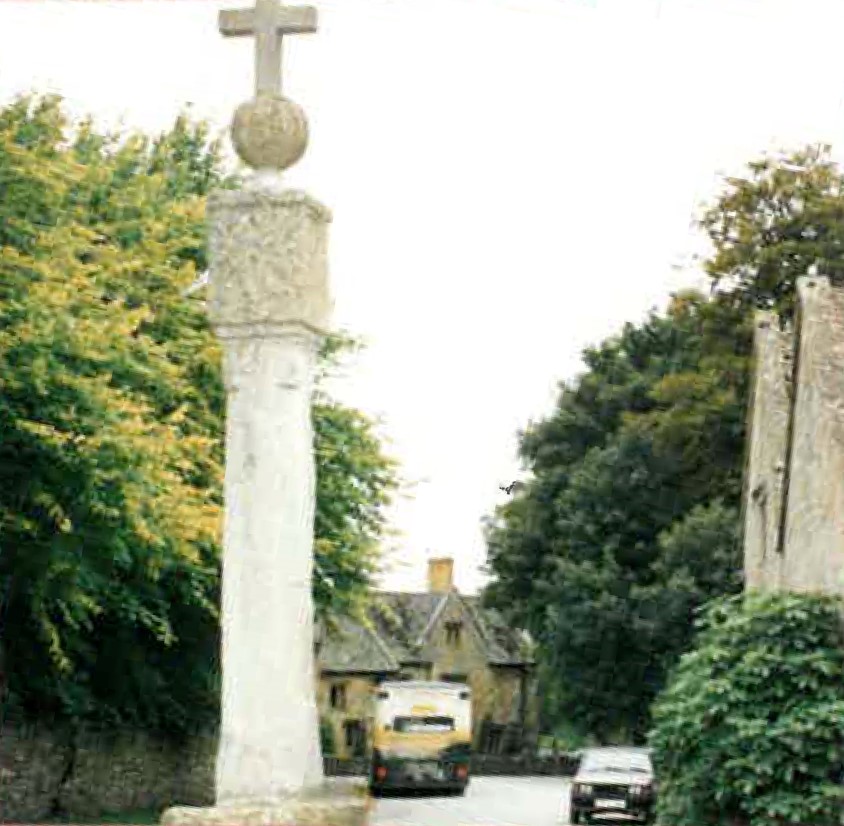
to the 1400s. Outside on the lawn is an old, stone market cross. In medieval villages,
churches often ran the local markets; a cross designating the market site.
Market Cross, Stanton, Cotswolds
Just outside the village is Stanton Manor House, a Jane Austen-looking house where Tony tells us that Joan Collins and Nigel Hawthorne filmed a movie here this past summer; TheClandestine Marriage to be released later this year.
The manor has two literary references. One—J.M. Barrie was staying at the house in a room where his window looked out towards a nearby barn. A weathervane atop the barn turning rapidly in the blowing wind caused a light reflection to bounce around his room—and Tinkerbell was born. A Dr. Dover also stayed in the manor house. During his travels, Dr. Dover discovered a marooned castaway on a deserted island. Having rescued him, he subsequently introduced the shipwrecked survivor to Daniel Defoe and was the basis for Robinson Crusoe.
Henry VIII’s sixth and last wife, Catherine Parr, who outlived him, inherited Stanton and its environs. Historians do not know whether she ever lived in the manor house, which now sticks out into the road so that our tour bus barely has room to squeeze past.
Daniel Defoe
penned a phrase about our next little village—“Stow-in-the-wold where the
winds blows cold.” At the junction of three major roads, including
the Fosse Way (A429), which is an old Roman road, Stow-in-the-wold is
located on the top of Stow Hill, a windy 800-foot hill.
Tony heads
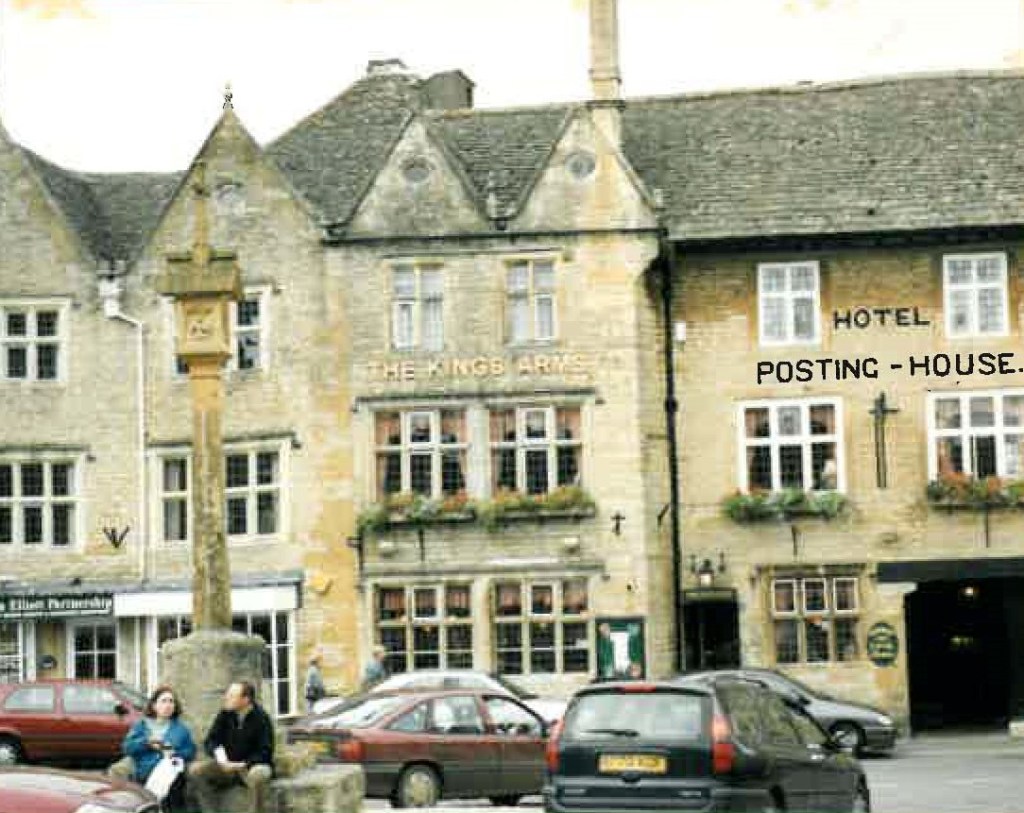
for the tea shop. I head for the antique shops. Stow-on-the-wold’s marketplace
is evident from an open, round, bricked area commemorated by its ancient market
cross. The public space also retains the old stocks in which criminals were
punished. The narrow alleyways or “tunes” running into the square were designed
to funnel sheep to the market square. After a bit of shopping, I have tea and a
scone at the Ann Willows tea shop before heading back to the tour bus for the
ride back to Stratford.
Stow-in-the-wold, Cotswolds
The
Cotswolds is a very special place; capturing both my heart and my imagination.
Back in
Birmingham, it is nearly dark when I arrive home just after 7:30 PM. I walk
through the door and Tony says to me in a Sherlock Holmes’ way, “So, you’ve
been to the Cotswolds today, have you?” There is no way he could have known
this since I did not see him before I left and they did not know where I was.
Then he tells me, he read it on my shopping bag.
Caroline comes up to my room later and we sit on the floor looking at brochures for Hawaiian cruises. She and Tony are planning their next summer’s holiday.
Caroline tells me stories of some of the previous guests. One, a German lady, Tony walked in on while she was in the shower. She was in the wrong room and Tony did not know she was there. Apparently the shower mechanism in her room was broken so she went into another, empty room. Despite her current state of undress, she insisted on telling him about her broken shower right then and there and Tony says he really didn’t want to hear about it right then! Another time Caroline didn’t want a guest to see her in her dressing gown, so she ducked into the breakfast room, only the guest, unknowing, followed her in, so she hid behind the sofa. All was fine until Lutchford came in and started licking her face. Caroline says she should write a book—Tales from an English B&B.
Dean’s nine-year-old daughter, Ari, is keeping count of how many days it’s rained since we’ve been in England. She is up to 15 days; so it’s about 50-50. Monday dawns sunny, but becomes increasingly cloudy as the day goes on.
Dean and I spend the day in London on research visits. After leaving my bag at Euston station, I pick up the Victoria line to Pimlico, which is one of the three jumping off points that the Audit Commission gave me in their directions. I discover what morning rush hour traffic in London is like…commuters are packed into the train carriage like sardines. I skip the first train, but the second is just as crowded so I squeeze in and stand most of the way to Pimlico.
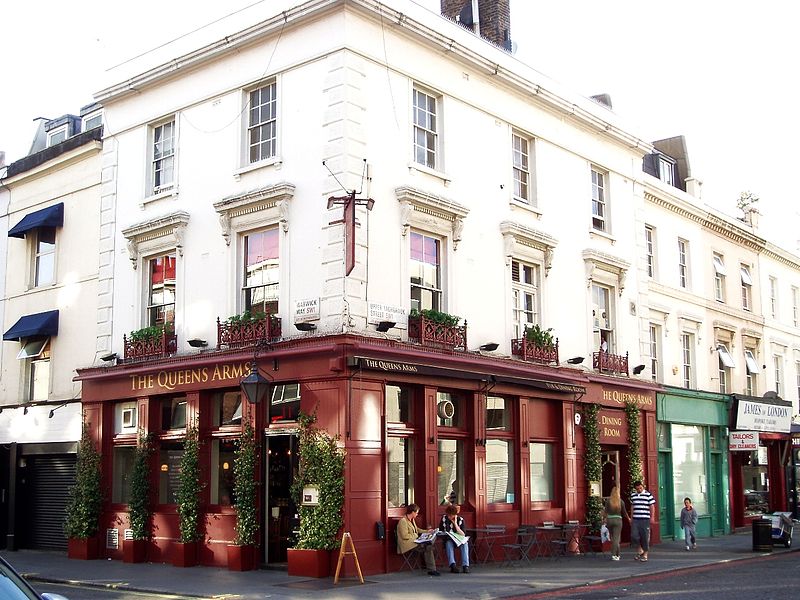
We talk with Worth Houghton at the Audit Commission, then make our way to the Improvement Development Agency where we have lunch with Cheryl Brigham at a local pub; the Queen’s Arms.
I make my way back through Victoria station to Euston in time to catch the 16:10 train to Birmingham. A placard at the entrance of Victoria station says there are delays due to a passenger under a train. I shudder at this gruesome way to die with visions of an Agatha Christie victim being shoved off the platform in front of an oncoming train.
A word about British newspapers: At lunch we talked about Cheryl’s friend living in Florida who says she misses English newspapers. Dean and I struggle to find a US counterpart to the national papers in Britain—The Times, Evening Standard, Daily Mail. There is none really except perhaps the Wall Street Journal. US papers are full of lurid crime headlines and little real news. Even the USA Today, which Dean mockingly calls “McPaper,” only focuses on national news in a cursory way. British papers are tomes, especially the Sunday papers, which take a week to read. They are full of social commentary and political news, as well as many serializations. But the Brits have their tabloids as well, which is another story altogether.
As the week goes on, I continue to wait for my ATM card. The bank for the 2nd time cancels an existing order for a card that never arrived and orders me a new one. For the fourth time, they say it will be here next week. It is very frustrating. But, I cash my first check on my Lloyds of London account.
I email Sandra,
my contact at the British Council, to see if she can do anything about my ATM
card. She writes back, “I am astonished that this seems to have been so ineptly
done, and that you have been so patient. I am on it!” Less than an hour later,
she says she has found my card and it will be mailed express to my B&B
before noon tomorrow. Of course it does not arrive the next day. If finally
comes two days later, but apparently the PIN number comes separately and that
is not here yet. Sigh.
I spend most of the week getting used to university life. I give a presentation to a group of graduate students with Dean. The seminar is boringly titled, “Transatlantic Comparisons: U.S. City and State Governments.” Dean speaks of his experiences in Philadelphia and I fill in with some remarks about Maine state government.
I attend Professor Michael Hughes’s lecture on Best Value for a group of visiting Norwegian local government officials. Michael previously worked for the local government association and helped negotiate the details of the Best Value program with the Blair government. His overview is excellent and he is a very good presenter. I had thought him disorganized and muddled, but today I change my mind.
Another day, Dean and I have lunch at Staff House with several of the INLOGOV faculty: Steve Rogers, Mike Smith, and Peter Watt. Peter has a good sense of humor. When Steve mentions the name of his workshop “From Performance Management to Best Value,” Peter says that, in five years’ time, he can do the same presentation and name it “From Best Value to Performance Management.” “You don’t have to throw your overheads away, you can simply show them backwards. You’ll thank me in five years’ time,” he says cheekily.
I also attend
my first graduate student seminar about Russian government (this is the seminar
I have to give in two weeks’ time). The topic is not really relevant to
anything but, having taken a year of Russian history in college, I find it
interesting.
I find this anagram on the Internet, which I immediately send to Brian knowing he will appreciate it: Rearranging the letters of “The Houses of Parliament” gives you “Loonies far up the Thames.”
In today’s news: The news is full of a big train crash yesterday; a high-speed train going into Paddington station. About 90 people are believed dead. The crash occurred in a place called Ladbroke Grove in West London. It wasn’t a Virgin train, which are the trains I frequently use, but a Great Western. The UK’s rail system was privatized under the Thatcher regime and people have been grumbling ever since that it is not as efficient, or cheap. Interestingly, I read an article a few weeks ago that said a major train disaster was only a matter of time. Apparently trains regularly go through red lights.
My Bayswater
hotel was full last night and the breakfast room is crowded. After breakfast, I
walk to nearby Kensington Gardens; the end where the little Peter Pan statue is
located. On our previous trip, at my instigation, Brian, Mom, and I walked the
full length of Kensington Gardens, nearly a mile, to see this little statue. They
were not impressed.
Squirrels and rabbits burrow at the bronze statue’s base while Tinkerbell-like fairies flutter upwards towards the boy Peter who stands in his nightshirt legs akimbo blowing on a horn. It is charming. J.M. Barrie lived on the adjacent Bayswater Road where Kensington Gardens inspired his stories. Apparently, the author himself commissioned the statue and had it installed in Kensington Gardens in the middle of the night, in part, because he didn’t have planning permission to put it there, but also he wanted children to think it appeared magically.
Peter Pan statue, Kensington Garden, London Photo: Wikimedia Commons
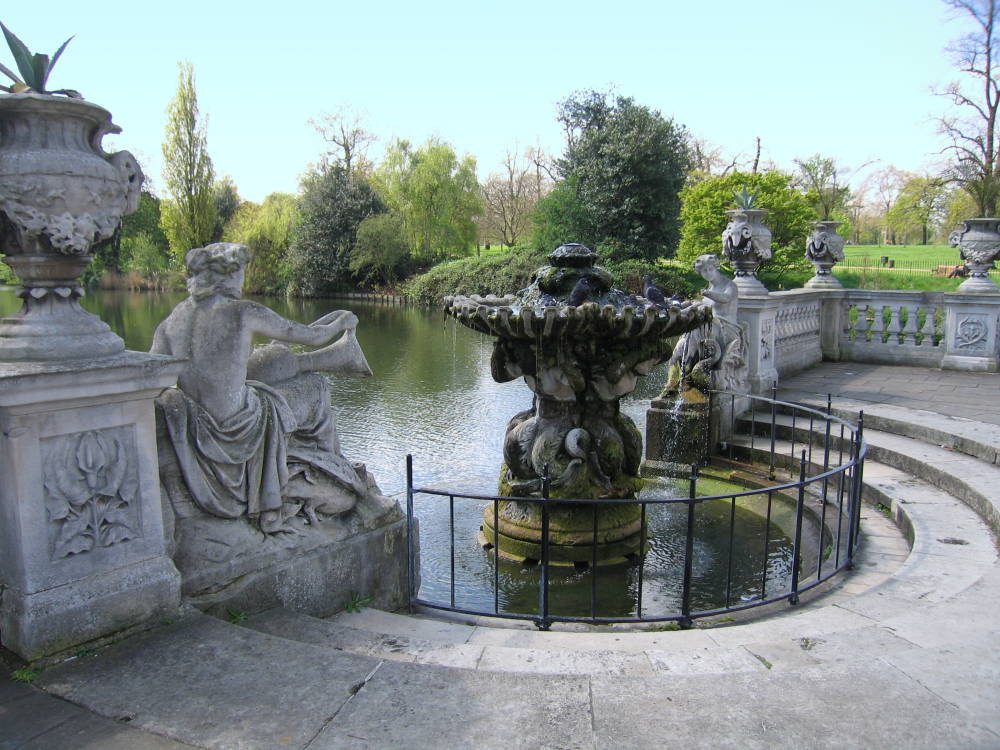
Just off Bayswater Road is Kensington’s splendid Italianate Garden. Water arcs from urns held by elaborately carved Greek nymphs into a series of four marble basins. The ornate fountain basins are situated at the end of the Long Water stream that eventually becomes Hyde Park’s Serpentine Lake.
Italian Gardens, Kensington Garden, London Photo: Robert Freidus
The park is full of Sunday strollers—parents with baby carriages, joggers, people walking hand-in-hand. It is a lovely walk in the cool, but sunny morning.
I take the tube from Lancaster Gate to Green Park to tour Spencer House. Spencer House was the London home of the Spencers of Althrop until the 1920s. John, 1st Earl Spencer, built the townhouse in the 18th century. Earl Spencer still owns the house, but a Rothschild corporation has a 120-year lease on it.
Facing Green
Park, when the Spencers built the house in the 1760s, its grandeur rivaled its
neighbor Buckingham Palace. But, during the previous 70 years, it had been stripped
of everything from fireplaces to moldings, removed for safety during the Blitz,
and used as a nursing hospital, then subdivided into offices. Just this year,
the Rothschilds completed 12 years of costly renovations, meticulously restoring
the mansion to its original 18th century condition.
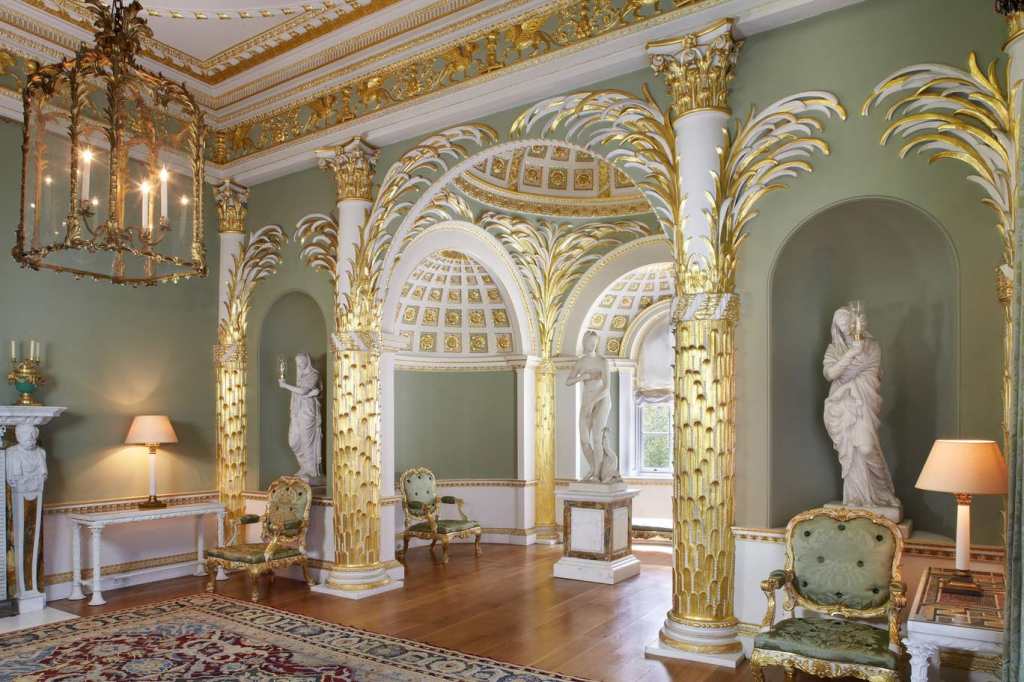
An hour-long tour gives us the details of the paintings and furnishings. Its design is classical—Greek Ionic columns and statuary in some rooms with half-dome ceilings said to be inspired by Rome’s Temple of Venus in others. I particularly like the Palm Room, which as one writer puts it:
The climax of the ground-floor tour is the extraordinary Palm Room, into which the gentlemen would retire after dinner. The classical columns mutate into palm trees, with extravagant fronds framing the arches. Everything is generously gilded and the colour scheme is made up of white, pale green and equally pale pink, all very light and glittery. In the domed and coffered alcove stands a reproduction of the Venus de Medici, to give the gentlemen something to look at while they drink their port.
A portrait
of Georgiana, Duchess of Devonshire,
prompts the guide to ask if anyone has read Amanda Foreman’s new
biography of Georgiana—the book I recently finished. (I
just keep running in to her.) In Lady Spencer’s room, where they gambled night
and day, the guide says, “A lot of money was won and lost in this room.”
I make my way back to my hotel via Convent Garden. I stroll the shops keeping a hand on my travel wallet around my neck. It was here in 1996 where I had my wallet lifted out of my fanny pack losing everything: money, credit card, driver’s license. Fortunately, my traveler’s checks were easily replaced and VISA fed-exed me a replacement card in a couple of days, but the chance of being pickpocketed again always makes be uneasy.
I have
dinner at Garfunkels near my hotel. It is awful. The Caesar salad is full of
old, white lettuce; the Parmesan cheese comes from a can.
In today news: The paper is full of news about the Conservative Party conference that starts tomorrow. It reports that Margaret Thatcher privately referred to William Hague, the leading Conservative Party contender to challenge Tony Blair, as wee Willie—implying that he is not important enough in stature to lead the party. Also, a serialization of John Major’s memoirs reveals a rift between them during his term. Finally, some personal mementos belonging to Princess Ann have been stolen from Buckingham Palace; presumably, the paper implies by palace staff. It says security among staff is notoriously lax.
My lovely Irish vacation over, I
arrive back in London where I am staying through Monday when Dean and I have a meeting
with the Audit Commission. But I have the rest of the weekend in London.
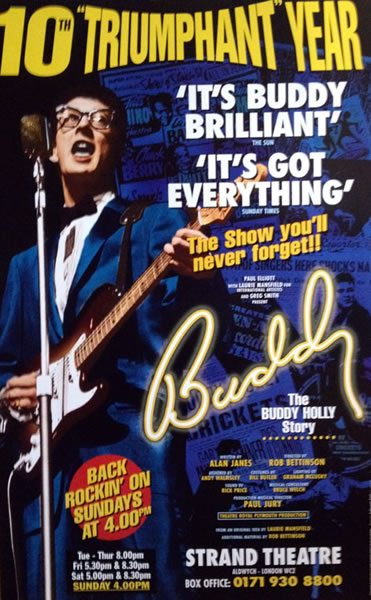
I check into another of the ubiquitous cheap hotels with tiny rooms near Padding Station and am off in search of theater tickets. I take a double-decker bus to Trafalgar Square, a few blocks from Leicester Square, and get a matinee ticket to Buddy at the Strand Theater.
The Strand is near Covent Garden and I walk through the heart of London’s theater district to locate it. I bump into the National Theater Museum and go it, but only have time to barely scratch the surface. It traces the history of London’s greatest stage actors from Henry James to Ellen Terry to Noel Coward. It is a gem of a little museum.
I make my way to the Strand and take my seat.
The musical, Buddy, is in its 10th year on the London stage and it is easy to see why. It traces the short, but brilliant career of Buddy Holly with wonderful music that makes you want to dance. Besides all of the great Holly/Cricket hits, we are also treated to songs by the Big Bopper and Ritchie Valens.
The finale of the show is the re-creation of their last performance in Clear Water, Iowa, on February 2, 1959; the night before the tragic plane crash that took all their lives. It was the Winter Dance Party and featured La Bamba and ChantillyLace, plus all of Buddy Holly’s hits. Sadly, Richie Valens was not scheduled to fly on that plane; rather he “won” his seat in the flip of a coin replacing one of the other band members.
Before the finale, announcers tell the audience to stay seated. But they should have known better; it just serves as an invitation for everyone to jump out of their seats and start dancing in the aisles.
I leave the theater singing La Bamba and Peggy Sue. Incidentally, the show reveals the background to the
song named Peggy Sue. A young woman
of that name agreed to sleep with the band’s drummer if they named a song after
her. The rest, as they say, is history.
I have dinner at a lovely French restaurant, Le Café du Jardin, just around the corner from the theater and take a cab back to my hotel.
We’re in for a rainy few days
before I leave for Ireland. At night, the rain lashes against the window at
times so hard, it wakes me.
Brenda gives me some travel tips
for Ireland. She recommends going to the Cliffs of Moher, which she says is her
absolute favorite. “It’s brilliant,” she says.
But I have one more trip to London
before I go to Ireland.
I manage to avoid getting soaked walking to my office. Shortly after I arrive, a woman pops her head in and asks if I am the person from Maine? She says her husband—a New Yorker—went to Bates College and they still have friends in Lewiston! I cannot believe it and she is equally astounded when I say I grew up there. She promises to have me over for dinner to meet her husband.
With no checkbook yet, I have to break into my traveler’s checks. While I am at the bank, I order some Irish punts to pick up when I get back from London. “Punt” is the Gaelic word for the Irish pound.
I take an afternoon train to London. Once again I find that it is not easy getting from Euston station to Paddington, which is where my hotel is. I get on the Victoria line to Kings Cross and wander around for what seems like forever before finding the right train. Finally I get to Paddington. I am a nearby but a different hotel than the one Mom, Brian, and I stayed at. The lobby is nicer, but otherwise, it is the same small room, small bed, and small bathroom. I eat pizza at a restaurant around the corner and go to bed early.
I wake relatively early and have
breakfast—the ubiquitous bacon, fried egg, and toast. The waitress asks me if I
want tomato or brown sauce with my eggs. Thinking it might be a grilled tomato
that sometimes comes with breakfast, I say, “Tomato, please.” She brings me a
bottle of Heinz ketchup.
After my morning meeting, I take a hop on/hop off tour bus, which departs from Paddington. This seems like a scenic way to get to the Tower of London; the destination I have in mind. I enjoy the ride. At Trafalgar Square, we get a new guide; a rather cheeky chap named Martin. He is a great guide, but tells really bad jokes. We pass Somerset House, the government office where Diana and Charles signed their final divorce papers. Martin says that after the divorce, Diana had a blood test. She was found to be HRH negative. Groan.
From the top of the bus, for just a few quick seconds, I can see the splendid dome of St. Paul’s Cathedral framed by the church’s two towering steeples. I feel like I can reach out and touch them. It is a spectacular view, but fleeting and I don’t get a picture.
We ride through the posh Mayfair neighborhood where the likes of Sean Connery and Margaret Thatcher live. Baroness Thatcher’s residence has a posted guard. Our guide tells us to wave to him. The guard does not wave back. Martin says there are two kinds of guards—wavers and non-wavers. He says it runs about 50-50.
I hop off the bus at the Tower of
London and catch the last guided tour of the day. A ruddy Scotsman Yeoman
Warder leads the tour. Martin told us that it is a misnomer that the Yeoman Guards
are called Beefeaters; this is simply not so, he says. Our Yeoman Warder, David,
gives a bloody account of the Tower’s history.
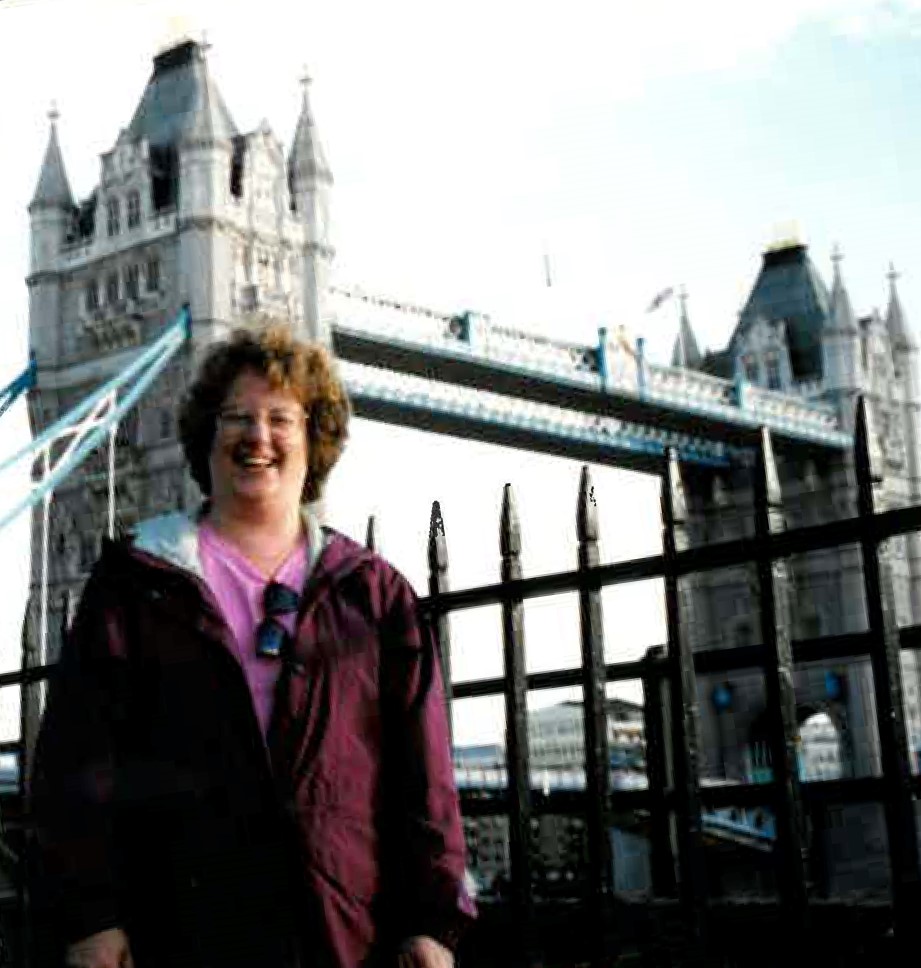
The Tower of London is perhaps my favorite landmark in London. It sits right on the Thames, adjacent to the Victorian engineering marvel, Tower Bridge.
Tower Bridge from the grounds of the Tower of London
Like most of the massive fortresses in the UK, the conquering William built it to proclaim his royal power and to fortify that claim. The tourist brochure says:
William intended his mighty castle keep not only to dominate the skyline, but also the hearts and minds of the defeated Londoners. Nothing like it had ever been seen in England before.
If its haunted walls could talk
they would tell of the most perverse events in the world’s history—most
notoriously the beheading of two of his queens by an egomaniacalHenry VIII.
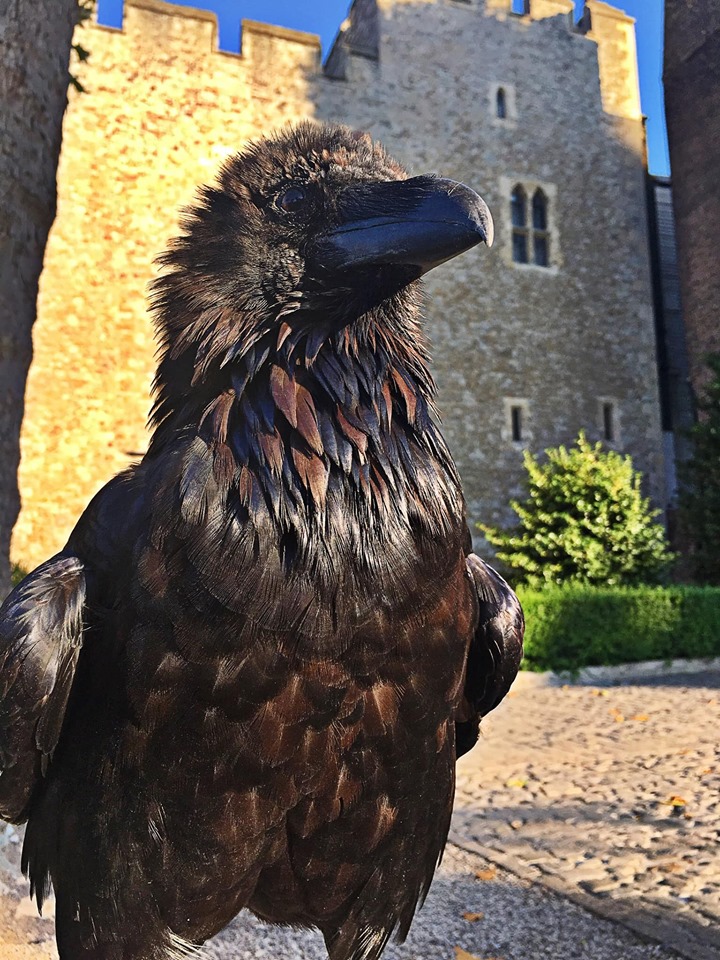
We learn about the Tower’s ravens; seven of them. Legend has
it that should the ravens leave the Tower, both it and the kingdom will fall.
The Royal Ravenmasters are taking no chances and trim their wings so the birds
cannot fly away.
Not all ravens are cut out for the job. Just three years ago, two of the ravens were banished for “conduct unbecoming Tower residents.” This makes me laugh and I can only imagine what they did that caused their eviction!
Recently, I read The Ravenmaster: My Life with the Ravens at the Tower of London. It is a fascinating account of Yeomen Warder Christopher Skaife, the Tower’s Ravenmaster, and the birds that he cares for. All of the birds have names and individual personalities. They are smart and have remarkable memories. They are also sneaky. They have been known to steal children’s crisps, popping off the lids of Pringles’ tubes and cramming as many into their mouths as possible before getting caught.
While legend has it that the ravens have been here for more than 300 years, it really has only been since Victorian times. Chris speculates that the Warders first brought in ravens because of Edgar Allan Poe’s poem, which was popular at the time. I laugh to read that past ravenmasters taught the birds to say, “Nevermore.”
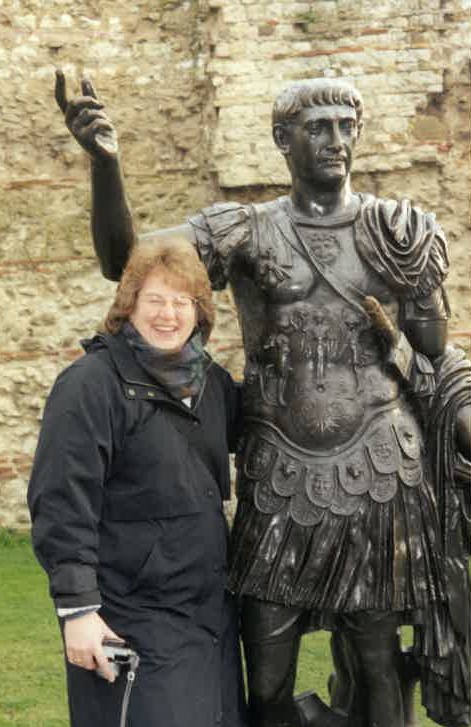
As old as the Tower is, just
outside of it are the remains of a 35-foot-high wall that once encircled London
built by the conquering Romans more than a millennium before William invaded
from France. There is a bronze statue of the Emperor Trajan on the grassy knoll
in front of the stone Roman wall. As far as I can tell Emperor Trajan had no
particular association with Britain, except perhaps as cousin and predecessor
to Hadrian of Hadrian’s wall fame in northern England.
Roman Emperor Trajan statue, Tower of London
Back on the bus, we head down Whitehall, past Westminster Abbey, toward Buckingham Palace. The guide says we can’t actually pass in front of the palace because the Queen decided she didn’t like the tour buses passing that way. Apparently, the Queen also doesn’t like the smell of fried onions, so she has forbidden hot dog vendors around Buckingham Palace. The guide tells us all of this with an amused air. She seems to take the Monarch’s idiosyncrasies in stride.
Past Kensington Palace, up Notting
Hill, and the bus returns to Paddington station. I have fish and chips at a pub
called The Dickens. This pub doesn’t claim that Dickens drank here, but many
pubs in London do. If he drank in as many places as publicans claim, he would
not have had any time to write his novels.
The next morning, I take the 10:15 from London Euston to Birmingham and arrive back just before noon. I grab a sandwich at the Student’s Guild—tuna with cucumber and sweet corn. I stop by my office to answer a few emails and go to the bank to pick up my Irish punts.
My checkbook has arrived! But alas no ATM card. They say that will be a few more days still.
In today’s news: USA Today: Boston to greet year 2000 a tad early. Bostonians might want to begin chilling their champagne a bit earlier than usual on December 31. They city plans to pop the corks at 7:00 PM. Rejecting customary Eastern Standard Time, the city announced it will ring in the New Year when it arrives in Greenwich, England. “We’ll be marking the millennium when it’s midnight in Greenwich, according to Greenwich Mean Time, which is the universally accepted standard of time for the world,” Mayor Tome Menino said.
Brian and I could be celebrating New Year’s at the same
time!



 Jody’s UK Memories
.jpg)


.jpg)
.JPG)