The weather is still nice here—like autumn at home and,
just like at home, it is a bit unpredictable; Monday is quite windy and chilly.
Tuesday is so warm I had to open the window in my room to cool things down.
My schedule feels a bit overwhelming just now. Between finishing my presentation, packing for Scotland, and making other travel arrangements, I don’t seem able to finish one thing, before I jump to something else, and none of them gets done. Dean says I really should be making reservations now if I am planning to go to Paris in December, so that adds one more thing to the list. Is anyone feeling sorry for me as I go winging off to try and find the Loch Ness monster?
Tony says if I pack up my things, he will store them. If he can rent my room while I am away, he will deduct that from my rent. If not, no harm done. It might save me a few nights rent. This is really awfully good of him.
I have been watching a fun game show called, “Who Wants to be a Millionaire?” It is a good format. There are 14 questions; each escalating in value from £100, to £500, up to a million. If you answer a question right, you can go on to the next one. If you get a question wrong you lose everything. Although there are two stages where you can decide to walk away and keep what you have―at £1,000 and £32,000. The questions are multiple choice and you have three “lifelines.” You can: 1) ask the audience for help, 2) call a friend, or 3) take a 50-50 meaning the game show eliminates two of the answers leaving you just two to choose from.
Caroline watches it regularly and during the commercials runs into the guest TV room to ask me excitedly whether I knew this or that answer. She thinks I should call the number to become a contestant on the show.
A word about British TV programming: The BBC’s programming schedule is weird. The Millionaire game show is on at different times on different nights. Last night, it was on at 8:00 PM. Tonight, it is 7:30 PM. It seems the BBC just shows whatever they want whenever they feel like showing it. For several weeks, I watched Ballykissangel at 8:00 PM on Sunday night. One Sunday, for no apparent reason, it was on at 7:00 PM instead, and I missed it.
In today’s news: The Queen is traveling on a State Visit to Ghana and South Africa. She was warmly received in Ghana, which left the Commonwealth in 1969. Since then, they have formed a Republic and have implemented some democratic systems. However, they all love the Queen and see her as a symbol of stability. It is also reported that Prince Charles will lay the wreath at the Cenotaph on Remembrance Sunday since the Queen will be in South Africa. The mayoral race for London’s first elected mayor is beset with politics. Gordon Brown, Chancellor of the Treasury, is preparing a new budget with lots of tax breaks, he says. And London is prospering without adopting the euro, thank you very much.
A word about British news: The print media appears to hold sway over other forms of news. The TV and radio news reporters have the curious habit of featuring as one of their news stories that day’s print headlines, actually reading or holding up the papers to show the headlines. Instead of deciding for themselves what warrants important news, they just tell us what the newspaper moguls think is important.
Caroline is surprised to see me this morning. They didn’t
hear me come in late last night. Joanie, a guest who is in town for a Chekov
theater workshop, joins me at breakfast. I sit with my second cup of coffee and
write out postcards. I have a senior moment and can’t remember if Aunt
Kay-Lee’s box number is 29 or 229. Caroline says, “Wait until you’re my age,
your brain is always muddled.”
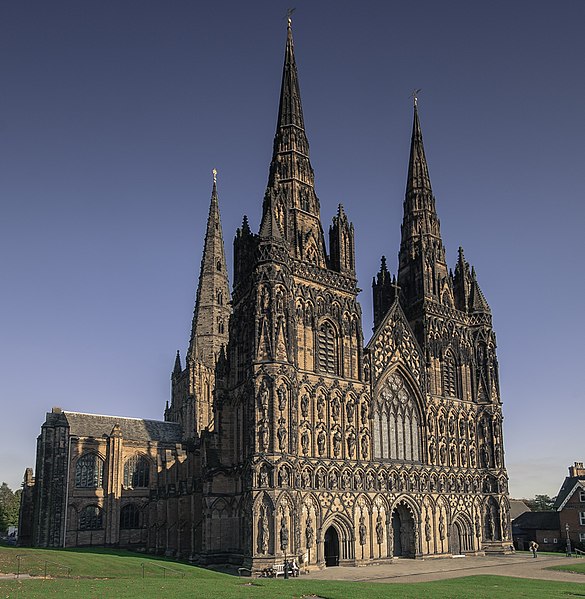
I take the train to nearby Lichfield to see the exquisite, three-spired, medieval cathedral there. It is meticulously carved and covered with over 100 statues of kings and biblical figures. I walk the entire perimeter of the cathedral and then pop into the gift shop. The minister and his wife come in. Calling each other dear and sweetheart, they buy candles but are in a hurry and ask the cashier to make a note so they can take care of the bill later. After they leave, the cashier smiles at me and says, “If you can’t trust the vicar, who can you trust?” My thought exactly.
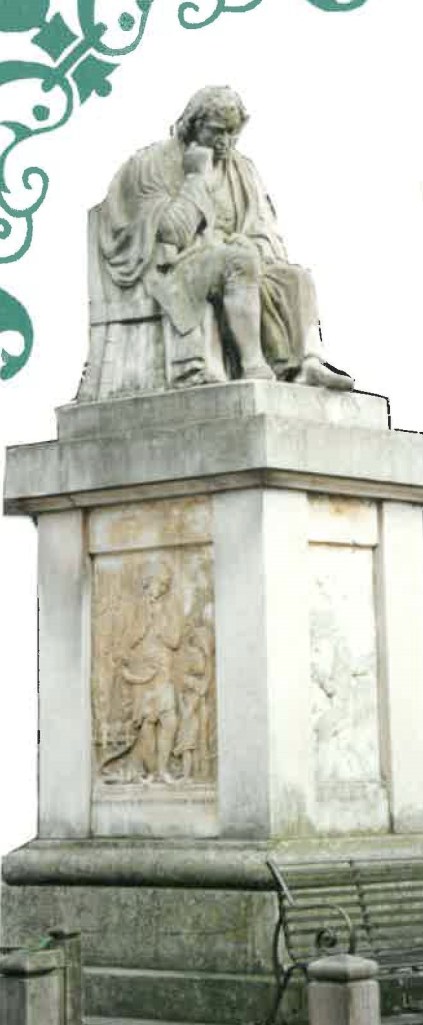
I walk back to the center of town to see Dr. Samuel Johnson’s birthplace. Johnson was a popular 18th century author, wit, and man about town. He famously said, “When a man is tired of London, he is tired of life.” Unfortunately, the house/museum is closed, despite my guidebook saying it is open every day. In the market square is a monument with Dr. Johnson sitting deep in thought.
Dr. Johnson monument, Lichfield
Johnson compiled the first dictionary in 1755. It is funny and often irreverent. He famously defined oats, for instance, as “a grain, which in England is generally given to horses, but in Scotland supports the people.”
I cannot resist a High Street sweet shop because of its name—Truly Scrumptious—a song from Chitty Chitty Bang Bang, one of my favorite movies of all time. I buy a piece of fudge and walk back to catch the train for home.
In London last week, the other fellows introduced me to the author, Bill Bryson whose wit I equate to Samuel Johnson. I am reading his book, Notes from a Small Island. Bryson, an American, lived in England for 20 years and wrote a fond farewell travelogue about his last trip around the country before he returned to the U.S. His book is funny, heartfelt, and nostalgic. I love this passage about English town names.
There are some 30,000 place names in Britain, a good half of them, I would guess, notable or arresting in some way. There are villages that seem to hide some ancient and possible dark secret—Husbands Bosworth, Rime Intrinseca, Whiteladies Aston. There are villages that sound like toilet cleansers—Potto, Sanahole, and Durno. Villages that sound like skin complaints—Scabcleuch, Whiterashes, Scurlage, and Sockburn. You can find fertilizers—Hastigrow; shoe deodorizers—Powfoot; breath fresheners—Minto; and dog food—Whelpo. You can find villages that have an attitude problem—Seething, Mockbeggar, and Wrangle. Some parts of the country seem to specialize in certain themes. Kent has a peculiar fondness for foodstuffs—like Ham and Sandwich. Dorset goes in for characters in a Barbara Cartland novel like Bradford Peverell, Compton Valence, Langton Herring, and Wootton Fitzpaine.
Bill Bryson, Notes from a Small Island
I love every word of this book and cannot put it down.
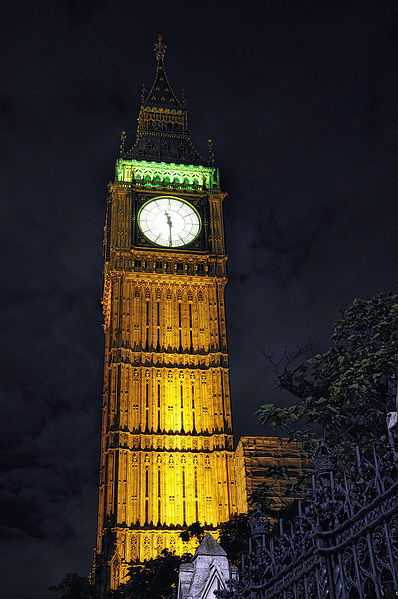
The Guy Fawkes celebrations continue. In my room, I can hear fireworks all around me on both sides of the house like surround-sound. Several bangs are so close and so loud, they shake the house like a huge crack of thunder would. From my window, I can see the colored streams of sparks floating around the clock tower. Evidently, people buy their own fireworks and set them off in their yards, which is perfectly legal here.
In today’s news: The Australians narrowly vote to keep the Queen rather than move to a Republic. Pundits and political writers note that it is probably not so much that everyone loves the Monarchy, rather they disliked the alternative proposed—a president appointed by a parliament, not popularly elected. The Queen is happy with the election result, but is said to have been surprised by the strength of the republican sentiment. Prince Charles is buoyed by the vote.
I am up early for the bus to Liverpool. Months ago, Chris invited me on the bus tour that he organizes every year for the university’s foreign students. Chris is a music enthusiast and Beatles fan, so I think the trip is as much for him as it is for the students.
I walk briskly to the Student Guild where the buses are queuing. There is a cutting wind, but it is not raining. There are already about 100 students there waiting. I see a few of the international students I’ve met. Olha from the Ukraine is clutching British Council literature that Chris has asked her to distribute on the bus—it’s our schedule, tickets, etc. Together, we board one of the buses.
Olha (the
Ukrainian version of the name Olga) is getting her MPA here from the School of
Public Policy in an accelerated course that takes just one year. She speaks fluent
but heavily accented English and speaks very fast, which together cause me to miss
some of what she says. She began learning Russian in the 1st grade and
Ukrainian and English in the 2nd. She belonged to a group called the Pioneers, which
she equates to the Boy Scouts. But the military maneuvers she describes are not
like any Boy Scout meeting I know. She talks about how, in order to find hidden
items, they had to… “What is the word for it?” she asks, “To move on hands and
knees parallel to the ground?” “Crawl?” I suggest. She was 17 when the Soviet
Republic broke up.
She is proud
of her Ukrainian heritage and indignant that Americans think borscht—beet
soup—is Russian. “It’s a Ukrainian recipe,” she declares.
She is
disdainful of several of the other Russian students in our group who are from
Kazakhstan. They are well-dressed in expensive leather jackets. In Kazakhstan,
I think I understand her to say, the wealthy party leaders let poor people live
in dirt caves and treat them like slaves. She said this arrangement continued
until very recently. Despite this, she assures me that everyone in Russia is
equal—all middle class. Everyone has the same food, the same housing, and the
same cars. I keep my skepticism to myself.
The bus trip takes almost three hours. The first Magical
Mystery tour starts at 11:00 AM and we pull in just a few minutes after the
hour. We are divided into four groups. Olha and I are in tour group #3, which
is scheduled for 2:00 PM. The bus drops us off at Albert Dock on the banks of
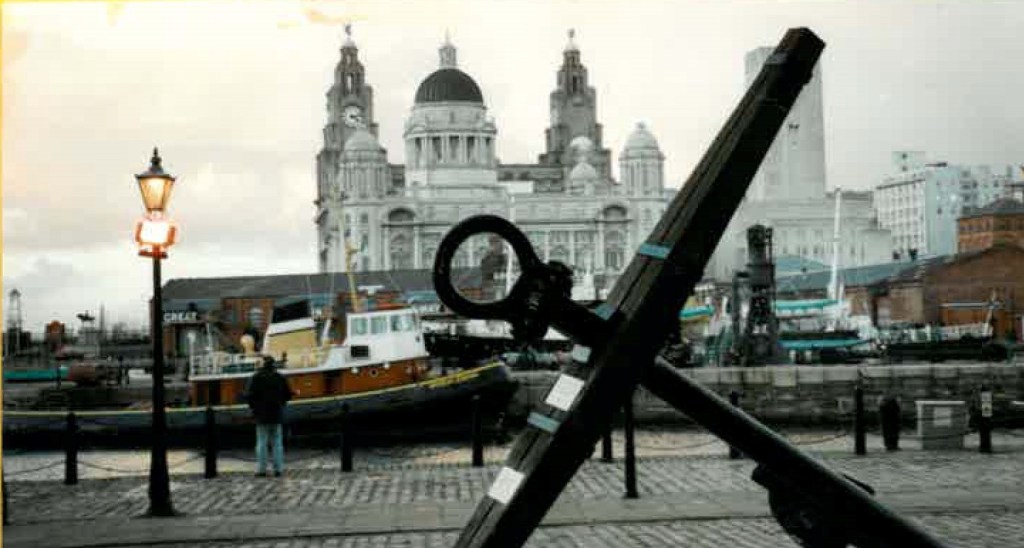
the Mersey River to do some shopping and sightseeing in the meantime. The old docks
and warehouses that used to hum with commercial shipping activity now house
shops, restaurants, and museums.
Liverpool waterfront with City Hall in the background
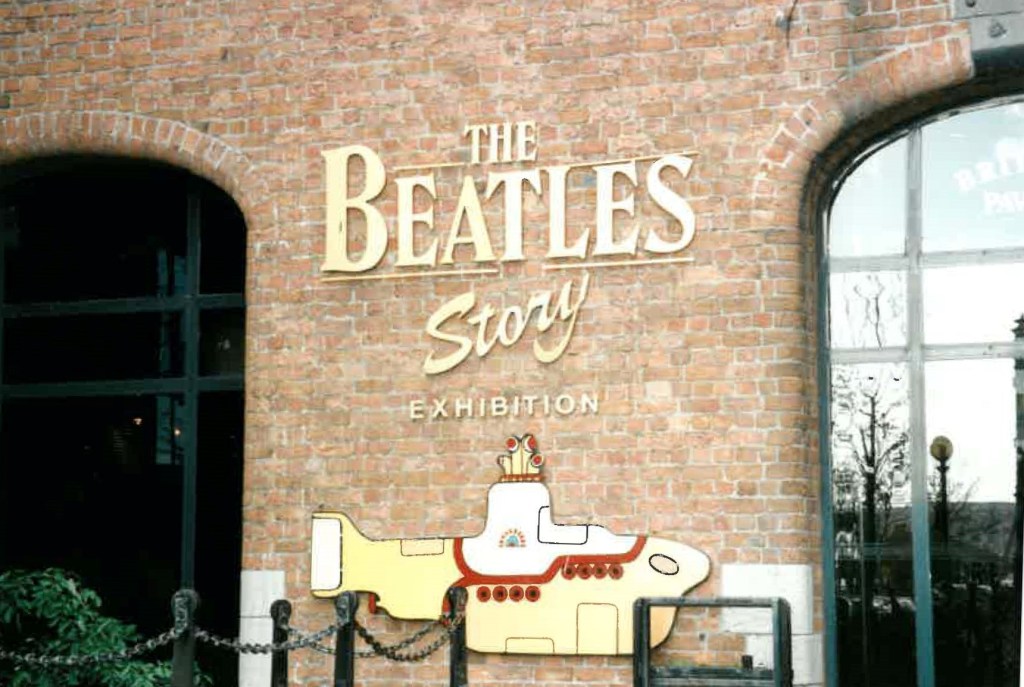
Olha, who has been to Liverpool before, scoots us over to the “The Beatles Story” museum. It traces the Fab Four from their earliest days playing the Cavern Club to their much-lamented breakup in 1969. The museum is splendidly done with a good mix of newsreels, memorabilia, exhibits, and even a full-sized yellow submarine completely constructed for the museum’s purpose.
The Beatles Story museum, Liverpool
Yellow Submarine, Beatles museum, Liverpool
I love the early clips, before the long hair and hippie clothes. A young John Lennon looks nervous as he is about to meet Princess Margaret. Despite his clear respect for the Royal Family, John Lennon refused his MBE, which would have bestowed on him a knighthood, in protest of Britain’s involvement in the Vietnam War.
The display commemorating John Lennon’s death is specially moving. It is a totally white stage with only a white piano and on the piano a framed black and white picture of Lennon and a pair of his trademark round hippy spectacles. His song, Imagine, is playing in the background; one of my favorite songs of all time.
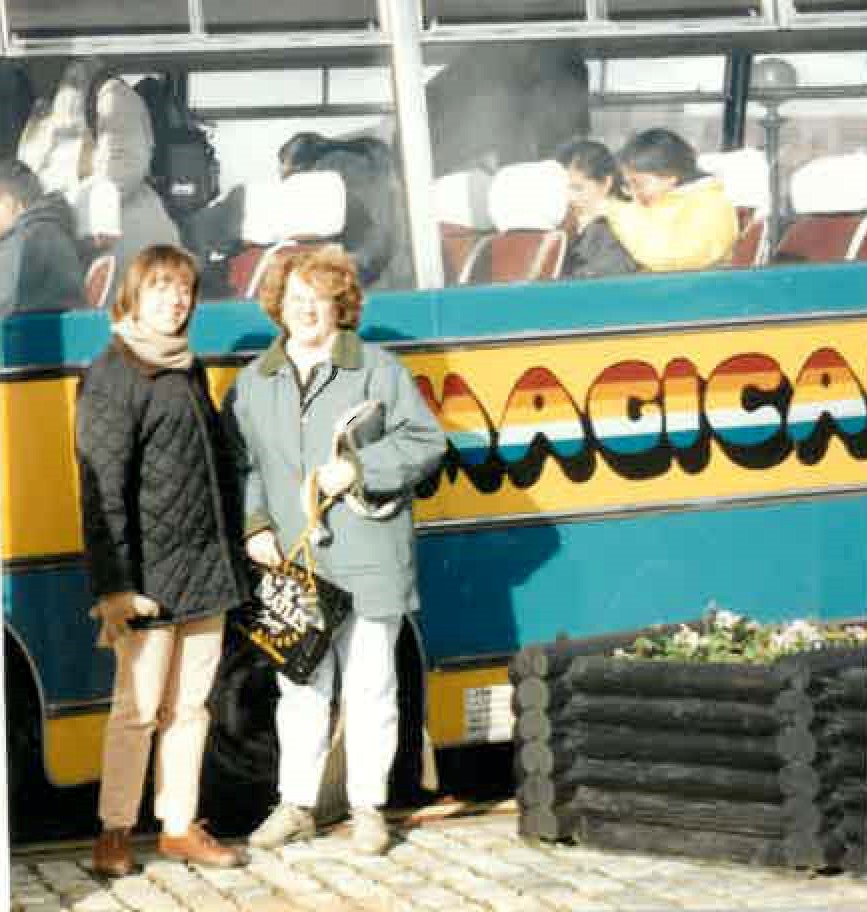
Then we board the yellow-painted Magical Mystery tour bus
for a nostalgic ride through the Beatles’ old stomping grounds.
Jody and Olha on the Magical Mystery Tour Bus, Liverpool
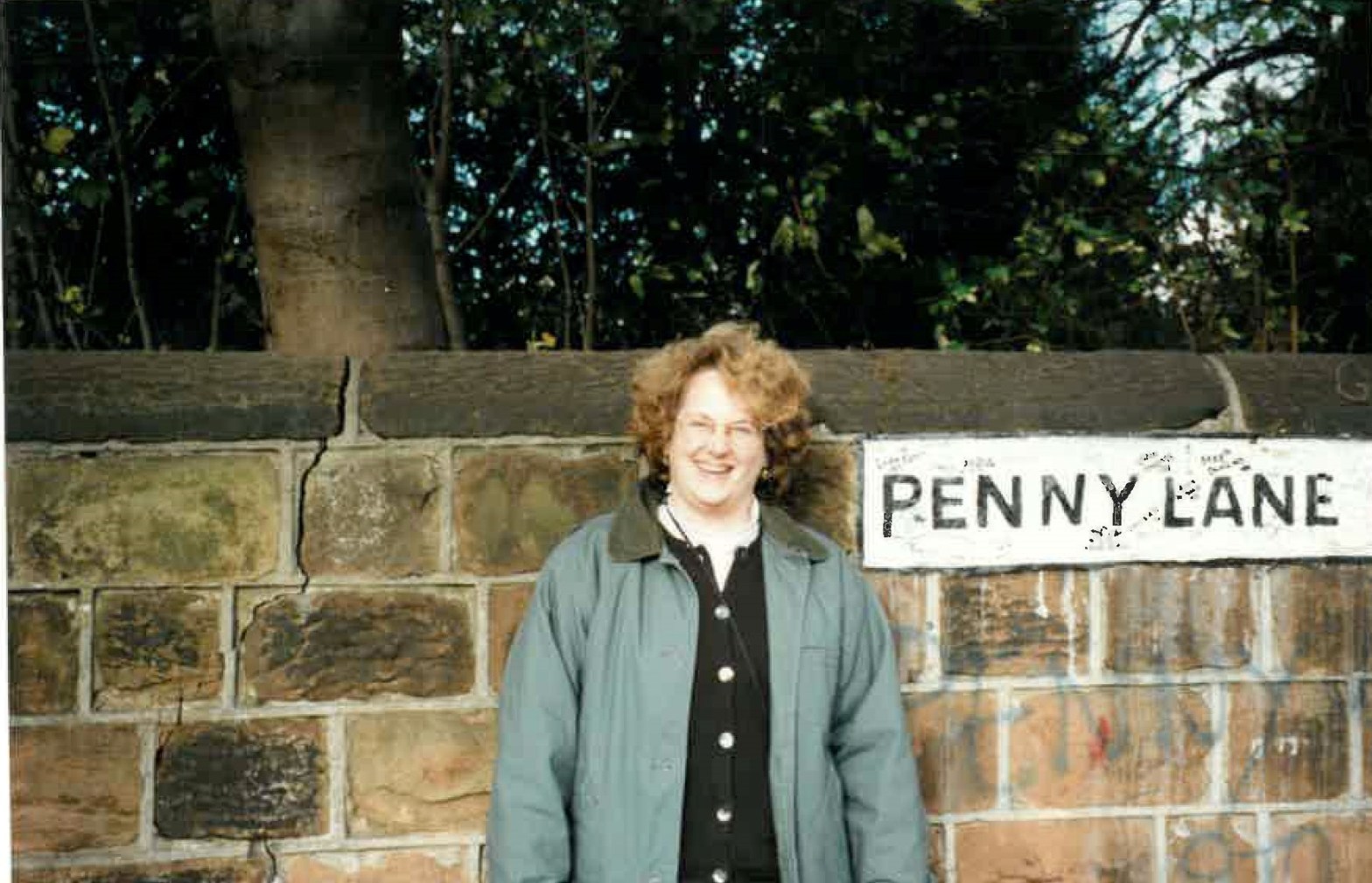
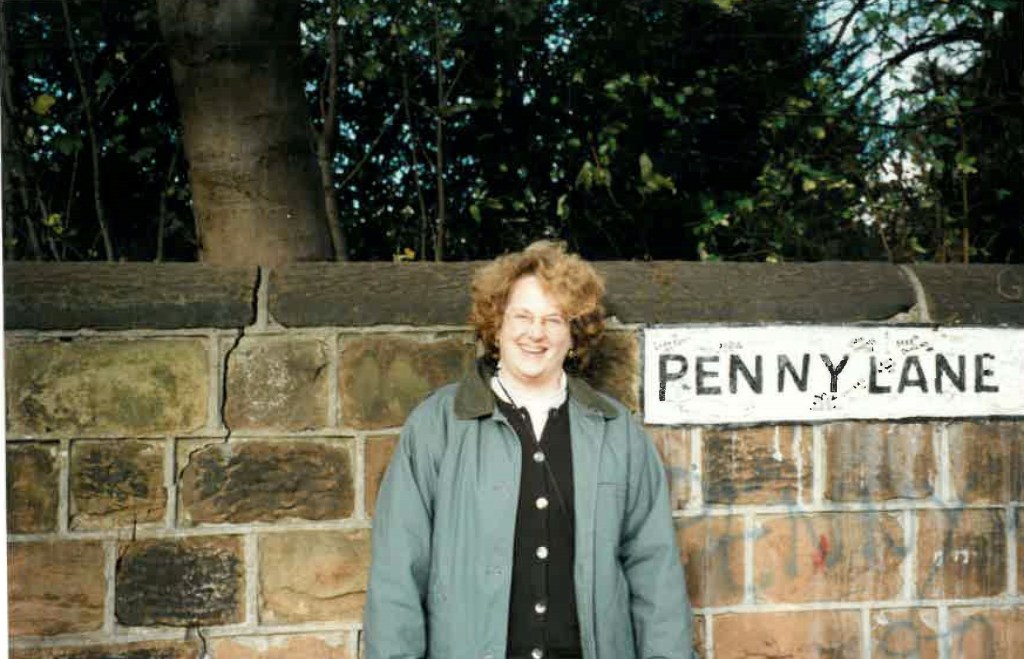
The bus takes us to the top of Penny Lane and we all pile
out to take photos of the street sign. Of course, as we do, we sing “Penny
Lane is in my ears and in my eyes.” One Indian student asks me as we get
back on the bus, “What is this? This Penny Lane?”
Penny Lane, Liverpool
Our tour guide, an obvious and self-admitted Beatles fanatic, loves Paul McCartney. Well, who doesn’t? She met him once at a charity event when she was wearing a Linda McCartney cancer-fundraiser t-shirt. Paul reached out and touched it and said, “That’s a really nice shirt.” Now, she says proudly and a bit cheekily, “Paul McCartney touched my chest.” As a lad, the cathedral’s music director refused Paul a choirboy spot because he wasn’t good enough. Forty years later, the Royal Liverpool Philharmonic Orchestra performed Sir Paul McCartney’s classical oratorio at that cathedral. “He showed them,” says our besotted guide.
There is an arresting sculpture at the top of Hope Street
looking down toward the River Mersey. It is a pile of stone-sculpted suitcases
and trunks randomly stacked in the middle of the traffic island. The suitcases
are labelled with brass plaques of the famous people who have passed through
Liverpool like Charles Dickens, 19th century feminist Josephine
Butler, and a trio of modern Liverpudlian beat poets: Adrian Henri, Roger
McGough, and Brian Patten. A small stack of suitcases and a guitar case
stand a bit off to the side by themselves memorializing Liverpool’s favorite
sons.
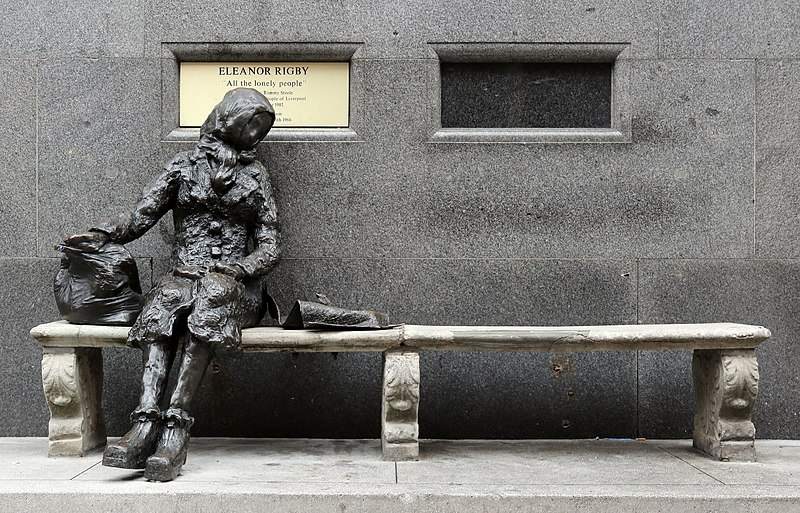
We pass an enchanting little bronze statue of Eleanor Rigby “dedicated to all the lonely people.” She is wearing a handkerchief headscarf and sitting on a bench with her shopping bag.
Back at the Albert Dock is a massive obelisk dedicated to the engineers who lost their lives in the Titanic tragedy.
The Titanic, although having sailed from Southampton, was
registered in Liverpool. The offices of the ship’s owner, the White Star Line,
were in Liverpool, and many of the crew was from here including Captain Smith,
the eight heroic band members, and Fred Fleet, Titanic’s lookout who spotted
the iceberg.
We have about two hours to kill before our dinner/party at the Cavern Club. I want to go to the Merseyside Maritime Museum. Olha is not interested in ships she says and goes off to City Centre to do some shopping with some of the other students. I am the only one who goes to the museum, which is about as interesting as you would expect a maritime museum to be. But, I came to see the small exhibit dedicated to the floating palaces.” It has pictures and memorabilia from both the Titanic and the Lusitania.
I have tea in the museum café before heading out to meet
the others.
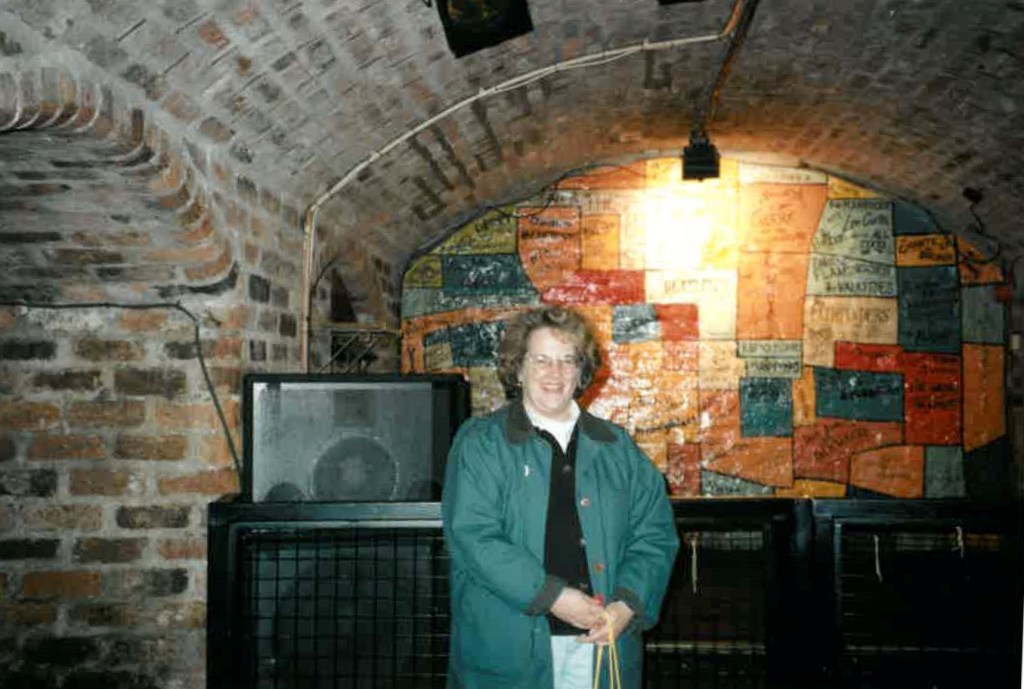
The Cavern Club is where the Beatles got their start and
is today still a working club. Chris tells me that some Saturday nights, it is overcrowded,
smoke-filled, and smells of sweat. But it’s a mecca for Beatles fans and
would-be musicians the world over.
The whole of Matthew Street, where the club is located, is
a tribute to the Beatles with a bronze statue of a young John Lennon. Behind
him is a wall of bricks engraved with the names of all the bands that have
played at the Caravan Club over the years: Jerry and the Pacemakers, Rolling
Stones, and many more. There is also the Beatles Shop, the Lucy in the Sky Pub,
Abbey Road Bar, and on and on.
Cavern Club, Liverpool
Upstairs is a banquet room with music that Chris says
will get louder as the night progresses. I sit at a table with Olha and a young
couple from Botswana. They too speak excellent English. The young man says to
me, “I like your English.” I ask if it is easier to understand than the British
accent, by which I mean the impenetrable Birmingham brogue, and they both nod
their heads vigorously. They know someone in Washington DC. I say I love
Washington DC but don’t go there in the summer as it is too hot. They say the
heat wouldn’t bother them as it is hot where they come from (I am not sure that
they understand about humidity). Anywhere the sun shines would make them happy,
“Not like this place,” the girl Keeya says mournfully.
Olha can’t wait to dance. Keeya and her boyfriend (I didn’t catch his name) join her on the dance floor. The Indian man I met at the City Hall awards reception sits down to say hello. It comes to light that he mistakenly thinks Dean is my husband. When I correct him, he is embarrassed and maybe a little angry saying, “But I asked about your husband before.” Earlier on the bus he asked me, I thought, whether I brought my colleague. At the time, I wondered if he might have said “hubby,” instead of “colleague” but I couldn’t imagine an Indian-speaking person for whom English is a second language using the word hubby and assumed I misheard.
I dance a couple of times until it gets too hot and smoky, then retreat to my table in the back. We leave around 9 PM but, not before Chris gets on the microphone and begins to sing, “I did it my way.” It is so unexpectedly different from his normal British reserve that I know he has drunk many beers.
Today is the first hard soaking rain we’ve had in Birmingham since I’ve been here (not counting the sideways rain in Ireland and the downpour in Cornwall). I can hear it pelting against my bedroom window and am thankful I don’t have to walk in it. Dean will drive us to our seminar.
We are, once again, at Wast Hills House. During the morning, it rains so hard that the conference room ceiling begins to leak. I decide not to run the 50 or so feet between buildings to go with the rest of the group for coffee during the mid-morning break. I am content to sit alone in the seminar room and listen to the rain.
The attendees in this workshop are more policy-oriented than Wednesday’s group. There is a lot of good discussion. I hope I am learning something through absorption.
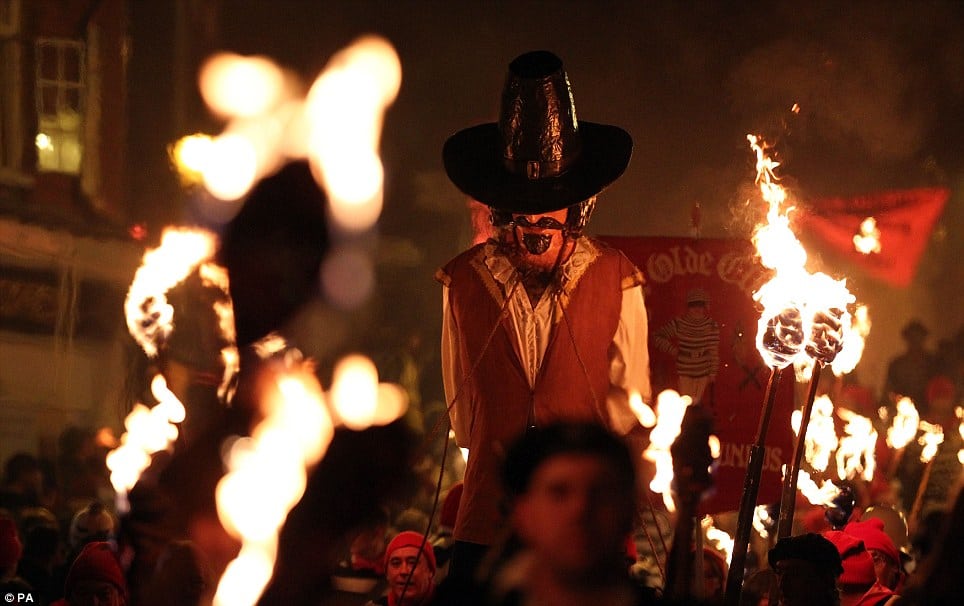
Today is Guy Fawkes Day, also known as Bonfire Night. It commemorates the foiled attempt by one Guy Fawkes and his treasonous compatriots to blow up the House of Lords and kill King James I on November 5, 1605. Parliament declared it a day of national thanksgiving and nearly 400 years later revelers still celebrate with parades, fireworks, and throwing straw figures representing the would be assassin onto bonfires. The fireworks represent the gunpowder that never exploded.
Remember, remember, the fifth of November Gunpowder treason and plotWe see no reason Why Gunpowder treason Should ever be forgot ….
British nursery rhyme
The papers connect Guy Fawkes to what is happening in Westminster now with the House of Lords voting down Tony Blair’s welfare bill. A clever Timespolitical cartoon turns the table and shows the King and the Lords trying to blow up the House of Commons.
As I type this in my room at Glenelg, I can see fireworks from my window. They echo across the city. The leaves have mostly fallen from the trees from today’s wind and rain, leaving me a clear view of the university clock tower. I think the fireworks will go on all night. It is still raining and although I love fireworks and normally would be out watching, tonight I prefer the obscured view from my warm, dry bedroom.
The BC has arranged a tour of the British Foreign and
Commonwealth Office (BFCO) for us in London and a chance to listen to some
parliamentary debate in the House of Lords. We are also invited to a reception
at the BFCO sponsored by the Baroness Scotland.
I board the 10:15 train to Euston and am seated next to
two lovely white-haired ladies, dressed in blue uniforms sporting WAAF badges
(Women’s Auxiliary Air Force). Outgoing and cheery, they tell me they are on
their way to London for a RAF band concert in honor of the WAAF’s 60th
anniversary. Next week, for Remembrance Day, they will march in
the parade when the Queen lays a wreath on the Cenotaph. One of them says
to me, “Look for me on the telly because I am tall, and I will stand out. You
can tell everyone that you met that lady on the train!”
It seems that the ladies have a reunion every few months. This summer they all dressed up in 1920s garb, even wearing garters to hold up their stockings. My new tall friend laughed and said the cameraman wanted proof that they were wearing garters. She shows me a picture of a group of elderly ladies with their dresses pulled up to their thighs showing off their garters. She said she wouldn’t have done it except for the challenge—that, and the three glasses of wine she had drank. As the noble motto goes, Honi soit qui mal y pense.
I am delighted at having met these ladies and disembark
with a smile.
I take the tube to Charing Cross and walk through Trafalgar Square to the BC offices. We have a “fork buffet lunch” of salmon, rice, and plum pie with custard.
After lunch we walk over to the BFCO to hear about
British foreign policy. One speaker tells us the Blair government has two
objectives related to the EU: 1) to win a place at the high table of EU’s
decision-making body; and 2) to win the war in the UK about Britain’s
participation in the EU. He said, however, the more they talk about the EU, the
more the British people retrench.
There is more discussion about the differences between UK and US politics, like the story of a visiting U.S. senator who could not understand why a major private business could not call up their MP and get legislation introduced into Parliament. At the reception later that evening, a British civil servant is appalled when we describe the Electoral College. “It makes no sense,” he says. I reply, “No one in the U.S. understands it either.” He is so worried that U.S. citizens don’t get to vote for who they want. But then, a few days later, The Times reports on how the Labor Party is deciding who they will put up for candidates for a particular district. There are no primary elections in England; the party decides who will run. So, in England, voters don’t get to elect who they want either; they can only vote for a contender the Party puts forward.
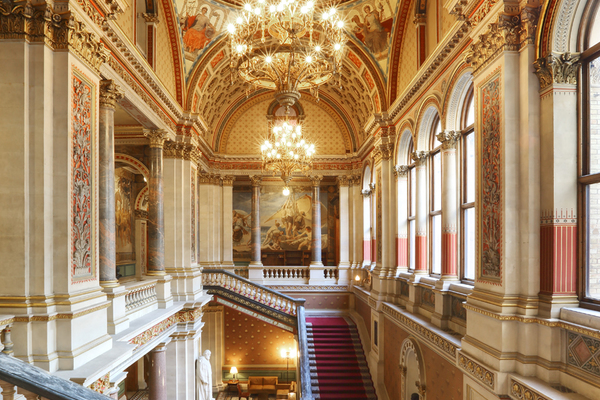
Following the program, a very proper and precise guide gives us a tour of the stunning BFCO offices. Just two years ago, the government restored of a number of the public rooms to their magnificent 19th century grandeur.
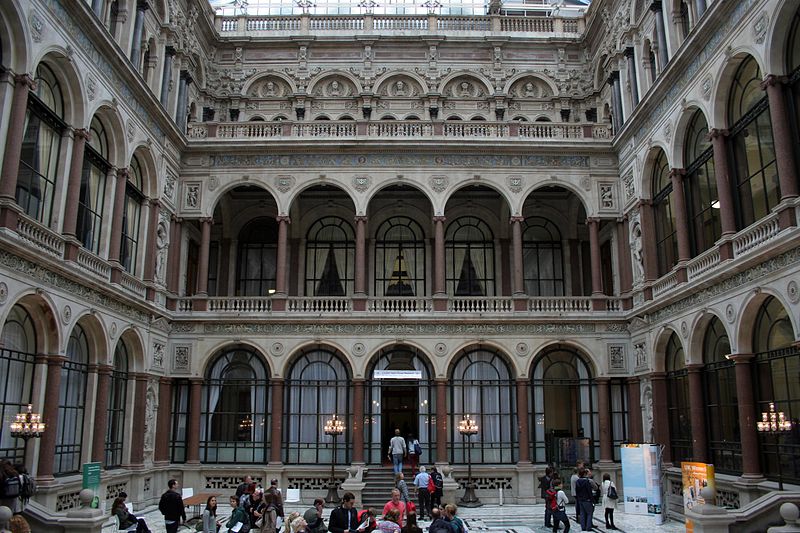
One of these—the 1867 Dunbar Court in the former India Office—is striking. It has a sunken floor of swirling Greek marble and a glass ceiling. All four sides of the massive hall are lined with three-story-high, colonnaded, arched glass windows trimmed with ornate, molded, plaster friezes. The 19th century architect, who earlier in his career had made an acclaimed book of illustrations of London’s glorious Crystal Palace, was clearly influenced by those drawings in designing Dunbar Court. I think that this is what the Crystal Palace must have looked like.
Durbar Court, British Foreign and Commonwealth Office Photo: Wikimedia Commons
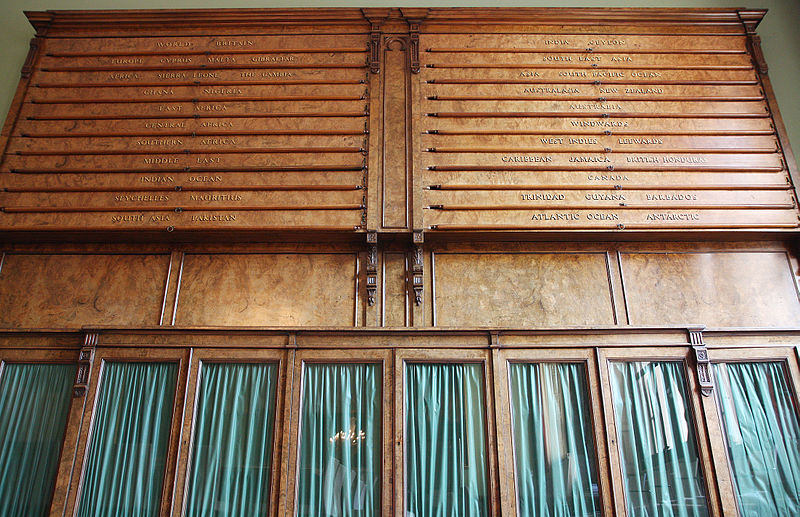
Our meeting earlier was in the Map Room complete with a large wooden map case that once held maps of Britain’s colonies. Each map slot is marked in gold leaf lettering: Canada, Jamaica, Guyana, Central Africa, etc. The Map Room is supposedly the scene of the only meeting between Britain’s two greatest military heroes: the Duke of Wellington and Lord Horatio Nelson.
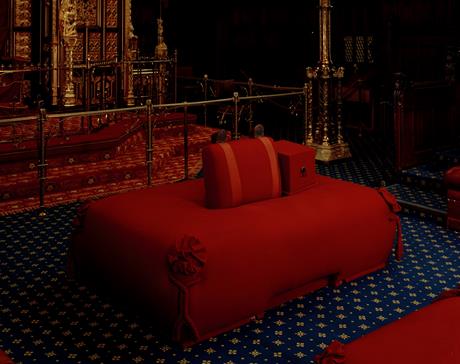
Inside the Palace of Westminster, we are led through several ante-chambers, down a wide hallway, and finally up some stairs into the visitor’s gallery. The huge debate hall below us is richly decorated in reds and golds. The peers sit on red leather benches. A massive, ornate, golden dais at one end of the hall holds the Sovereign’s gilded wood and red-velvet throne. I see the red woolsack in the middle of the hall. The debate is very civilized; everyone addressing each other as “My Lord.” It is less raucous than in the House of Commons—no jeering or harrumphing, although there are a few, “Here, here’s.”
The bewigged Lord Chancellor sits on the woolsack and a few old peers are asleep (I counted three sleeping peers; Stacy saw five). They are debating Tony Blair’s welfare reform bill that controversially seeks to cut benefits for people with disabilities who have pensions. Referencing a work requirement, one peer argues for part-time work, although I cannot tell if he favors the bill in question or not. Apparently, it is this peer’s maiden speech and the next speaker congratulates him on his eloquence.
Note: The House of Lords exercised their muscle voting down the Welfare Reform and Pensions Bill just days before most of the peers themselves are cut from the upper chamber and its hereditary membership abolished.
At the BCFO reception, I meet the Baroness Scotland, our hostess, who is not a hereditary peer, but received her honor from the Queen for her good works. A tall, striking, Black women, she is dressed very formally in a long black dress and wears a diamond and black pearl necklace. A lawyer by trade, she says she likes the Atlantic Fellows program because it gives high-level, policy people, who are busy fighting day-day fires, an opportunity to step back from the fray and think long-term.
I leave early to catch my 19:45 PM train. Of course, I cannot find a taxi on Whitehall and I end up walking to Westminster station. I remember vividly being angry with Brian for not getting a taxi after attending the theater and having to walk back to our hotel in high heels. My feet hurt today just as much as they did back then and I can’t even blame Brian.
It slips past 7:30 PM and I am still on the tube. I start
to worry that I won’t get to Euston in time. I run to the train with only a
minute or two to spare and sink into my seat; my feet swollen, and my head
aching from too much red wine.
I take a taxi home from New Street station and gratefully
slip off my shoes.
In a small-world coincidence, Jane Lutz gives me some materials on performance contracting from a presentation she went to here at INLOGOV. The presenter was Bruce Clary of the University of Southern Maine, whom I know. I email him and he replies sending me the web address of a Maine Policy Review journal that contained the article I wrote on performance budgeting.
Dave Lachance from Maine’s budget office emailed me to say the first performance budgeting commission meeting went well. Happily, they seemed to like the new budget model.
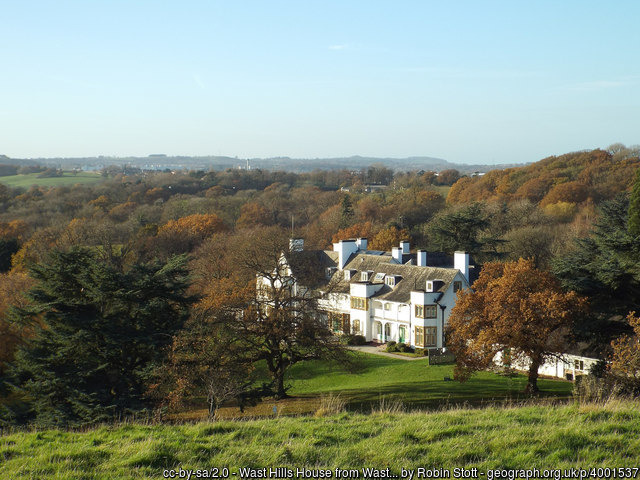
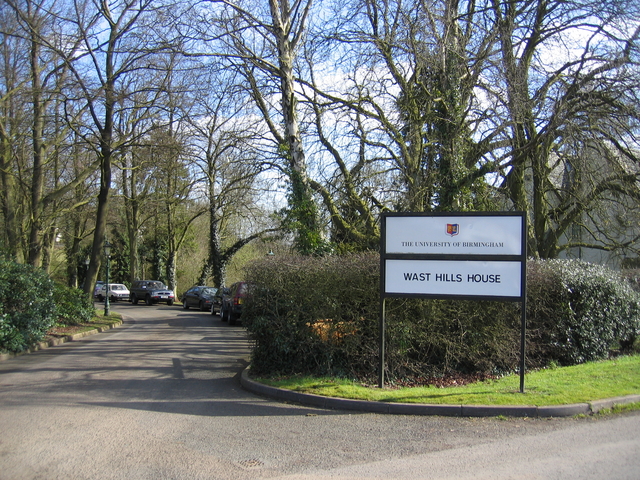
On Wednesday, I attend a training seminar sponsored by INLOGOV. It is held in the Wast Hill House just off campus. Caroline markets this house for conferences and seminars as part of her job at the university. The Cadbury family owned the house—which explains the doorknobs throughout shaped like cocoa beans.
Entrance to Wast Hills House, University of Birmingham Photo: Wikimedia Commons
Wast Hill House, formerly owned by the Cadbury family
The training seminar is quite good. But I am beginning to realize there are no promising conclusions. The British government is doing the same things we are doing in Maine, and struggling with the same issues. But I meet some interesting people in the field. One woman works on best value in Cheltenham, a borough in the Cotswolds, where Prince Charles’ country estate, Highgrove, is located.
With the time change, it is dark when I walk home now, It is a gloomy reminder that winter is coming and my time here is going by fast. I am at the half-way point and feel like I am just starting to know what I am doing—almost. Plus, it is raining so it is a messy walk home. But it will be warm and dry when I get there with Lutchford to greet me.
In today’s news: Prince Charles stepped into the political limelight again and is reportedly annoying the Blair government. The monarchy is prohibited from criticizing or supporting one government’s programs or policies, according to Britain’s unwritten constitution. Recently, Prince Charles has expressed his concern about government approvals of genetically modified foods, boycotted the government-sponsored banquet for the Chinese president, and, this weekend, took his sons on a fox hunt, which the Labor government is trying to ban. A furor ensued. Analysts say his behavior is beginning to indicate a pattern that undermines the government.
The fox hunt is an interesting issue; one that pits urban against rural Englanders, much the way deer or bear hunting does in Maine. Tony Blair has vowed to ban the fox hunt; a practice that reeks of upper-class privilege, which he is bent on dismantling, only in this case, cloaked in objections about animal cruelty. Rural England sees this as a slap in the face to their traditional way of life. Prince Charles has always hunted and attends the elite Beaufort Hunt every year. This year, because of legislation to ban the hunt, one would think he would see the political landmine and avoid stepping right into the blast. But maybe that is his intent. I see Camilla Parker-Bowles’ hand in this this; an avid hunter herself, she also rode in this year’s hunt.
At the same time, Prince Charles is working with the
Government to champion British beef abroad; to become an ambassador of sorts to
help bolster British beef exports, which have suffered following the Mad Cow
outbreak.
My guidebook says
there is good local bus service to Avebury from Marlborough or Devizes. I ask
at the Bristol train station, but there are no trains to either of these towns.
“The closest you could get,” the ticket agent says, “is Chippenham.” “Well,” I
think, “there must be buses there.”
Only there aren’t. In Chippenham, the bus station is closed. I
ask a nearby taxi driver what the fare would be to Avebury. He says £20. I ask
if there are taxis there to bring me back. He says no, but if I pay for his
waiting time, he will not charge me for the return trip. All told, it will be
£30. Avebury is on my “must-see” list, so I jump in and off we go. It’s about
10 miles to Avebury and my driver points out the sights along the way, keeping
up a steady chatter. He is better than any tour guide.
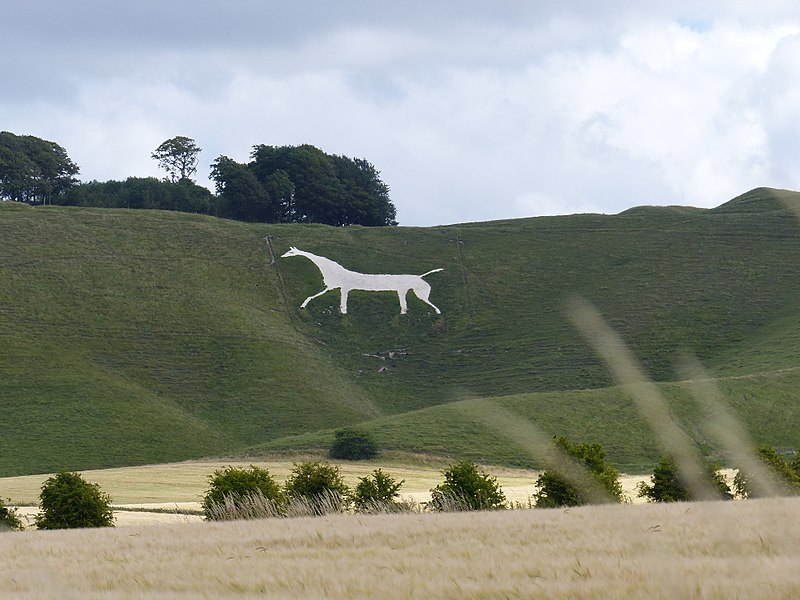
We pass the White Horse of Cherhill—a 165-foot-high, horse-shaped figure cut into the Wiltshire hills revealing the white, chalky soil underneath. It stands out starkly against the grassy slope that surrounds it so that it can be seen for miles . There are more than a half-dozen of these chalk figures in the area, dating back to the Bronze Age. No one knows why they were originally cut, but archaeologists re-discovered them in the 17th century and local people have maintained them for centuries. My taxi driver says RAF pilots used them as landmarks during WWII.
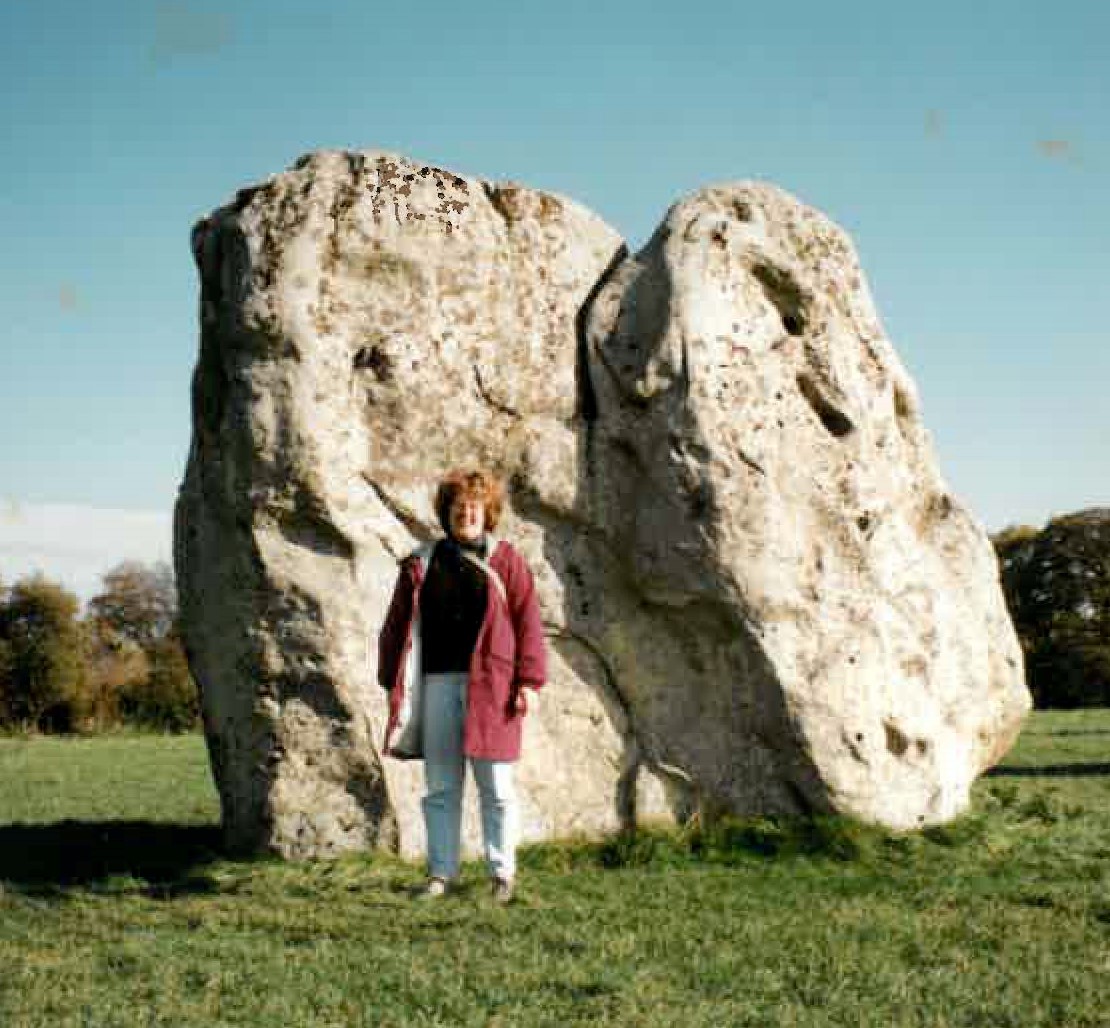
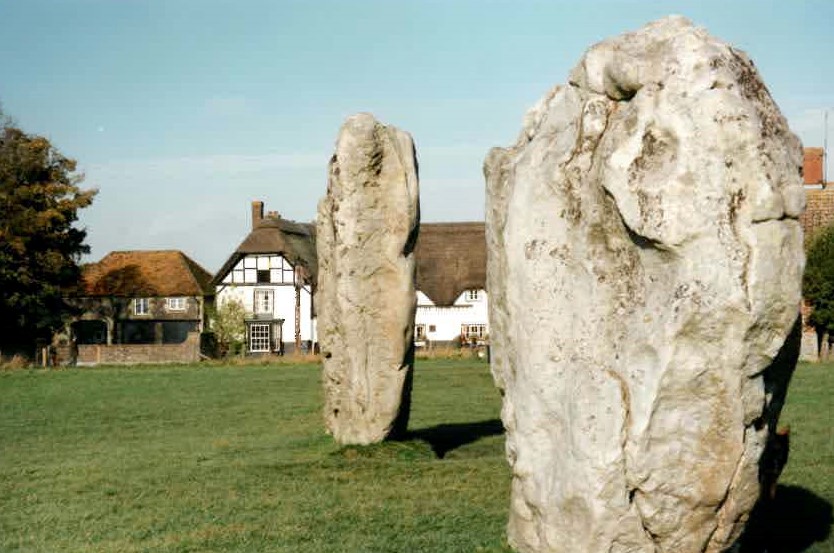
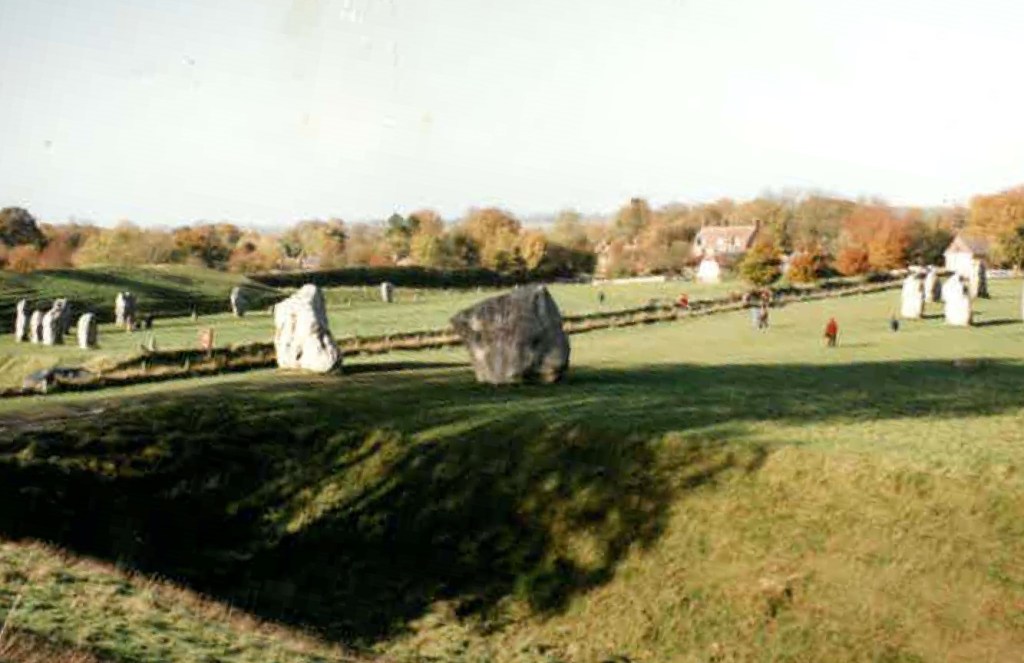
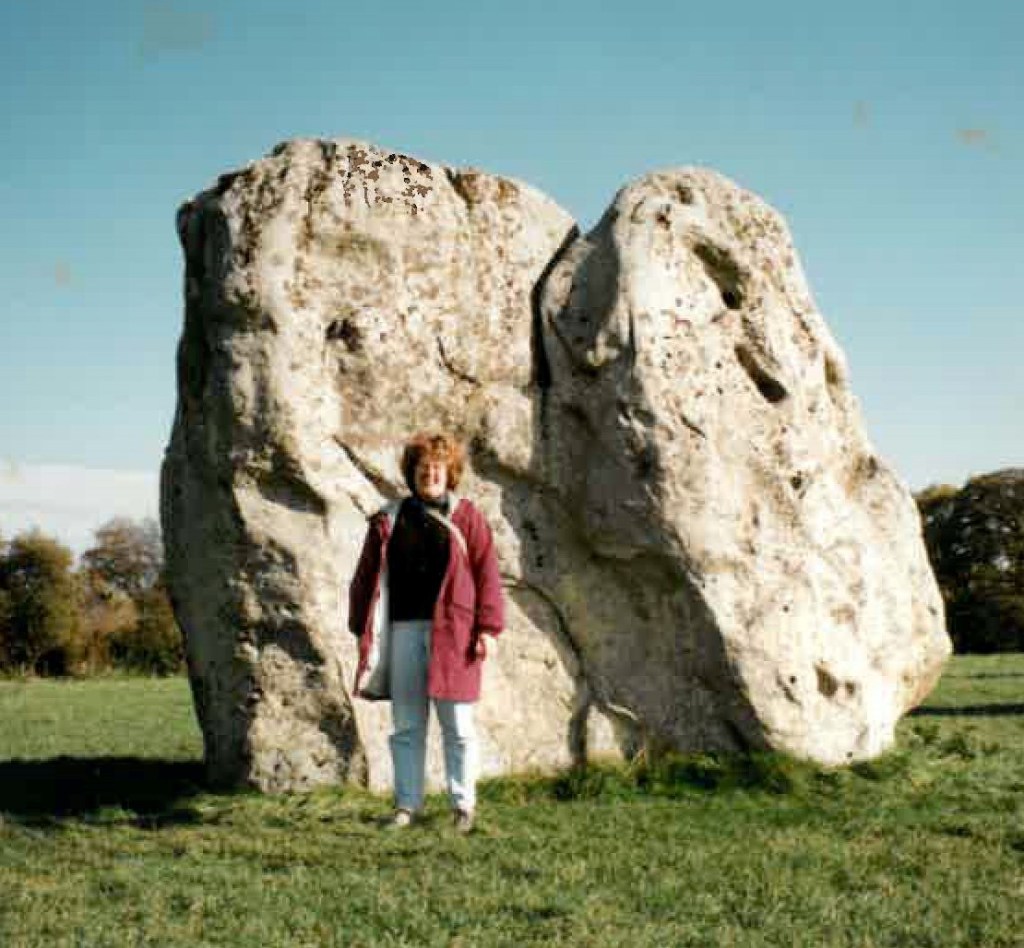
The 4,500-year-old stone circle at Avebury is the largest in the
world, with 76 stones standing today, but once boasting as many as 600 stones
weighing in excess of 40 tons each. I love the stones. The site actually
consists of circles within circles of stones. Sheep graze contentedly and the
little village of Avebury is nestled among them.
Avebury
One postcard I buy says, “The
village would not be Avebury without the prehistoric monuments and the stones
would be unfinished without the houses, shops, and the postman.”
At first the stones seem to be everywhere and I can’t see any
particular pattern. Soon though, I can discern the circular pattern of a
massive ridge that slopes down into a ditch that encircles the scattered
stones. The scattering begins to make sense too once I realize there are gaps where
stones are missing.
Avebury
Avebury
Wiltshire is remarkable for its many Neolithic sites from Stonehenge to Avebury
to the chalk figures along with other numerous barrows and henges dotting the
county. What is it about this area that prompted ancient man to build so many
monuments here?
My taxi driver takes me back to Chippenham, whose population he says has doubled in ten years. Not even in my guidebook, this sleepy little suburb is on a direct rail line from Paddington. It is an old market town and the covered market stall stands as a monument to a distant agricultural past that has given way to mini malls and ATMs.
Roman Bath
From Chippenham, I take the train to Bath.
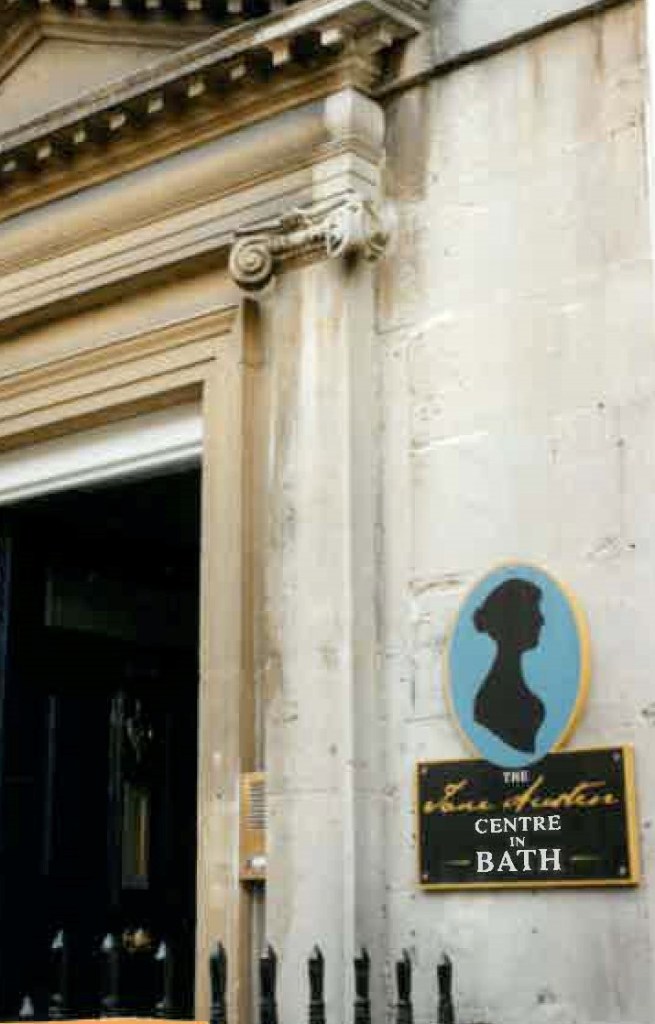
For several years of her life, Jane Austen, lived in Bath and
two of her books are set here. A line from Northanger Abbey makes me
smile every time I read it. She says of the streets of Bath, “Everybody may
remember the difficulties of crossing Cheap Street –a street of so impertinent
a nature.”
Jane Austin Center, Bath
I visit the Jane Austen Center located in the same street, but
not the same building, where Jane Austen lived when she was in Bath. It is
small, with some exhibits of period clothing and a film about Jane’s life in
Bath and, of course, a gift shop.
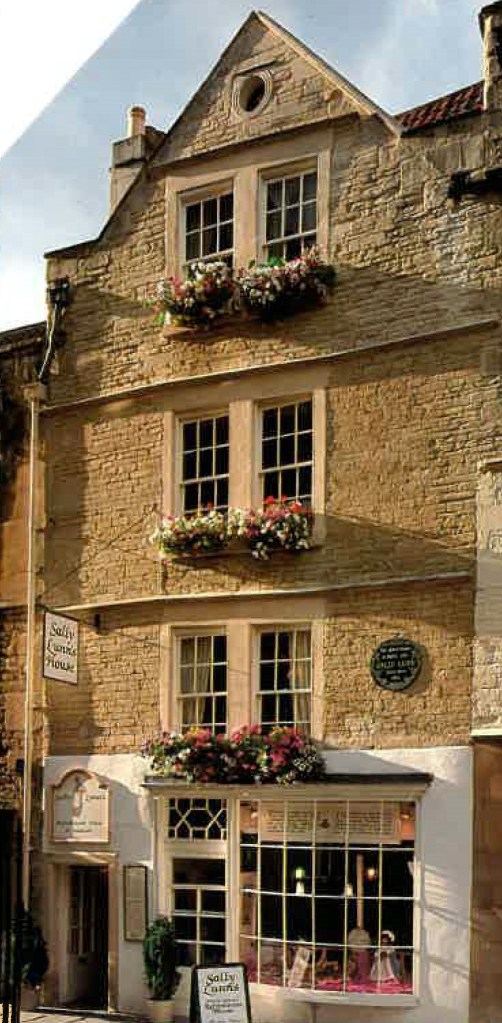
Hungry, I pop into the Sally Lunn tea shop for one of the famous
Sally Lunn buns; a large, round, light roll, popularized in Georgian England,
which Jane herself would have perhaps eaten in this very shop. Sally Lunn was a
young, French refugee who invented the sweet roll named for her. It is not that
great actually; plain and dry, but better with Tiptree strawberry jam and
copious amounts of tea.
Sally Lunn Tea Shop
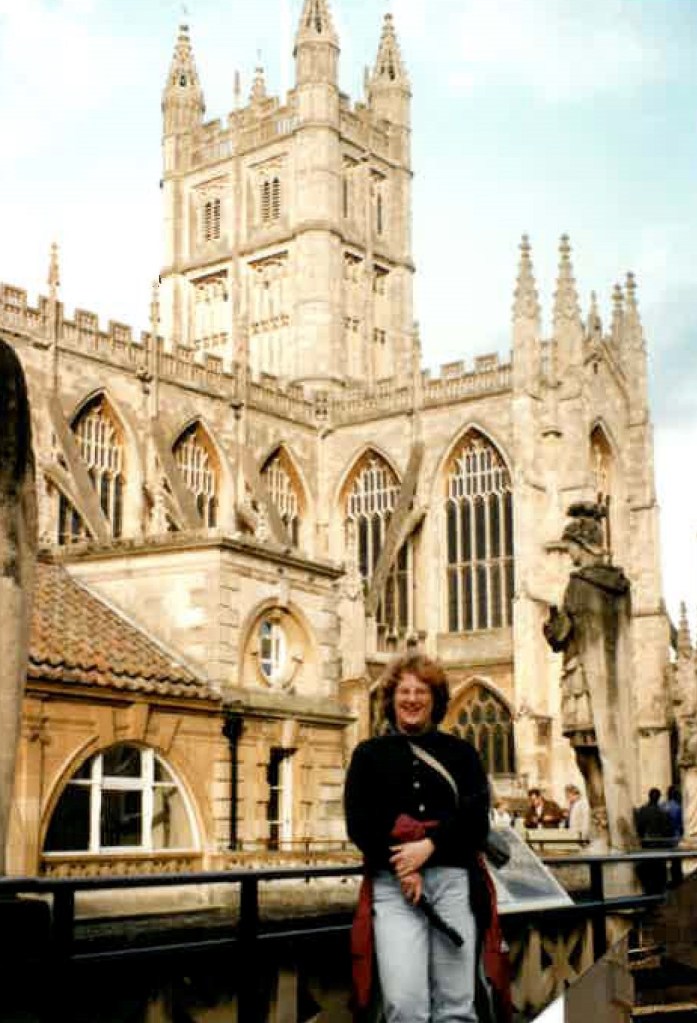
The abbey bells merrily peal out a delicate Handel-like tune for
a quarter of an hour as I make my way through the people thronging the wide
Bath streets.
Bath Abbey
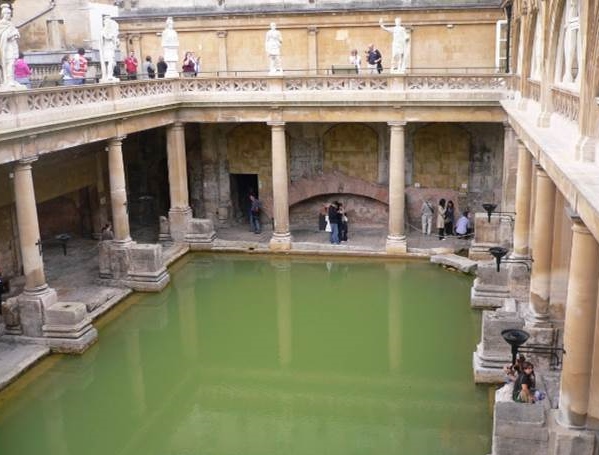
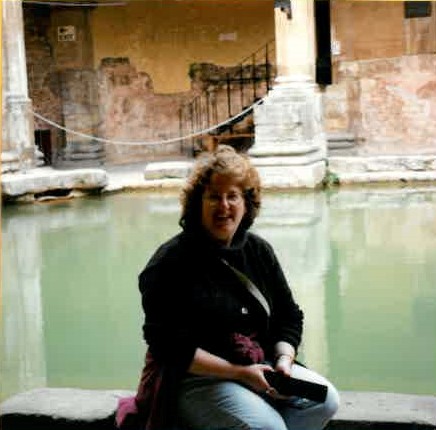
Even though I have visited them before, I could not leave Bath without a trip to the Hot Baths; a marvel of Roman engineering, and one of my favorite sites in England. Constructed around a steamy, natural hot spring, Roman patrons of all social classes would come here to bathe. Over the centuries the baths were lost to time until, in the 19th century, archaeologists re-discovered them and, in the over-the-top way that Victorians had, they imposed an ornate colonnade with Roman emperors and governors carved of the soft, golden, local stone over the original Roman drainage work.
Roman Baths
Roman Baths
A hot spring fed the Roman pools reaching temperatures of up to 200
degrees Fahrenheit. The Romans piped the water to bathing pools. They then
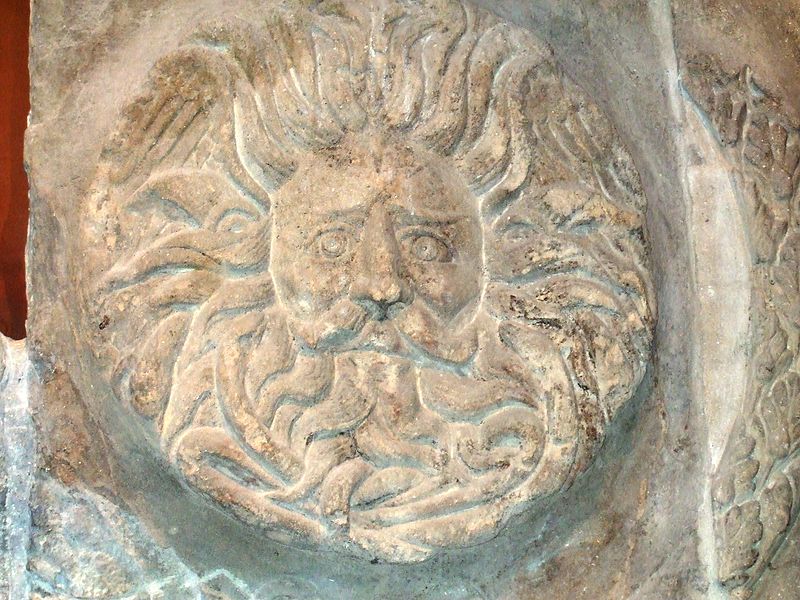
erected a temple over the baths with a central carved figure of a Gorgon’s head
that glowered down on the bathers. Today, a replica of the Gorgon greets me at
the entrance to the underground chamber that leads tourists to the baths. It is
supposed to be a testament to the power of the goddess, Sulis Minerva, who, in
legend, helped Perseus slay the creature.
In that way that conquerors have of integrating old ways into
new to promote acceptance of their subjugation, Sulis Minerva is a two-in-one
goddess; Sulis being the Celtic goddess of healing and sacred waters; Minerva
the Roman goddess of wisdom.
The surplus hot water, not needed for the baths, flowed through
a Roman drain to the River Avon a few hundred meters away. Still functioning
2,000 years later, the basin through which the steamy water drains is a rusty
color, rich in iron, and strewn with pennies. I add my bright, shiny penny to
the lot.
The Romans also wrote prayers on small sheets of lead that they threw into the spring, hoping Sulis Minerva would answer. I see samples of these prayers in the museum. They are labelled the “curse tablets” because many of the prayers asked Minerva to avenge wrongs done to them. A surprising number wanted redress for having their clothes stolen while bathing, which makes me laugh out loud. Archaeologists have found over 130 curse tablets.
I end my
visit by tasting the water in the Pump Room; a Georgian addition, where health
seekers came to drink the water in civilized surroundings. In describing the
meeting between her heroine, Catherine Morland, and Henry Tilney in Northanger Abbey, Jane Austen wrote of
the fashionable Pump Room, “Every creature in Bath […] was to be seen
in the room at different periods of the fashionable hours.”
My suitcase
that I have been schlepping across Cornwall and Somerset feels interminably
heavy as I make my way back to the train station. The train takes me back to
Bristol from where there is a direct line to Birmingham. It is crowded and somehow,
I end up in the smoking carriage. The 90-minute ride feels interminable.
On the bus ride down Bristol Street headed back to Glenelg, fireworks are popping around us. Today is Halloween. The Brits don’t celebrate Halloween the way we do in the U.S. There are several stories on the TV news this morning reporting on how the Americans celebrate Halloween—bizarrely, the stories said. In England, Guy Fawkes Day, or Bonfire Night, is the big day (November 5), which is celebrated… naturally…with bonfires. The Brits roll Bonfire Night and Halloween into one celebration that lasts for two weeks. I have been hearing firecrackers off and on all week.
Tony and
Caroline are off on holiday in Wales this weekend. They’ve hired a young
student to take care of things in their absence. But I do not see her and just
head up to my room.
The early
morning sky is still dark as I walk up the hill to the train station to begin
my four-and-a-half hour journey to Tintagel.
It is not easy getting to Tintagel via public transportation. I must take the train from Bristol as far as Bodmin Parkway. From Bodmin, I catch a bus to Tintagel. There are only two buses from Bodmin to Tintagel; one at 11:30 and one at 17:00. So, to get to Bodmin in time for the morning bus, I have to take the 7:40 train out of Bristol rather than the more leisurely 10:00 one I had anticipated. From Bodmin, it is an hour-long bus ride to Tintagel. There is no bus service tomorrow, on Sunday, so I have to come back tonight, when I had originally planned to stay overnight in Tintagel. The bus leaves Tintagel at 16:35, but only goes to Bodmin Town, not the train station, so I have to make a city bus connection at 17:28 (the Tintagel bus gets in at 17:18 PM) to catch the 18:40 PM train back to Bristol. Phew.
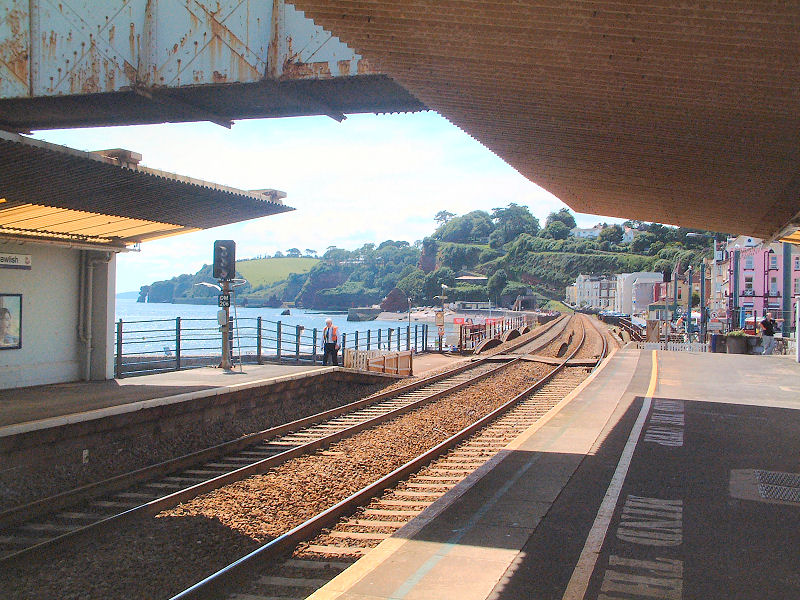
The train winds down the south coast through Exeter, Torquay, and Plymouth, running along the edge of the gray and choppy water of the Cornwall coast, before turning north and skirting Bodmin Moor. From the train window, Dawlish catches my eye—a cozy seaside town with large resort hotels hovering on the water’s edge. Dawlish, along with Torquay, is part of what is known as the English Riviera on the southern English Channel. I didn’t realize when I made my travel plans that I would pass through Agatha Christie territory; Torquay being the setting for several of her books and where she lived for much of her life. I must come back.
I am no
longer surprised when I see two women who share my carriage eating crisps with
their morning coffee. It is just after 8:00 AM. At Frances’s house the other
night, I commented on how eating crisps seemed to be a British national
pastime. Frances said, “You mean people in America don’t eat a lot of crisps?”
I responded, “Yes, but not for breakfast.” They asked about the flavors in the
U.S. and I named them: barbeque, sour cream and onion, salt and vinegar. At
this point, Frances’s daughter, Kate, brings out some for us to have as a
pre-dinner snack. I asked which is her favorite flavor? She said, “Oh, I’m
disgusting actually, I like prawn cocktail. I confessed that it is my favorite
too.
The train takes forever with about 15 stops along the way. I am anxious about making the bus connection. But, shortly after I disembark, the #125 bus to Tintagel pulls up. The driver tells me I can’t board yet, it’s about a 10-minute wait. A sweet little lady in the train’s buffet area makes me a cheese and tomato sandwich. She cuts mild white cheddar off a big block, sprinkles it lightly with salt, and puts it between two slices of soft white bread along with sweet, juicy tomato slices. It is delicious.
I am the
only one on the bus, although others get on and off during the 1-1/2 hour trip.
It begins to rain hard. Near the end of the journey, I see two large windmills
whirling madly in the wind and rain. They are massive and stand out dramatically
on the stark moor. As we move to higher ground I can see there are a dozen or
more of them lined up. They are white and utilitarian and look like they are
marching along the hill’s ridge like the walking war machines in the War of the Worlds.
Editor’s note: I learn later, when checking my facts on the Internet, that the live Halloween broadcast of War of the Worlds that sent the American nation into full-scale panic was aired on Sunday, October 30, 1938―this very day, 61 years ago. I am astonished at the coincidence.
By the time the bus pulls into Tintagel, I am once again alone on the bus. I am not confident of the connection back and ask the driver. He doesn’t know either because it is a different bus line going back. But, he says the bus will pick me up around the corner at the Methodist Church.
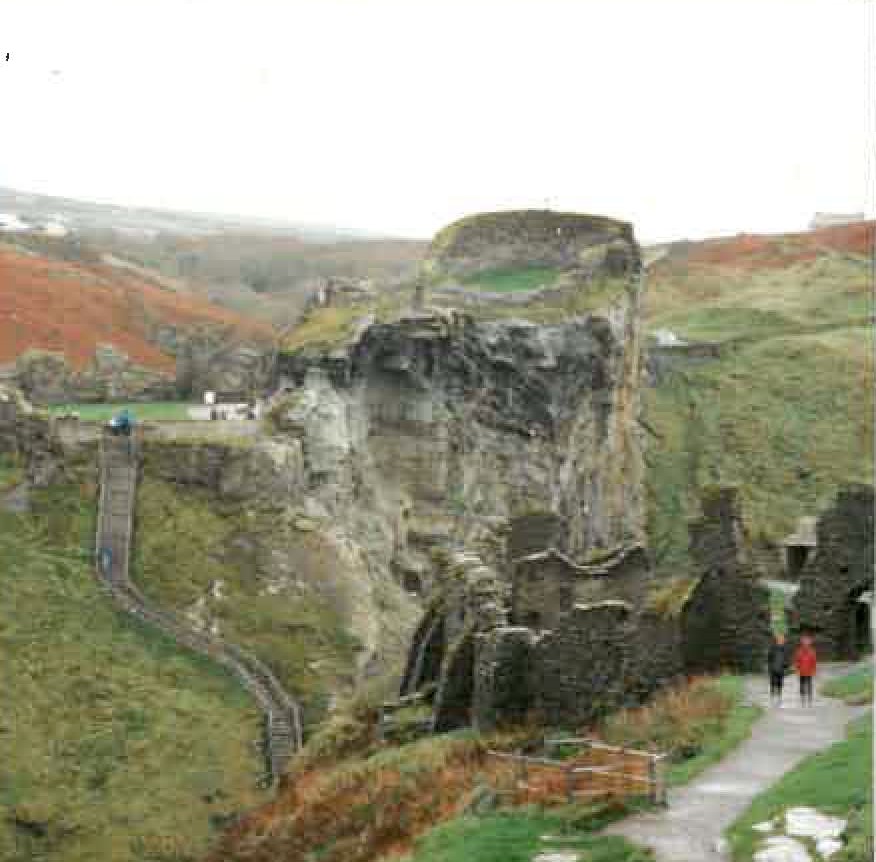
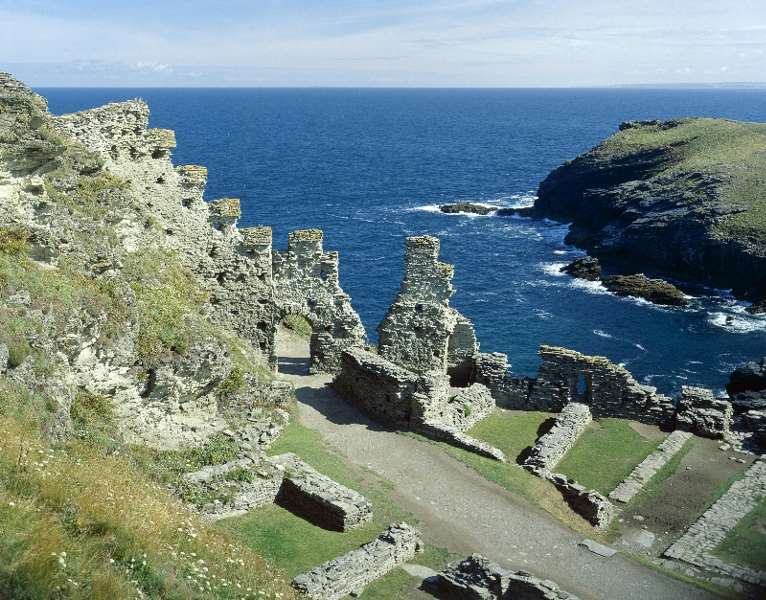
It is pouring and, as I walk towards the castle, I pull my hood tightly around my head. My upper body clad in Gortex is dry, but my jeans and sneakers quickly become sodden. I begin to wonder why I made this crazy trip out in the middle of nowhere. Then, I get my first glimpse of the castle ruins, the 12th century stronghold belonging to the Duke of Cornwall that legend attributes as the birthplace of the mythological King Arthur. It takes my breath away.
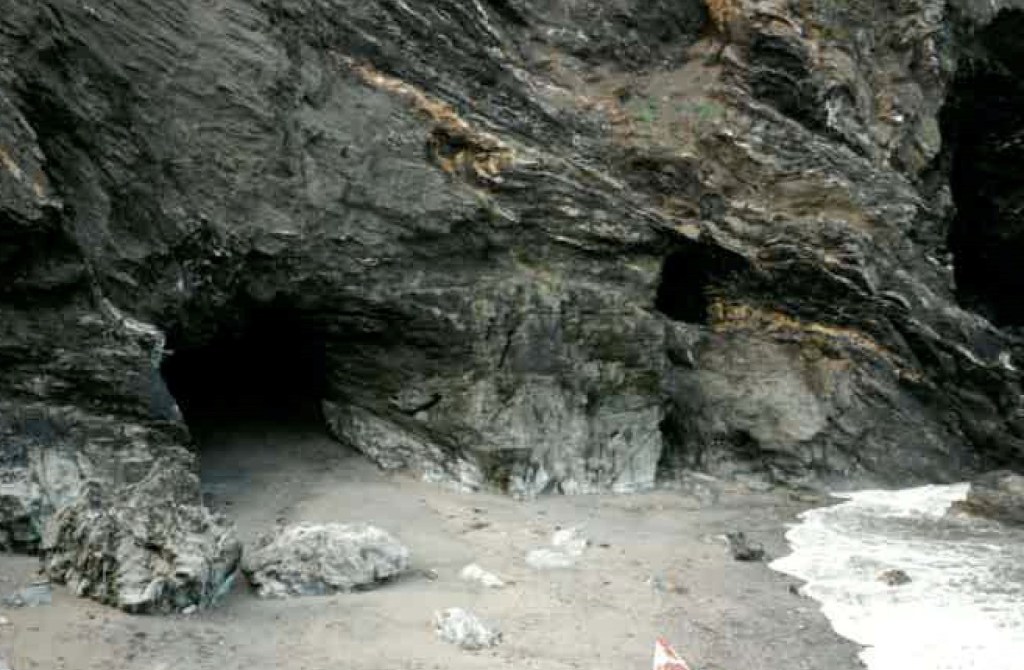
The eerie ruins of Tintagel Castle stand high up on a cliff, stark against the stormy sky amidst the whipping wind; angry ocean waves ebb and flow from Merlin’s cave hundreds of feet below. It is easy to understand how so many legends became associated with this place.
Merlin’s Cave, Tintagel, Cornwall
The cliffside
climb to the ruins is steep and the stone steps are slippery and uneven. It is
not for the faint of heart and my legs are little wobbly by the time I reach
the top. But the rain is beginning to slow.
Tintagel Castle
An English
Heritage guide, a local historian, is giving a free tour to a small,
umbrella-ed group and I join them. The bearded, burly guide is excellent,
giving an overview of the castle’s Roman origins and its intimate connection
with the Arthurian legend.
He tells us about the 400-year Roman rule of Britain. England, at the time of Arthur, was thoroughly Roman. By 400 AD, Celtic rule would have been as far back in the memory of those Roman Britons as our association today is with the Spanish Armada. However, Britain’s pleas for help from Mother Rome against the invading Saxons went unheeded as she battled her own invaders, the Huns. The Arthurian legend stems from a powerful Roman Briton king who beat back the Saxon invaders. History tells us however that the Saxon’s relentless onslaught was, in the end, invincible.
By the time our guide finishes his tale, the sun is out; the water
sparkles below us.
Cornwall Coast, Tintagel
When asked if Arthur was a real man, our guide says that much of history is steeped in myth and legend. But legends have their origins somewhere; told and retold over centuries so that you no longer recognize the truth. He tells us about an ancient oak door covered with supple leather that hangs on one of the gates in the walled city of Exeter. Local lore, long dismissed, had it that the leather was the human skin of a captured Viking invader put there as a warning to other raiders. In the 1980s, when repairmen were re-hanging the door, someone thought to test the leather. It turned out not to be animal skin as people supposed, but human, and carbon-dated to within 30 years (+/-) of the height of the Viking invasions of England. So, while our guide does not subscribe that King Arthur is a real man, neither does he dismiss the Arthurian legend as totally fiction.
I love history. To study it teaches you how to think, how to ask
questions, how to interpret facts. It is much more a discipline than a bunch of
dates and facts.
Arthurian inscription found at Tintagel: On 6 August 1998, English Heritage revealed that while digging on the Eastern terraces of Tintagel Island, a broken piece of Cornish slate was discovered bearing the name “Artognov.” The 6th century “Arthur Stone” as it has already been christened, clearly reads “Pater Coliavificit Artognov,” which Professor Charles Thomas of Exeter University has carefully translated as “Artognou, father of a descendant of Coll, has had this built. Dr Geoffrey Wainwright, chief archaeologist at the, normally cautious, English Heritage declared, “Tintagel has presented us with evidence of a Prince of Cornwall, in the Dark Ages, living in a high-status domestic settlement at the time Arthur lived. It has given us the name of a person, Arthnou. Arthnou was here, that is his name on a piece of stone. It is a massive coincidence at the very least. This is where myth meets history. It’s the find of a lifetime.” Source
Tintagel Castle ruins
I walk back to town and poke in the shops along the way, all wonderfully tackily named commemorating the Arthurian legend: King Arthur’s bookshop, Camelot Collectibles, Merlin’s Gifts and Confectionery, etc. I stop at King Arthur’s café and eat a Cornish pasty; a meat pie in pastry folded like a calzone and eaten hot or cold. At this café, they proudly claim to have the true thing—“Cornish pasty made by the Cornish.”
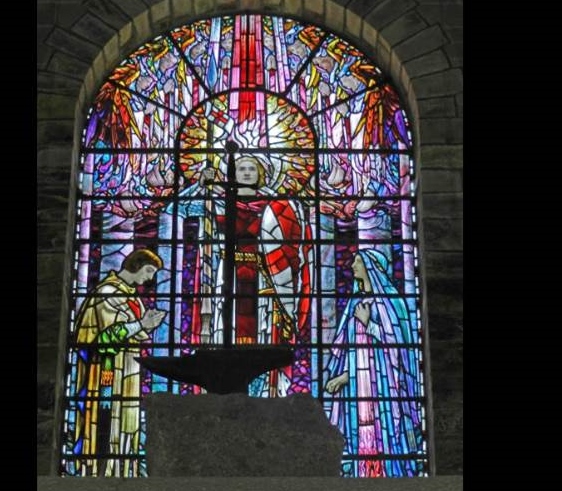
King Arthur’s Great Hall is not old but founded in the 1920s as a fraternal order to celebrate fellowship and chivalry. The grand hall holds a regal granite throne, a massive oak roundtable, and some of the most beautiful stained-glass windows I have ever seen. There is a laser light show that describes the King Arthur legend. Afterwards I walk quickly through the hall and exhibit area. I only have a few minutes before my bus is due to arrive.
At the Methodist Church, I see no sign of a bus or a bus stop. I go
into a pet food shop next door and ask the proprietor. She says, “Oh, just
stand in the church yard, they will pick you up there.” I ask if she knows the
bus number. “No,” she says, “but it will be the only one.” After much anxiety
that I will be marooned on the Cornish coast, the bus pulls up.
Once again, I am the only person on the bus and, as it winds through the back roads, it reminds me of Ireland with the lush, green countryside, off-and-on rain, and narrow roads. Only this time, I am in the bus and it’s the oncoming cars that must pull over. One lady backs up her car, smiles, and waves to the driver as we pass.
Bodmin Parkway station is very small and empty. I feel like I am in Fiddler on the Roof, when Tevye takes his middle daughter to catch the train to Siberia, where it is nothing but a bench and a flag on a pole. Bodmin is not that bad, but it is definitely not full service. There is one rail worker, but the buffet is closed. I’ll have to get something on the train.
There are no sandwiches on the train’s trolley cart; I get a flapjack and bottle of water. As we speed through the dark, along the edge of the rough ocean, I have a fleeting thought wondering how the train driver sees at night, but then decide I am better off not thinking about it. I lean my head back and close my eyes. We pull into Bristol around 10:30 PM. Back at my Holiday Inn Express, I set the clock back one hour before turning off the light.
From Stacy and Matthew’s breakfast table a large window looks out over the city of London. It’s foggy today but they tell me on a clear day you can see the London Wheel, the millennial Ferris wheel. Matthew has been out running and he brings back croissants; large, flaky, almond-crusted ones that are sweet bliss. We have coffee and pastries and chat. We head out just after 9:00 AM. I am off to Glastonbury.
From Paddington, I take the train to Bristol. It is foggy as the train travels through Reading, Swindon, Chippenham, Bath Spa, and pulls into Bristol Temple Meads station. I look for the Badgerline Bus #376. I am constantly amazed at how vague tour book instructions are. Mine says the bus to Glastonbury is outside the train station. But of course it is not there where the other buses are queuing; it’s down the hill and around the corner. It’s now 12:10 PM and I run, thinking I have missed the 12:07 bus and will have to wait an hour for the next one. But I am in luck. It’s there and I jump on.
The bus meanders through amazingly
scenic little towns like Chewton Mopid and Cheddar. Yes, there is in actual
fact a town called Cheddar in England!.
In Glastonbury, I walk down the High
Street, past the 15th century St. John the Baptist church, and pick
up some brochures at the tourist information center before heading to the abbey
ruins.
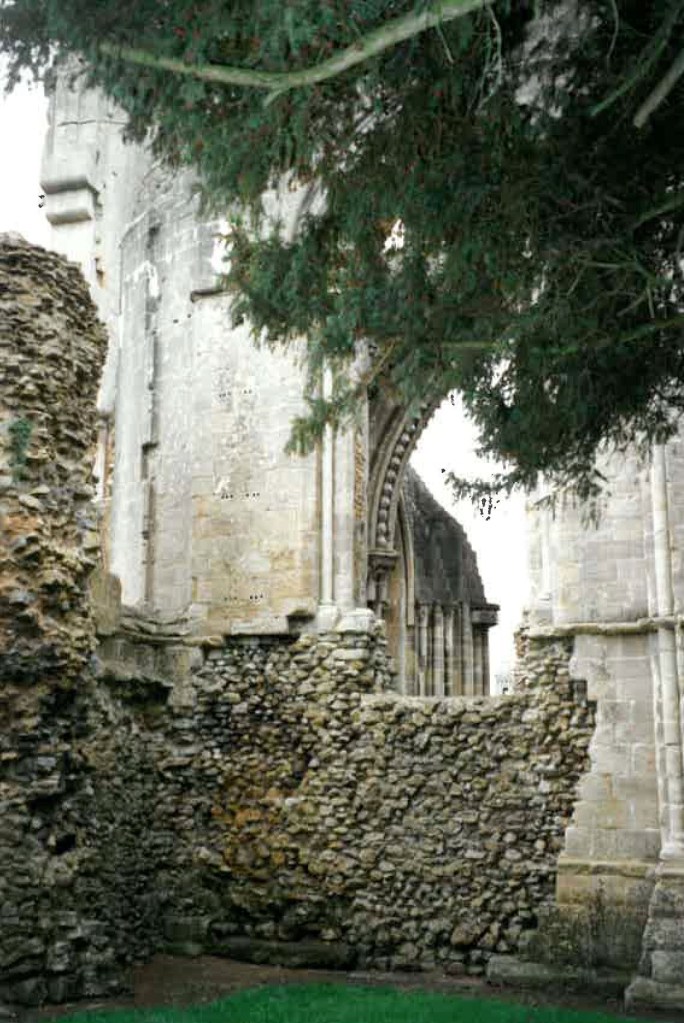
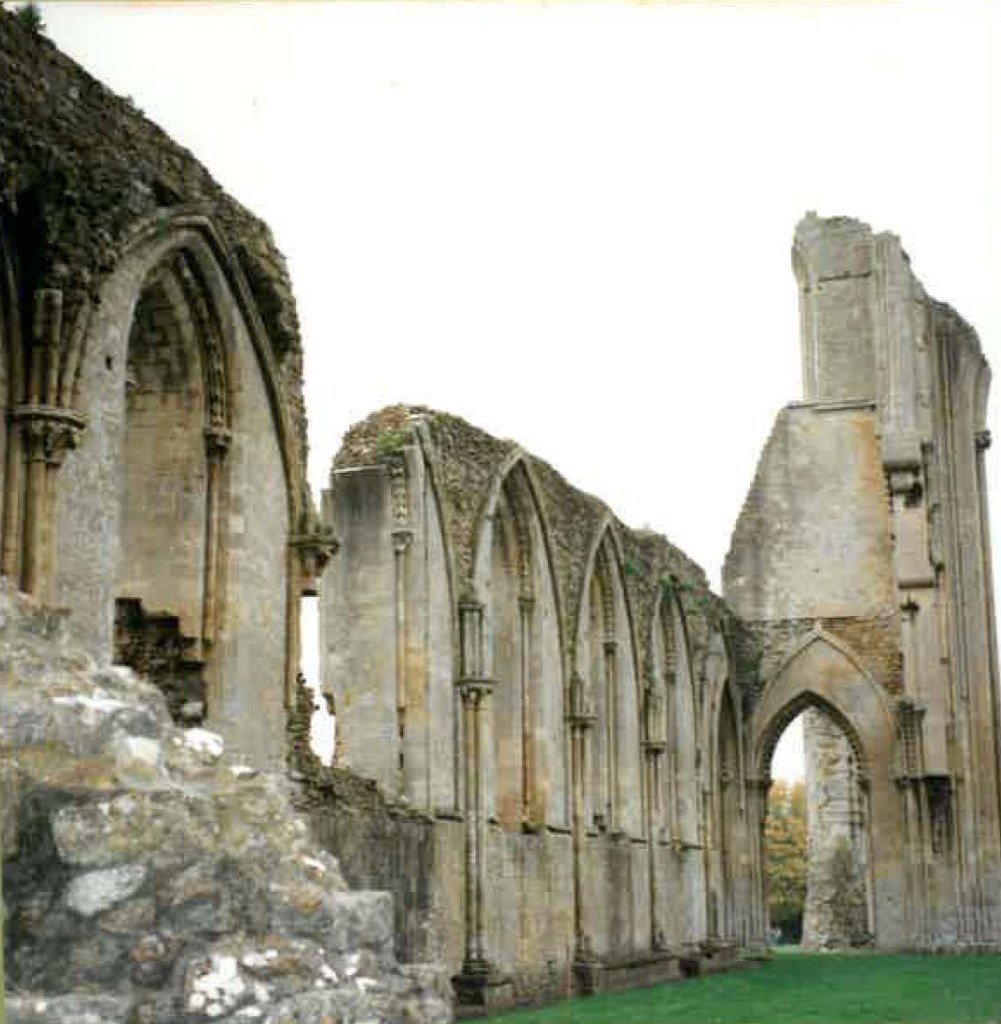
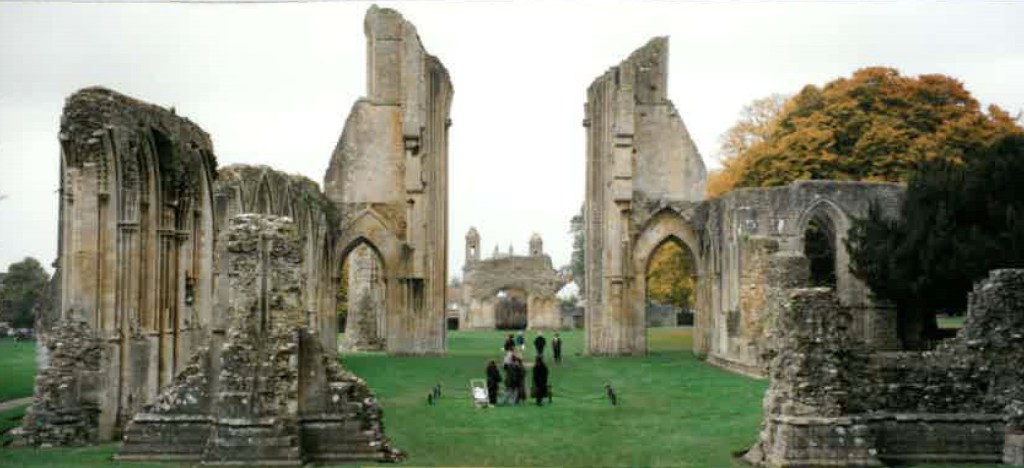
The 8th century Glastonbury
Abbey ruins are magnificent; soaring hundreds of feet above my head, steeped in
romance and lore. Abbey monks, in 1191, claim to have found the remains of King
Arthur and Queen Guinevere in the graveyard near the Lady Chapel. Although it
is more likely they fabricated the discovery to boost their flagging coffers. Nevertheless,
enthusiasts claim that Glastonbury is the mystical Isle of Avalon.
Interestingly there is geological evidence that Glastonbury used to be
surrounded by water; Roman drainage work in the 800s changed that, making it
the dry land that it is today.
Glastonbury Abbey
The abbey ruins give a tantalizing glimpse of what must have been a grand abbey. Artists’ recreations of the 10th century abbey show that it was the largest in England at the time and larger than Winchester or Canterbury today.
On the grounds of the abbey is the Glastonbury Thorn—a Hawthorn tree― reputed to have sprouted from the staff of Joseph of Arimethea, the wealthy man who buried Jesus, became a missionary, and founded Glastonbury Abbey. Another legend has it that he also brought the Holy Grail to England and hid it in Glastonbury’s Chalice Well. Of course, the historical evidence supports none of this. Nevertheless:
The Glastonbury Thorn is said to flower on Christmas Day every year, and a blossom from the plant in the churchyard of St John’s Church Glastonbury is said to be used to decorate the Christmas breakfast table of the Queen each year.
I love the peaceful grounds and wander through
the ruins trying to imagine all the history these stone walls have witnessed; it
conjures up a past much older than anything I have seen thus far. One
scientific article I reads
says, “Archaeological evidence dates occupation
at the Glastonbury Abbey site during the fifth century—when Arthur allegedly
lived.”
Glastonbury Abbey
Glastonbury Abbey
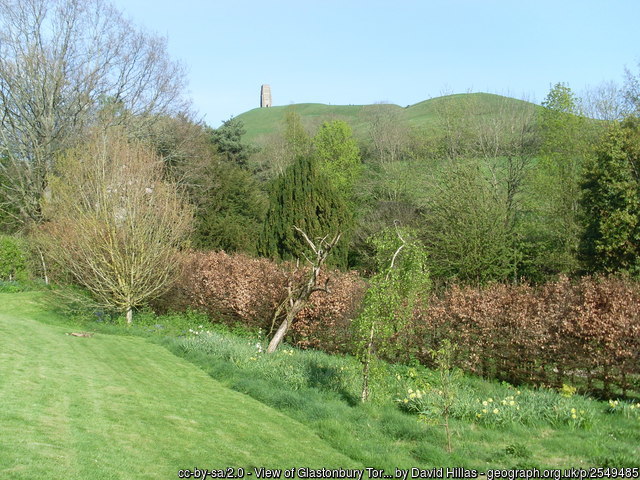
I walk the nearly one mile to the
Chalice Well. There, I have a great view of Glastonbury Tor, a 521-foot hill
with St. Michael’s tower, a remnant of a 14th century church,
perched on the top. Pilgrims once climbed the hill with dried peas in their
shoes as penance. Nowadays people come to St Michael’s to feel the Earth’s
energy along the ley lines. Researchers have found that when plotted on British
ordinance maps, ancient, megalithic sites can be linked in an incredible
coincidence of interconnecting lines; along these lines the ground actually
vibrates with energy.
Glastonbury Tor
The Chalice Well is at least 2,000 years
old. Their website says:
There are many associations with Chalice Well covering countless centuries; it is a timeless and sacred place, full of legend, symbolism, and atmosphere, a place whose history has no beginning.
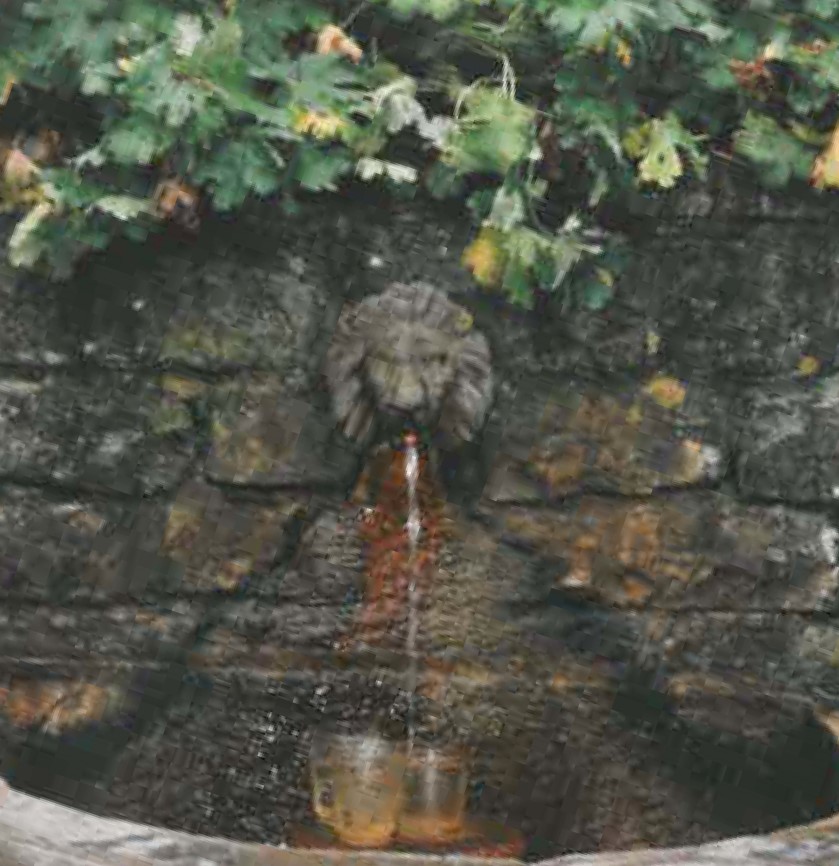
Thought to be tapped by the Druids, the
reddish-brown-colored water that gushes from a lion’s head fountain is supposed
to have healing properties. Visitors today can drink the water. I slurp a
handful from the lion’s mouth, which tastes minerally but fresh.
Chalice Well fountain
I take the bus back to Bristol and check
into the nearby Holiday Inn Express. I take a hot shower, watch the news, and
eat dinner at a small Italian restaurant around the corner.
In today’s news: The European Union Commission restated its stand, after reviewing new evidence, that British beef is safe. For weeks now, the French have refused to lift their ban on the import of British beef, which has escalated into a mini trade war. Local restaurants and food stores have begun pulling French goods such as bread, apples, and cheese from their shelves and some British people have begun to boycott French products. French farmers on the other side of the Channel blockaded normal shipments of British products for several hours one morning at Calais. The conservatives want all out action. The Blair government cautions against a trade war, which would not be good for anyone. The French government says they are taking all the facts into consideration.
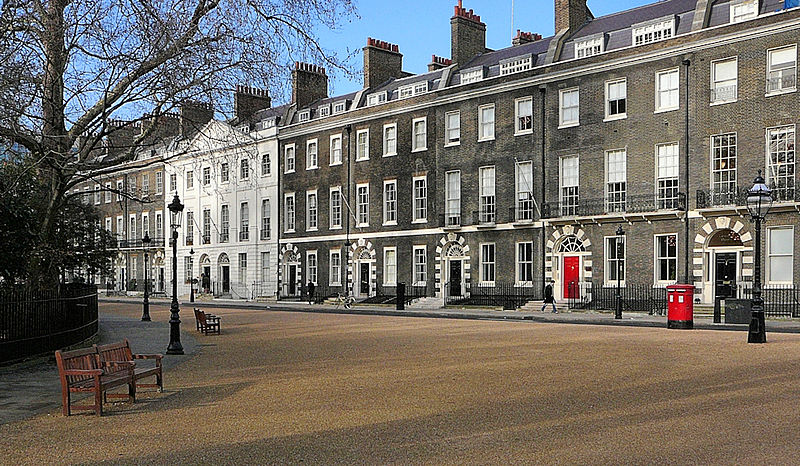
The trip to Euston is uneventful. I have an hour to kill so I get a baguette at Euston and read. I realize I left my London A-Z at home, so I have to find Nuffield Foundation at 28 Bedford Square where the Fellows are meeting on my own. Instead, I take a taxi that drops me right at the front door.
I am not the first to arrive, but
William Plowden is not here yet. He has arranged for the 1999 fellows to meet
with past fellows to talk about the academic part our fellowship. Even though
William’s organization does not administer the fellowship program anymore, he still
wants to support us.
William arrives a few minutes later on
his bike. He offers us wine in his upper crust British accent (or maybe it is
just a London accent), different than the broad, rounded accent of the Midlands
that I have grown used to.
I meet Elizabeth Mitchell; a fellow from
last year. She is the daughter of Elizabeth “Libby” Mitchell, Maine’s Speaker
of the House of Representatives; our first woman Speaker of the House.
Elizabeth has taken up residence in London. Her husband works for a bank and
she is taking classes at the London School of Economics. She bears a striking
resemblance to her mother. It is a bit weird talking about my project and its
applicability to Maine as her mother, as Speaker, adamantly opposed implementing
performance budgeting for Maine’s state budget.
We plunge into a discussion about our projects and papers. The older fellows’ combined advice—”Don’t worry about the paper.” They advise us to write the paper for ourselves and go out and enjoy the experience. Most agree that it takes six months for the “jumble” to come together, which doesn’t help me at all.
We end at 7:45 PM and it takes almost an
hour to get to Stacy and Matthew’s apartment, who have invited me to stay with
them, in North London.
Stacy and Matthew live near Primrose Hill in the London borough of Camden. It looks to be quite exclusive. Their apartment is very nice, belonging to a professor on sabbatical. They tell me about their neighbors—Sir Derek Jacobi, Bob Hoskins, and a singer from the band Oasis. Derek Jacobi lives across the street. His lights are on and I peer somewhat voyeuristically into his window. Oddly I can see the tall, dark figure of a stuffed bear, standing on two legs, with what I imagine to be a snarling countenance, but I can’t quite see that. I suggest we invite ourselves for tea. Matthew says we could go trick-or-treating early.
I brought Italian and Belgian chocolates, which we eat while we talk. Stacy is struggling with her project. The nonprofit that is her host is not working out—she doesn’t even have a desk and chair. So, for the moment, she is working at home, which she says he likes—working in her pajamas in the morning—up to a point. The BC is trying to get her placed into the Social Exclusion Unit, a Cabinet Office.
Stacy tells a funny story about the
plumbing. A repairman came the other day and she followed him to the basement
to check it out. She found it to be a crazy set-up with an open cistern. The
plumber assured her the drinking water did not come from the cistern!





 Jody’s UK Memories


.jpg)


.jpg)
.jpg)