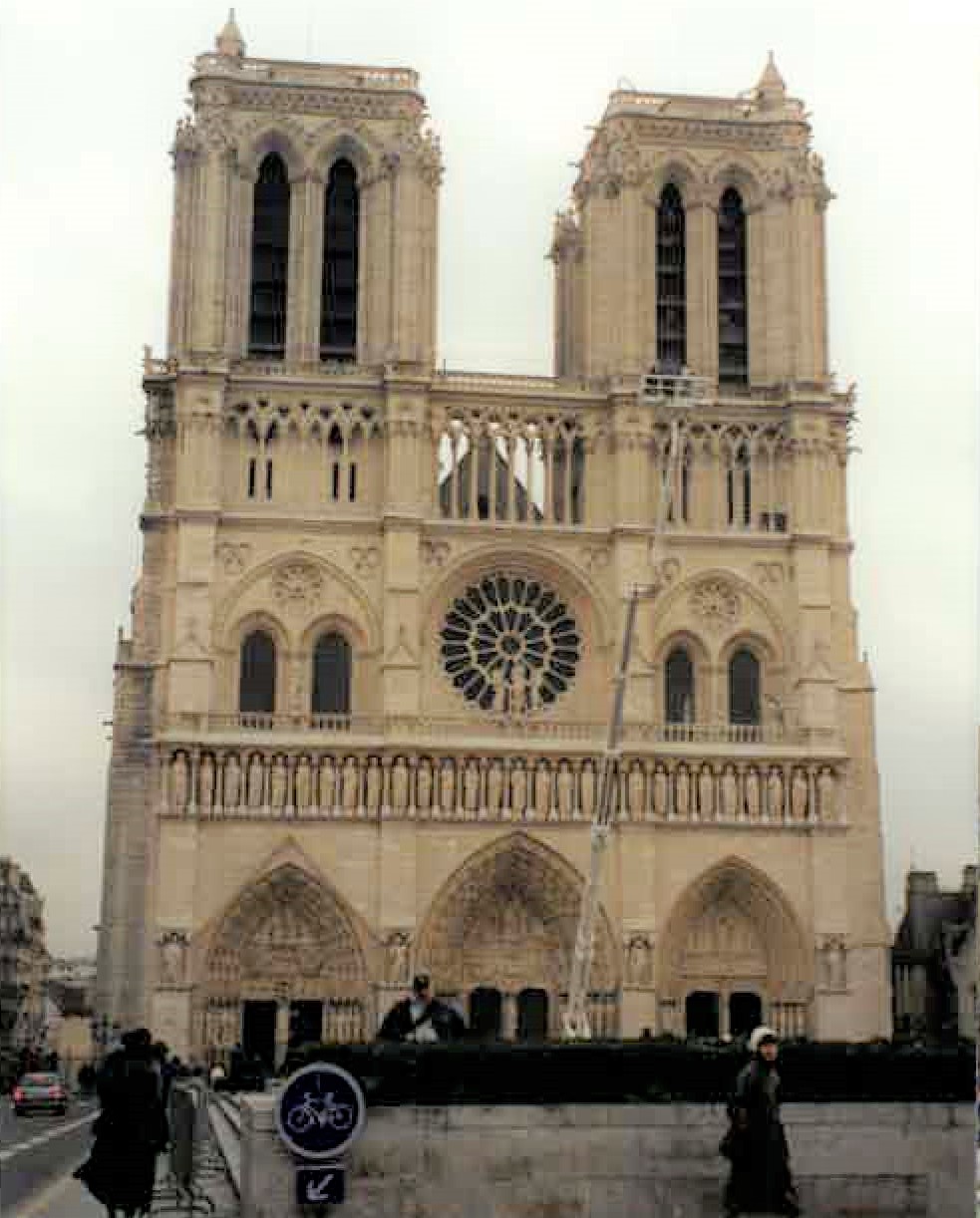
We squeeze in one last sightseeing excursion—Notre Dame Cathedral—before taking the Eurostar back to London.
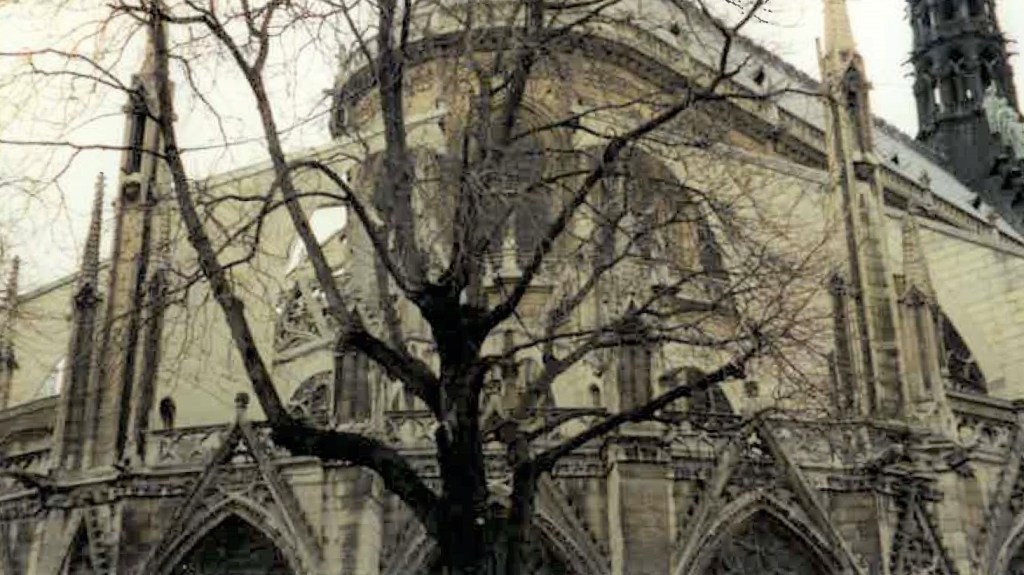
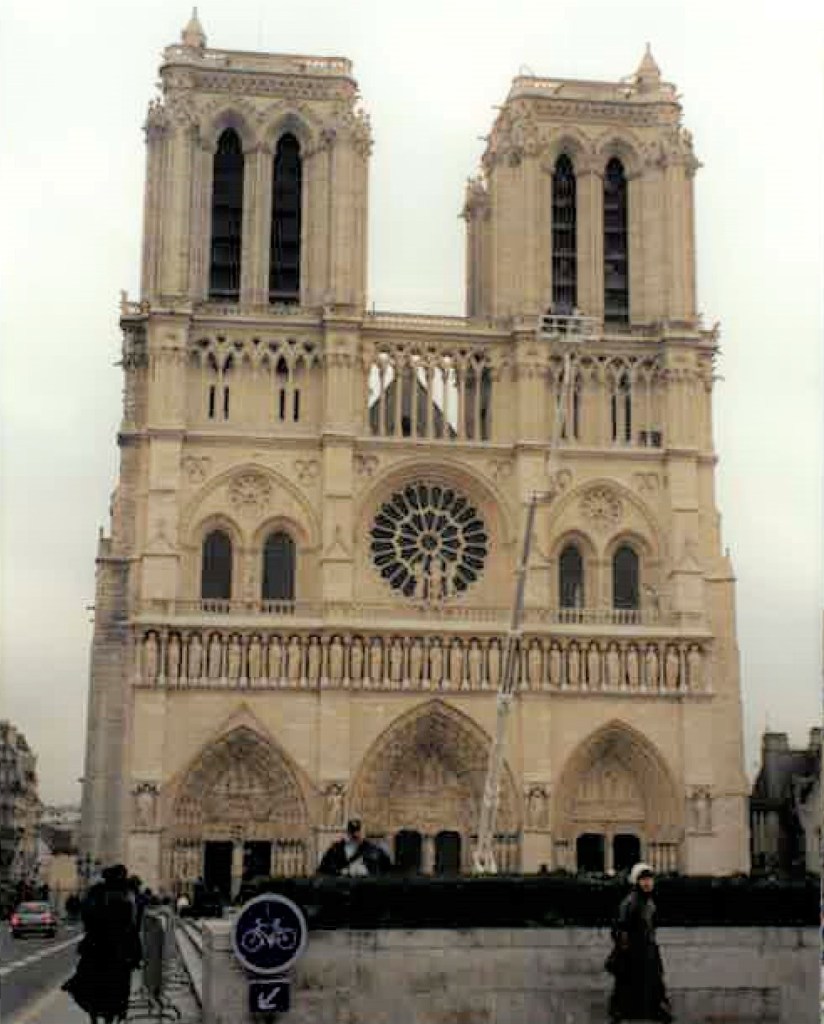
Notre Dame sits on a small island in the Seine, the very picturesque Île de la Cité. Built more than 800 years ago, the cathedral is a Gothic masterpiece of high twin towers, rose windows, and flying buttresses. Victor Hugo called it, “A sublime and majestic edifice.”
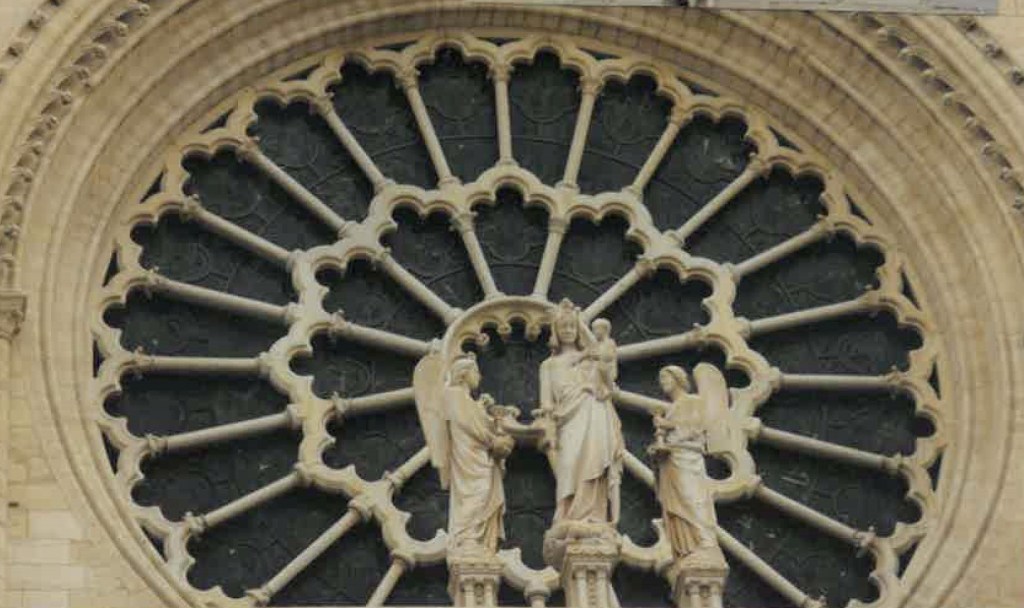
It is very crowded. We squeeze among the masses and enter through the center door―one of three massive arched doorways that form the main entrance on the west side of the cathedral―passing underneath the church’s extraordinary rose window with a neat row of carved saints at its base. Inside, the center transept soars 140 feet above us and we are surrounded by stained-glass.
There are also gargoyles. Everywhere. They not only do they drain water but they are supposed to protect the church from evil spirits.
To a gargoyle on the ramparts of Notre Dame as Esmeralda rides off with Gringoire, Quasimodo says, “Why was I not made of stone like thee?”
Victor Hugo, The Hunchback of Notre-Dame
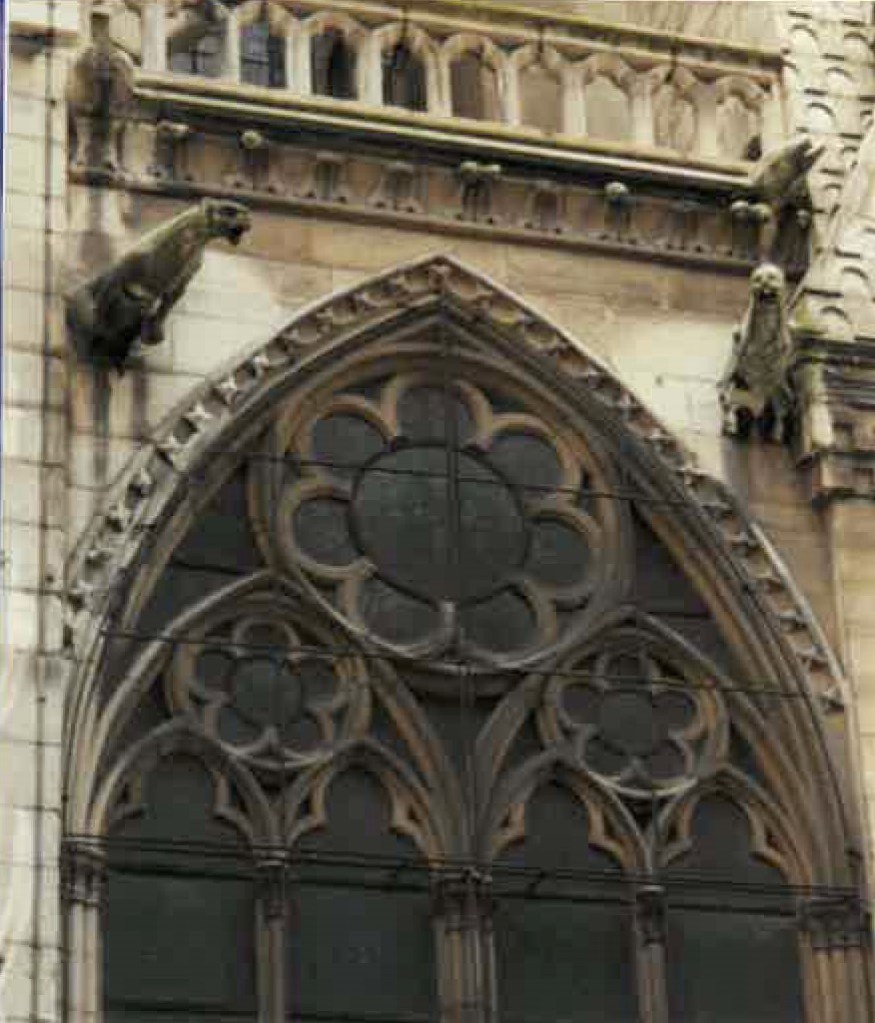
Constructed in the 12 and 13th centuries, Notre Dame was badly damaged during the French Revolution. Interestingly, Victor Hugo wrote his book, The Hunchback of Notre Dame, to call attention to the neglect and disrepair. It worked. The book inspired the public’s patriotic and religious fervor that sparked a major restoration effort.
Notre Dame is perhaps most famous for its eight immense bells. The largest and oldest of these is named Emmanuel. It is the only original surviving bell as the others were looted and melted down for canon balls by French mobs.
Morning in Paris, the city awakes
To the bells of Notre Dame
The fisherman fishes, the bakerman bakes
To the bells of Notre Dame
To the big bells as loud as the thunder
To the little bells soft as a psalm
And some say the soul of the city is
The toll of the bells
The bells of Notre Dame
Disney’s song, The Bells of Notre Dame
Across the street from the cathedral, we stop for breakfast. I order a croissant and a café crème. It is heaven. The large croissant is flaky and buttery and the coffee is pure pleasure; smooth, silky, and creamy. I inhale it. I will always remember sitting in this little café; with coffee and pastry in the shadow of Notre Dame. It is my favorite memory of Paris.
We stand in line for 20 minutes for the Eurostar only to find out we are in the wrong place. The station signs are confusing, but we finally get the information out of a rude cashier and understand we must go upstairs. We go through passport control and a woman checks our tickets. She tells us to go to Coach A that will begin boarding any minute now. The signs directing us to our coach lead us inside a waiting room. Another sign in the waiting room points us back out to the corridor where we just came from. Another sign directs us left, but the attendant waves us to the right to Coach A. I tell Lisa that the only thing I will miss about Paris is the croissants.
Speeding through the snow-covered countryside, we stop twice—including in Calais. Then we enter the Chunnel. I pay attention this time. The Chunnel takes 20 minutes to traverse; it is dark but feels like any other underground tunnel crossing. When we come out on the other side, the train’s loudspeaker announcements in French are now repeated in English.
Back at our London hotel, the Winchester, we are put in a different room than we had earlier in the week. This one has a double bed and a twin. Lisa says I should have the double bed and I accept. It is so nice to have enough room be able to simply turn over in bed.
We head out to Farrington―one stop down from Euston―for dinner at the Eagle Pub. It is noisy, crowded, and smoke-filled, but it is delicious. I have a stew of potatoes, mushrooms, and Swiss chard. Lisa has a pasta dish with garlic, tomatoes, and mussels. She loves it.
I stop at a newsstand to buy a Hello magazine with pictures of Prince Andrew at the movie premiere.
- In today’s news: English MP Neil Hamilton sued Harrod’s owner Al Fayed for libel over false accusations that he (Hamilton) had corruptly taken money from Fayed in exchange for asking questions in Parliament that were favorable to Harrods. The jury ruled there was no basis for the libel suit as Mr. Hamilton was indeed corrupt. The judge ordered the MP to pay £1 million in legal fees.
- Mr Fayed did not come out unscathed however. The Times headline blares, “The winner who has lost all.” The trial, they say, brought to light a wealth of damning evidence about Fayed’s business practices. His reputation is shredded, his credibility destroyed, and he has lost any chance of ever getting the British passport he so covets. Lastly, they report, not only does Harrod’s face losing its Royal Warrant, it is said the Queen is prepared to take legal action over Fayed’s comments that Prince Phillip masterminded the death of Princess Diana.
Lisa says the British newspapers are like soap operas.
 Jody’s UK Memories