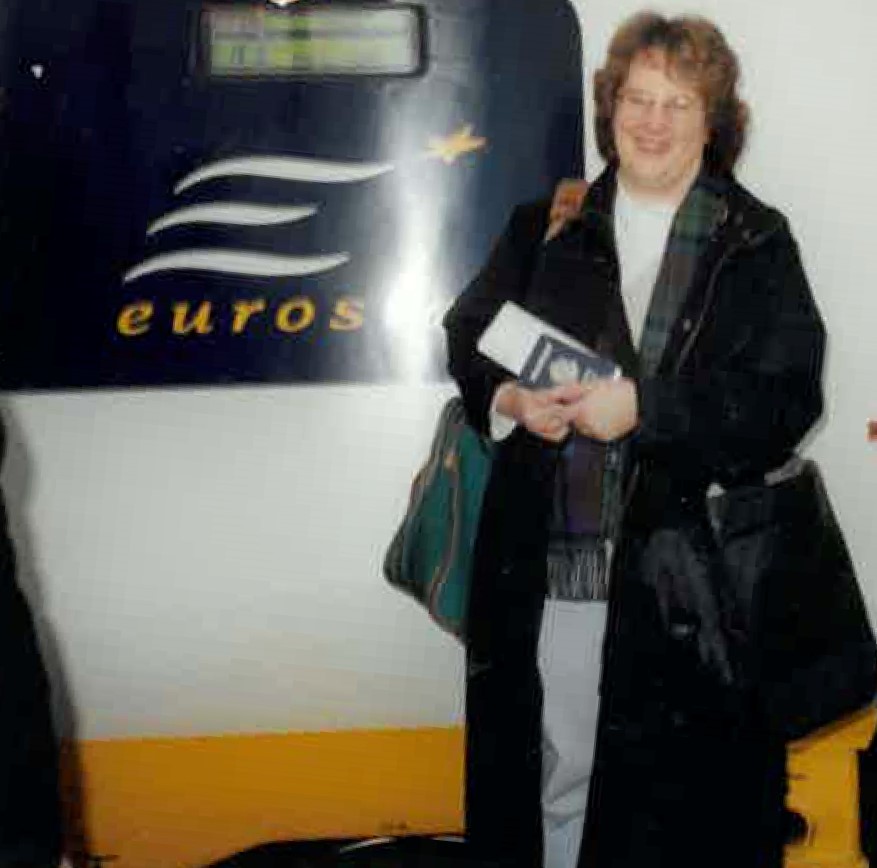
We are off to Paris today. I am nervously excited about it. We walk to Victoria station and take the tube to Waterloo station where we grab a sandwich and head to the Eurostar terminal. We go through security but no one checks our passports; one advantage of the European Union that the Brits are so adverse to.
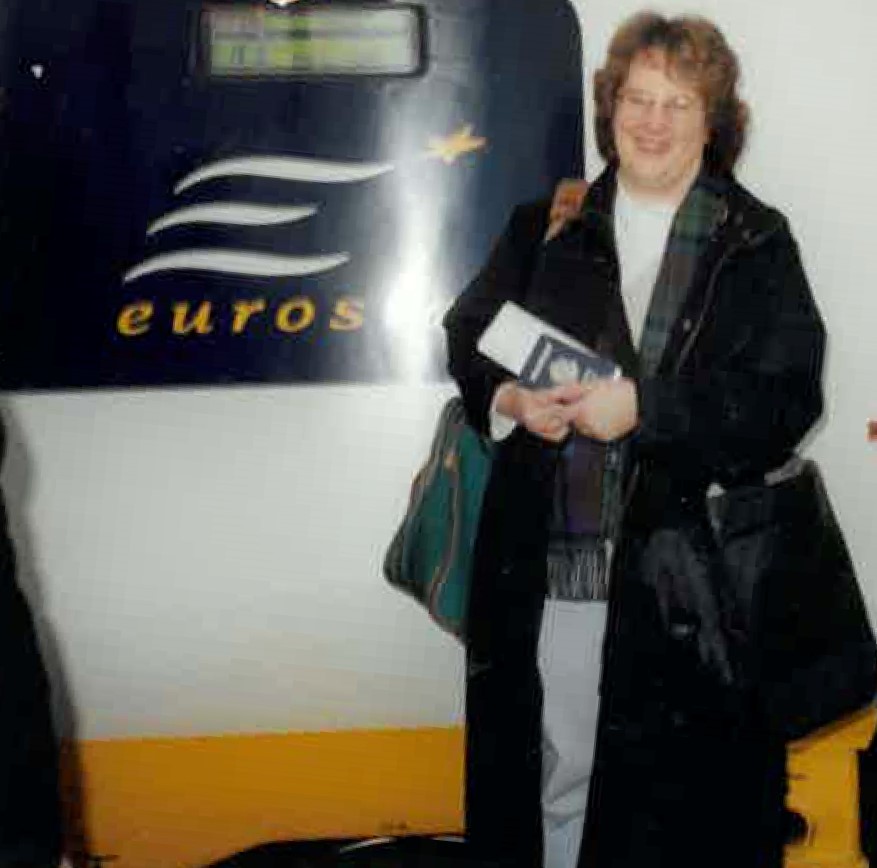
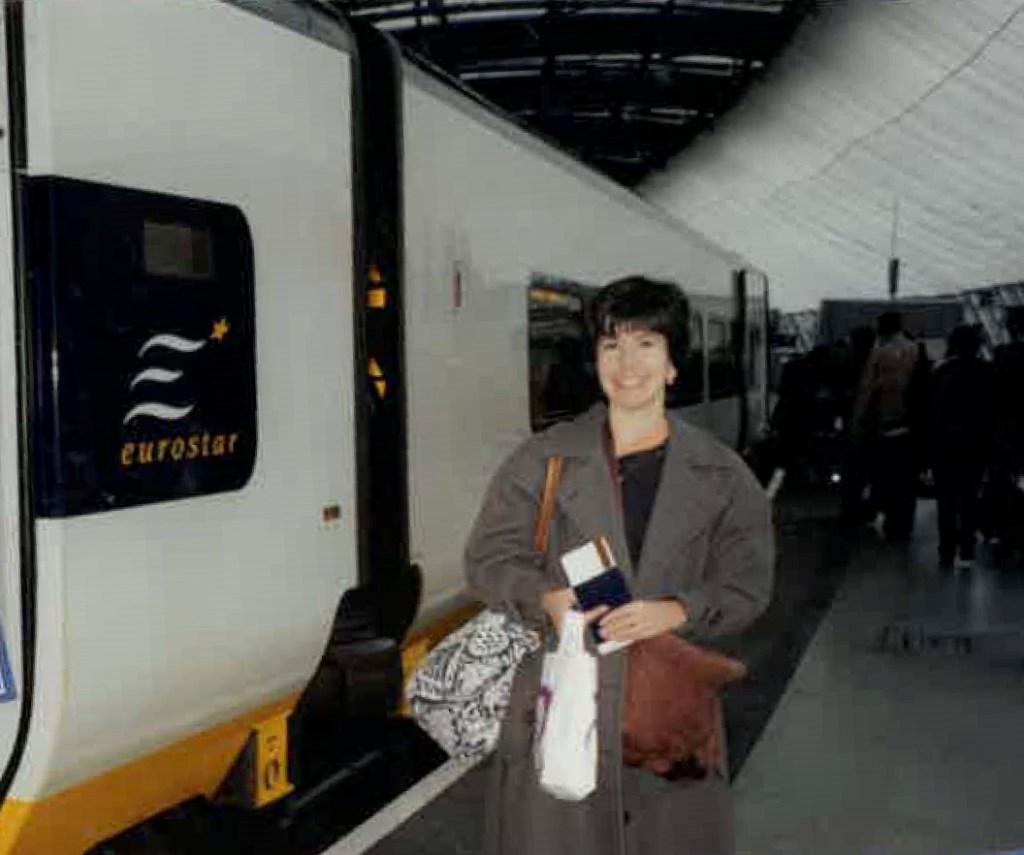
The train is new. Lisa and I have a table with no one opposite so we can stretch out. We eat our sandwiches and read and look at the Paris guide making a tentative itinerary. Paris is one hour ahead of London so we re-set our watches.
Ironically, we pass through the Chunnel almost unnoticed. The conductor makes an announcement, but I am still reading and all of sudden I look up and we are emerging from the tunnel and we are in France. The train speed accelerates with a whoosh and we sit back for the remaining hour’s ride to Paris.
Lisa reads to me that the French side of the trip takes less time because of they have rails that accommodate high-speed trains. In England, their antiquated rail line will not allow the trains to go as fast. England almost jeopardized the Chunnel crossing altogether by dragging its feet. As far back as the 1970s, engineers envisioned a Chunnel, but the English refused―fearing who knows what. When work finally commenced, English construction was always behind schedule and over budget. Today, still, it will be another 10 years before they are able to rebuild tracks to accommodate the 200-mph-trains that France uses now.
By the time we reach Paris Gare du Nord, it is dark and has begun to rain.
I call our Paris hotel to get the street address. I think she says St. Tropez in District 6 at the Odeon metro stop. Lisa figures out the metro and we attempt our first conversation with a Parisian who doesn’t speak English—it is just one of many that will frustrate us. The ticket agent is unbelievably rude. He is really annoyed with us when for some unknown reason based on something Lisa says he gives her three Metro tickets. When she tells him she only wants one, he literally blows air out of the side of his mouth in annoyance, rolls his eyes, and throws her money back at her. A nice lady in line behind us helps us.
With tickets in hand, we pass through the Metro gate and find the right platform. We are packed in like sardines on the train. One woman says to me, “Pardon,” and waves her hand in front of her face, “C’est chaud.” I smile and nod and say, “Oui,” never letting on that I don’t speak French.
We get off at Odeon and look for our street on the map. There is no such street. It is raining hard now but for some reason Lisa does not want to take a taxi. So, we go into two places looking for a phone book to look up the hotel street address. Both places deny speaking any English and shake their head when we ask for a phone book. We decide to call the hotel again, but the only phone booth we find doesn’t take coins, only phone cards. By now, I convince Lisa to let us take a taxi. But the taxi driver speaks no English. He cannot find St. Tropez street either and tells us St. Tropez is a region in the south of France. He thinks we don’t know we’re in Paris? We give him the number for the hotel which he calls but it is busy or no one answers. We have run up a meter of 341 francs but he doesn’t charge us when, in resignation, we get out of the taxi. We buy a phone card from a news agent who doesn’t speak English and only reluctantly makes change from our 500 Franc note. We finally get through to our hotel and get the correct street name―St. Suplice. Lisa makes her spell it. We find it on the map and start walking in the rain. The map gets wet but it doesn’t matter as we can’t read it very well under the muted street lamps. We walk along Rue de St. Germaine des Pres, but still cannot find St. Suplice. Finally, we go into a pharmacy where they speak only a little English. A man gives us directions that we only half understand, but I understand enough to know we are going in the wrong direction. Lisa asks him to draw us a map, which he very kindly does. Walking and following his map, we discover our hotel just 1-½ blocks from the Metro stop where we originally got off.
We check into our hotel; a bit bedraggled and dampened in spirit. Paris did not show us her best this night.
The Louis II hotel is lovely. The lobby looks pretty, all decorated for Christmas with these white Christmas trees the French seem very fond of. They are fake fir trees covered with white spray. They are everywhere.
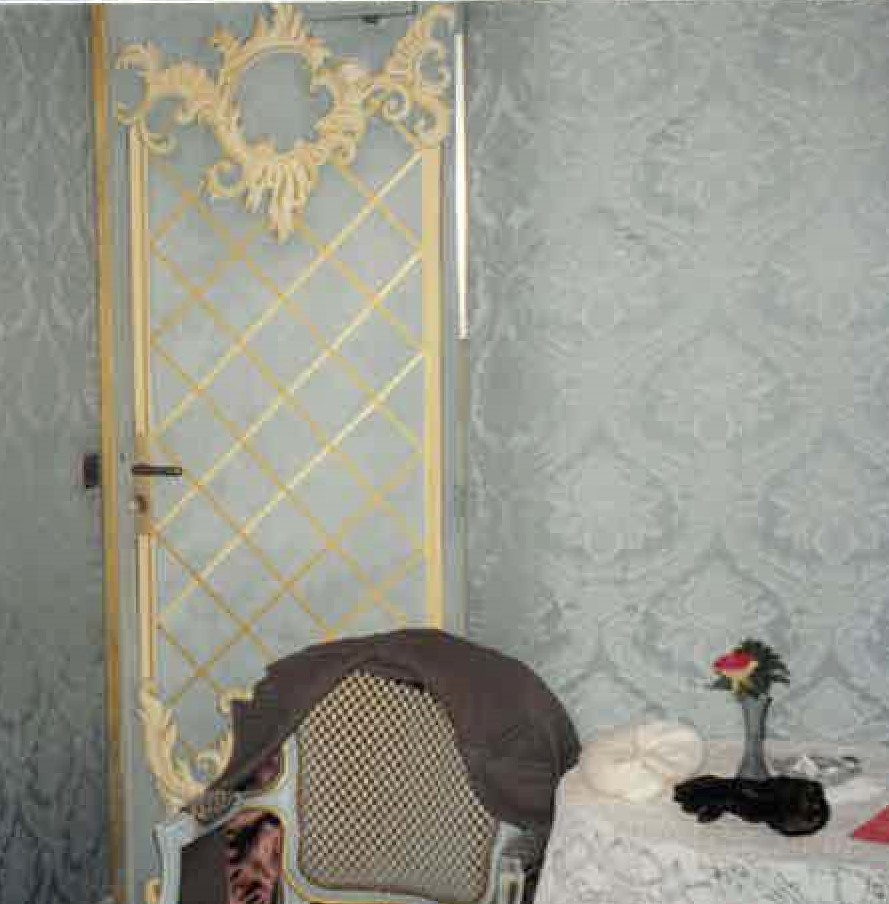
Our room is small with two twin beds. The wallpaper is ornate; teal-color with creamy-white fleurs de lis. There are lace coverings on the beds and pillows and Louis XVI-style furniture. It is very French.
We dry off and warm up a bit and then head out to dinner. There are a ton of restaurants as we walk along Rue de St. Germaine des Pres, Rue de Buci, and Rue de L’Odeon. The narrow streets are lined with fish and meat markets, patisseries, brasseries, cafés, and more. The pastries in the window are unbelievable—croissants and breads, bouche de noels, petite fours, tarte tatins, chocolate eclairs, and truffles. It is still raining, but somehow the bright lights and throngs of people do wonders to lift our spirits. We are astonished at all the cafés that have outside seating in December. But soon we notice that there are big gas heaters hanging above the sidewalks throwing an amazing amount of heat that we can feel even on the street when we pass. I suspect that with those heaters and a bottle of wine, it would be quite pleasant sitting outside under an awning despite the cold and rain.
We select a brasserie called L’Atlas, named for the strong man. It seems that the moment we walk through the door, before we even say anything, the waiter knows we are English or even perhaps American. He says to us in English, “A table for two?” This happens all the time and I am not sure why we are so easy to spot as tourists. I have the ribeye steak and frites and a glass of red wine. Lisa has baked salmon and bottled water. The waiter asks if she wants the water with “gas” or “no gas.” Without blinking an eye and while I am still trying to figure out what he is talking about, Lisa responds, “No gas,” meaning uncarbonated. When we get the bill, we laugh to see that my glass of wine cost less than her water. “We’re in France now!” The food is excellent and the waiter very nice. Besides our map-drawer, he is the first nice person we’ve encountered in Paris. I would say it is because he is working for tips, but that does not seem to motivate very many of our waitstaff here.
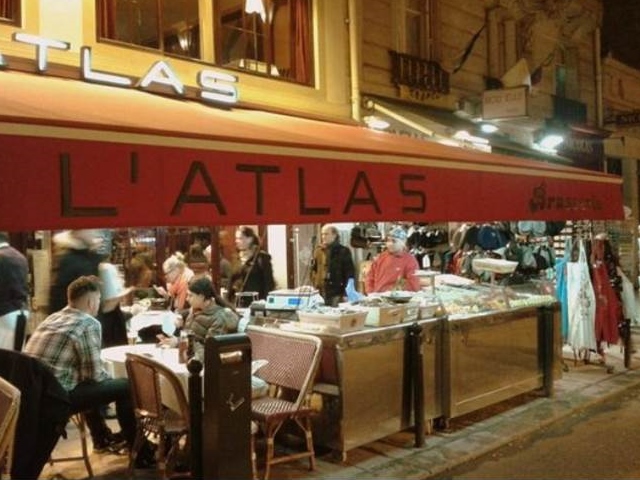
Photo: Trip Advisor
We had planned to go to the Eiffel Tower, but it is still raining so we walk around just a bit more and then go back to our hotel. We pass a huge, domed building with sign that says, “Senat.” We look it up in the guidebook and learn that it is the Palais du Luxembourg, now home of the French Senate, but formerly the 17th century palace of Marie de Medici, widow of France’s King Henry IV, built it is said to remind her of her native Florence.
It seems so strange to have the streets bright and full of people. It is a city that is alive and teeming even late into the night—so unlike English cities. I can’t believe we are in Paris.
 Jody’s UK Memories