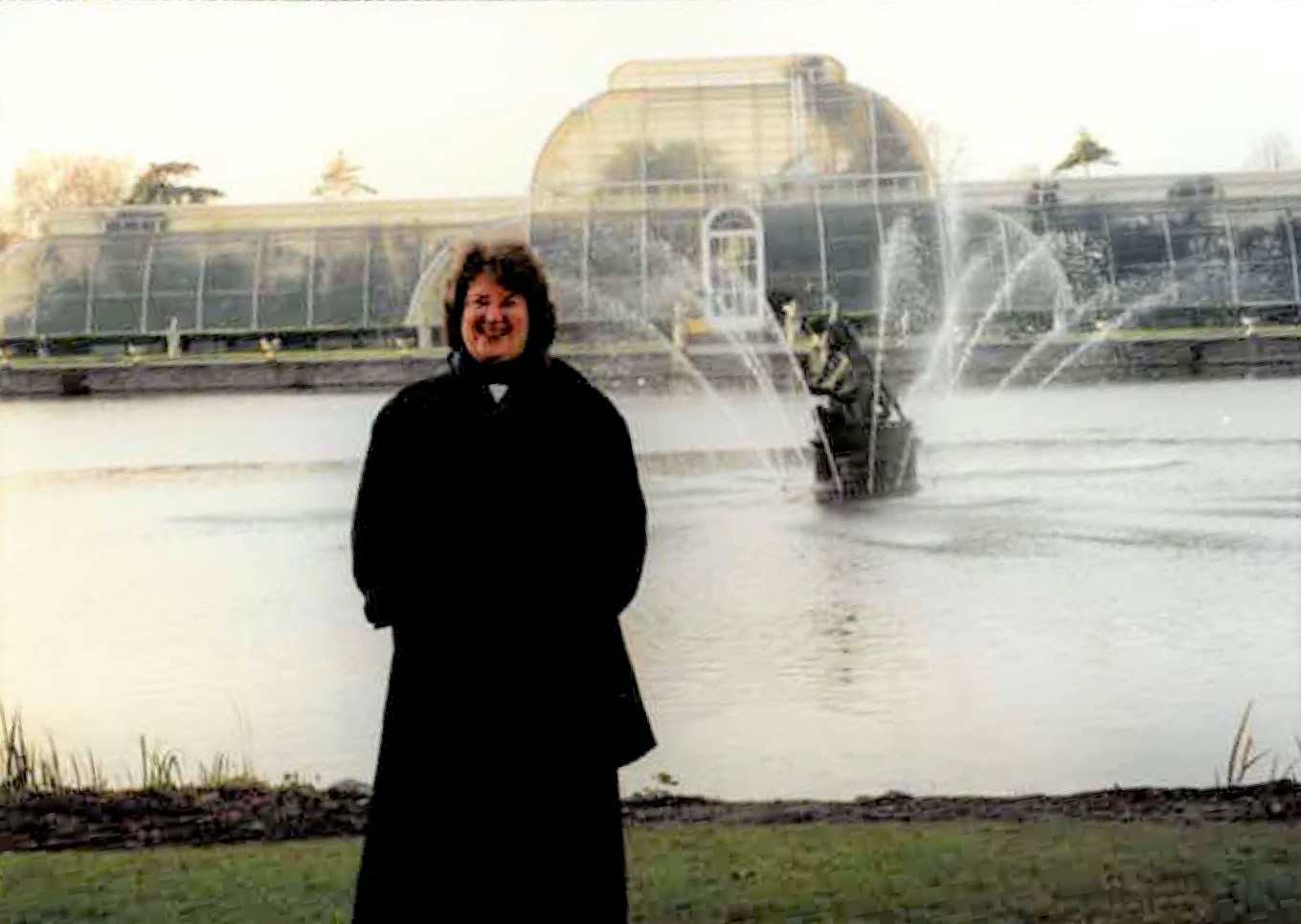
I groan when the intercom wakes us after only six hours of sleep. After breakfast, we hit a cashpoint machine, then we’re off to Kew Gardens. Kew is in Surrey, 11 stops down the District Line; about a 30-minute ride. For part of the journey, we ride along the Thames. We see a huge, odd-looking, modern building on the banks of the Thames and wonder what it is. I joke that it looks like a Disney World hotel.
Surrey is a cute, residential area. We walk towards the gardens and admire all the beautiful homes with Christmas trees in their big bow windows. It is cool—in the 40s—but gorgeously sunny and a great day to walk through the gardens.
Kew Botanical Gardens is 300 acres of more than 50,000 plants, trees, and flowers. Prince Frederick, the eldest son of King George II and father to George III, created the garden that his widow, Princess Augusta, turned into a botanical garden. Captain Cook brought some of the garden’s earliest plants from his explorations around the world. Two beautiful Victorian-style greenhouses—the spectacular Palm House and the Temperate House—are filled with tropical plants: Date trees, olive trees, ferns, palms, banana trees, coconut trees, and even chili peppers. We see rhododendron, orchids, and all kinds of exotic flowers.
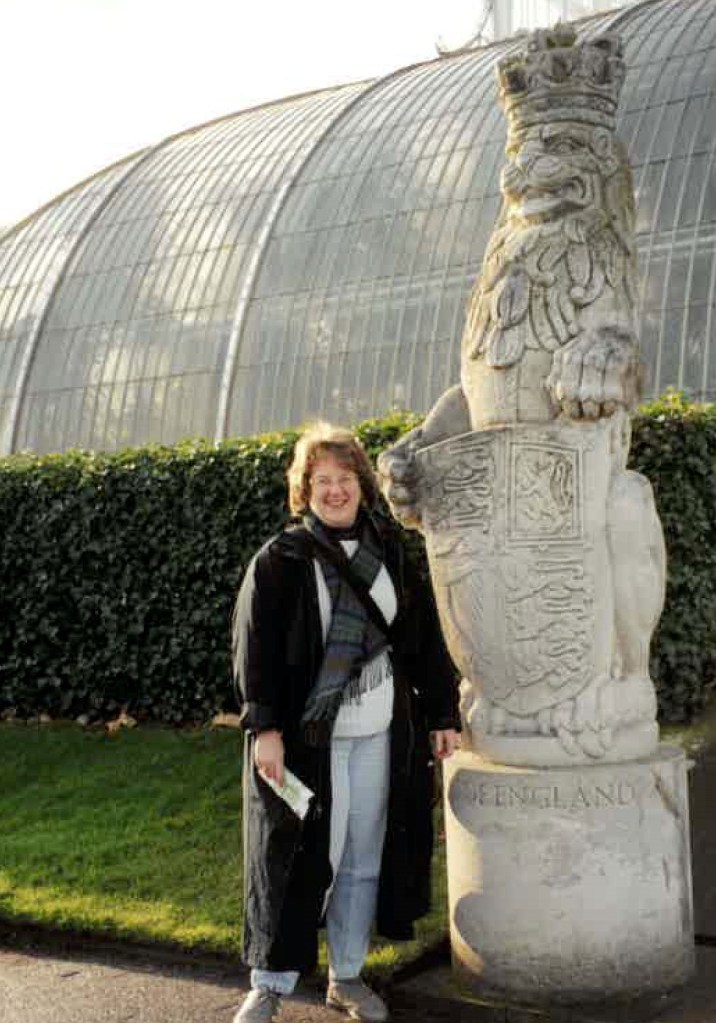
Of course, my favorite is the Princess of Wales Conservatory. It exhibits 10 climatic zones, including a northern one of snow-covered fir trees that looks like Maine. In 1987, Diana dedicated the conservatory in the name of George III’s wife, Charlotte, who took her turn as Princess of Wales before becoming the Queen.
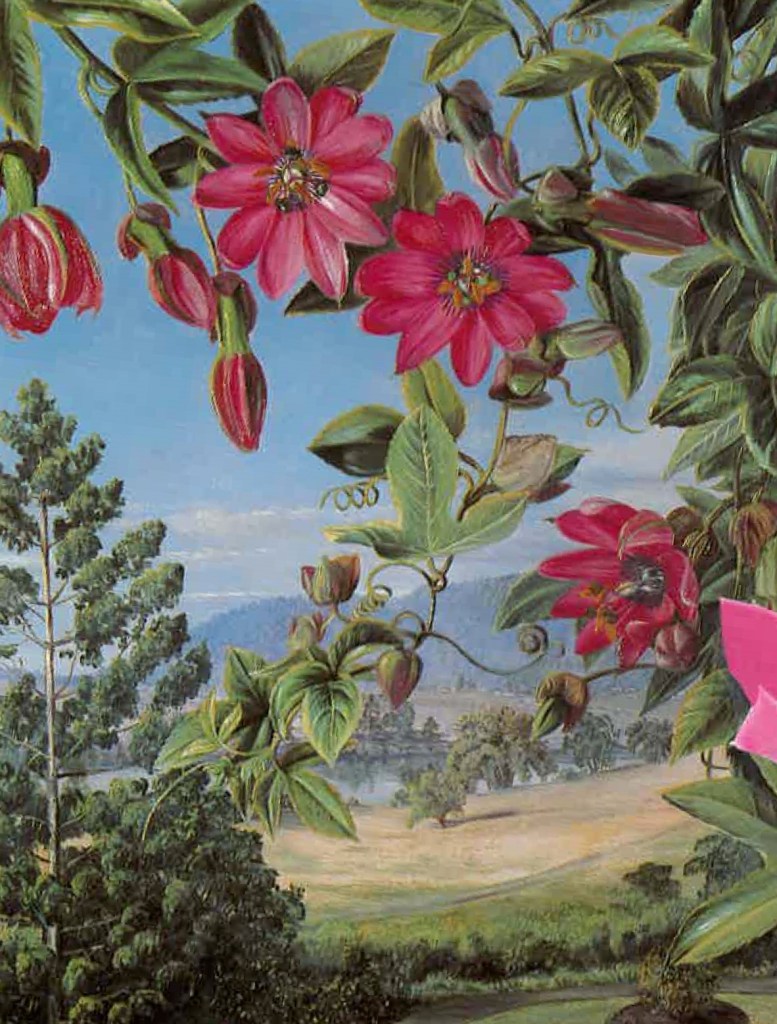
We stop by chance at a small gallery and discover Marianne North, a Victorian woman painter who traveled the world painting plants and flowers. Her paintings are bold and colorful and the gallery walls are covered with over 700 of them, which she donated to Kew. Both Lisa and I love them and spend a long time studying them.
We walk back to the tube, stopping at a bakery for a curry pastry. The train pulls up just as we arrive back at the station and we hop on.
Next we go to the Tate art museum near Pimlico station. It is a long walk from Pimlico to the Tate—more than two miles—and we nearly get run over a couple of times. We see the Disney building again. It is a concrete Art-Deco building—sort of. The upper stories have lots of windows encased in what look like a gray metal façade. Again, we wonder what it could be.
The Tate exhibits mostly British artists but has a collection of other famous works by Picasso, Matisse, Van Gogh, Rodin, and even Andy Warhol. The museum’s centerpiece is seven rooms of Turners—perhaps Britain’s greatest painter, which is saying a lot from a country that produced Rossetti, Reynolds, Gainsborough, and Constable, and inspired expatriates like Whistler and Sargent all of which are showcased at the Tate.
A watercolorist, Turner is known for his hazy, almost luminous, landscapes, cityscapes, and seascapes. I particularly like his ocean scenes with swirls of grey clouds; sometimes a dark tempest, sometimes with warm yellow streaks of sun.
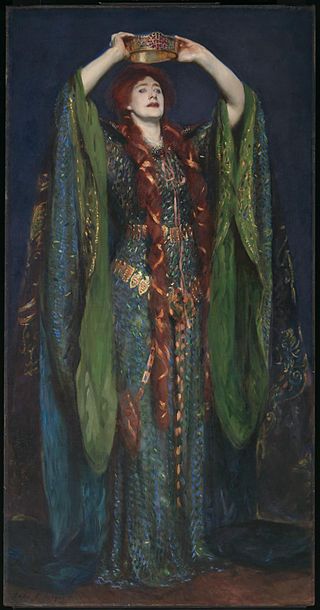
There is also a room of Pre-Raphaelites, where I get to see another version of Rosetti’s Proserpine as well as Millias’ Ophelia. There is also a painting of Ellen Terry, an exceptional female Shakespearean actress of her day, dressed as Lady Macbeth, in a gown of iridescent beetle wings. Oscar Wilde said of seeing Ellen Terry alight from her taxi so dressed—that the street will never be the same (I paraphrase).
We decide on Indian for dinner and, after a brief stop at the hotel, make our way to Goodge Street to an Indian restaurant Lisa found in her guidebook. It is too easy; we walk right to it with no backtracking, circling around, or retracing our steps. It is near the BT telecom tower, which looms over everything in this neighborhood. The food is excellent. We have poppadoms with onion marmalade, prawn puri, and prawns and spinach with lemon rice.
I jokingly say to Lisa, now that we have been here, Goodge Street will never be the same.
 Jody’s UK Memories