A woman on the train to Cardiff is wearing a Maine/New England jacket. I tell her I am from Maine and we marvel at the coincidence. Her mother asks me what I am doing here and assures me Cardiff Castle will not disappoint. I learn that their brother/son lives in Salt Lake City, but I never do discover how she came to have a Maine jacket.
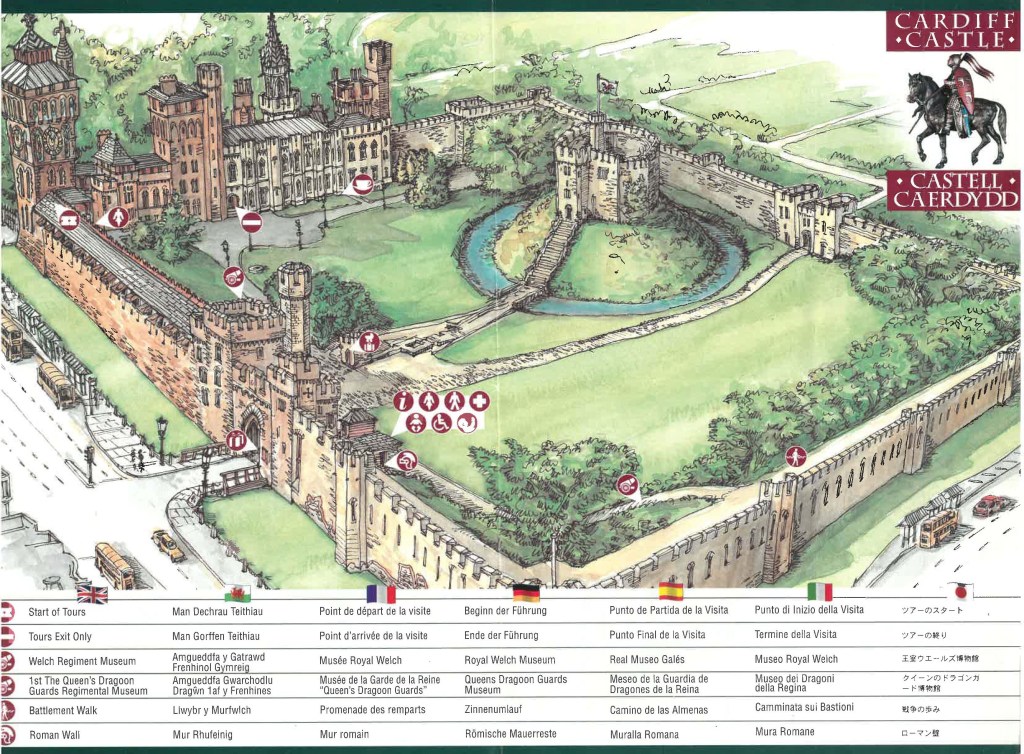
Except for the Welsh street signs, Cardiff looks just like any other English town—especially the High Street. I walk along the block-long castle wall, dotted with colorful fluttering pennants, to the entrance to Cardiff Castle.
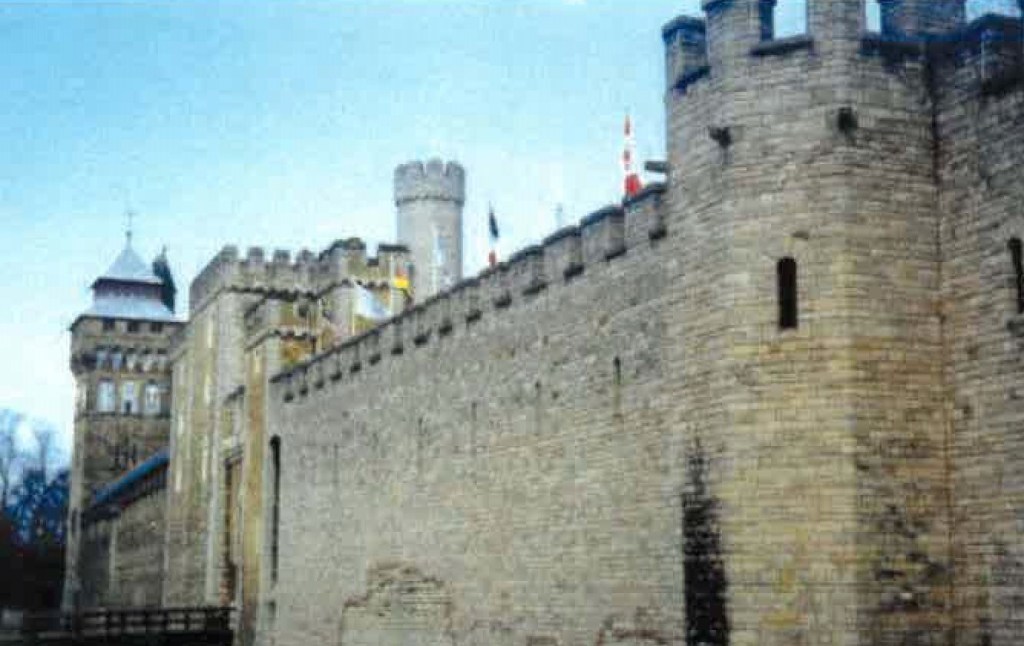
The Romans conquered Wales too―a section of ancient wall attests to it. One thousand years later, Britain’s other unstoppable conquerors, the Normans, swept across Wales. The Norman builders as intent on fortifying their holdings as their Roman cousins, built the thick-walled, 12-sided “keep,” the tower up on a hill inside the castle’s protective outer walls. It is this tower which gives Cardiff its name. “Caerdydd” is Welsh coming from the word “caer” meaning “fortress.”
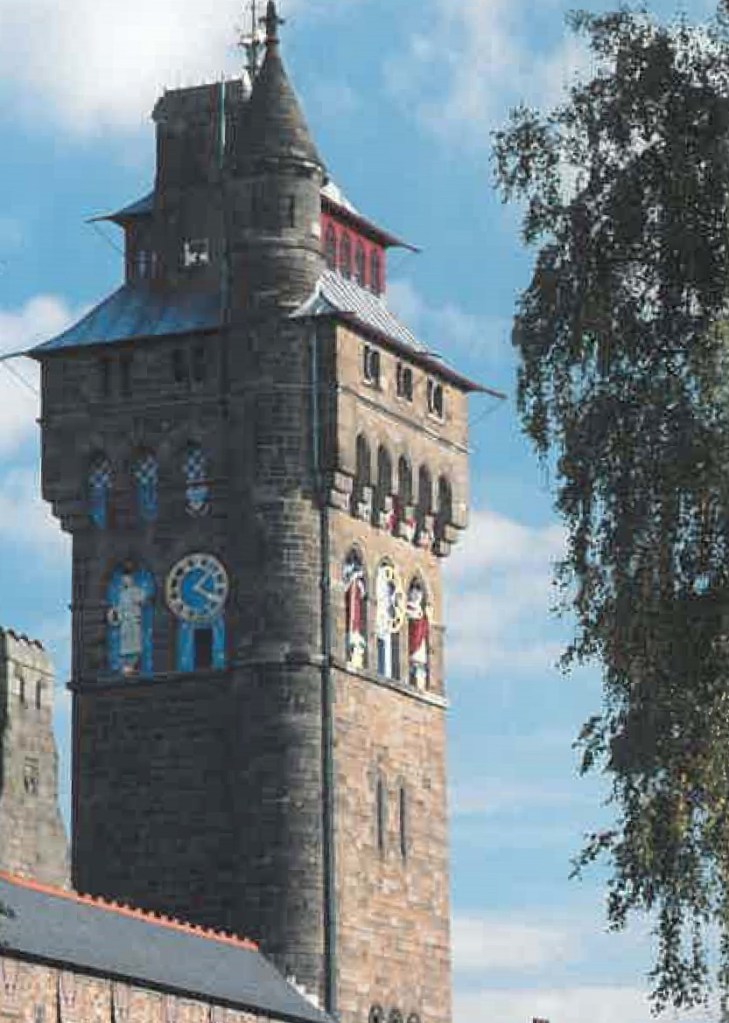
Two thousand years after the Romans and one thousand following the Normans, the Victorians got a hold of Cardiff Castle. The 3rd Marquess of Bute had more money than he knew what to do with, so he added a series of Gothic towers to Cardiff Castle. The main tower, an ornate, fairy-tale, clock tower, contains 101 steps spiraling to the top. At the bottom of the tower is the Marquess’s winter smoking room because, well, the top of the tower is reserved for his summer smoking room.
Lord Bute’s fantasy extended to inside the castle too, which is decorated with gold leaf and carved oak. There are massive fireplaces, lush Indian rugs, and glittering stained-glass windows. Instead of Rubens and Titians, like many British castles, the Marquess’s tastes ran to frescoes, murals, and painted tiles. Signs of the zodiac intersperse with Greek gods and goddesses depicting mythical tales of love and war. One author wrote that Cardiff Castle’s Victorian rooms are “three dimensional passports to fairy kingdoms and realms of gold.”
The Winter Smoking Room contains an elaborately decorated fireplace inscribed with Virgil’s quote, “Love conquers all, Let us yield to love.”
Arab Room Ceiling 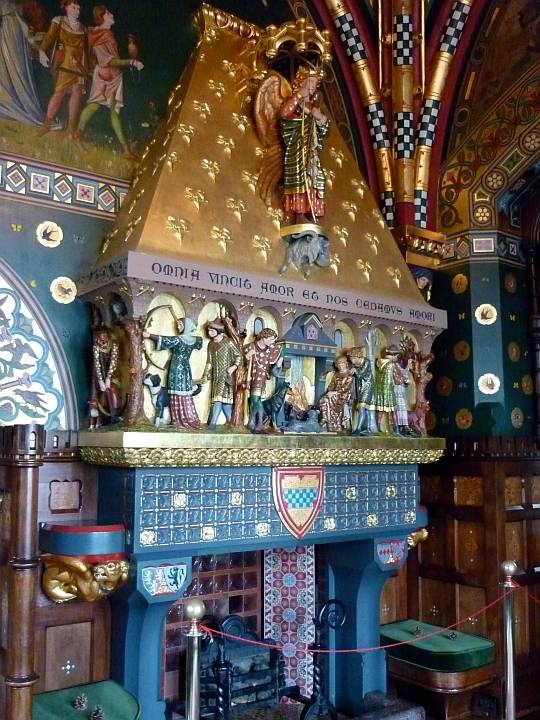
Winter Smoking Room Fireplace
Photos: Jacqueline Banerjee and Robert Friedus, The Victorian Web
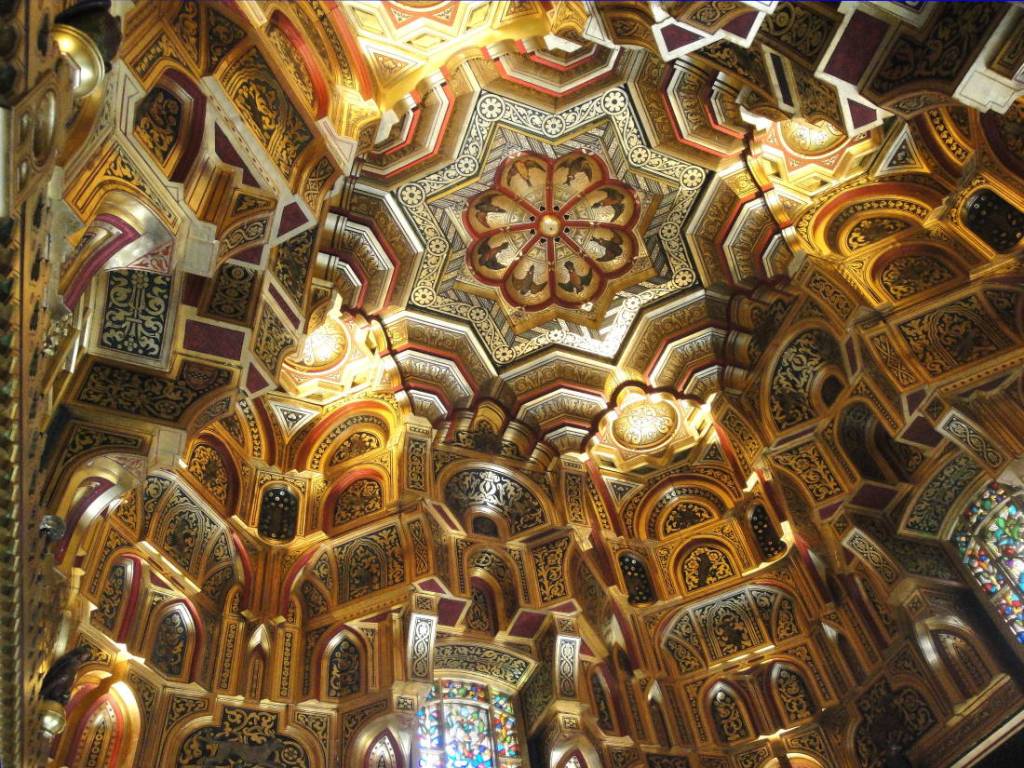
The Arab Room is stunning. It’s intricate honeycomb-patterned ceiling is an interior design masterpiece unlike anything I have ever seen. Lord Bute built the Arab Room as a drawing room for the ladies.
Moving along the passageway to the nursery (decorated now for Christmas), the walls contain frescoes of children’s fairy tales. My favorite is the invisible prince. At first glance, it looks like a lonely partridge sitting among the branches of winter-bare trees. But it is an optical illusion much like the better-known two-faced, old woman/young woman drawing. As you look carefully at the trees, the figure of a man emerges who is holding the bird on his arm.
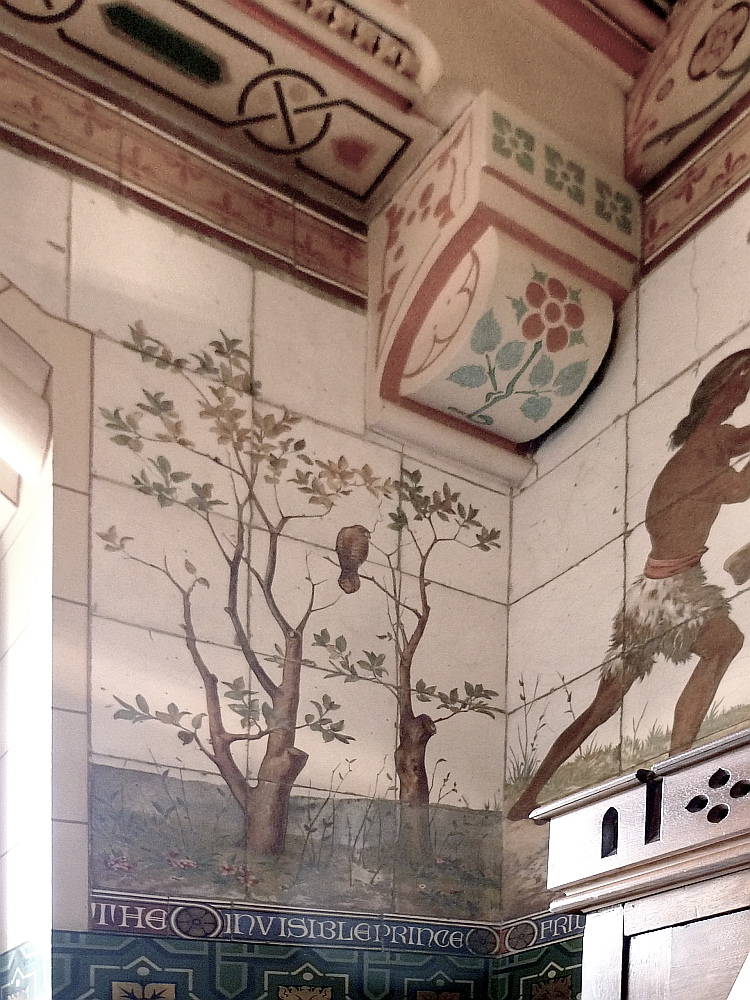
Photo: Jacqueline Banerjee, The Victoria Web
The large banquet hall is decorated with scenes of ferocious battles from the time of King Stephen, who vied for the throne with his cousin, the Empress Matilda. Robert of Gloucester, Matilda’s brother, who owned Shrewsbury Castle, once owned Cardiff Castle. Again, Brother Cadfael gives me my history. The mystery book by Ellis Peters that I just finished contains a sub-plot about Gloucester, without whom Matilda would not have had the successes she did. He was her army’s commander and a keen military strategist.
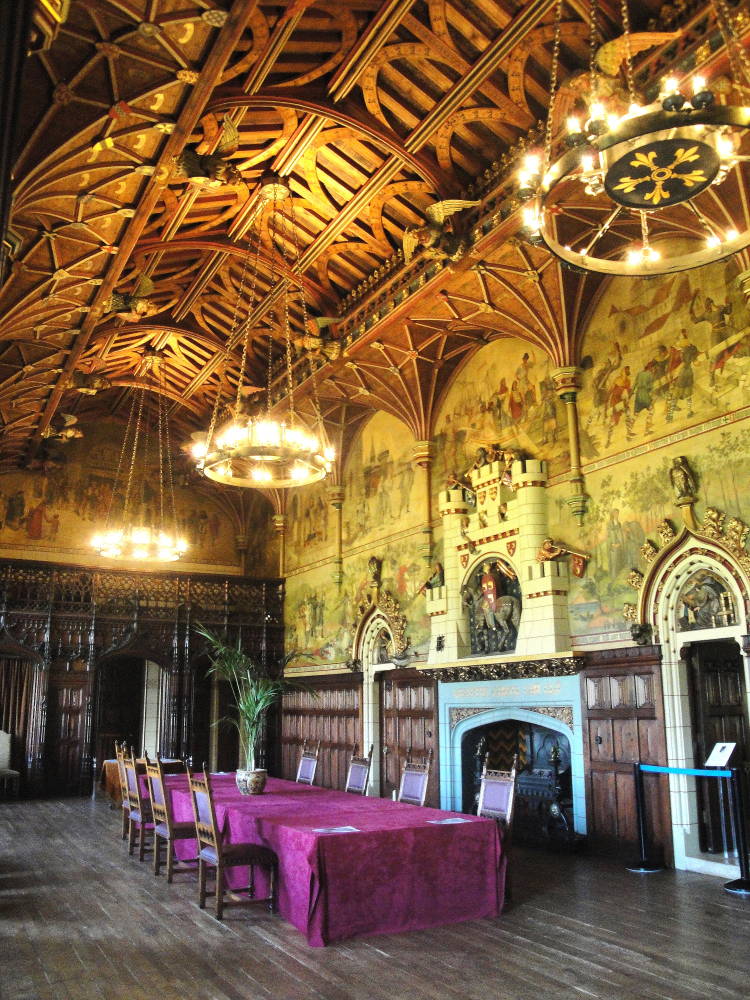
Photo: Jacqueline Banerjee and Robert Friedus, The Victorian Web
The last room we tour, the library, has shelves of books from the Cardiff City Council. The city, now owning the building, filled the shelves with old city records books to make the room look like the well-stocked library it once was when it contained the Marquess’s collection, now gone.
I have a sandwich in the Castle tearoom and, of course, browse the gift shop. I buy a carved, wooden Welsh lovespoon. The spoons’ designs each have their own meaning―a heart signifies steadfast love, a horseshoe is for luck, a keyhole means “my house is yours”―and are meant to be given as tokens of affection.
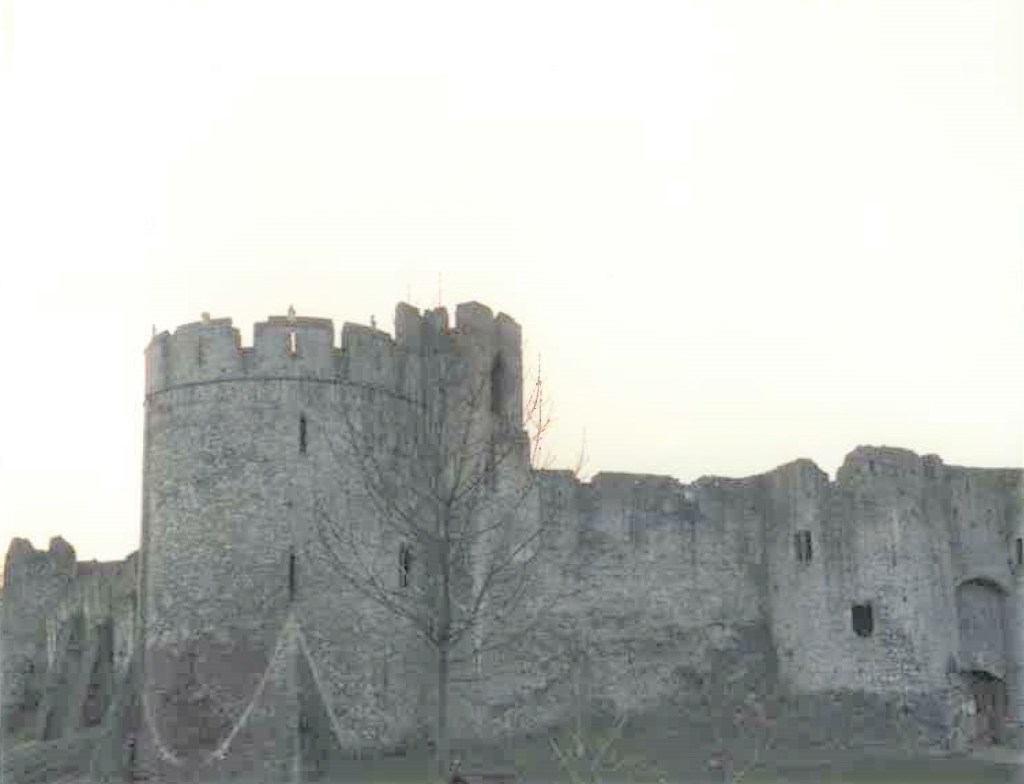
I catch the 14:00 train out of Cardiff to Chepstow to catch a bus to Tintern Abbey. Chepstow is a small cute market town. Its narrow streets lead to Chepstow Castle; one of the first stone castles built in Wales. Those great builders, the Normans, put up the sturdy tower in 1067 to subdue the restless Welsh.
The 12-mile bus ride to Tintern is quick. The bus passes by the abbey ruins and sets us down in the center of the tiny village. I walk back to the abbey and snap some pictures—it is already getting dark.
Tintern’s location on the banks of the River Wye inspired the romantics—artists and poets—of the 19th century. Wordsworth’s poem, Lines Written a Few Miles above Tintern Abbey, is the most famous
Five years have past, five summers, with the length
William Wordsworth, July 13, 1798
Of five long winters! and again I hear
These waters, rolling from their mountain springs
With a soft inland murmur—Once again
Do I behold these steep and lofty cliffs, That on a wild secluded scene impress Thoughts of more deep seclusion; and connect The landscape with the quiet of the sky.
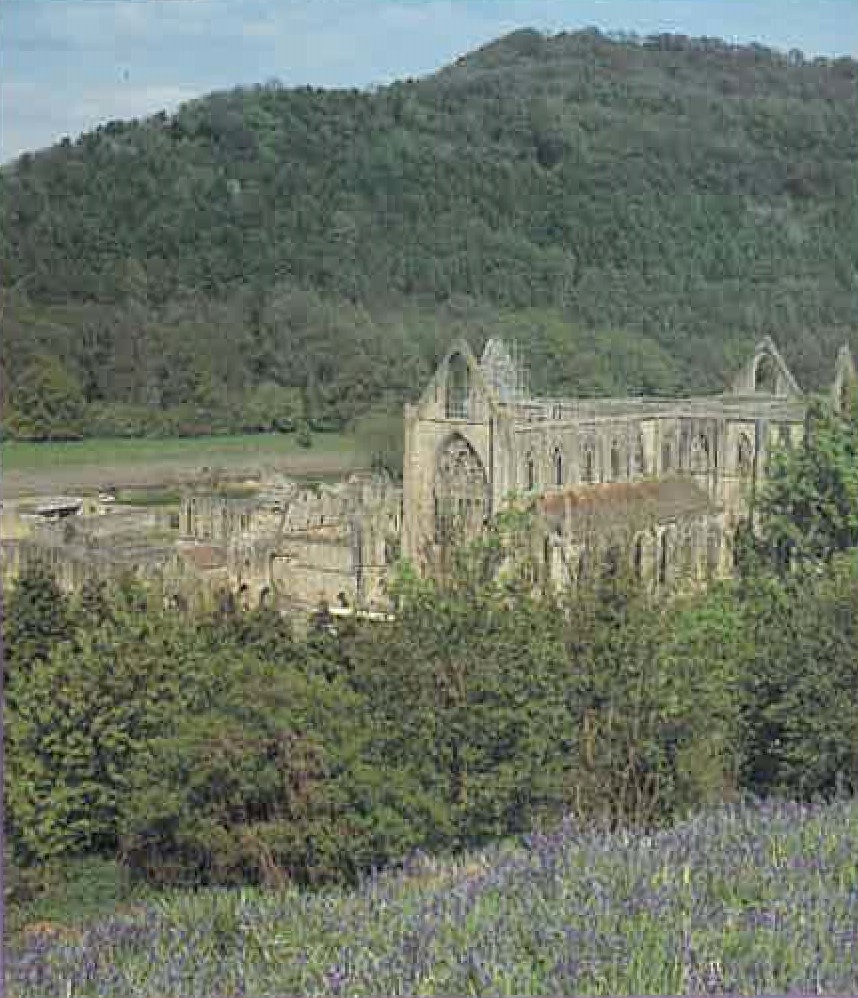
The ruins are impressive. A Cistercian abbey dating to 1131, it began its decay under Henry VIII when its valuable lead roofs were stripped and scavenged. Still, its lofty transepts and high vaulted arches transcend its crumbling, lichen-covered walls. The past is palpable.
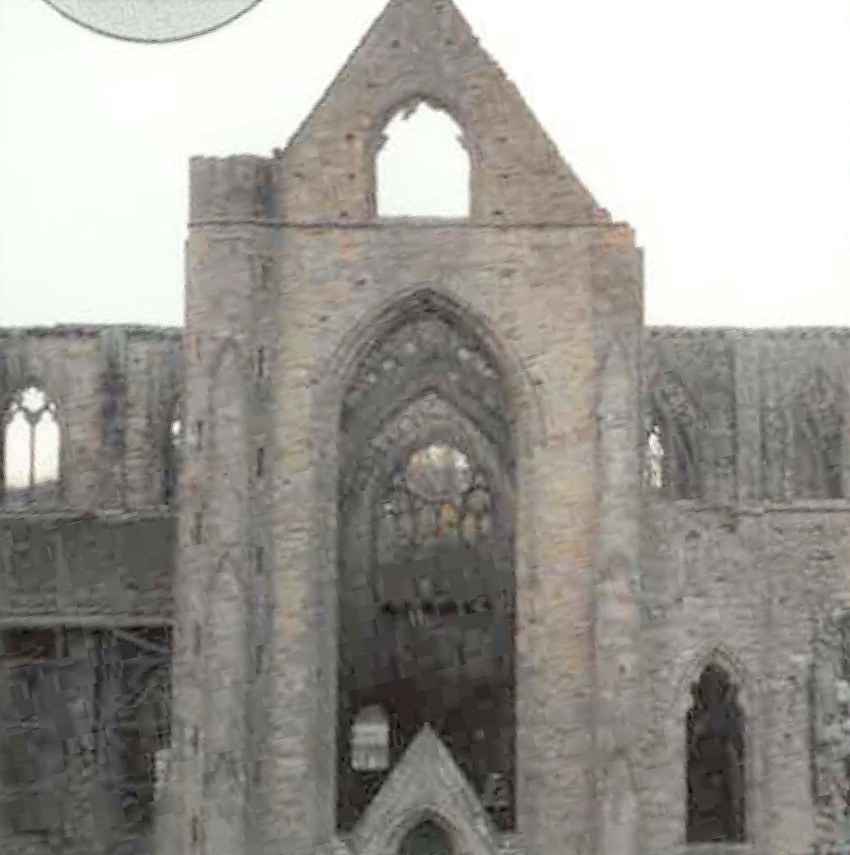
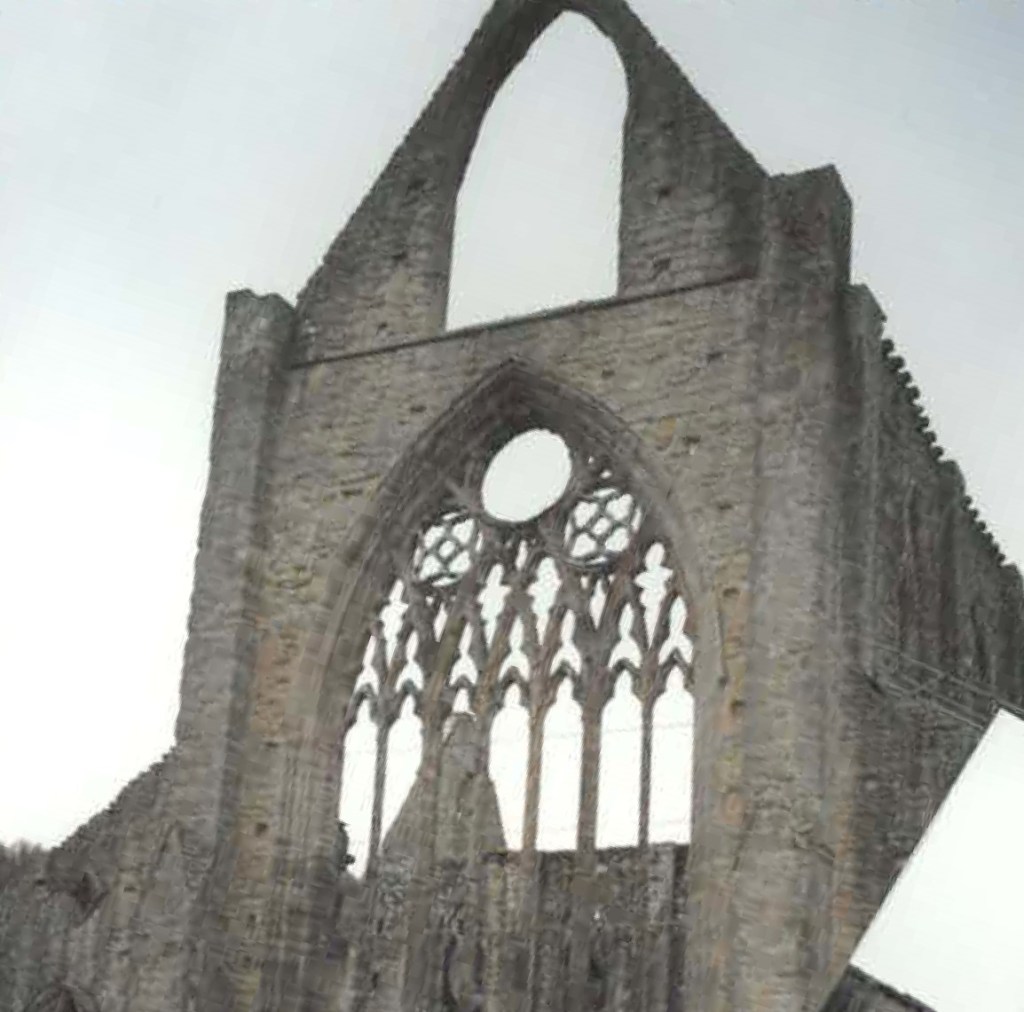
All of these abbey ruins I have visited―Tintern, Glastonbury, Holyrood―fill me with wonder. Their sheer size is impressive, but more, the devotion of the builders who erected these megaliths, not completing the building even in their own lifetimes, but over four or five generations. Still they persevered knowing they would never see it completed. It boggles the mind.
I hurry back to the bus stop, but the 16:08 bus never comes. I know I didn’t miss it because two other ladies have been waiting for it longer than me. By 4:40 PM, we know it is well and truly not coming and it was the last bus on the schedule. We agree to share a taxi back to Chepstow. Thelma and Elizabeth are very nice. One lives in Chepstow; the other is a Londoner who is visiting for the weekend. Our taxi arrives back at Chepstow just as my 16:50 train is pulling away. I must wait for the next one at 17:40. Thelma and Elizabeth head back to their warm abode and I pace up and down on the cold platform to keep warm.
A fellow traveler, a man carrying a box accordion, makes an offhand remark about waiting for the train. I said it would be fine if it were a little warmer. He says, “You’re an American, aren’t you? He is from Ireland and tells me he is going to Newport, the platform for which is on the other side of the track. But he is waiting on this side because, “It’s too bleak over there.” He plays When Irish Eyes are Smiling. I hum along.
Of course, the train is late. It’s been one of those days. There is a speaker box that instructs passengers to press a button for information on the trains’ timetable. It speaks in Welsh first, then English. Everyone that comes by presses it. “Don’t waste your time,” the Irishman tells them. It basically says look at the board posted on the station wall or call for information. Three men joke that trains that don’t arrive at all don’t count as late. I am thinking that will make Tony Blair’s efficiency measures look better.
The Irishman finally decides to move over to his platform and bids me a friendly, “Cheerio, love.” I continue pacing. One of the three men uses a mobile phone to call the information number and reports that the train will be 11 minutes late. When it finally arrives, it is crowded and I stand from Chepstow to Gloucester before a seat opens up. I decide I am tired of all this traveling and think, regrettably, it will be good to go home at the end of the month.
It is just after 8:00 PM when the taxi driver drops me off at Glenelg. It smells like a brand-new taxi so I give him a £1.50 tip thinking that he has a new vehicle to pay off. He is very appreciative.
 Jody’s UK Memories