I am up early for the bus to Liverpool. Months ago, Chris invited me on the bus tour that he organizes every year for the university’s foreign students. Chris is a music enthusiast and Beatles fan, so I think the trip is as much for him as it is for the students.
I walk briskly to the Student Guild where the buses are queuing. There is a cutting wind, but it is not raining. There are already about 100 students there waiting. I see a few of the international students I’ve met. Olha from the Ukraine is clutching British Council literature that Chris has asked her to distribute on the bus—it’s our schedule, tickets, etc. Together, we board one of the buses.
Olha (the Ukrainian version of the name Olga) is getting her MPA here from the School of Public Policy in an accelerated course that takes just one year. She speaks fluent but heavily accented English and speaks very fast, which together cause me to miss some of what she says. She began learning Russian in the 1st grade and Ukrainian and English in the 2nd. She belonged to a group called the Pioneers, which she equates to the Boy Scouts. But the military maneuvers she describes are not like any Boy Scout meeting I know. She talks about how, in order to find hidden items, they had to… “What is the word for it?” she asks, “To move on hands and knees parallel to the ground?” “Crawl?” I suggest. She was 17 when the Soviet Republic broke up.
She is proud of her Ukrainian heritage and indignant that Americans think borscht—beet soup—is Russian. “It’s a Ukrainian recipe,” she declares.
She is disdainful of several of the other Russian students in our group who are from Kazakhstan. They are well-dressed in expensive leather jackets. In Kazakhstan, I think I understand her to say, the wealthy party leaders let poor people live in dirt caves and treat them like slaves. She said this arrangement continued until very recently. Despite this, she assures me that everyone in Russia is equal—all middle class. Everyone has the same food, the same housing, and the same cars. I keep my skepticism to myself.
The bus trip takes almost three hours. The first Magical Mystery tour starts at 11:00 AM and we pull in just a few minutes after the hour. We are divided into four groups. Olha and I are in tour group #3, which is scheduled for 2:00 PM. The bus drops us off at Albert Dock on the banks of the Mersey River to do some shopping and sightseeing in the meantime. The old docks and warehouses that used to hum with commercial shipping activity now house shops, restaurants, and museums.
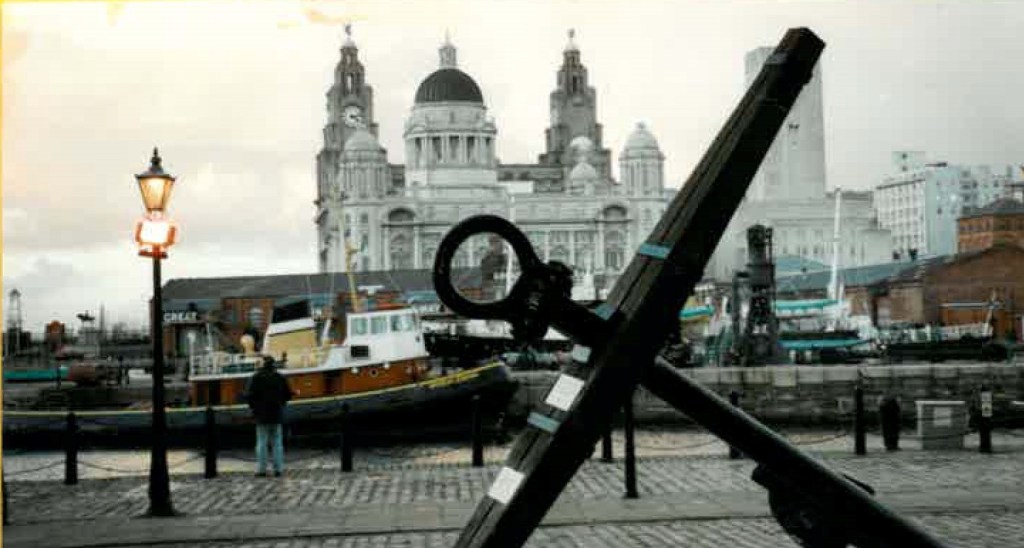
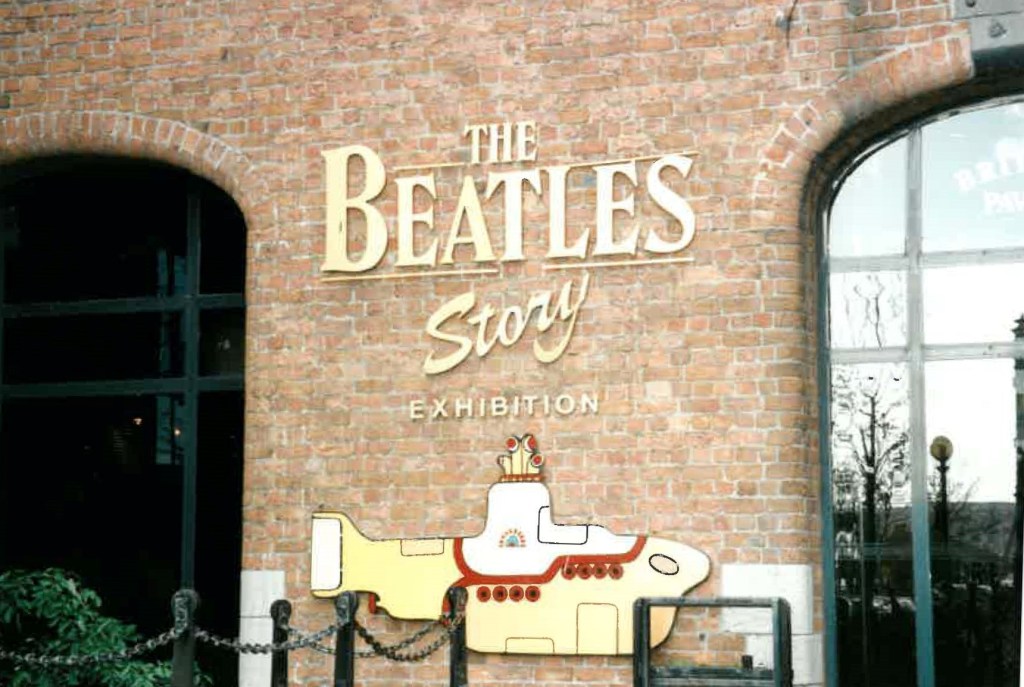
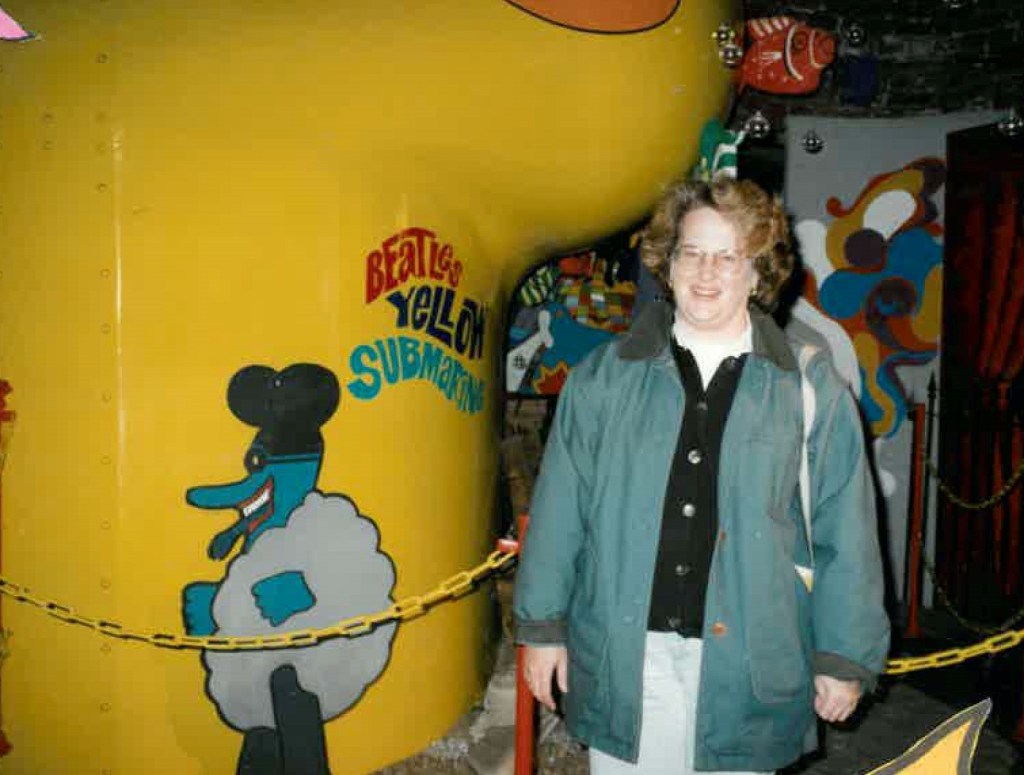
Olha, who has been to Liverpool before, scoots us over to the “The Beatles Story” museum. It traces the Fab Four from their earliest days playing the Cavern Club to their much-lamented breakup in 1969. The museum is splendidly done with a good mix of newsreels, memorabilia, exhibits, and even a full-sized yellow submarine completely constructed for the museum’s purpose.
I love the early clips, before the long hair and hippie clothes. A young John Lennon looks nervous as he is about to meet Princess Margaret. Despite his clear respect for the Royal Family, John Lennon refused his MBE, which would have bestowed on him a knighthood, in protest of Britain’s involvement in the Vietnam War.
The display commemorating John Lennon’s death is specially moving. It is a totally white stage with only a white piano and on the piano a framed black and white picture of Lennon and a pair of his trademark round hippy spectacles. His song, Imagine, is playing in the background; one of my favorite songs of all time.
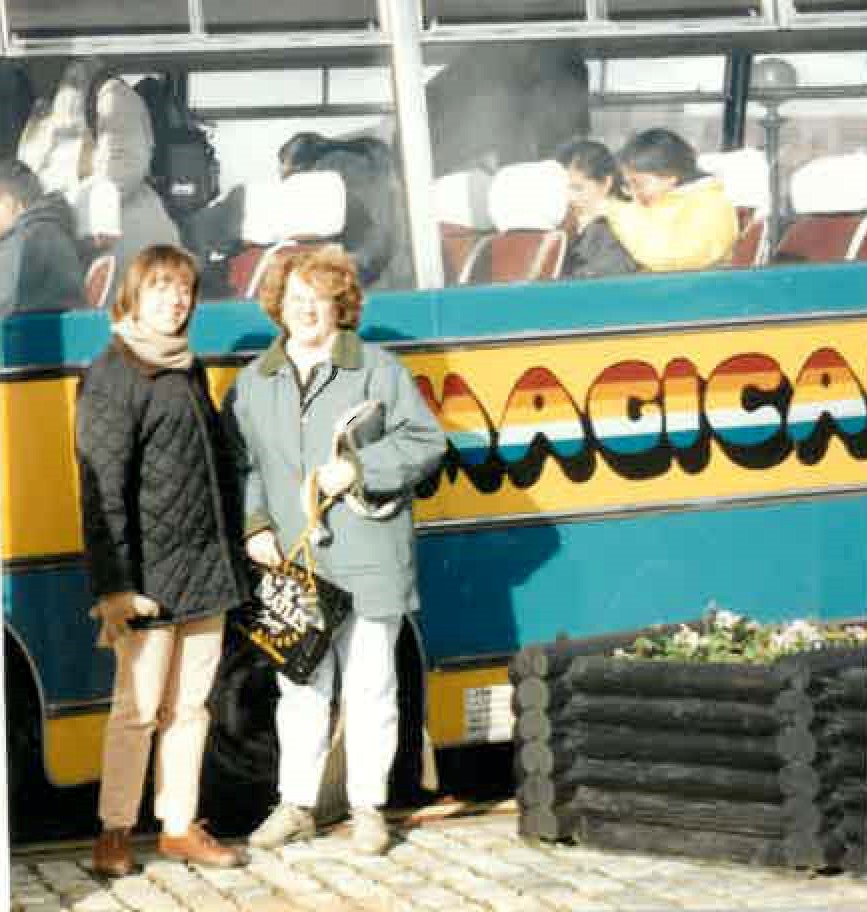
Then we board the yellow-painted Magical Mystery tour bus for a nostalgic ride through the Beatles’ old stomping grounds.
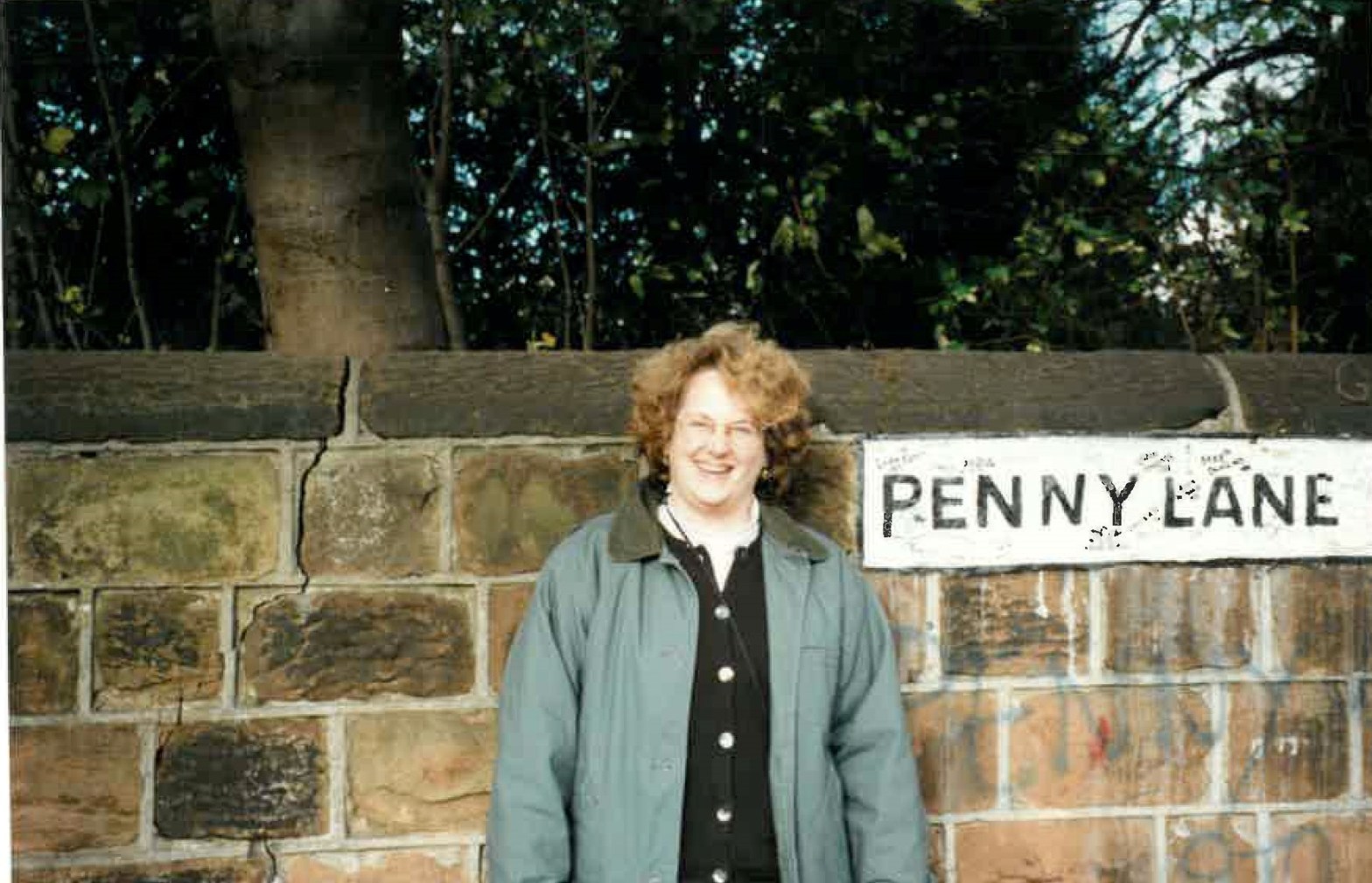
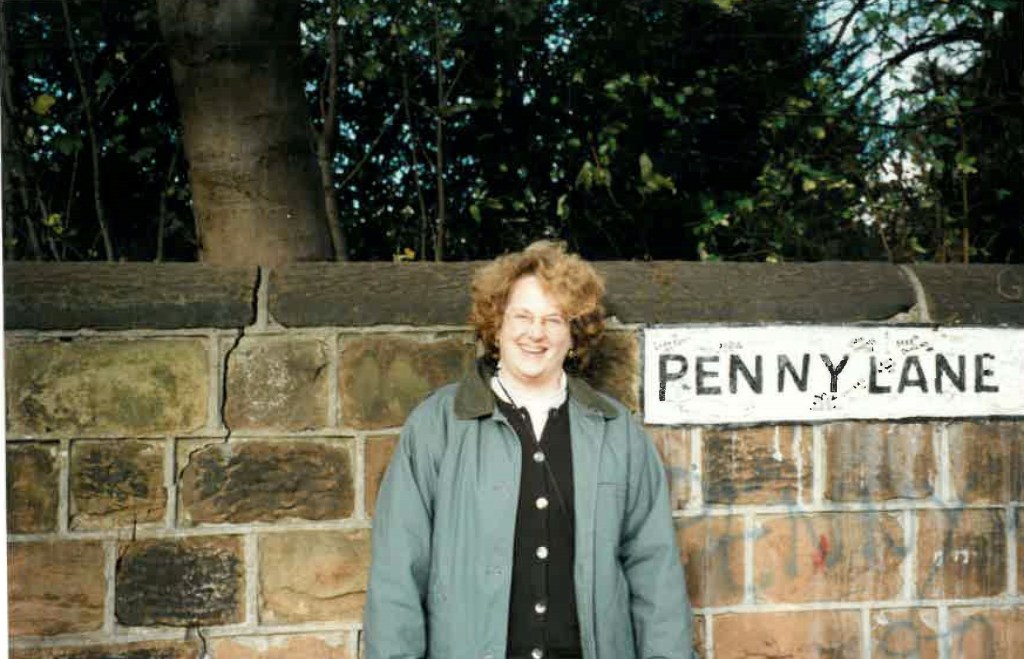
The bus takes us to the top of Penny Lane and we all pile out to take photos of the street sign. Of course, as we do, we sing “Penny Lane is in my ears and in my eyes.” One Indian student asks me as we get back on the bus, “What is this? This Penny Lane?”
Our tour guide, an obvious and self-admitted Beatles fanatic, loves Paul McCartney. Well, who doesn’t? She met him once at a charity event when she was wearing a Linda McCartney cancer-fundraiser t-shirt. Paul reached out and touched it and said, “That’s a really nice shirt.” Now, she says proudly and a bit cheekily, “Paul McCartney touched my chest.” As a lad, the cathedral’s music director refused Paul a choirboy spot because he wasn’t good enough. Forty years later, the Royal Liverpool Philharmonic Orchestra performed Sir Paul McCartney’s classical oratorio at that cathedral. “He showed them,” says our besotted guide.
There is an arresting sculpture at the top of Hope Street looking down toward the River Mersey. It is a pile of stone-sculpted suitcases and trunks randomly stacked in the middle of the traffic island. The suitcases are labelled with brass plaques of the famous people who have passed through Liverpool like Charles Dickens, 19th century feminist Josephine Butler, and a trio of modern Liverpudlian beat poets: Adrian Henri, Roger McGough, and Brian Patten. A small stack of suitcases and a guitar case stand a bit off to the side by themselves memorializing Liverpool’s favorite sons.
We pass an enchanting little bronze statue of Eleanor Rigby “dedicated to all the lonely people.” She is wearing a handkerchief headscarf and sitting on a bench with her shopping bag.
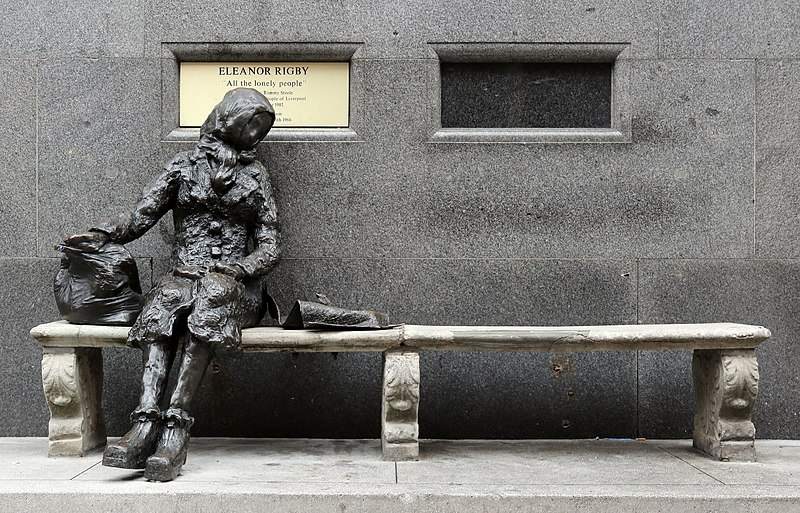
Photo: Wikimedia Commons
Back at the Albert Dock is a massive obelisk dedicated to the engineers who lost their lives in the Titanic tragedy.
The Titanic, although having sailed from Southampton, was registered in Liverpool. The offices of the ship’s owner, the White Star Line, were in Liverpool, and many of the crew was from here including Captain Smith, the eight heroic band members, and Fred Fleet, Titanic’s lookout who spotted the iceberg.
We have about two hours to kill before our dinner/party at the Cavern Club. I want to go to the Merseyside Maritime Museum. Olha is not interested in ships she says and goes off to City Centre to do some shopping with some of the other students. I am the only one who goes to the museum, which is about as interesting as you would expect a maritime museum to be. But, I came to see the small exhibit dedicated to the floating palaces.” It has pictures and memorabilia from both the Titanic and the Lusitania.
I have tea in the museum café before heading out to meet the others.
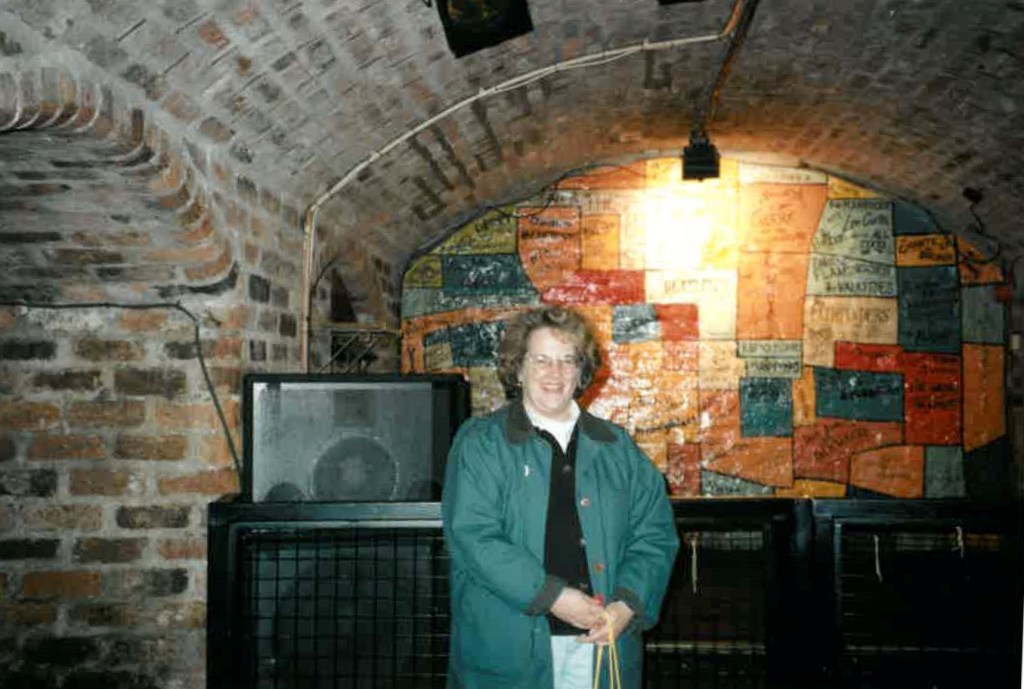
The Cavern Club is where the Beatles got their start and is today still a working club. Chris tells me that some Saturday nights, it is overcrowded, smoke-filled, and smells of sweat. But it’s a mecca for Beatles fans and would-be musicians the world over.
The whole of Matthew Street, where the club is located, is a tribute to the Beatles with a bronze statue of a young John Lennon. Behind him is a wall of bricks engraved with the names of all the bands that have played at the Caravan Club over the years: Jerry and the Pacemakers, Rolling Stones, and many more. There is also the Beatles Shop, the Lucy in the Sky Pub, Abbey Road Bar, and on and on.
Upstairs is a banquet room with music that Chris says will get louder as the night progresses. I sit at a table with Olha and a young couple from Botswana. They too speak excellent English. The young man says to me, “I like your English.” I ask if it is easier to understand than the British accent, by which I mean the impenetrable Birmingham brogue, and they both nod their heads vigorously. They know someone in Washington DC. I say I love Washington DC but don’t go there in the summer as it is too hot. They say the heat wouldn’t bother them as it is hot where they come from (I am not sure that they understand about humidity). Anywhere the sun shines would make them happy, “Not like this place,” the girl Keeya says mournfully.
Olha can’t wait to dance. Keeya and her boyfriend (I didn’t catch his name) join her on the dance floor. The Indian man I met at the City Hall awards reception sits down to say hello. It comes to light that he mistakenly thinks Dean is my husband. When I correct him, he is embarrassed and maybe a little angry saying, “But I asked about your husband before.” Earlier on the bus he asked me, I thought, whether I brought my colleague. At the time, I wondered if he might have said “hubby,” instead of “colleague” but I couldn’t imagine an Indian-speaking person for whom English is a second language using the word hubby and assumed I misheard.
I dance a couple of times until it gets too hot and smoky, then retreat to my table in the back. We leave around 9 PM but, not before Chris gets on the microphone and begins to sing, “I did it my way.” It is so unexpectedly different from his normal British reserve that I know he has drunk many beers.
 Jody’s UK Memories
