From Stacy and Matthew’s breakfast table a large window looks out over the city of London. It’s foggy today but they tell me on a clear day you can see the London Wheel, the millennial Ferris wheel. Matthew has been out running and he brings back croissants; large, flaky, almond-crusted ones that are sweet bliss. We have coffee and pastries and chat. We head out just after 9:00 AM. I am off to Glastonbury.
From Paddington, I take the train to Bristol. It is foggy as the train travels through Reading, Swindon, Chippenham, Bath Spa, and pulls into Bristol Temple Meads station. I look for the Badgerline Bus #376. I am constantly amazed at how vague tour book instructions are. Mine says the bus to Glastonbury is outside the train station. But of course it is not there where the other buses are queuing; it’s down the hill and around the corner. It’s now 12:10 PM and I run, thinking I have missed the 12:07 bus and will have to wait an hour for the next one. But I am in luck. It’s there and I jump on.
The bus meanders through amazingly scenic little towns like Chewton Mopid and Cheddar. Yes, there is in actual fact a town called Cheddar in England!.
In Glastonbury, I walk down the High Street, past the 15th century St. John the Baptist church, and pick up some brochures at the tourist information center before heading to the abbey ruins.
The 8th century Glastonbury Abbey ruins are magnificent; soaring hundreds of feet above my head, steeped in romance and lore. Abbey monks, in 1191, claim to have found the remains of King Arthur and Queen Guinevere in the graveyard near the Lady Chapel. Although it is more likely they fabricated the discovery to boost their flagging coffers. Nevertheless, enthusiasts claim that Glastonbury is the mystical Isle of Avalon. Interestingly there is geological evidence that Glastonbury used to be surrounded by water; Roman drainage work in the 800s changed that, making it the dry land that it is today.

The abbey ruins give a tantalizing glimpse of what must have been a grand abbey. Artists’ recreations of the 10th century abbey show that it was the largest in England at the time and larger than Winchester or Canterbury today.
On the grounds of the abbey is the Glastonbury Thorn—a Hawthorn tree― reputed to have sprouted from the staff of Joseph of Arimethea, the wealthy man who buried Jesus, became a missionary, and founded Glastonbury Abbey. Another legend has it that he also brought the Holy Grail to England and hid it in Glastonbury’s Chalice Well. Of course, the historical evidence supports none of this. Nevertheless:
The Glastonbury Thorn is said to flower on Christmas Day every year, and a blossom from the plant in the churchyard of St John’s Church Glastonbury is said to be used to decorate the Christmas breakfast table of the Queen each year.
BBC Article, The Passion
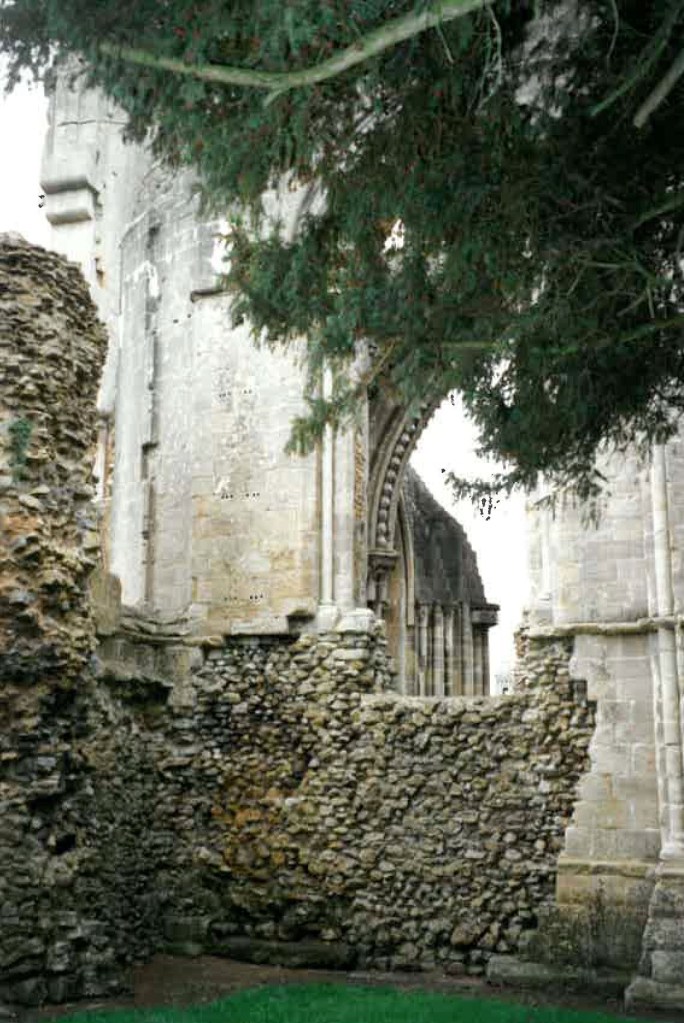
I love the peaceful grounds and wander through the ruins trying to imagine all the history these stone walls have witnessed; it conjures up a past much older than anything I have seen thus far. One scientific article I reads says, “Archaeological evidence dates occupation at the Glastonbury Abbey site during the fifth century—when Arthur allegedly lived.”
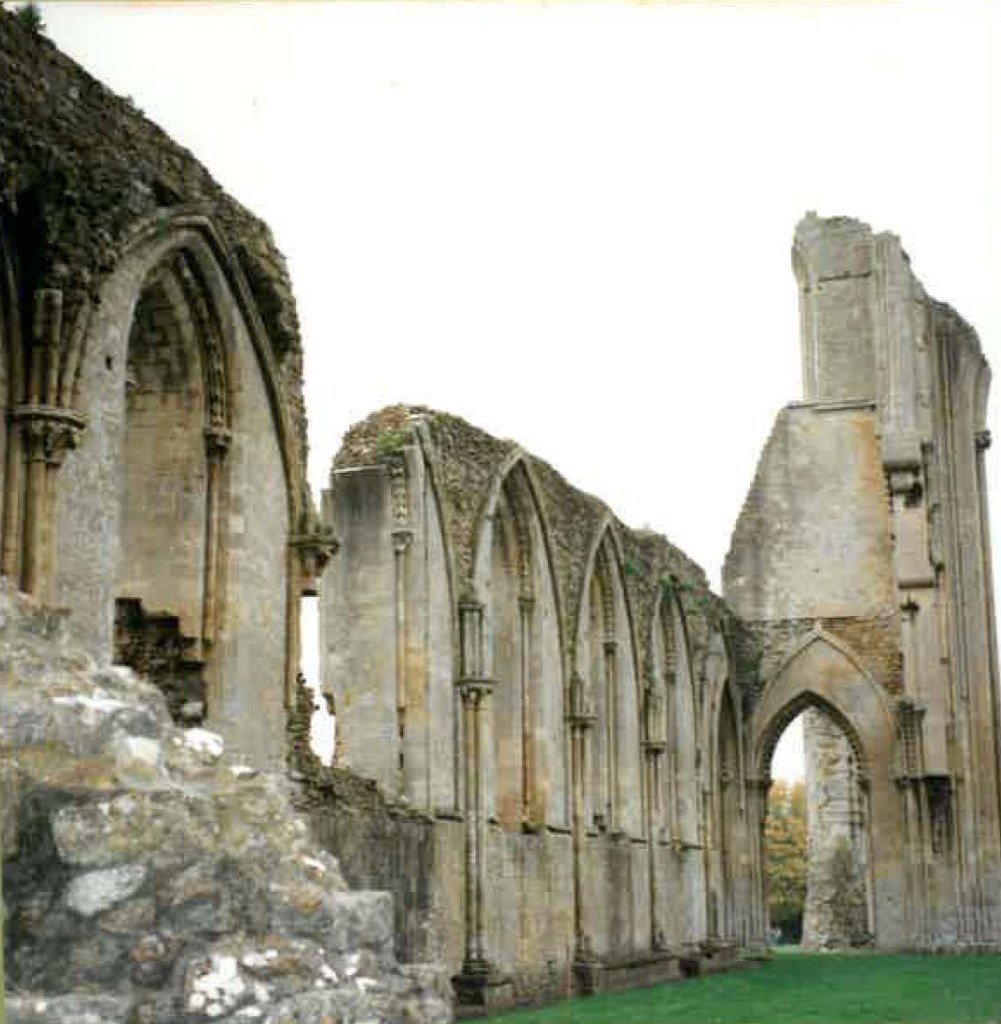
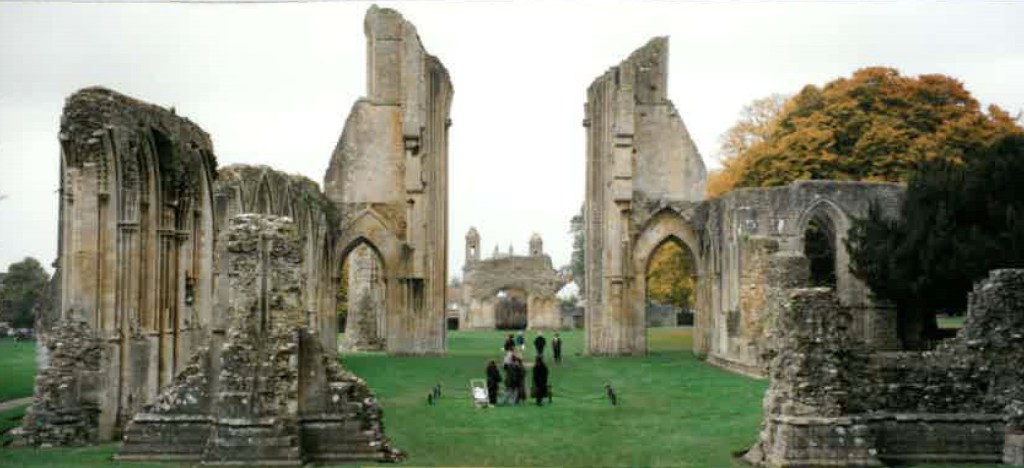
I walk the nearly one mile to the Chalice Well. There, I have a great view of Glastonbury Tor, a 521-foot hill with St. Michael’s tower, a remnant of a 14th century church, perched on the top. Pilgrims once climbed the hill with dried peas in their shoes as penance. Nowadays people come to St Michael’s to feel the Earth’s energy along the ley lines. Researchers have found that when plotted on British ordinance maps, ancient, megalithic sites can be linked in an incredible coincidence of interconnecting lines; along these lines the ground actually vibrates with energy.
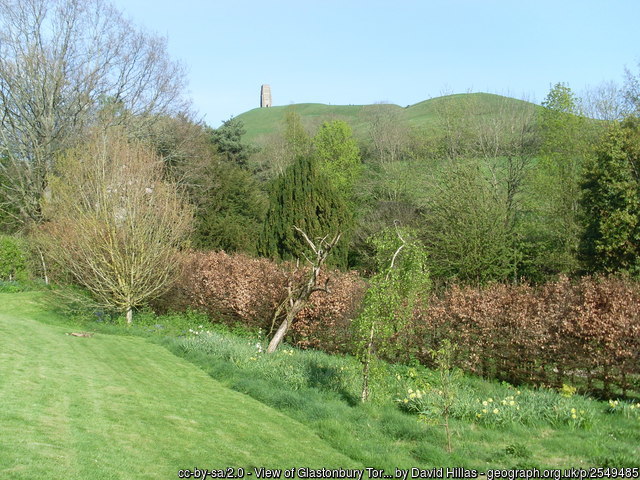
The Chalice Well is at least 2,000 years old. Their website says:
There are many associations with Chalice Well covering countless centuries; it is a timeless and sacred place, full of legend, symbolism, and atmosphere, a place whose history has no beginning.
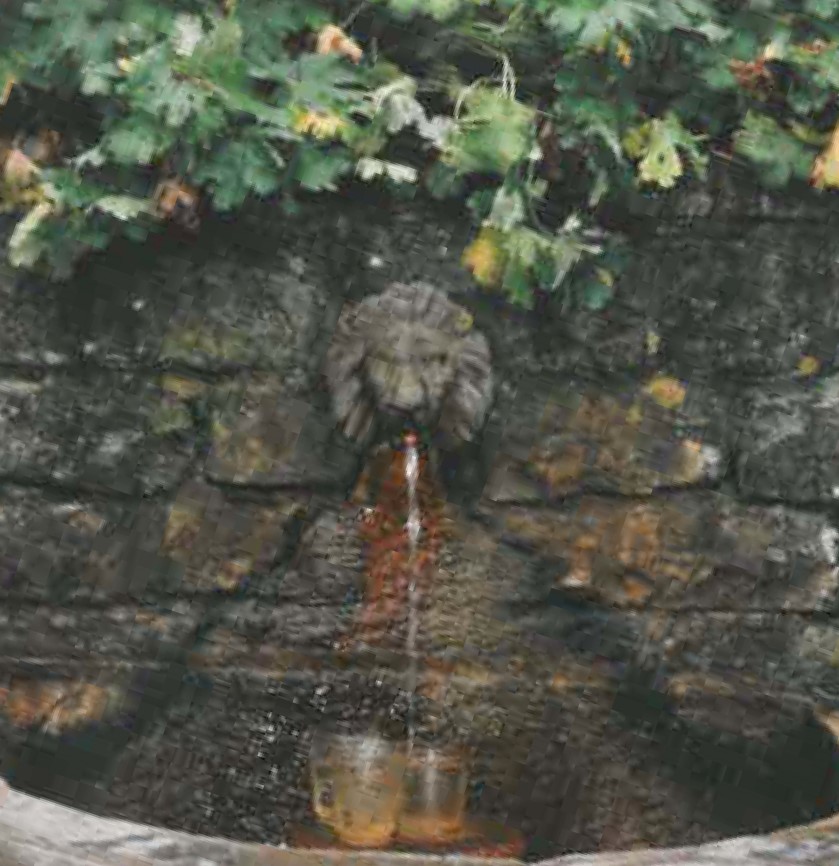
Thought to be tapped by the Druids, the reddish-brown-colored water that gushes from a lion’s head fountain is supposed to have healing properties. Visitors today can drink the water. I slurp a handful from the lion’s mouth, which tastes minerally but fresh.
I take the bus back to Bristol and check into the nearby Holiday Inn Express. I take a hot shower, watch the news, and eat dinner at a small Italian restaurant around the corner.
- In today’s news: The European Union Commission restated its stand, after reviewing new evidence, that British beef is safe. For weeks now, the French have refused to lift their ban on the import of British beef, which has escalated into a mini trade war. Local restaurants and food stores have begun pulling French goods such as bread, apples, and cheese from their shelves and some British people have begun to boycott French products. French farmers on the other side of the Channel blockaded normal shipments of British products for several hours one morning at Calais. The conservatives want all out action. The Blair government cautions against a trade war, which would not be good for anyone. The French government says they are taking all the facts into consideration.
 Jody’s UK Memories