Tony gave me a one-cup cafetiére and this morning I make a cup using the Godiva coffee I brought with me. It is nice to be able to have a cup of coffee in my room.
A cafetiére is a French-press coffee maker with a plunger that pushes the grounds to the bottom of the pot after they have steeped in hot water. I read an article in Economist magazine comparing the Blair government to a cafetiére. It said, and I paraphrase, that Thatcher relied on her ministers to develop new policy ideas and, like a percolator, the ideas would bubble up from the bottom. Blair, on the other hand, is a very top-down administrator. He and his most trusted aids initiate Labor policy and push it down through the government, like a cafetiére.
This is the first morning that I do not have breakfast downstairs. Dean and Barbara are picking me up first for brunch in Birmingham at 10 AM, then we’re going to Oxford for lunch.
Jane Lutz, a professor at INLOGOV, and her husband, Richard, live in Birmingham in a wonderful house in a very pretty neighborhood. They have an overgrown, multi-hued, English garden, bright with wild flowers; a winding path through it.
Jane has made laktes to serve with fruit and bagels. There is also lox, herring, and some other strong-smelling fishy stuff. Dean is the only one that eats the fish. I have some lox but neither Barbara nor I touch the white fish, nor do the kids.
Richard went to Bates College (graduating in 1972). He has a good friend, a lawyer in town, whom they visit periodically. He just shakes his head when I tell him I was born in Lewiston and grew up near there. Jane is a delightful person and I love her Scottish accent. Richard is a direct, outspoken New Yorker, but I like him. It was very sweet of them to have us over.
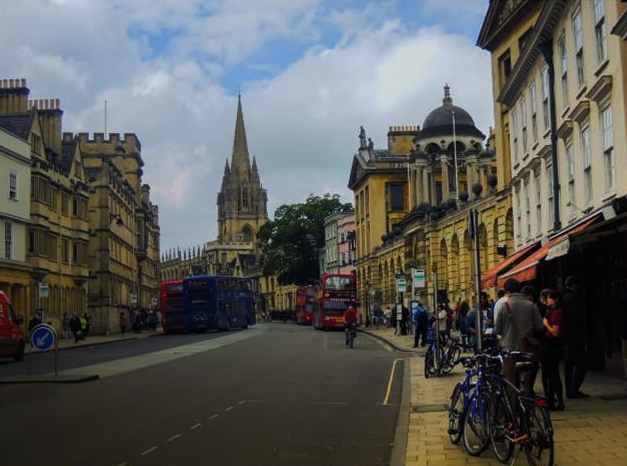
After brunch, we drive to Oxford, arriving only 45 minutes late. Still, we are only the second group to have arrived. Kathy Taylor, a fellow fellow, and her husband, Kurt, are our hosts. Kurt has a prestigious chair professorship at Oxford where he is teaching this year. I can’t imagine how he did that! Even he said it is unusual—visiting professors are not usually given chairs as they are reserved for the top faculty members.
Mary Ellen is here with her husband Kelly and their two children and Mildred (none of us can remember the mother-in-law’s name; it is Ari who tells us her name is Mildred). Mary Ellen, whose father is ill with cancer, receives the half-expected call while we are there that he has passed away. She went back to the U.S. last week to see him. We try our best to console her.
Andy and Rebecca have three children; one, an adorable little two-year old boy with the biggest, angelic smile. Andy says they got lost coming here; every time they get in the car, they get lost. He says jokingly they just got to the point back home where their children (the oldest is 8) were beginning to think they were adept at being parents. They had a roof over their head, they could get them to school and home, and they ate three meals a day. Now, in England, all that is out the window. He is immensely funny.
We talk and laugh, becoming fast friends due to our shared circumstances. We complain about British oddities—driving on the left, houses with plumbing problems, and, of course, the woeful banking! We wonder if we will miss it all when we return home to the States.
On the way home, we get stuck in a traffic jam and creep along for more than two hours before arriving back in Birmingham.
I have a message waiting for me from Dawna, a friend from the budget office at home. Her husband, Jim, is attending a conference in Birmingham. They have arrived in Birmingham!
- In today’s news: Goats reprieved by Lords. The House of Lords has approved a measure which will end the centuries-old tradition of printing acts of Parliament on animal hide. At the moment, two copies of acts of Parliament are printed on vellum—a parchment made of goat skin. Under the new measure, only one copy would be produced on archive paper, which has a life expectancy of 500 years. There is also expected to be a financial savings of about £30,000 a year.
 Jody’s UK Memories