The train to Shrewsbury takes an hour from Birmingham. Following the signs for “tourist information,” I walk up the hill to the market square. Shrewsbury’s market square boasts a monument of Robert Clive, better known as Clive of India, one of the founders of British rule of India. He was also an MP for Shrewsbury in the 1760s.
The Drapers Guild built the two-story, 16th century Market Hall. The tourist information center is just behind it where they tell me a wedding is scheduled at the abbey at 1:30 PM. But it is just noon now and only a 10-minute walk, so I have time.
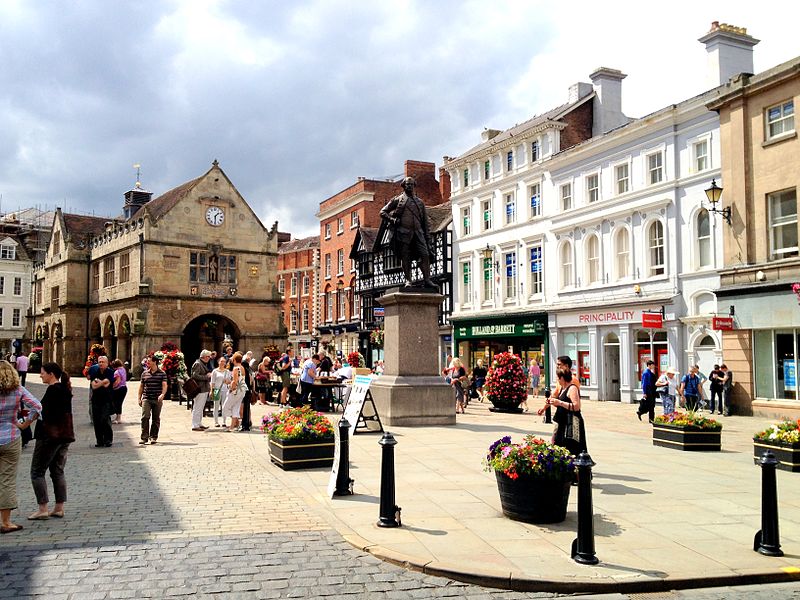
Photo: Wikimedia Commons
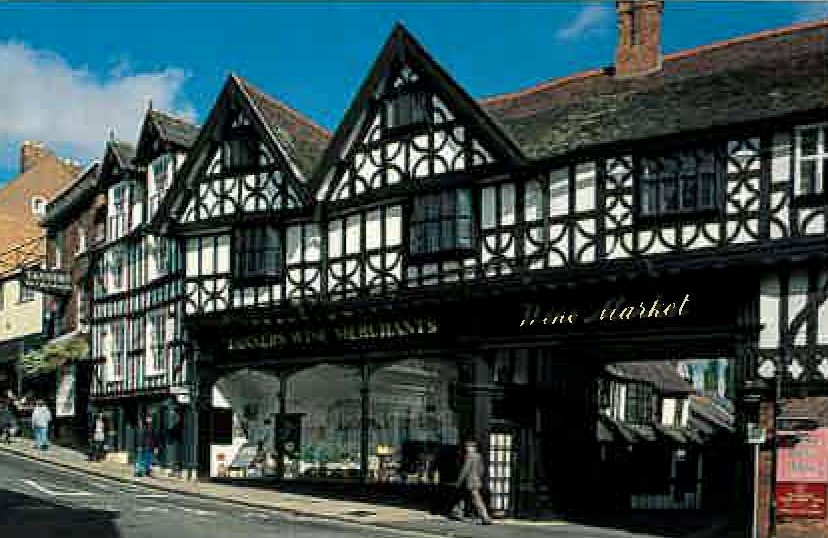
The narrow streets are lined with half-timber Tudor houses. My guidebook says:
Shrewsbury is famed for its unique medieval character and charm. Shropshire’s county town, it contains some of the best Tudor and Jacobean buildings, which cascade down steep gradients and along tiny cobbled alleyways to the river.
On my way to the abbey, I cross the English Bridge over the River Severn where there are two white swans and several brown ones sunning themselves. I wonder if the Queen owns them.
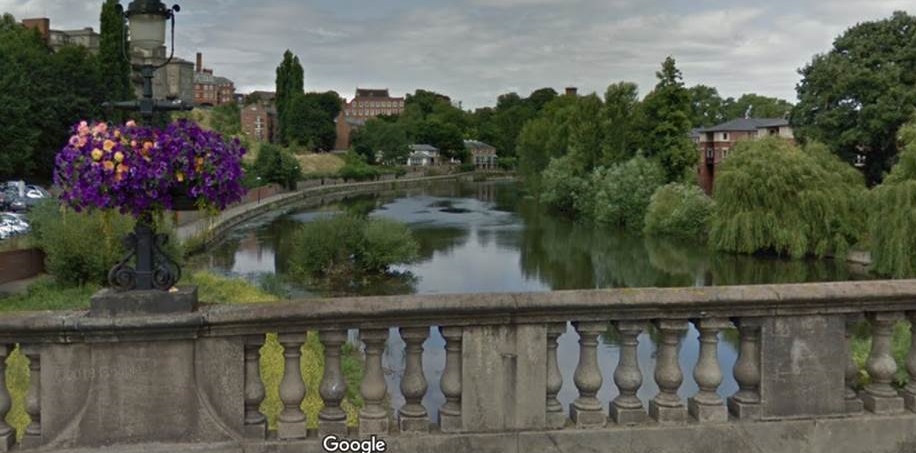
Photo: Google
The sweet, red-bricked abbey that was home to a Benedictine monastery is smaller than I expected. It still has its original long, narrow Norman nave. I wander around inside for a while admiring its 14th century stained-glass window depicting St. Benedict, which is dedicated to local author Edith Pargeter who wrote under the pseudonym, Ellis Peters.
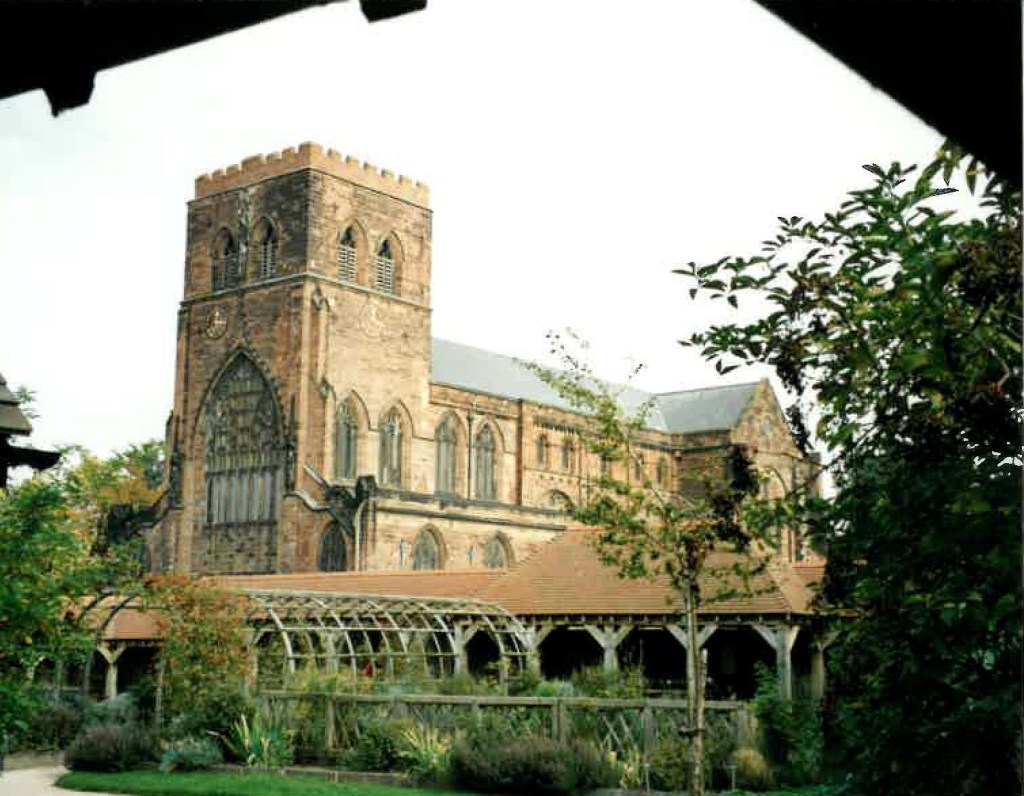
Founded in 1080, Shrewsbury Abbey thrived until the “Dissolution” under Henry VIII. In a straight-out money grab, Henry VIII took over 800 abbeys and monasteries, taking their treasures. Some were sold or converted to parish churches, but many others were ransacked, burned, quarried, or left to the neglect of time. Fortunately, Shrewsbury Abbey escaped destruction, the fate of many other beautiful abbeys—victims to Henry’s greed―but the monastery was not so lucky. Nothing of it remains.
Everything I know about Shrewsbury comes from Ellis Peters’s books about the famous sleuthing monk and herbalist, Brother Cadfael, which PBS made into a series for Masterpiece Mysteries, starring Derek Jacobi. Set during the period of history known as the Anarchy—20 years of conflict in the early 1100s with Maud, the daughter of a king, and Stephen, the king’s nephew, both grandchildren of William the Conqueror, fighting for the throne. In Shrewsbury, first Maude, then Steven, held the castle. Loyalties were divided and power passed back and forth making it a difficult political time for the monks and the townspeople. Cadfael tries to stay out of the struggle. In one of the book’s passages he says, “In my measure there’s little to choose between two such monarchs, but much to be said for keeping a man’s fealty and word.”
Across the street from the abbey, is a tourist attraction called the Shrewsbury Quest that re-creates monastery life at the time of Brother Cadfael. Among the rooms and exhibits are Cadfael’s herbarium and its medicinal dried herbs, which were a big part of the stories. As Ellis Peters describes it:
The eaves . . . were hung everywhere with linen bags of dried herbs, his jars of wine sat in plump, complacent rows, the shelves were thronging with bottles and pots of specifics for all the ills of winter.
Monk’s Hood,” Mysterious Press, 1980
The Quest captures it all utterly.
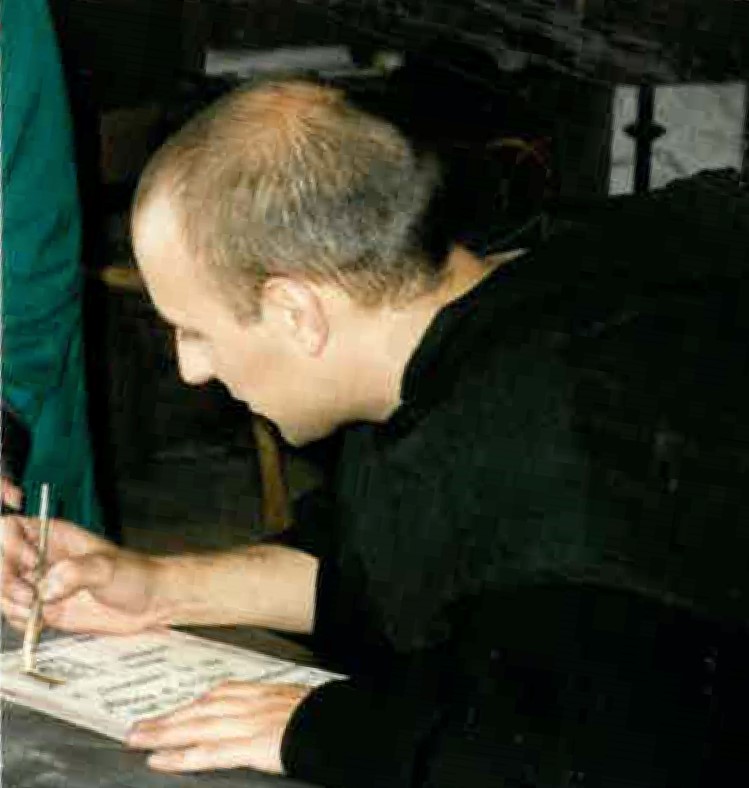
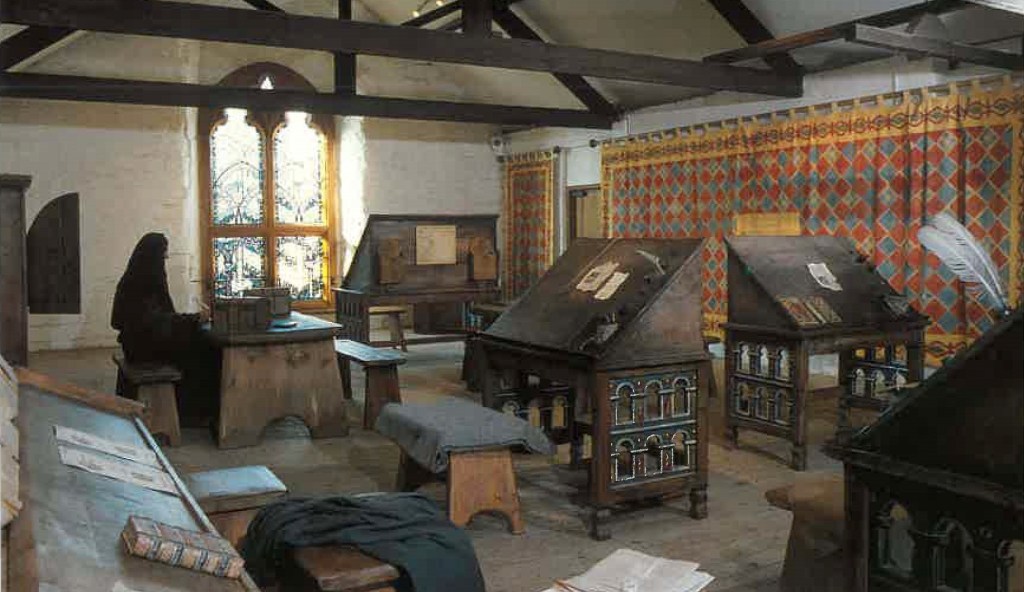
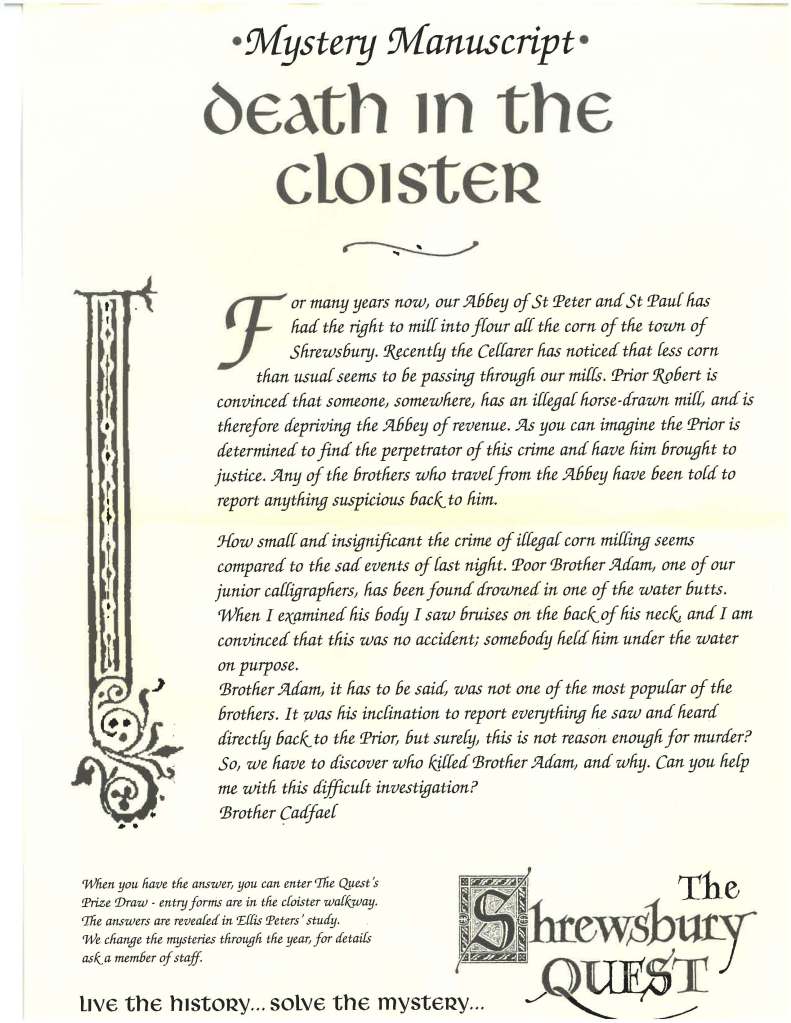
There is a puzzle to be solved with clues placed along the way in the cart shed, guest hall, scriptorium, herb garden, and herbarium, and finally a re-creation of Ellis Peters’s study. From the herb garden there is a wonderful spot to view the abbey just as it must have been nine hundred years ago; the noisy traffic blocked by the cloister walls and drowned out by the chanting monks. I stop in the scriptorium to do a brass rubbing and try my hand at calligraphy. I pick up the clues regarding the murder of Brother Adam who knew too much about an illegal grain milling operation, but I don’t seriously try to solve it.
Brother Cadfael would not recognize Shrewsbury today. It is a bustling town with hundreds of people milling about going into malls and record shops; young people hanging out on the street corner; and an odd kind of evangelist handing out pornographic literature to help us to get to know God. It is disappointing to see the small, sweet Shrewsbury Abbey, in which the medieval monks worshipped, located next to a busy highway.
I walk back across the river to the center of town and go into a few shops. From a bakery, I get a sausage roll and bottled water for lunch, and sit in the town square to eat it.
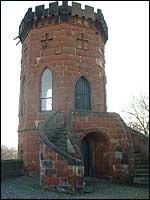
I make my way to the pink sandstone Shrewsbury Castle. William the Conqueror granted land to his closest ally, Roger de Montgomery, who built the castle to quell the troublesome Welsh. It now houses the Shropshire Regimental Museum, which the IRA bombed in 1992. If the terrorists were trying to make a point, they didn’t succeed. I fail to see the political power in bombing a small, local museum that is practically located in Wales. I skip the museum and walk around the courtyard and climb the hill to a small watch tower. There is a gorgeous view of the Severn River Valley and I can see the abbey in the distance.
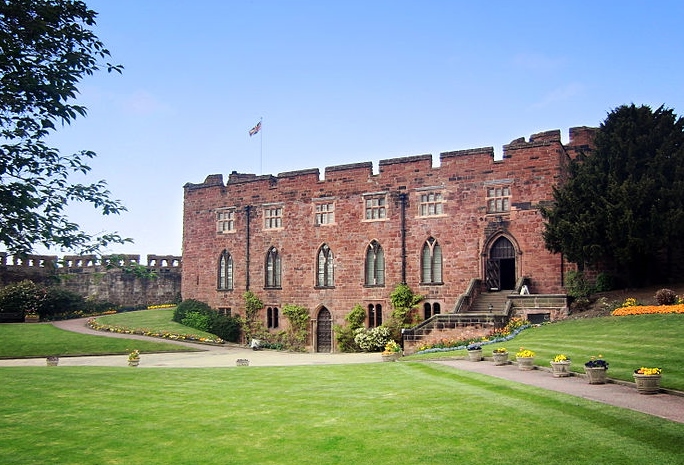
Photo: Wikimedia Commons
I head back to Shrewsbury’s impressive Victorian train station and am soon back at the B&B for a quiet evening.
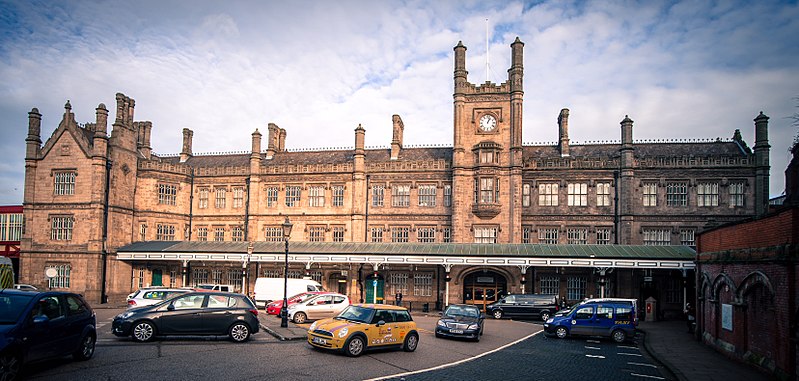
Photo: Wikimedia Commons
 Jody’s UK Memories


