There is a new guest at the B&B—Brenda; a young woman with a lovely Irish lilt. When I tell her I am going to Ireland next week, she complains that it rains all the time in Ireland and it is very expensive. Brenda is studying for her Ph.D. in chemistry at Trinity College in Dublin, which will take her seven years to complete! She is horrified to learn that I will be alone for Christmas, but says surely I will make friends and someone will invite me for Christmas dinner. However, she thinks being in London for the millennial New Year’s celebration is “brilliant.” For Brenda, everything good is “brilliant.”
I read in the paper that there was a fire at Birmingham New Street station Monday night around 9:00 PM. People were forced to evacuate the station and people on incoming trains were stuck on the tracks outside the station for two hours. I’m glad it wasn’t the night before; or it would have been me stuck out there. The trains are back on schedule on Tuesday.
The mysterious Simon makes an appearance at the office. He is tall, thin, and speaks with a fast, clipped accent. He makes a few phone calls, complains about his computer, and is gone. The secretaries describe him as eccentric. Apparently he rides his bicycle to work and has very strong views on ecology. After today, I don’t see him again for the rest of my time in Birmingham.
I spend the week digging into my research. Scanning the Internet I find a lot of relevant materials—much of it generated here at Birmingham University. One day, I go to the library looking for a book written by Steve Rogers, one of the INLOGOV faculty titled, Performance Management in Local Government. I have not met Steve, but am anxious to see what he has to say. I make my way through the Dewey Decimal system only to find the book sitting in a trolley waiting to be re-shelved. I check it out using my new university ID card. I get back to my office and just as I unlock the door, a man walks by. He says, “Jody, Hi. I am Steve Rogers.” He grins when I show him the book I am carrying.
I begin to get to know some of the other faculty. Michael Hughes, with his wild hair and sandals, gives me tons of material to read as well as disks with excel files of the Audit Commission’s work. He has just written a book on Best Value, which he says I can get in the library. I tell him it is not there yet and he says resignedly, “But I gave them a copy.” He is rather disorganized; not able to find all the books he wants to give me. But I have enough for now.
Another one of the faculty, Mike Smith, asks me to conduct a graduate student seminar in October on my project. The seminar is in the late afternoon and afterwards all the students go to the Staff House for drinks.
I meet briefly with Peter Watt, who is back from Hong Kong. He basically tells me to do whatever I want and, if I need help, knock on his door. This is fine with me.
One day midweek, Dean, Peter, and I go to lunch at the Staff House. Peter is also Dean’s mentor. The Staff House has three floors, a cafeteria on the top floor, a coffee/sandwich shop on the 2nd floor and, a pub on the first floor. We eat our hot meal in the cafeteria and then go down to the 2nd floor for tea.
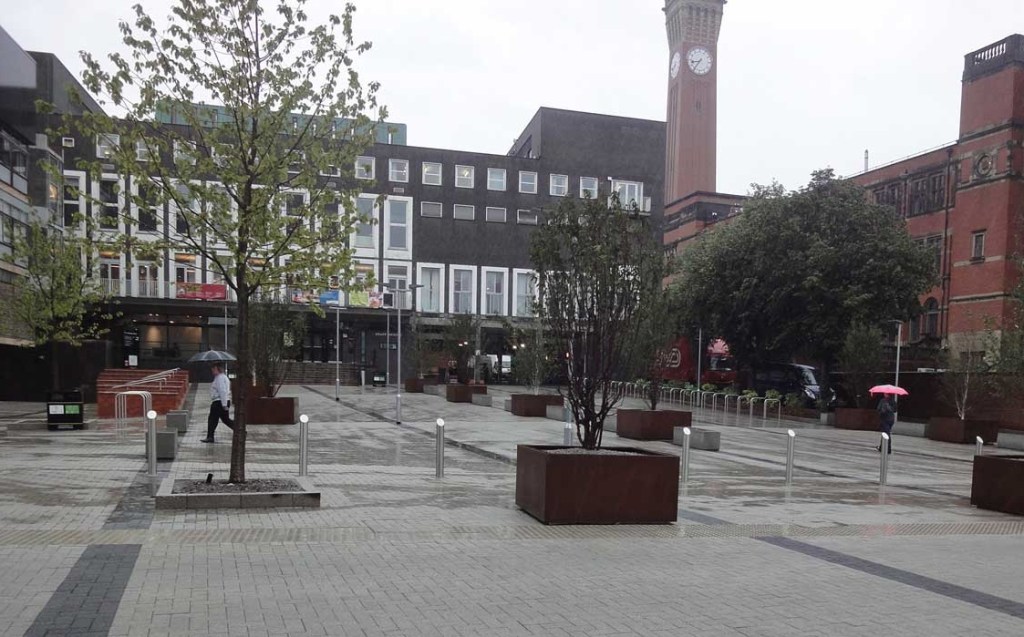
Peter tries to explain why British people are so reserved. He compares Americans and British conversations to a card game. Americans lay their cards out on the table immediately saying, “This is what I’ve got.” The British hold them close to the vest and lay one down occasionally. Peter says, for the Brits, it’s like a game, but he thinks it can waste a lot of time. He speculates that it has to do with America’s strong market economy. To prosper in the US, you have to get all your cards out on the table quickly to make a deal. In Britain, with its social, bureaucratic society, knowledge is power and it’s something you want to keep for yourself. I find this interesting and illuminating. It explains why I sometimes have to ask a lot of questions before getting a full answer.
I stop at Lloyds Bank and end up being there for nearly an hour. They can’t find my checkbook. It has been mailed to this branch, but they never received it. So, they have to cancel the order and arrange for a new one to be sent. It should be here next week. I ask if there will be a checkpoint (ATM) card too. They say, “It will be here next week.”
Chamon, the Indian restaurant in Selly Oak, just down the street, has become a regular haunt for me. I like the food and it is inexpensive. There are usually a lot of students there and one review I read says, “It’s good solid Birmingham Balti.”
Birmingham is known as the Balti Capitol of England; its large Kashmiri population having introduced it to the city:
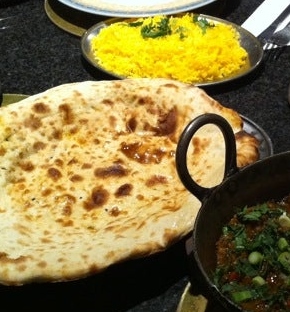
“Balti” literally means “bucket” referring to the pan in which the food is cooked; a round-bottomed wok with handles. It is a type of curry, fast-cooked over a high flame with fresh meat and vegetables, and then cooked with extra spices. The meal is often served sizzling. Each restaurant jealously guards its own special recipe, but they all use similar spices like cumin, cardamom, coriander, cloves, and ginger. Although the restaurant will give cutlery to “beginners,” experienced “baltiers” use naan bread to scoop up their food.
I usually order the chicken tikka, a kebab, or chicken and mushrooms with a naan, which is enormous. Sometimes I just get an omelet. They don’t serve alcohol, but you can bring your own. I always seem to forget and usually just have water.
I finish the book I am reading. Author Amanda Foreman writes a familiar scenario:
She could not help but suspect the true nature of her husband’s feelings toward her…she soon realized they had little in common.
He was used to his bachelor life; love he received from his mistress…
In less than a year, she had eclipsed her husband and become a popular figure in her own right. Her “goings on” had become an obsession in the press. Her clothes, her movements, her friends—in short anything new or unusual about her was considered newsworthy.
It was the greatest paradox that her husband must be the only man in England not in love with [her].
Although eerily parallel, these passages are not about Diana, but about Georgiana Spencer of Althrop, a many times great aunt of Diana’s who married the Duke of Devonshire in 1774 at age 17.
 Jody’s UK Memories