We pass on the haggis at breakfast this morning and head out for Edinburgh Castle. The massive castle, situated on an extinct volcano, dominates the city skyline. We enter through the football-field-sized esplanade, which is the parade ground for the Edinburgh Military Tattoo held annually in August. Ian, our Scottish guide, takes us through the portcullis gate and tells us to take a wee walk up the hill where we will start our tour.
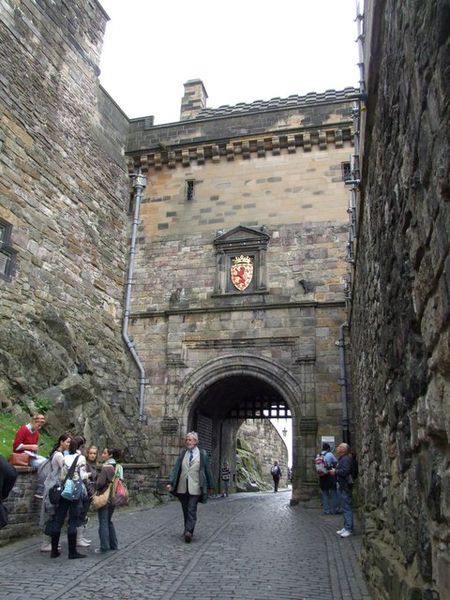
Photo: Dave Hitchborne/Wikamedia Commons/CC BY-SA 2.0
We climb the steep, broad, cobbled road to the ramparts of the Upper Ward that look out over the city. We have a beautiful view of the Firth of Forth, the estuary of Scotland’s River Forth.
Here also is the one o’clock gun. The Royal Artillery gunner fires the booming cannon at 1 PM as he has done every day since 1861. The firing is so consistent that ships in the Firth of Forth set their maritime clocks by the gun. Cheeky Ian tells us that the ever-frugal Scots chose 1 PM instead of 12 PM to save on ammunition; having to fire only one canon shot not 12.
Next, we visit St. Margaret’s chapel―a small, simple chapel made of sandstone. King David I built the chapel around 1130 and named it for his sainted mother. This is the castle’s oldest structure.
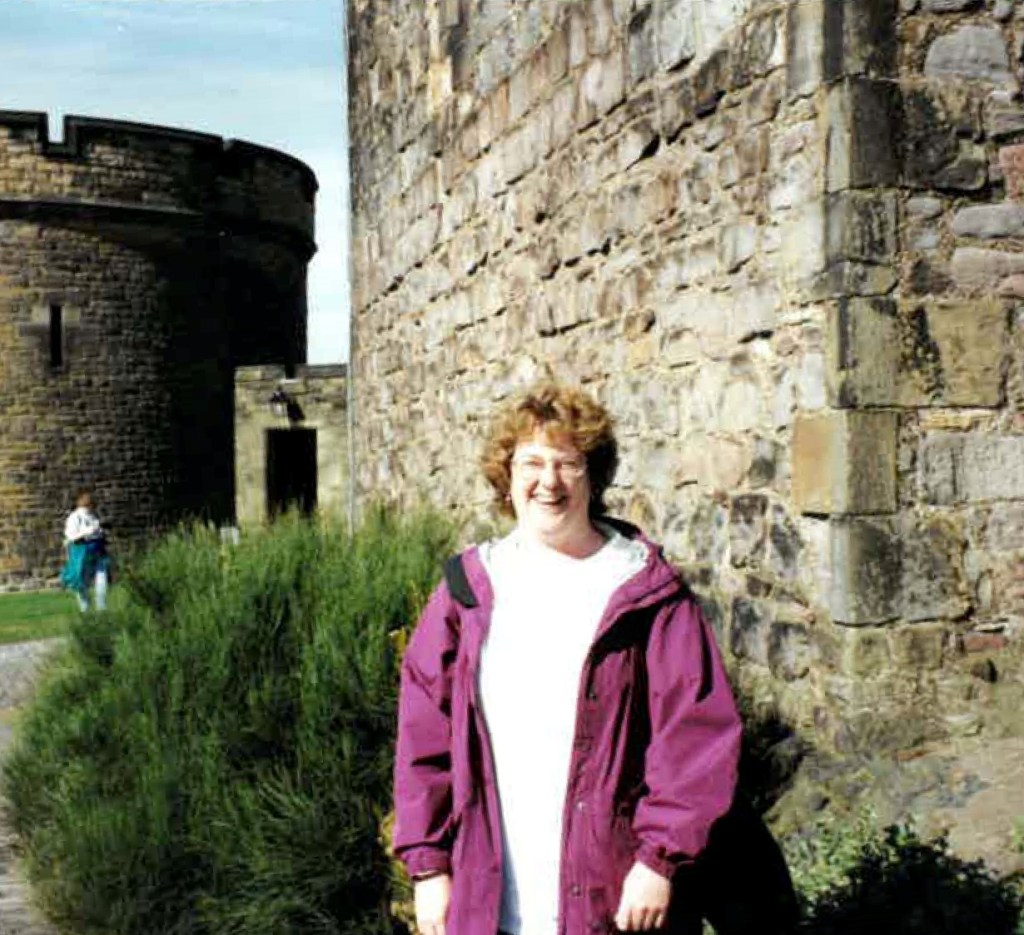
We move along to the Royal Palace entering a small bricked square that is distinguished by a neat, hexagonal clock tower. This was the official residence of the Stewart kings and queens. We see the rooms that Mary Queen of Scots occupied.
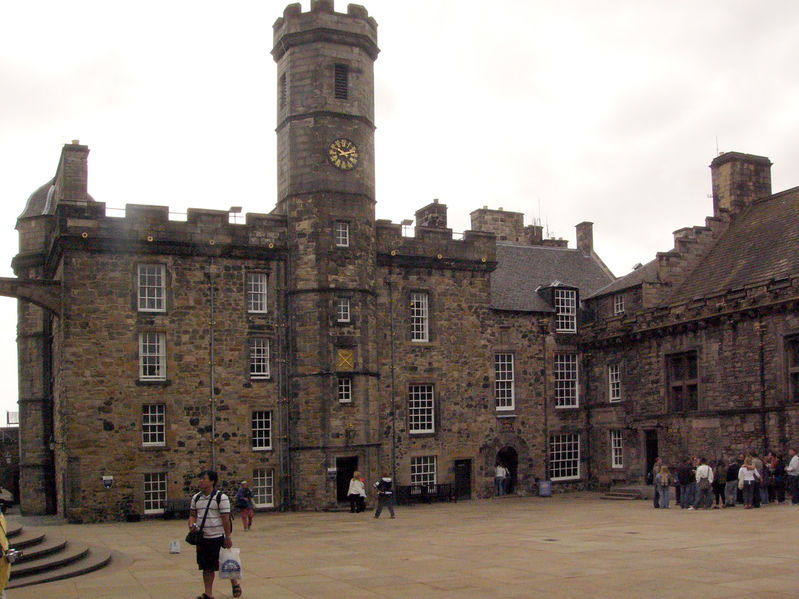
Photo: Christian Bickel
The Stone of Scone aka the Stone of Destiny
I am most interested in seeing the Stone of Destiny. The Stone is displayed in the Crown Room in the Royal Palace along with the Honors of Scotland, as the Scottish Crown jewels are known. It is an ancient stone that solemnized Scotland’s royal coronations.
Unless the fates be faulty grown
― ancient poem translated by Sir Walter Scott, 16th century
And prophet’s voice be vain
Where’er is found this sacred stone
The Scottish race shall reign.
Steeped in myth, Scots believe that without the Stone’s presence, a coronation is not legitimate. In the 13th century, King Edward I of England captured the stone and brought it to Westminster Abbey. Here it remained until 1950 when four reckless Scottish nationalist university students stole the 300-pound stone, bringing it home to Scotland, but breaking it in half in the process.
England soon recovered the stone, but the students’ act set off a patriotic fervor. Finally in 1996, as a gesture to try to quell the Scottish separatist movement, John Major’s Conservative government returned the stone to Scotland; 700 years after it was removed and coincidentally only a year after Mel Gibson’s Braveheart movie that depicts the brutal destruction of the Scots by a villainous Edward I. For the next British coronation, the Lord Great Chamberlain will install the stone in Westminster Abbey for the ceremony, but return it to Edinburgh Castle afterwards.
Leaving the castle, we begin our walk down the Royal Mile—as the mile-long street between Edinburgh Castle and Holyrood Palace is known. The street is lined with monuments, churches, and historic sites, as well as shops and pubs.
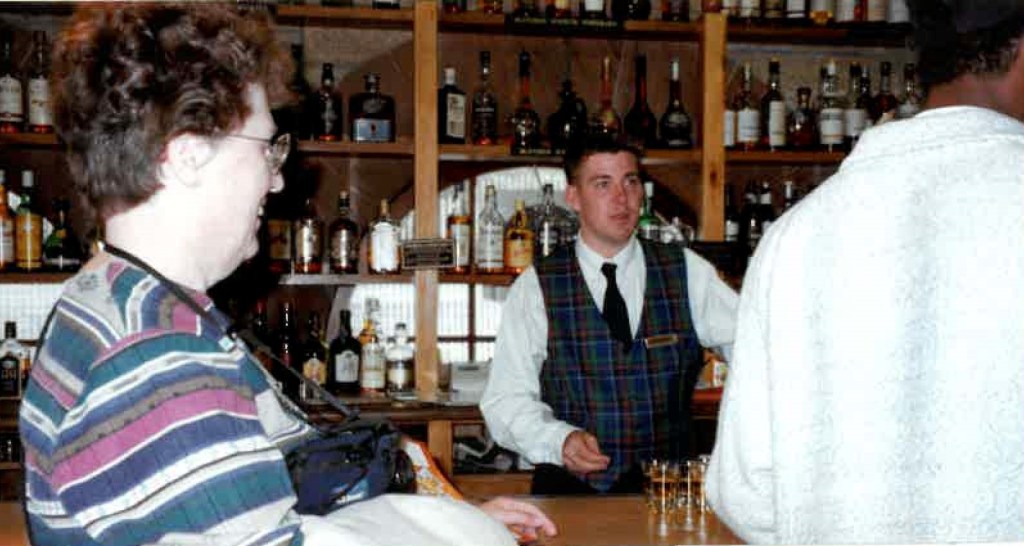
After a brief stop at the tartan store where Mom buys some wool, we move on to the Scotch Whisky Heritage Center (Scotch Whisky, as opposed to Irish Whiskey, is always spelled without an e).
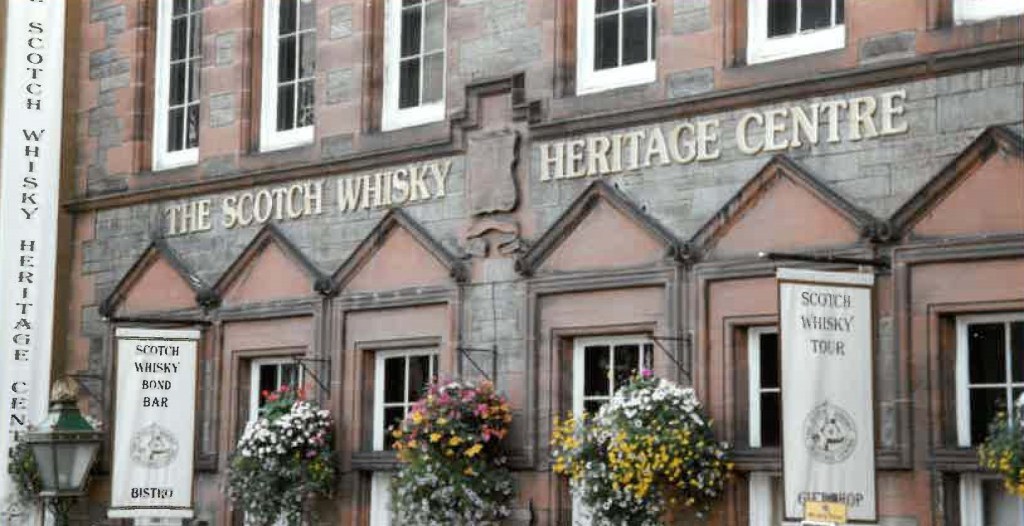
Whisky—the water of life
A Disneyesque ride in a whisky barrel takes us through the history of the distilling industry from the early Royal charters that allowed businessmen to sell whisky tax-free in the 1600s; to the high-tax period from which rose the illicit stills and the everlasting battle to outwit the excise man; to prohibition, which nearly bankrupted the industry; to the young WWII servicemen who acquired a taste for Scotch and took it to all corners of the globe.
Our tour ends with a wee dram. Undiluted, the strong liquor burns all the way down my throat. The gift shop boasts over two dozen single and blended malts. Mom buys some crème liqueur for Dad.
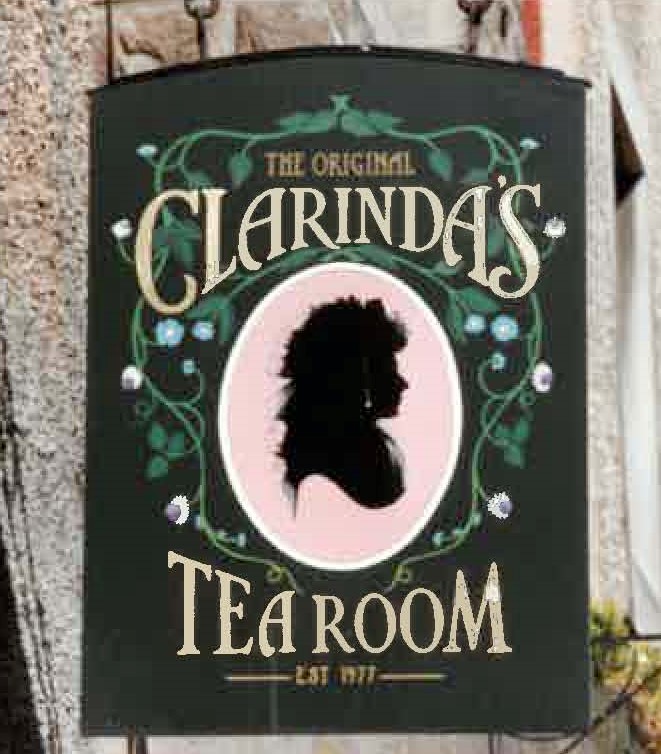
Continuing down the Royal Mile, we stop at Clarinda’s Tea Room for a late lunch/early tea. It’s a very cute tea shop with a wonderful selection of sweets from the trolley.
The Queen’s Palace of Holyroodhouse
We make our way to Holyrood Palace. Built for Charles II in the early 17th century, he never actually saw it, let alone lived in it. The “new” palace he had constructed incorporated a tower from the older palace that is steeped in Mary Queen of Scots lore. She lived here with her second husband, Lord Darnley. It was here where a jealous Darnley murdered Mary’s private secretary. And it was from here whence Mary escaped and fled Scotland…into the even more jealous arms of her cousin, Elizabeth I of England.
The palace has some interesting and unique personal items of various monarchs and would-be monarchs, including a lock of hair from Mary Queen of Scots; pistols belonging to Bonnie Prince Charlie; and a fork and spoon of Charles II’s.
Holyrood (rood meaning cross) is a working palace where Queen Elizabeth stays when in Edinburgh. The guide in one room tells us that the Queen’s apartments are directly above us, but that she has never seen them, “It is not allowed,” she says.
We pass through the 16th century apartments of Mary, Queen of Scots and the State Apartments used for official and state entertaining. According to the Holyrood website:
The rooms become progressively grander as you approach the King’s Bedchamber―the grandest room of all, where historically, only the most important guests would have been granted an audience.
The bedchamber in the 17th century was not just for sleeping but also where the King or Queen received guests and met with diplomats. According to one account, these ceremonial duties often crowded the sleeping chambers until the monarch had to move to another bedroom when he or she actually wanted to sleep.
My favorite part of the palace is the Abbey ruins. The ruins are vast and I can almost imagine how splendid the church must have been, including huge stained glass windows and a wonderful Gothic nave. King David founded the abbey in 1128 and it stood for 400 years until the Scottish Reformation when mobs destroyed and looted it. In the mid-18th century the roof collapsed leaving the abbey the ruined shell that stands today. Its soaring arches are weathered but look sturdy and solid with their intricate stone work. They leave a haunting impression of ancient Scotland.
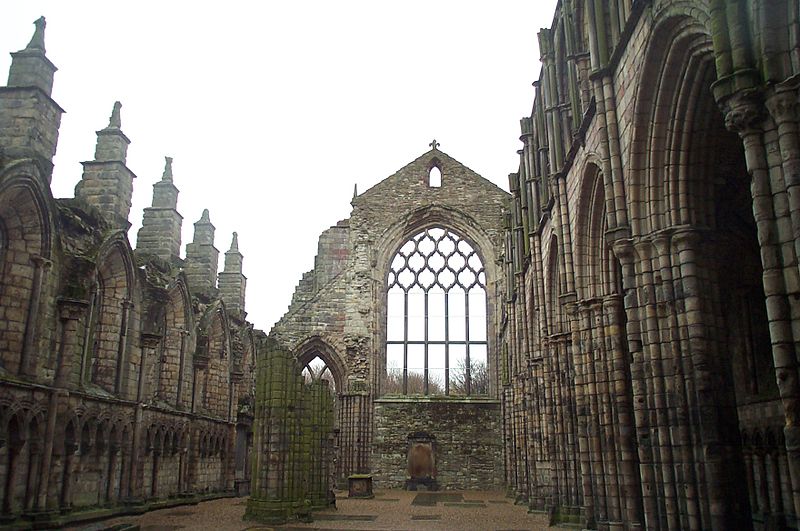
Photo: Wickipedia Commons
After hitting one more gift shop, we walk back to the hotel, have dinner, and pack to leave tomorrow.
 Jody’s UK Memories


