At breakfast Brian says I have to record in my journal that Jody didn’t have the cereal, but Mom loved it. It’s some kind of mix of grains with banana and coconut chips. I have my usual—croissant, toast, and grapefruit.
We take the train to Warwick from Birmingham’s Snow Hill station, which is the terminal for local train services rather than long-distance. One of the platforms has recently been renovated and will be ceremonially opened next week by Princess Anne. It is just a few minutes’ walk from Corporation Street and then it is about a 20-minute ride to Warwick.
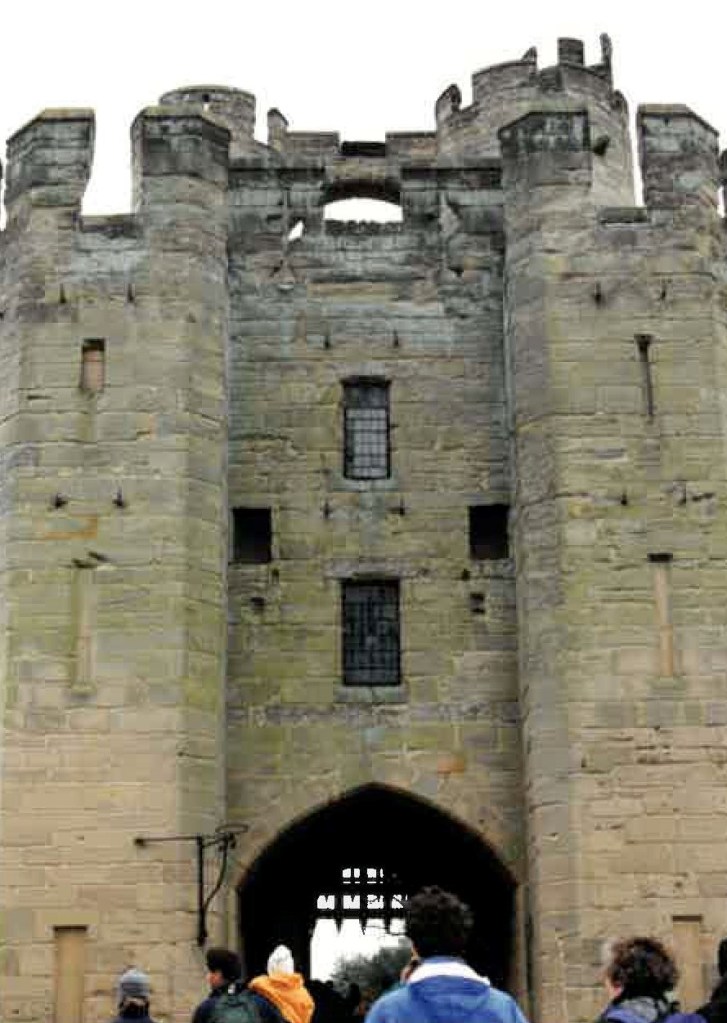
We approach the castle through a dark tunnel carved out of solid rock before emerging onto a tree-lined walkway (Brian calls it a leafy corridor) where we get our first glimpse of stone turrets through the leaves. We enter through the massive medieval gatehouse with its arrowslits and ramparts. It makes me want to look up to make sure no one is preparing to throw boiling oil on us.
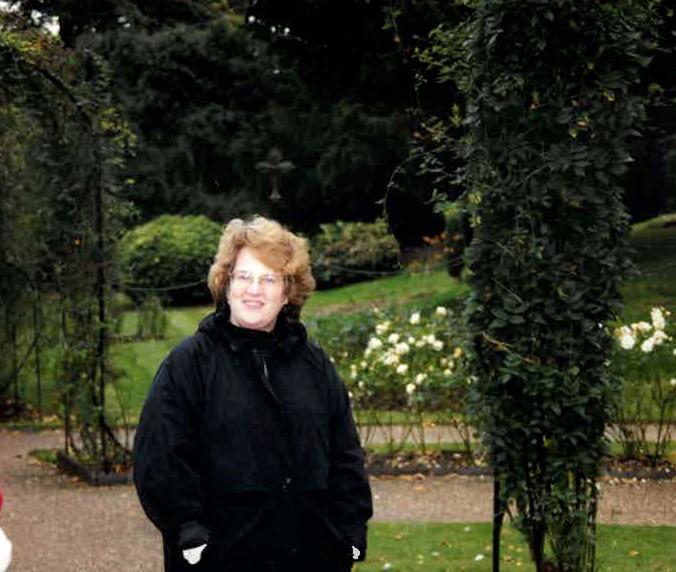
Before entering the castle, Mom and Brian indulge me in a diversionary stroll through the Victorian rose garden just outside the castle walls. It has been recently refurbished and dedicated to Diana, Princess of Wales. The center is planted with white Princess of Wales roses in her memory.
Warwick Castle is locally proclaimed the “greatest castle in Britain.” Located on the River Avon, it is a microcosm of 1,000 years of British history. Beginning with Ethelfelda, daughter of Alfred the Great, who built an embankment on the site in 914 to defend against invading Danes, the castle has been at the center of the pivotal events of English history.
In 1068 William the Conqueror built a wooden fort at Warwick to retain control of the Midlands while he battled on to capture the north. During the 100 Year’s War, British soldiers brought their French prisoners from the battlefields and incarcerated them in the castle’s grim dungeon, where they were forgotten and left to die. During the Civil War, Warwick’s nobles came down on the side of Oliver Cromwell’s parliamentarians and its dungeon held Royalist captives.
The 13th Earl supervised the trial of Joan of Arc. And we will hear about Warwick the Kingmaker, the 16th Earl, during the War of Roses in a bit. The 17th Earl, a potential claimant to the throne, and rival to Richard III (“My horse, my horse, my Kingdom for a horse”), got himself mixed up in a plot to overthrow the King and was executed for his trouble. And it was the Earl of Warwick’s daughter-in-law, Lady Jane Grey, who ruled as Queen for nine days; a pawn in the royal power struggle that ended in the 17-year-old’s beheading by Queen Mary I.
The castle, featuring Madame Tussaud waxworks, showcases its momentous history with a multitude of exhibits: the stables where men prepare for battle during the War of the Roses; the medieval Great Hall complete with weapons and coats of armor; the Court of Henry VIII and all six of his wives; the glittering Baroque 17th century state rooms; and a sumptuous Victorian weekend house party.
We start with the Kingmaker.
The year is 1471 and Warwick’s Earl, Richard Neville, commonly known as the Kingmaker, is readying for battle―Kingmaker because of his military prowess that helped win the throne for two English kings during the War of the Roses.
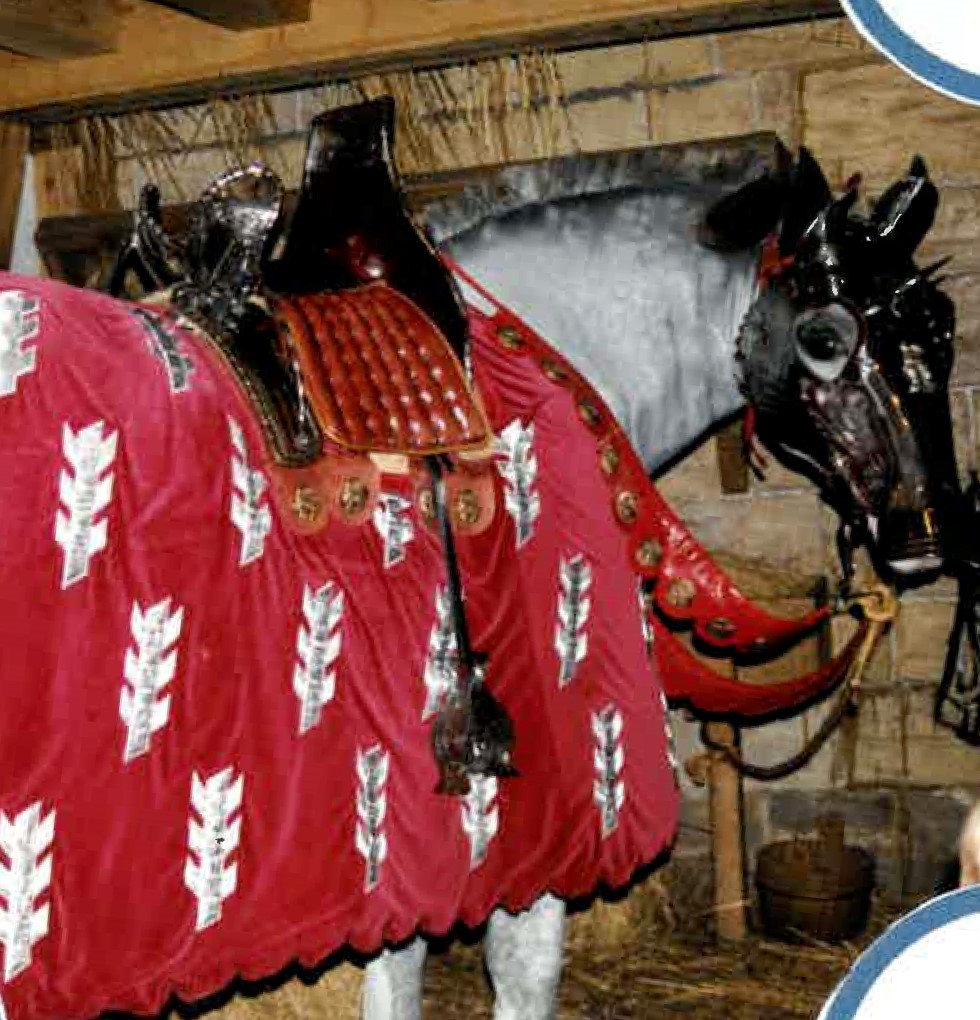
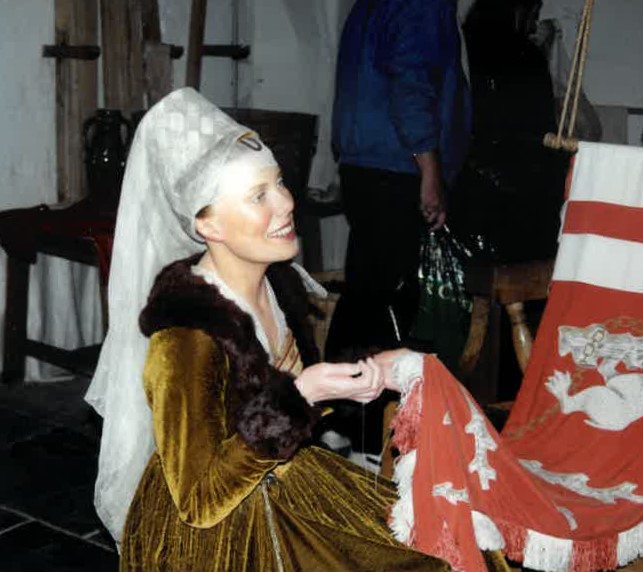
The exhibit has soldiers wielding swords and grooming their decorated horses along with music and snippets of dialogue that depict a castle gearing up to fight. There are displays of all the craftsmen who support the soldiers: blacksmith, wheelwright, fletcher (arrowmaker), and bootmaker. The women of the medieval castle, clad in their veil-adorned steeple headdresses, are sewing battle flags.
The last scene shows Neville, sword in the air, rallying his men for the fight. The Earl was killed in this battle.
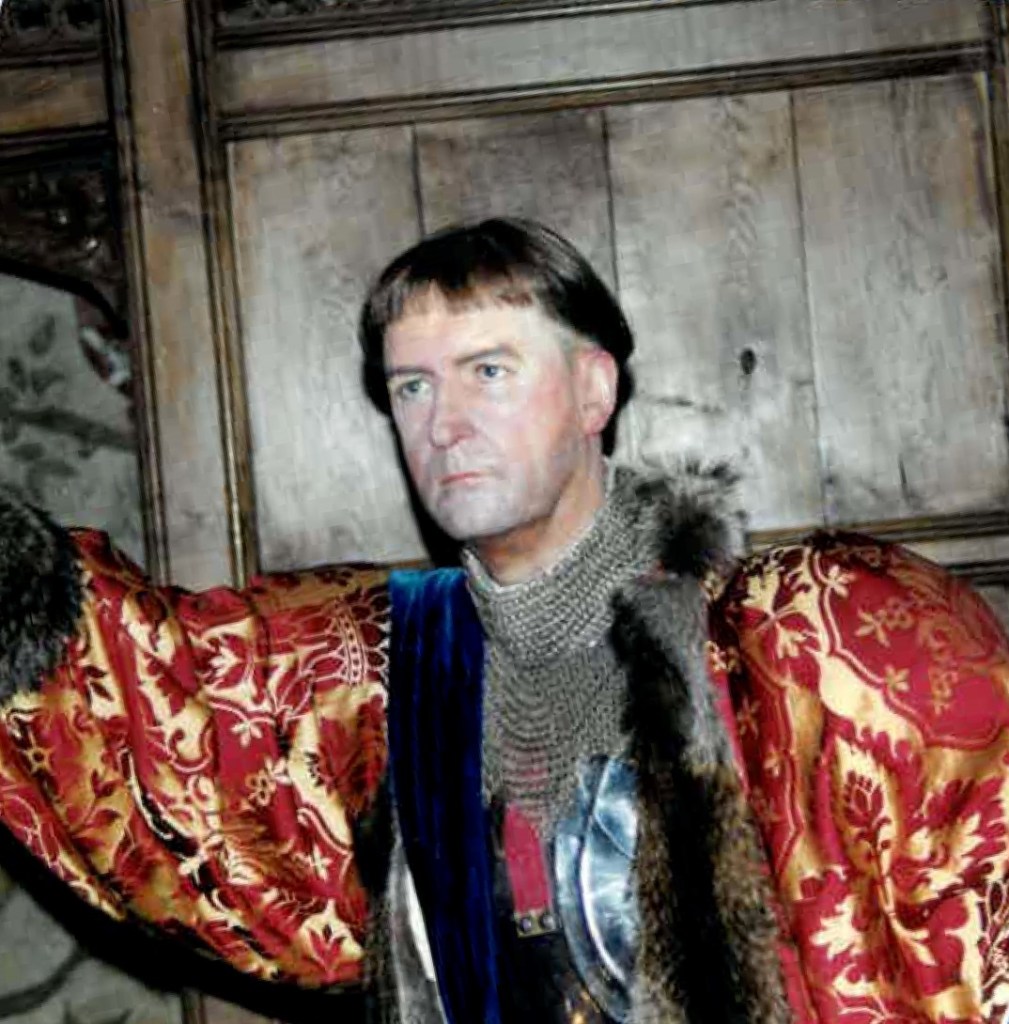
My favorite part of the castle is the Victorian exhibit, which jumps ahead 400 years and recreates an 1898 Royal Weekend Party complete with wax likenesses of the Earl and Countess, their well-heeled guests, and servants.
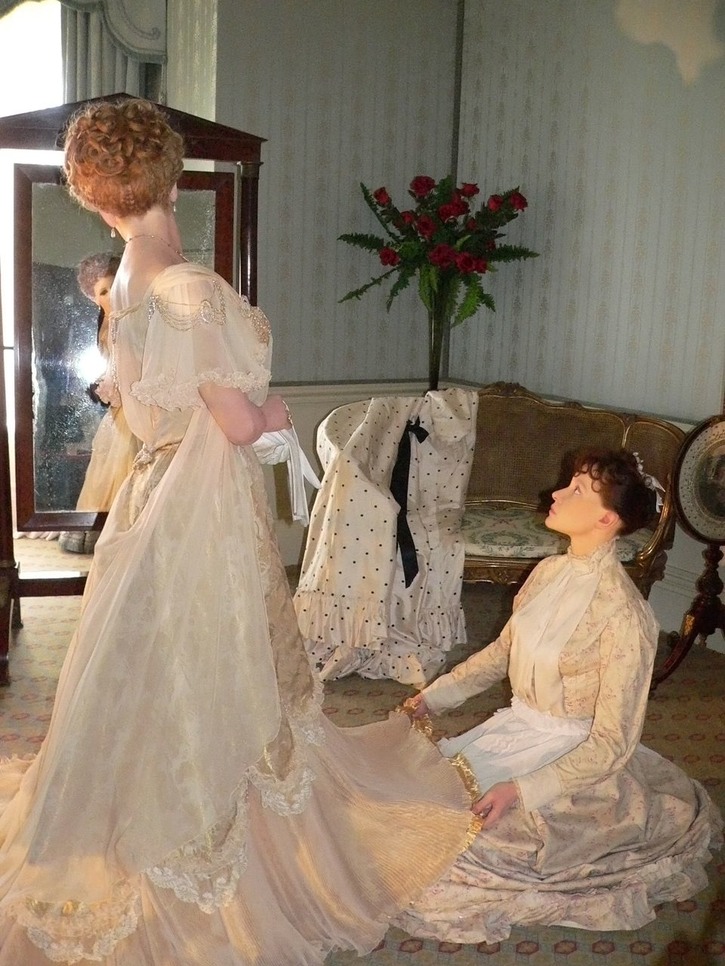
Each of 12 rooms presents a different tableau. Among them are:
- A young Winston Churchill reading in the masculine, oak-bookcase-lined library. Winston is shortly leaving for Egypt to become a war correspondent.
- In the Music Room, Clara Butt, renowned contralto singer of the time, entertaining Winston’s mother, Lady Churchill, and her 20-year-younger lover and future 2nd husband, George Cornwallis-West.
- The Duke of York, later to be King George V, playing cards with Charles Spencer Churchill, 9th Duke of Marlborough and owner of Blenheim Palace, in the Smoking Room while the butler mixes drinks.
- Daisy, Countess of Warwick in front of a full-length mirror in her luxurious bedroom trying on her new white satin and lace gown. Daisy’s maid sits at her feet holding the dress’s lavish train.
- The Kenilworth Bedroom is reserved exclusively for Daisy’s lover, the Prince of Wales, the future King Edward VII, where he stands in front of the fireplace with a fat cigar in his hand. His valet is pouring him a pre-dinner drink.
- Daisy’s tolerant husband, Francis Greville, Earl of Warwick, also smoking a cigar, waiting for his bath to be drawn in the Earl’s Dressing Room.
- Consuelo Vanderbilt, Duchess of Marlborough, preparing for dinner in the Chinese Bedroom with its colorful oriental furnishings. The American heiress is said to have been locked in her room by her father for four days before agreeing to marry the English Duke.
- In the nursery, Maud, the nurse, holding the baby Marquis of Blandford, the first son of the Duke and Duchess of Marlborough, while the maid Lily looks out the window to see what is happening outside.
We all love Warwick Castle, its history, its attention to detail, its sheer immensity. After our tour, we have to agree, it is the greatest castle in Britain, or at least one of them.
We grab a quick bite to eat at the castle’s Stableyard Restaurant and take the train back to Snow Hill.
At Snow Hill, we dash down the escalator and hop on the train to Worcester just minutes before it pulls out of the station. It is an hour-long ride during which, at one stop, a group of school boys gets on. They are wearing uniforms—neat pants and navy blue blazers. Despite their very proper appearance, they act in typical noisy boy fashion—pushing and shoving. A short while later they all scramble off, and peace is restored.
Worcester is a quaint city with a central cobblestoned, pedestrian walkway lined with Tudor-style buildings that house shops and restaurants. We pass the Guild Hall. Through the windows, we can see gorgeous chandeliers inside. But, I can’t find anything in my guide book about it.
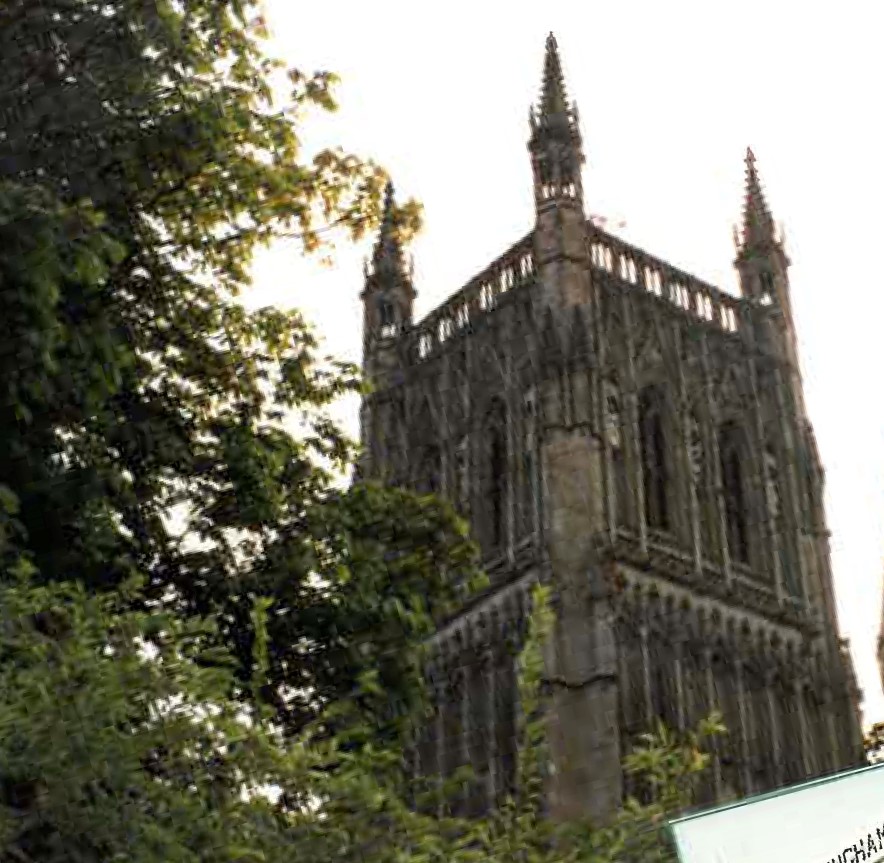
Worcester Cathedral dominates the skyline as we walk towards it. It is built of sandstone and, as my guidebook says, “It is a rich stew of architectural styles.” The plague carried off many of the stonemasons that worked on its construction in the mid-twelfth century. It is also where King John, who died in 1216, is buried. They story goes that the king of Magna Carta notoriety explicitly asked to be buried between the tombs of saints Wulfstan and Oswald in Worcester Cathedral.
We continue walking down a narrow path to Severns Street, named for the Severns River, which it borders, until we see the blue metal archway with the Royal Worcester crest. We head first for the Spode Blue Room to pick out some Spode Italian Buildings china for Aunt Kay-Lee—a covered cheese dish. We arrived in Worcester rather late; about 4 PM and most everything closes at 5:30 PM. We go in a few factory shops, have some tea, and hop back on the train.
We eat dinner in Birmingham at Pasta Bella, go home, and fall into bed.
 Jody’s UK Memories