I make my way through immigration control, customs, and on to baggage claim…oh, no…baggage claim! Did we arrive in Newark in time to for my bags to make it on the plane to Birmingham? But, yes, here they come around the carousel. I load up my “buggy” and go looking for the British Council representative who is to meet me.
Almost immediately, I see a distinguished-looking, white-haired man holding a placard with my name. Mr. Chris Gately of the Guild of Students, University of Birmingham, and our driver, Roger, take over the buggy and we exit the airport. The British Council (BC) has hired a bus (what in the UK they call a coach) to take me to my lodging. How much luggage did they think I would have? We’re off; my empty, queasy stomach made even more so by the bouncing coach, not to mention the backwards “roundabouts.”
My First Glimpses of Birmingham
We leave Roger and the coach at Thomas Cook’s travel agency where we also pick up the first installment of my stipend. Then we walk through the city’s public squares.
Birmingham is a city of 1 million people but it feels approachable and, at least on this early Friday morning, not very crowded. We walk through Victoria Square; one of the biggest public squares I have ever seen. Dominated by the massive, ornate 19th century city council building, long, low stairs form almost an amphitheater sweeping down to an open, spacious, cobblestoned central square. Water cascades down the stairs directly in front of the city hall; part of the square’s focal river fountain. The city completely redesigned Victoria Square in 1993; only the bronze statue of Queen Victoria remains in its original location. Diana, Princess of Wales, re-opened the new square in May 1994.
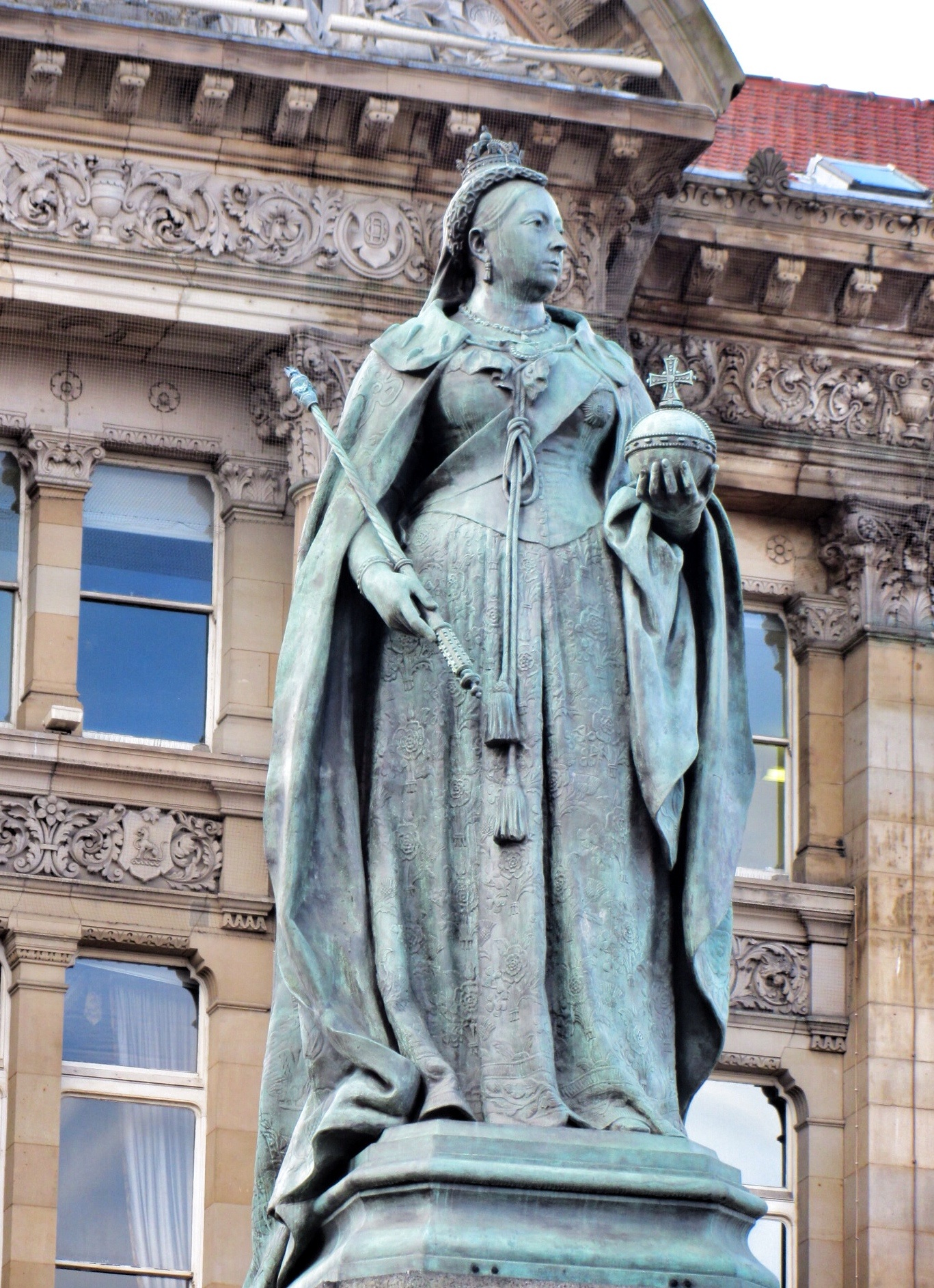
Photo: Birmingham Conservation Trust
I will learn that Princess Diana left her imprint on Birmingham in life and death: From commemorating the redeveloped Victoria Square; to opening the first-of-its-kind-in-the-world children’s hospice in Selly Oak; to the University of Birmingham accident reconstruction team secretly examining the demolished Mercedes in which she was killed (which Caroline at my B&B talks about in almost in a whisper); to the city naming a new children’s hospital in her honor a year after she died.
We walk to Birmingham’s St Phillip’s Cathedral. Small by cathedral standards, it is quite pretty; a little oasis of green amongst the urban pavement. Thomas Archer, the “gentleman architect,” designed the cathedral in 1715. We go in and admire the stained glass windows by Victorian artist, Edward Burnes Jones.
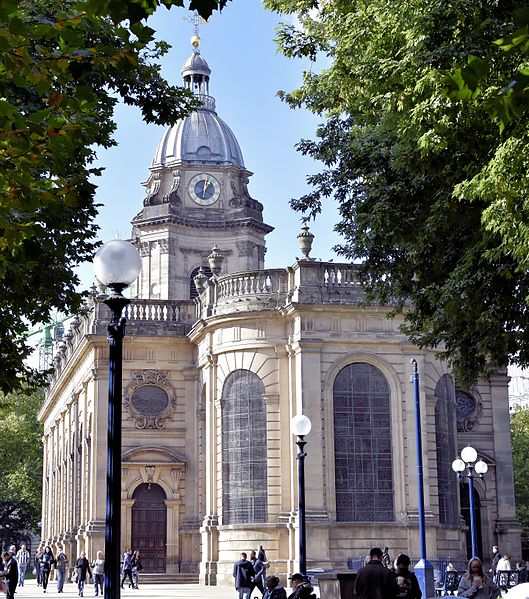
Photo: Wikimedia Commons
Chris tells me that Bill Clinton, when he came to the UK last year to promote the Good Friday agreement, visited Birmingham. Chris points out the sewer grates that the City of Birmingham sealed off for security reasons; the Hyatt where the Clinton entourage had the full top four floors to themselves, and the pub along the canal where Bill quaffed ale and ate chips. His visit seems to have made quite an impression on the Brums (as people from Birmingham are locally and affectionately known).
At the Birmingham Museum and Art Gallery, we have tea and scones in the Edwardian Team Room. Chris asks, “Do you drink tea?” “Well, normally I am a coffee drinker, but tea sounds nice.” I am thinking to myself that it could help soothe my querulous stomach. “Do you drink Earl Grey?” “Sure, I reply, not really having a preference.” “Do you?” “Yes, depending on the time of day. Alternatively, I drink Assam,” Chris says. I vaguely know that Assam is a strong, black tea, but do you drink different teas at different times of the day? How do you know which is morning tea and which is for the afternoon? I realize I am way out of my league in the tea department.
I never do find out if Chris prefers Earl Grey in the morning or the afternoon. His British reserve is showing. I don’t get very expansive answers to my questions about him, although he readily talks about England, about the Royal Family (whom he supports), and about university issues.
Chris says he admires the Pre-Raphaelite paintings of which the Birmingham Art Museum has a big collection. He says that I must come back and see them. I don’t know who the Pre-Raphaelites were or what their paintings are, but I assure him that I will. Little do I realize, but his one off-hand comment to me sparks a life-long love of the colorful and brilliantly rendered literary subjects by the Victorian brotherhood of Hunt, Millais, and Rossetti.
The Y2K Menace and Some Advice
Chris is the advisor to foreign students at the University. He is younger than I originally thought. He might not be that much older than me; his white hair belies his age. He dispenses advice that he thinks I need to know. Get insurance for your personal belongings. Take a taxi, rather than the train, if you’re traveling late at night. Purchase train tickets after 9 AM and before 3 PM and avoid traveling on Fridays when the rates are higher. He also confirms something I read in the briefing material. The BC does not recommend that we travel by air from December 19 through January 11 because of Y2K. But, he says, it’s up to me. Hmmm, I am flying home on January 4. Hopefully air traffic controllers will have any bugs from the turnover to the year 2000 worked out by then.
He is knowledgeable about most things in America with regards to news and politics. “Who do I think will be the next president? George Bush?” “Yes, most likely, I answer. “Unfortunately,” I add. However, at the same time, he asks unexpectedly funny questions, “What is that holiday in November that Americans celebrate by eating turkey? And just what does it commemorate?” I don’t think he intends it to be funny, but I laugh nevertheless.
University of Birmingham, A Victorian Edifice
We board the train at the New Street station located in City Centre. Two stops away from New Street, at the stop for the University/Queen Elizabeth Hospital, we disembark. The University has its own train station!
We walk through the campus, with all of its grassy quadrangles and august Victorian brick buildings. Queen Victoria granted the university a charter in 1900. But it was Joseph Chamberlain, the university’s first chancellor, whose vision for a “red brick” research institution propelled it into the 21st century. One of the top 100 universities in the world, Birmingham University’s pioneering research developed the pacemaker and X-ray telescope among many other scientific and medical breakthroughs. England’s beloved “Pomp and Circumstance” composer, Edward Elgar, was head of the school of music here. Today the school has 20,000 students; it also caters to a large population of foreign students, of which I suppose I am one.
The University boasts an impressive clock tower. The massive brick clock tower—the tallest in the world—is said to be modeled after the Torre del Mangia clock tower in Siena, Italy.
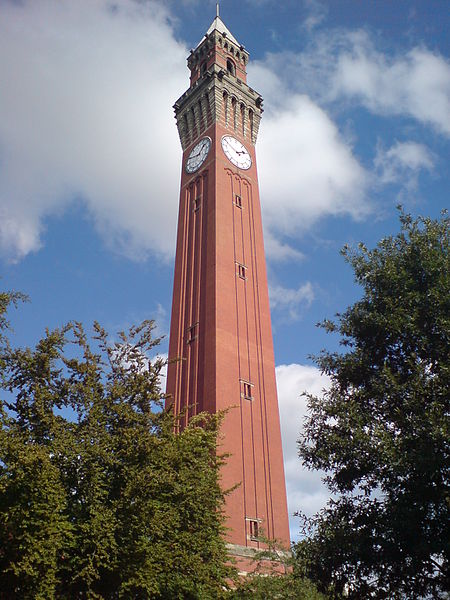
We continue to walk crossing over the canal and to the Guild of Students where Chris’s office is located. The Guild is home to numerous student groups and societies. It contains an insurance agent, travel agent, grocery store, and post office. There is also the foreign student’s office. I pick up a map of the campus. The Guild appears to be like a student union, although I do not see a bookstore with hats and t-shirts of the kind that are on American campuses.
I raise my eyebrows when Chris points out the bar on campus for faculty and students. He says drinking is allowed on campus; the drinking age in England is 18. And, just as on U.S. campuses, the freshmen drink heavily. Classes don’t start until later in fall, although some students are here now taking exams. Chris is surprised when I tell him U.S. university classes start this week.
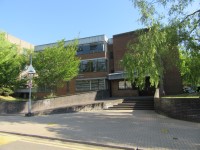
Photo: University of Birmingham
We head to the School of Public Policy on the west side of campus. It is a small, plain, office building that looks like it was built in the 1970s, rather than in the Victorian era. We go upstairs to see Dr. Peter Watt, who is to be my mentor. He is a very tall man with a broad grin, beard, and glasses. He is stooped a bit in the way that tall men in middle age do and vaguely reminds me of Dr. Taylor at UMO, although he is much more outgoing. Saroj Purba, the office assistant, assures us that I will have an office when I come in on Tuesday. I am happy to know they have at least been thinking about an office for me.
It’s about a 10-minute walk from the Public Policy School to the bed & breakfast Chris has arranged for me. Chris tells me if I like the B&B, I can stay for the duration and he takes his leave after warning me to call him immediately if there is an emergency. He defines an emergency as an illness or being robbed.
Glenelg B&B, My Home Away from Home
Glenelg B&B is lovely. My ensuite room, on the second floor, looks out over the back gardens. It has pale, pink-striped wallpaper, a double-sized bed with a flower-print bedspread, and a small, white, mirrored vanity with a tea service and lovely vase of fresh flowers on it. It includes continental breakfast, use of the laundry, and they do all the housekeeping. It is all the comforts of home as well as charming hosts.
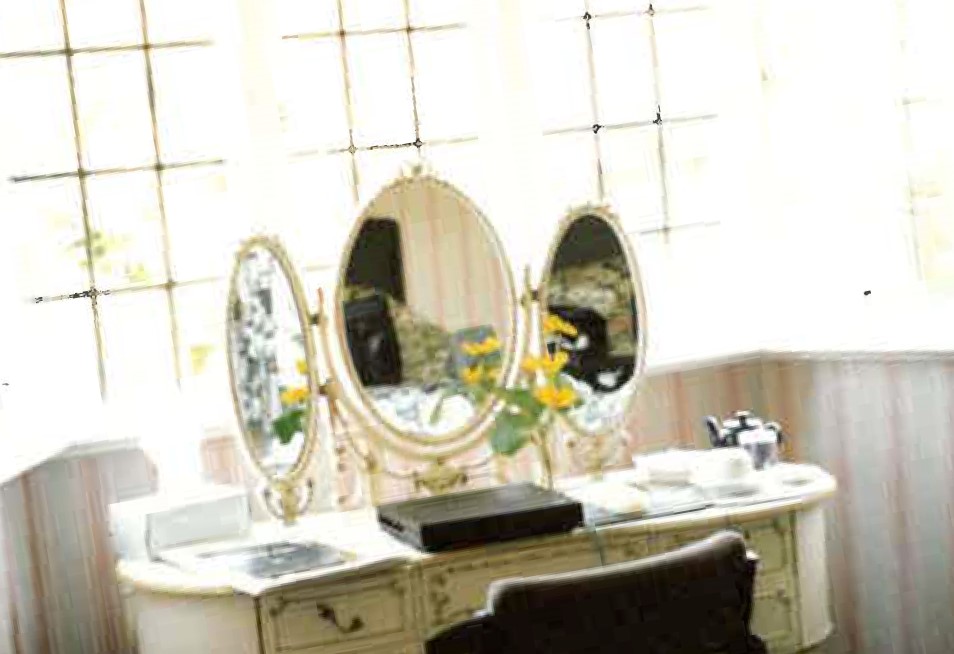
I take a nap for about an hour and then go downstairs in search of my host. Tony Regan, the proprietor, is on hand with Lutchford―a big, black, muscular boxer who doesn’t like strangers but, once introduced to you, is your friend. Lutchford is playful and both Tony and his wife, Caroline, are warm and friendly.
Tony and I speak of my arrangements for accommodations. I tell him I would like to stay here for the full term through December 29 when I leave for a week in London before flying home. While I am traveling, I will pay for the room for the privilege of keeping my “thinks” in my room. (The Brum way of pronouncing ing-ending words is with a “k” as in “somethink.”) During longer trips, Tony says he can store my cases and, if the opportunity arises, rent out my room while I am away; he will not charge me for those nights.
I think I can afford the £30 per night with my fellowship stipend. It’s high, but Chris assures me I will not find anything better-situated or nicer for less and even then I would have to pay a minimum six-month lease and a security deposit.
The Fellowship covers my roundtrip airfare, all the sponsored travel within the UK, and an allotment for both personal travel and living expenses. My stipend is:
UK Travel (£250 per month) £1,000
Shipment £ 300
Setting Up Allowance £ 600
Stipend (£906 per month) £3,624
Total £5,524
Lodging will cost me £3,750, which leaves £1,774 for food, travel, and incidentals. It will not cover it all, but fortunately I am still receiving a paycheck at home during my educational leave of absence. I decide to use my remaining stipend funds to travel as much as I can.
I call Mom and give her Glenelg’s phone number. The AT&T phone card, which allows for 60 minutes of calling time in the U.S. converts to only six minutes of international time. Mom and I use the full six minutes. Tony recommends a First National phone card that is reasonable and convenient.
Caroline offers me tea in their garden. They have a huge back yard with a much-loved, well-tended flower garden. At the far end of the property, bordering a tiny trickling brook is a wooden arbor that forms an archway to a little hedge-fenced stone patio with table and chairs. We sit and sip tea and I can hear the burbling stream as well as the chiming of the University clock tower.
As they tell me about their previous guests—many international professors—I can see they have a nice “word of mouth” reputation. One Argentine doctor, Geraldo, they say, came for one night and stayed for two years. They leave me in the garden to prepare dinner for their guests. I sit quietly enjoying the view. Looking back at the house, it looks very Tudor with a white/brown exterior and chimneys. However, Tony tells me it was built in the 1930s.
Caroline recommends an Indian restaurant located on the High Street, a 10-minute walk. I order a mushroom omelet with “chips” and peas. Susan Allen Toth’s book, My Love Affair with England, said the omelets are always good in English restaurants. It is also easy on my still queasy stomach. I am still not tired and go back to my room and begin journaling, typing away until almost 10:30 PM. I have now been awake for 26 hours.
I still can’t believe I am here. I am excited for this once-in-a-life-time adventure to begin.
 Jody’s UK Memories
